

Erectile dysfunction is one symptom—but the cause varies from man to man. For some, it’s a matter of blood flow. For others, it’s nerves, hormones, medication, the pelvic floor, or psychological factors, and often several factors are at play at the same time.
The underlying cause determines which treatment for erectile dysfunction will actually work for you—and which is a waste of time and money.
Here are the 15 most common causes I encounter in my clinic, grouped into five categories. Finally, I’ll share a simple method for determining which category your problem most likely falls into.
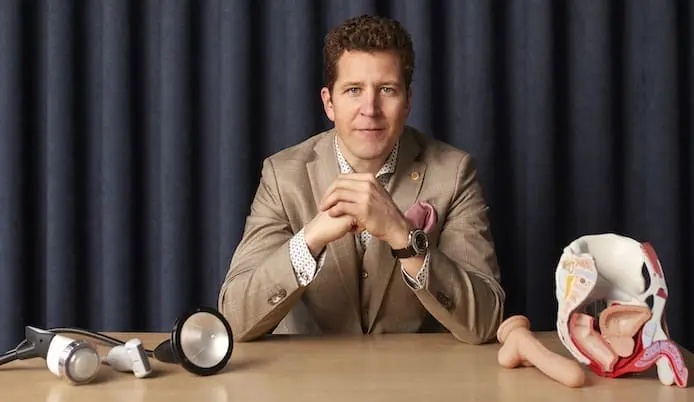
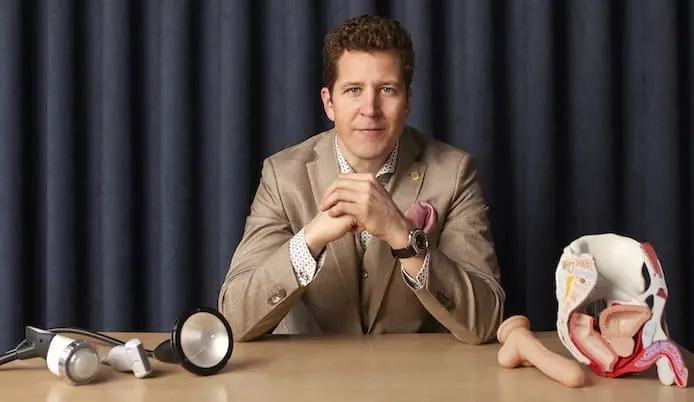
International speaker & expert in shockwave and EMTT treatment for erectile dysfunction, peyronies & CPPPS.
| Category | Causes |
|---|---|
| Circulatory System and Lifestyle | High blood pressure, diabetes, obesity, smoking, alcohol/drugs |
| Mental Health and Everyday Life | Stress, performance anxiety, sleep problems, low sex drive |
| Hormones | Low testosterone (hypogonadism) |
| Nerves and Surgeries | Neurological disorders, prostate surgery, and other surgeries |
| Body and Age | Medication Side Effects, Pelvic Floor, Age |
A good erection requires that the blood vessels be elastic and able to expand so that blood can completely fill the erectile tissues of the penis. High blood pressure causes the vessel walls to become less elastic, and blood flow decreases—probably the most common single cause of erectile dysfunction.
At the same time, high blood pressure increases the risk of atherosclerosis, and the blood vessels in the penis are particularly vulnerable: They are no more than about 1 mm in diameter and are therefore affected before the body’s larger vessels. That is why erectile dysfunction is often an early warning sign—studies have shown that it can appear 5–10 years before a serious heart problem. Read more about blood pressure medication and erectile dysfunction →
Diabetes is one of the most common causes of erectile dysfunction because it affects the body in several ways at once: Blood sugar levels that remain high over an extended period of time damage both the small blood vessels and the peripheral nerves—in the penis, but also in the hands and feet.
The penis becomes less sensitive, nerve signals weaken, and significantly more stimulation is required. Added to this are hormonal imbalances. The combination of reduced sensitivity, poor blood flow, and hormonal disruption creates a difficult foundation for a healthy erection—and diabetes is also linked to both neuropathy and Peyronie’s disease.
Excess weight—especially belly fat—directly affects hormonal balance: Adipose tissue converts testosterone into estrogen and increases the body’s levels of inflammatory substances. As a result, libido and erectile function gradually decline over time.
Physical inactivity exacerbates the problem because it reduces blood circulation and weakens the pelvic floor muscles. And here’s a practical side effect: The penis may appear smaller as the amount of fat around the lower abdomen and pelvic floor increases.
Nicotine constricts the small blood vessels and inhibits the production of nitric oxide (NO)—the signaling molecule that causes the blood vessels in the erectile tissue to dilate. Smokers have a significantly higher risk of erectile dysfunction, and that risk increases with both the number of cigarettes smoked and the number of years smoked.
This applies to all forms of nicotine—including vapes and e-cigarettes. The effects are often underestimated because they creep in gradually, while the elasticity of the tissue slowly deteriorates. Get help to quit smoking →
A single glass of wine may seem relaxing—but alcohol dulls the nervous system and weakens the body’s response to stimulation. With higher consumption, both sensitivity and hormone production decrease over time.
Long-term drug use, especially marijuana/cannabis, can dull the nervous system to such an extent that both morning erections and regular erections fail to occur because the brain’s neurotransmitters are affected. Damage to the liver, brain, and nervous system caused by long-term abuse can be permanent. If you need help with substance abuse, you can read more at Dansk Misbrugsbehandling →
Chronic stress has a well-documented negative effect on a man’s sexual function. When the body is in a constant state of alert, functions such as sex and erectile function are deprioritized—the brain is working overtime, and the body slowly shuts down.
High levels of the stress hormone cortisol inhibit testosterone production and affect the nerves’ ability to respond. Many people describe this as mental fatigue and a gradual loss of desire—often accompanied by poorer sleep and a shorter fuse.
An erection begins in the brain and requires a connection to the pelvic floor and the penis. If you feel pressured, anxious, or insecure in a sexual situation, the sympathetic nervous system—the body’s fight-or-flight system—is activated, and blood is drawn away from the lower abdomen and toward the large muscles. The erection subsides.
Performance anxiety can arise suddenly or develop over time, and it knows no age limits—it can affect a 20-year-old man just as much as an 83-year-old. A single bad experience is often enough to trigger a self-perpetuating spiral that can be difficult to break on your own.
Many men first notice signs of erectile dysfunction as a lack of morning erections. Morning erections are the body’s own functional test—an indicator of hormonal and neurological health. Most nighttime erections occur during REM sleep, and if sleep is disrupted, both hormone production and the nervous system are negatively affected.
Common sleep disruptors: sleep apnea, stress-related restlessness, an irregular circadian rhythm, high alcohol intake, and intense exercise shortly before bedtime. Read about not getting an erection in the morning →
A decreased libido is not the same as erectile dysfunction—but the two are related and reinforce each other. Without sexual desire, the nervous system rarely triggers the neurotransmitters needed to achieve and maintain an erection.
A decrease in libido is more common in men over 45, and the causes are most often stress, psychological challenges, relationship problems, or hormonal changes. If this persists over a longer period of time, it should be taken seriously.
Testosterone is essential for sexual desire, energy, and the ability to respond to sexual stimulation. If levels drop—due to aging, illness, being overweight, or stress—many men find that their erections gradually become weaker, even when their desire is still there.
The symptoms develop gradually and are often vague: fatigue and poor sleep quality, irritability and a diminished sense of joy in daily life, low motivation, decreased libido, lack of morning erections, and loss of physical strength.
The most important thing about hypogonadism is to identify the cause of the low levels. An injection, gel, or pill alone is merely symptomatic treatment—often, levels can be raised through lifestyle changes, and only if these have not worked within about 3 months should hormone therapy be considered in consultation with a doctor.
Conditions such as multiple sclerosis, Parkinson’s disease, diabetic neuropathy, and a herniated disc can damage the nerves that carry signals from the brain to the penis. If the connection weakens or a nerve becomes pinched, an erection may not occur—even when desire and stimulation are present.
Neurologically caused erectile dysfunction is often accompanied by other symptoms: sensory disturbances, weakness, or pain.
Surgery on the abdomen, prostate, pelvis, spine, or rectum can affect the blood vessels and nerves responsible for erections—even when the procedure is performed using nerve-sparing techniques. Prostate surgeries are among the most well-documented causes, and radiation therapy for cancer can cause nerve damage that is, in some cases, permanent. Surgeries can also trigger Peyronie’s disease.
Important point: An enlarged prostate does not in itself cause erectile dysfunction. I have had clients with prostates weighing up to 120 grams (the normal weight is about 30) who have fully retained their ability to achieve an erection. The size of the prostate can be measured at the clinic using an ultrasound scan.
With the right rehabilitation and treatment—started early, ideally within 6 months after surgery—a large portion of erectile function can be regained.
Many men experience erectile dysfunction when starting new medications. Pay attention during the first 3–4 weeks to determine whether this is a temporary or long-term side effect. The most common culprits are blood pressure medications, antidepressants, beta-blockers, and certain medications for an enlarged prostate—and most cancer treatments can also affect erections.
A side effect doesn’t mean you have to stop taking the medication. However, there are often alternatives with a different side effect profile—talk to your primary care physician before making any changes.
The pelvic floor is the most overlooked muscle in men. Think of it as a hammock that supports the bladder, intestines, and genitals—and during an erection, its muscles help to constrict so that blood stays in the penis.
If the muscles are too weak—or constantly tense—blood can flow backward, and the erection subsides. The pelvic floor is often overlooked in connection with back pain, incontinence, and after prostate surgery, when it is more important than ever. See pelvic floor exercises →
Age is not a cause in and of itself—but it brings about biological changes: Testosterone levels gradually decline, the nervous system becomes less responsive, and blood vessels lose their elasticity. As a result, many older men find that achieving an erection requires more stimulation and takes longer.
However—and this is important—many older men continue to have a very active sex life. Advanced age does not mean that sex is impossible.
You can go a long way by asking two questions before you even book an appointment:
1. How did the problem arise? Sudden onset = suggests a psychological cause (stress, performance anxiety, new situation). Gradual onset over months or years = suggests a physical cause (circulatory system, hormones, nerves).
2. Do you get morning erections, and do they work during masturbation? Yes to both = the body is functioning properly; the problem is situational and primarily psychological. No/impaired = a physical component is likely—in which case, the circulatory system, hormones, and nerves should be examined.
A rule of thumb is no substitute for a medical evaluation—for most men, there is more than one cause at play, and only an ultrasound scan can distinguish between, for example, vascular and pelvic floor causes. But it does tell you which direction to start in.
See a doctor if your erections have changed after previously functioning normally—erection problems can be an early sign of cardiovascular disease or diabetes, and this possibility should always be ruled out first.
If you’d like to get a clear understanding of your condition, I offer a free, confidential 15-minute consultation where we’ll assess your symptoms and determine whether an ultrasound examination is right for you. Call 41 40 08 58 or book online.
I will get back to you within 12-24 hours.
Are you unsure about what’s causing your symptoms, or whether a specialized treatment program at our clinic in Copenhagen would be right for you? If so, you can start with a brief, confidential consultation. During this consultation, we’ll assess whether your symptoms align with the areas I specialize in at MS Insight and determine what the next appropriate step might be.
The initial consultation is not a full consultation, diagnosis, or treatment plan. It is intended for those who would like a thorough assessment of whether it makes sense to proceed with a more in-depth examination, an ultrasound scan, and a personalized plan at our clinic in Copenhagen.