Peyronie's disease treatment in Copenhagen
Peyronie’s disease may be the cause if you experience new curvature, pain with erection, a hard lump or an area of the penis that feels less elastic. The condition can affect form, function, erection and comfort during sex.
At MS Insight in Copenhagen, a Peyronie’s disease course may include specialized assessment, ultrasound scanning and targeted treatment with focused shockwave and EMTT, and selected exercises. The goal is to assess whether plaque, scar tissue, pain, tissue elasticity or erector function can be affected with a non-invasive approach.
Treatment should always be assessed individually. Some men seek help for pain, others for curvature, plaque, shortening, hourglass shape or erectile dysfunction. Therefore, a course of treatment starts with clarifying the disease phase, tissue changes, function and realistic treatment goals.
- Ultrasound scan can assess plaque, calcification and tissue changes
- Focused shockwave is relevant for pain, plaque and scar tissue
- EMTT strengthens treatment for pain and lack of elasticity
Facts about Peyronies:
- Prevalence: Affects up to 10% of men – mostly aged 40-70, but also younger.
- Symptoms: Curvature, swelling pain, hourglass shape, erectile dysfunction and shorter penis.
- Active phase: The focus is typically on pain, irritation, development of curvature and assessing whether the tissue continues to change.
- Stable phase: Focus is typically on function, curvature, intercourse ability and realistic assessment of non-invasive or surgical options.
- Treatment: Focused shockwave, EMTT, PDE-5, traction, vacuum or exercises may be relevant depending on symptoms, disease phase and function.
- Holistic approach: Includes both physiological treatment and sexological therapy for better self-esteem.
International lecturer & expert in shockwave and EMTT treatment for peyronies.
How is Peyronies rated at MS Insight?
A course starts with a specific assessment of how Peyronie’s disease affects you. It’s not just about the degree of curvature, but also pain, plaque, shortening, hourglass shape, erection quality and whether the condition is still changing.
We always use ultrasound scanning to assess plaque, calcification and tissue changes before treatment. This allows us to work more precisely on whether the treatment should target a specific area of the penis or whether the problem is more about function, pain, blood flow or tissue elasticity.
Based on this, an individual plan is created. For some, the goal is pain relief and stabilization. For others, it’s about improving function, reducing discomfort from plaque or clarifying whether a non-invasive treatment is realistic before considering surgery.
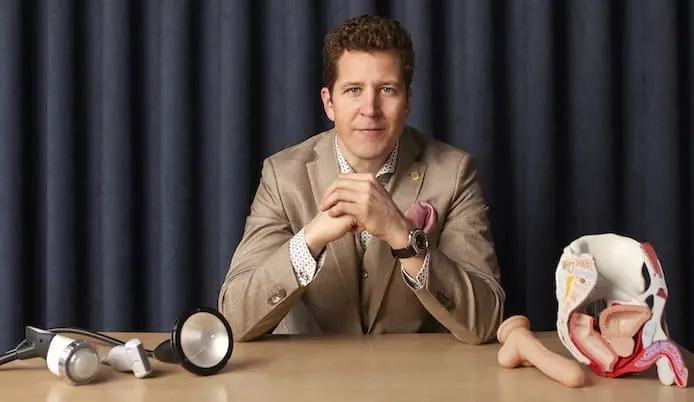
You meet Michael directly in the clinic, so assessment, explanation and treatment are connected from the start. This makes for a more accurate process and a more honest alignment of expectations.
Ultrasound scan for Peyronie’s, plaque and crooked penis
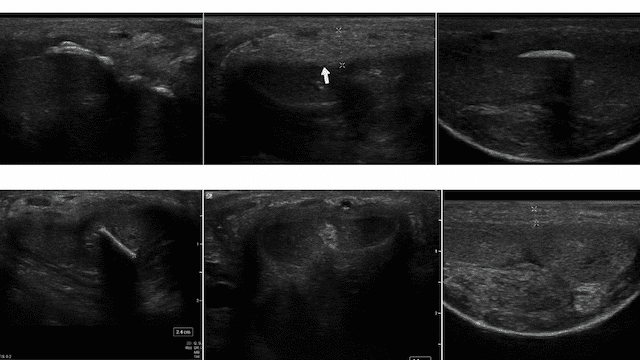
Ultrasound scanning is relevant and necessary when plaque, calcification or other structural changes in the penis are suspected. The scan can help assess where a change is located and whether there are obvious calcium deposits or tissue changes. Simply palpating with your fingers is not enough.
Ultrasound scanning is not used as an isolated checklist. With Peyronie’s, it is also necessary to understand the disease phase, pain, curvature, erection and the functional impact on you.
If erectile dysfunction is also present, a blood flow assessment may be relevant in selected cases because erectile function can influence both treatment choices and expectations.
Read more about ultrasound for Peyronie’s, plaque and erectile dysfunction.
Different types of peyronies on ultrasound
Targeted treatment of Peyronies at MS Insight
Peyronie’s is not just a visible deformity. It’s a tissue change that can develop differently from person to person. Some experience primarily pain and tenderness. Others get obvious curvature, notching, shortening or a hard plaque. In some, the erection is affected at the same time.
At MS Insight, we work with Peyronies based on an individual assessment of:
- Whether the condition is in active or stable phase.
- Whether there is pain with erection.
- Whether plaque or calcification can be identified.
- How much curvature affects sex and function.
- Whether the erection is stable and sufficient.
- What you want to achieve with a program.
We use focused shockwave as a non-invasive treatment targeting pain, plaque, curvature and hourglass shape.
Recent clinical studies also suggest that men may experience improvements in pain, plaque-related symptoms and curvature after shockwave treatment. This does not mean that everyone gets the same result or that every curvature can be corrected without surgery.
This means that shockwave and EMTT are a real and professionally relevant treatment option when chosen based on a thorough assessment.
The number of treatments depends on the specific case, but generally ranges from 8-15 treatments with an interval of 5-10 days between each treatment.
If you are traveling from afar, we can create more compressed and intensive peyronie’s treatment courses.
Shockwave for Peyronie’s – more than pain relief alone
Focused shockwave is a non-invasive technology where acoustic impulses are targeted to the affected tissue. For Peyronie’s, the treatment is used to focus on pain, tissue reaction and plaque-related changes.
Pain relief is the area where the evidence has traditionally been strongest. However, recent research also provides a more nuanced picture of the treatment’s potential.
In a 2026 prospective study of 112 men with Peyronie’s, patients received three ESWT sessions.
The study reported:
- Pain relief in 90% of patients.
- Improvement of curvature in 57.1%.
- An average reduction in curvature of 30 degrees among responders.
- Clinically relevant improvement in erectile function in 26.2% of patients who also had erectile dysfunction.
A 2024 systematic review and meta-analysis also found that shockwave was associated with a higher proportion of men with plaque reduction, curvature improvement and pain relief than control treatment.
Choosing the right shockwave technology has a direct impact on the results you can achieve in the active and stable phase respectively. At the same time, it should also be chosen according to the type of impact on the tissue. One machine can’t do it all.
At MS Insight, only focused shockwave is used to treat Peyronie’s and we use one or more of the 3 types of shockwave in each treatment that will give you the best effect.
Treatment is targeted when symptoms, findings and treatment goals make it relevant.

Få en gratis specialist-vurdering på 15 min.
When does Peyronie’s treatment make sense?
Peyronies treatment especially makes sense when the curvature is new, painful or gradually worsens, or when there is obvious scar tissue/plaque in the penis. It also applies if the curvature affects sexual intercourse, if erection has become less stable or if you are unsure if surgery is the only solution.
At MS Insight, the assessment starts by looking at the whole problem: curvature, pain, plaque, tissue elasticity, erection quality, blood flow and any signs of nerve or vessel dysfunction. This makes the treatment plan more precise than a standardized approach where everyone gets the same treatment.
Treatment is most relevant if the goal is to work with the tissue, reduce pain, support healing and try to influence scar tissue activity without first starting with surgery. The best results for Peyronie’s disease are seen within the first 12 months from the first symptom. After that, it will require more complex treatment, but changes are still possible.
What is Peyronie’s disease?
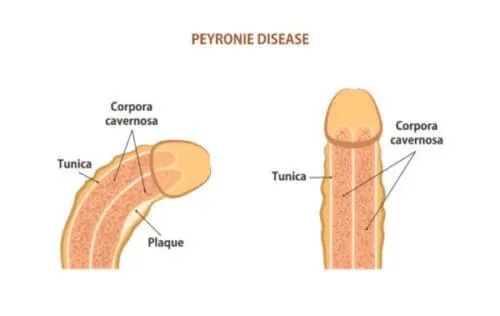
Peyronie’s disease is a condition where a localized tissue change occurs in the penis, often described as plaque or scar tissue. The change is typically located in the firm connective tissue around the swollen areas. When the penis becomes erect, this area may be less elastic than the rest of the tissue and can lead to curvature, notching, hourglass shape, shortening or pain.
Some men first notice a hard string or knot. Others notice that the penis has become more crooked during erection or that sex suddenly feels different, more difficult or painful. For some, erectile dysfunction occurs at the same time because the erection is physically affected or because pain and anxiety make it harder to be sexually confident.
It is important to distinguish between Peyronie’s disease and a penis that has always been slightly curved. A congenital or long-standing stable curvature is not the same as a recent change. If your penis has become crooked later in life, read more about crooked penis and signs of Peyronie’s.
Typical symptoms of Peyronie’s
Peyronie’s manifests itself differently from man to man. Some experience pain primarily in the beginning. Others notice a change in form or function first.
Typical symptoms can be:
- New or increasing curvature during erection.
- A hard knot, string or plaque in the penis.
- Pain with erection or during sex.
- Notch, hourglass shape or constriction.
- Perception that the penis has become shorter.
- More unstable or weaker erections.
- Intercourse that has become difficult or uncomfortable.
- Changes in the penis associated with cystic fibrosis and dupuytren’s disease.
If you’ve noticed a hard change but don’t yet know what’s causing it, read more about penile nodules and penile scar tissue or plaque.
Active or stable Peyronies – why it matters
A key question in Peyronie’s is whether the condition is still in an active phase or whether the change has become stable.
In the active phase, there may be pain, new plaque and changes in curvature or shape. Some people find that the penis gradually becomes more crooked over the months. The assessment is mainly about understanding the progression, reducing relevant discomfort and deciding whether a non-invasive treatment may be appropriate.
In the stable phase, the curvature is typically no longer clearly changing and the pain may have subsided. If the deformity continues to cause significant problems during sex, other options, including urological evaluation of surgery, may become relevant.
It is therefore not enough to simply note that the penis is curved. Disease stage, pain, plaque, erectile function and your own goals determine which plan makes sense.
Today, the disease is also referred to as degenerative and can have several active and passive phases throughout life.
Can Peyronie’s plaque be reduced or become less troublesome?
Plaque is the local scar tissue change that in Peyronie’s can make the penis less elastic and cause curvature, notching or pain during erection.
In some men, plaque may become less bothersome or feel softer after a course of treatment. Shockwave studies in Peyronie’s have reported plaque reduction in some clients, and recent clinical data suggests that plaque can be positively affected.
In the clinic, I see that some men find that plaque becomes less tender, less bothersome or changes character in connection with a targeted course of treatment. In selected men, ultrasound can also be used to monitor whether tissue changes, calcification or plaque changes over time.
However, it is important to formulate the expectation precisely: plaque cannot be promised removal, and a change in plaque does not automatically mean that the curvature will disappear. Therefore, plaque is always assessed together with pain, curvature, erection, disease phase and sexual function.
If plaque or calcification is suspected ultrasound scan at Peyronie’s may be relevant as part of the assessment.
Also read more about Scar tissue and plaque in the penis.
EMTT at Peyronies
At MS Insight, EMTT can be used as a complementary technology in selected programs. The treatment is used as a standard solution for everyone with Peyronie’s as it allows us to work more broadly with the tissue area, pain and function. It helps to increase the effect of shockwave, release growth factors, increase elasticity in the tissue and is effective in treating the pain, especially in the acute phase of Peyronie’s.
Read more about EMTT – Magnetolith.
Peyronies, curvature and erectile dysfunction
Peyronies are not just about shape. Some men also experience less stable erections, pain during erection, or concerns about curvature affecting desire and sexual confidence.
When Peyronie’s and erectile dysfunction occur simultaneously, it’s important to address both. A plan should take into account:
- Whether the erection is sufficient for sex.
- Whether pain or curvature makes intercourse difficult.
- Whether blood flow or other function should be further assessed.
- Whether sexological or relational strains have become part of the problem.
- You can read more about erectile dysfunction and impotence treatment.
Conservative options: traction, vacuum and drills
For some men, conservative measures such as traction, vacuum or guidance on relevant home efforts can be part of an overall plan. This is especially true when the goal is to work on elasticity, length, function or deformity over time.
Such measures should not be chosen randomly or used aggressively for a new and painful change without first understanding the condition. In Peyronie’s, relevance depends on disease phase, plaque, pain, curvature and motivation for a longer course, among other factors.
Read more about Peyronie’s exercises, traction and vacuum.
When might surgery be relevant?
Surgery may be relevant in cases of severe, stable curvature where intercourse is difficult or impossible and non-invasive options are not sufficient. This is especially true if the curvature is mechanically limiting and the disease is no longer actively progressing.
However, for many men, a thorough assessment of plaque, pain, erectile function and tissue condition is relevant first. This can clarify whether there is a realistic non-invasive treatment goal or whether surgical assessment should be the next step. Surgery is rarely performed on curvatures of less than 60 degrees, as the potential side effects may outweigh the benefits.
Read more about surgery for crumbling and Peyronie’s disease.
Why choose MS Insight at Peyronies?
Peyronies requires more than a general treatment for a crooked penis. It requires understanding the plaque, disease stage, pain, erectile function and the options that can realistically make a difference.
At MS Insight, you get a specialized approach where assessment and treatment are closely linked. We focus on non-invasive technologies such as focused shockwave and EMTT and use
ultrasound when it provides relevant information about plaque, calcification, or tissue changes.
It’s not about offering as many treatments as possible. It’s about choosing the intervention that makes the most professional sense for you.
You meet Michael directly in the clinic and get a plan focused on:
- To reduce pain and discomfort whenever possible.
- To work purposefully with relevant tissue changes.
- Realistically assess the possibilities for improving function and curvature.
- To identify when non-invasive treatment makes sense.
- Being honest if urological or surgical assessment should be included.
Alternative treatment methods for Peyronie’s disease
Peyronie’s treatment with vacuum pump
A vacuum pump creates negative pressure that draws blood into the swelling and stretches the tissue in a controlled manner. This oxygenates the scar tissue, prevents atrophy and maintains penis length. The vacuum pump is most effective as a daily home workout in combination with shockwave – alone it rarely removes the curvature. I will instruct you on the correct use and dosage so that the pump supports your treatment program without the risk of tissue damage.
Xiaflex for Peyronie’s disease
Xiaflex (collagenase clostridium histolyticum) is an injection treatment that chemically breaks down the collagen in scar tissue. It is approved in the US but has been withdrawn from the European market by the manufacturer and is currently not available in Denmark. Xiaflex also requires a real, defined plaque to inject into – which not everyone with Peyronie’s has. At MS Insight, we achieve comparable results with focused shockwave, which softens scar tissue biologically and without needles or side effects.
Collagenase injection for Peyronie’s
Collagenase injections are the same enzyme treatment as Xiaflex – an enzyme is injected directly into the plaque to dissolve the hard scar tissue. The treatment is typically given in series over several months with manual stretching exercises in between. Side effects can include swelling, bleeding and, in rare cases, rupture of the tumor bodies. As the treatment is not available in Europe, I recommend focused shockwave and EMTT as the most effective non-surgical alternative.
Peyronie’s new treatment
There is a lot of hype around what new treatments there are for Peyronie’s. PRP therapy is currently being marketed as a new Peyronie’s treatment, but the results from the initial studies are not positive in terms of a real effect in the tissue.
When it comes to shockwave, the latest knowledge on a new form of treatment is that several types of shockwave are used in combination with EMTT and laser treatment, which are also offered together in the clinic.
Frequently asked questions about Peyronie’s disease
Is Peyronies the same as a crooked penis?
No, it isn’t. A penis can be crooked for several reasons. Peyronie’s disease is an acquired condition where plaque or scar tissue can cause new curvature, pain, constriction or functional problems.
When should Peyronies be considered?
New or increasing curvature, pain with erection, hard areas in the penis, changes in shape, erectile dysfunction or if the symptoms affect your sex life and confidence. In general, as soon as you experience symptoms, you should get an assessment to get the best starting point for treatment.
Can ultrasound show Peyronie’s?
Ultrasound can help identify plaque, localization and possible calcifications. The scan should be seen as part of the overall assessment and cannot alone determine treatment options or expected outcome.
Can shockwave help with Peyronies?
Yes, focused shockwave may be a relevant non-invasive treatment option for Peyronie’s, especially when pain, plaque-related changes or impaired function are part of the problem. Recent studies also report improvement of curvature in some men, but the effect varies and the outcome cannot be predicted in advance.
Can shockwave reduce plaque?
Studies and the clinic’s experience show that many men experience plaque reduction or softening after shockwave treatment. However, it is not possible to promise that plaque will disappear or that a change in plaque will automatically correct curvature.
Can shockwave make the penis straighter?
In some men, studies have reported improvement in curvature after shockwave. However, the treatment should not be portrayed as a surefire method to straighten all curvature. Options depend on disease stage, plaque, degree of curvature, erection and individual treatment goals.
What is the difference between shockwave and EMTT in Peyronies?
Shockwave uses targeted acoustic impulses in the affected tissue. EMTT is a complementary technology that can be used in selected cases when a broader tissue-targeted approach is deemed relevant. At MS Insight, the combination is assessed individually.
Should I wait until the disease is stable?
Not necessarily. For pain, new plaque or changes in curvature, an early assessment may be relevant because treatment goals may be different in the active phase than later. An assessment does not mean you should automatically start treatment.
What if I also have erectile dysfunction?
Erectile dysfunction is common in men with Peyronie’s and can affect treatment choices. Therefore, erectile function should be included in the assessment, especially if sex has become more difficult or the erection less stable.
See prices and options for first assessment
Professionally prepared by Michael Strøm
This page is professionally prepared by Michael Strøm, who specializes in shockwave, EMTT and men’s sexual health. At MS Insight, you meet Michael directly in the clinic, so assessment, treatment and follow-up are closely linked from the start. The content is based on clinical experience, relevant research literature and an individual assessment model where symptoms, function, tissue, pain, erection and treatment goals are considered in context.
Professional basis for shockwave at Peyronies
Focused shockwave is used internationally as a non-invasive treatment option for Peyronie’s. And over the last 10 years, many studies have been published in the field.
The most well-documented treatment goal has traditionally been the relief of pain in the active phase, but recent clinical research also indicates potential for improving plaque-related changes and curvature in selected patients.
One of the most recent studies is a prospective study from 2026 involving 112 men with Peyronie’s who were treated with three sessions of ESWT. The study reported pain relief in 90%, improvement in curvature in 57.1% and clinically relevant improvement in erectile function in 26.2% of men with concurrent erectile dysfunction.
Another systematic review and meta-analysis from 2024 of seven controlled studies with a total of 475 men showed that the shockwave group had a higher proportion of patients with plaque reduction, curvature improvement and pain relief than the control groups.
The European Association of Urology currently recommends ESWT for pain in the active phase of Peyronie’s as a primary treatment.
At MS Insight, Shockwave is therefore used as a professionally relevant option in peyronies for both plaque, pain and curvature reduction.
References:
Saitta G, Trovato R, Striano V, et al. Extracorporeal shock wave therapy (ESWT) in the treatment of Peyronie’s disease: our initial experience. Archivio Italiano di Urologia e Andrologia. 2026;98(1). DOI: 10.4081/aiua.2026.14737.
Li G, Xu X, Man L. Low-intensity extracorporeal shock wave therapy for Peyronie’s disease: a systematic review and meta-analysis. BMC Urology. 2024;24:217. DOI: 10.1186/s12894-024-01607-4.
European Association of Urology. Guidelines on Sexual and Reproductive Health: Penile Curvature and Peyronie’s Disease. EAU guideline chapter.
I will get back to you within 12-24 hours.
Get a no-obligation consultation about peyronie’s disease treatment today
Er du interesseret i at høre mere om, hvordan vi kan hjælpe dig, er du altid velkommen til at kontakte os på telefon: 41 40 08 58 eller mail: michael@msinsight.dk. Otherwise, fill out the contact form with your details and a brief description of your problem. I’ll get back to you quickly with a customized solution proposal so we can find the best way forward together.