

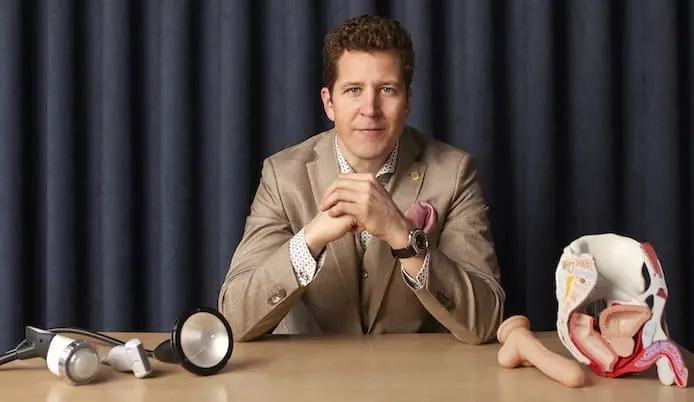
Written and medically reviewed by Michael Strøm
International speaker & expert in shockwave and EMTT treatment for erectile dysfunction, Peyronie’s & CPPS. Read more about me
Testosterone and impotence: Can low testosterone cause erectile dysfunction?
When the erection weakens or the sex drive decreases, many men are quick to think of testosterone. This is understandable. Low testosterone can be part of the explanation for some men, especially if there is also a noticeable decrease in desire, fewer morning erections, lower energy or other symptoms consistent with hormone deficiency.
But erectile dysfunction is far from always caused by hormones. Blood flow, medication, diabetes, previous illness, surgery, nerves, stress, pelvic floor and relational factors can also play a significant role. Therefore, it rarely makes sense to reduce the problem to a single blood count.
At MS Insight, the aim is not to conclude that testosterone is the problem before the overall situation is assessed. The goal is to help you understand if the hormone track is actually relevant or if your symptoms should probably be assessed more broadly.
Are testosterone and impotence related?
Low testosterone can contribute to erectile dysfunction, especially when accompanied by decreased sex drive, libido and other symptoms of testosterone deficiency. But erection also depends on blood flow, nerve function, tissue, medication, health and psychological factors. Therefore, testosterone deficiency cannot be determined by erection alone. If suspected, relevant symptoms should be assessed along with repeated morning blood tests and the overall clinical context.
If you primarily have problems getting or keeping an erection, you can read more on the erectile dysfunction and impotence treatment page, where we go through the different possible causes and relevant next steps.
In this article
- Can low testosterone explain your erection problems?
- Typical symptoms of low testosterone – and what they don’t say on their own
- When do blood tests make sense?
- Grey zone values: Why the numbers need to be interpreted in context
- When testosterone isn’t the whole explanation
- How the hormone trail relates to erectile dysfunction diagnosis
- Testosterone therapy is not a treatment for all erectile dysfunction
- What can you pay attention to yourself?
- An overall assessment makes more sense than one blood count
- Can low testosterone cause impotence?
- Can you have erectile dysfunction with normal testosterone?
- When should testosterone be measured?
- Is one low testosterone test enough to make the diagnosis?
- Does testosterone treatment always help with erection?
- Can ultrasound show if my testosterone is low?
Can low testosterone explain your erection problems?
Testosterone is important for men’s sexual function, but the connection is more nuanced than often portrayed. The hormone is particularly important for sex drive, sexual interest and overall response to sexual stimulation. If testosterone levels are low, some men may therefore find that desire disappears, initiative decreases or morning erections become less frequent.
However, the erection itself is dependent on several systems working together. Blood vessels must be able to dilate, nerve impulses must travel, tissues must respond, and the body must be sufficiently relaxed for the erection to occur and be sustained.
This means that a man can have normal testosterone and still have significant erection problems. Conversely, a man with low testosterone may well have other concurrent factors that are more important for his erection than hormone levels alone.
The European Urological Guidelines describe testosterone deficiency as a diagnosis that requires both relevant symptoms and documented low testosterone when properly measured. So it’s not enough to have erectile dysfunction or one low blood count.
Typical symptoms of low testosterone – and what they don’t say on their own
Erectile dysfunction can be part of the picture with low testosterone, but suspicion becomes more relevant when several symptoms occur simultaneously.
Signs that can make the hormone trail relevant include:
- Decreased sex drive or significantly less sexual interest.
- Fewer morning erections or less spontaneous sexual response.
- Fatigue, lower energy or less drive.
- Changes in muscle mass or increased fat mass.
- Decreased mood or feeling less energetic.
The symptoms are not specific to testosterone deficiency. Poor sleep, prolonged stress, depression, obesity, diabetes, chronic illness, medication and low physical activity can paint a similar picture. That’s why it’s important to look at the symptoms in context rather than drawing conclusions based on a single sign.
The difference between desire and erection is particularly important. You can have reduced desire without significant problems with erection. You can also have good desire but still experience erectile dysfunction due to blood flow, medication, nerve damage or other physical conditions.
If you have mostly experienced changes in desire, you can also read more about libido and menopause in men.
When do blood tests make sense?
Blood tests may be relevant if the erectile dysfunction is accompanied by symptoms that suggest low testosterone. For example, a significantly reduced sex drive, lack of morning erections, unexplained fatigue or other persistent changes in sexuality and energy levels.
Testosterone varies throughout the day and is affected by factors such as sleep, illness, nutrition and stress. Therefore, it is recommended that testosterone is measured in the morning, preferably fasting, and that a low result is confirmed by a new measurement on a different day. Both the European Association of Urology and the Endocrine Society emphasize that diagnosis requires symptoms along with persistent low values – not just one abnormal test result.
If testosterone deficiency is suspected, it will typically be relevant to talk to your doctor about which tests should be included. Depending on the situation, this may include:
- Total testosterone.
- Optionally calculated free testosterone and SHBG.
- LH and FSH to assess whether the impact could be from the testicles or hormone regulation.
- Prolactin in case of decreased desire or suspected secondary hormone effects.
- Other relevant tests based on health, medication and symptoms.
At MS Insight, we do not perform medical hormone therapy. If your symptoms point to a hormonal issue, we will help you understand why it should be investigated further and what is relevant to discuss with your GP or a relevant specialist.
Grey zone values: Why the numbers need to be interpreted in context
Many men become unsure when a blood test shows a value close to the lower limit. Is testosterone that low? Is it the cause of erectile dysfunction? And does it mean that hormone therapy is the right solution? Is it a sign of male menopause?
You can’t tell from the number alone.
According to the EAU, total testosterone below approximately 12 nmol/L together with relevant symptoms is used as an important diagnostic landmark in late-onset hypogonadism. At the same time, free testosterone assessment may be relevant in selected situations, for example where SHBG affects interpretation. However, threshold values should be assessed by a physician in the context of symptoms, repeated measurements, medications, weight, illness and fertility wishes.
It’s also important to understand that low testosterone can be secondary to other conditions. Obesity, sleep apnea, chronic illness, certain medications and effects on the hormone axis can be relevant parts of the explanation. Therefore, the goal should not just be to “raise testosterone”, but to understand why it is low and whether it actually explains the symptoms.
Testosterone therapy should not be initiated without medical evaluation. It may be relevant in cases of documented testosterone deficiency with symptoms, but requires assessment of fertility wishes, blood count, prostate conditions and other contraindications.
When testosterone isn’t the whole explanation
Some men seek help because they think that a lower erection must be due to decreased testosterone. But if desire is still present but erections are unstable, short-lived or insufficient, other explanations may be just as relevant.
Erectile dysfunction can be related to, among other things:
- Reduced blood flow.
- Diabetes or cardiovascular risk factors.
- Side effects from medication.
- Previous surgery, disease or neurological impact.
- Peyronie’s disease, scar tissue or changes in penile tissue.
- Stress, performance pressure or relational issues.
- Pelvic floor problems or pain.
The crucial question is therefore not only: “Is my testosterone low?” It’s also: “What best fits my symptoms and what should be assessed further?”
If pills like Viagra or Cialis work intermittently or insufficiently, this is not in itself evidence of testosterone deficiency either. It may be a sign that the problem should be assessed more broadly. Read more about erectile dysfunction and pills and PDE-5 inhibitors.
How the hormone trail relates to erectile dysfunction diagnosis
At MS Insight, the assessment does not start with an assumption that one particular treatment is the right one. Erectile dysfunction can have multiple concurrent causes, and the hormone trail is only one part of the overall assessment.
If your symptoms suggest low testosterone, blood tests and medical assessment may be an appropriate next step. If your symptoms point more towards altered blood flow, tissue changes, Peyronie’s, post-surgery sequelae or other structural conditions, ultrasound scans can help make the assessment more accurate in selected cases.
Ultrasound is not used to diagnose testosterone deficiency. However, it may be relevant if there is a need to assess anatomical or tissue conditions that may affect erections.
This way, the assessment is not a choice between “hormones” or “physical cause”. For some men, several factors are present at the same time. This is where a more systematic approach can be valuable.
Testosterone therapy is not a treatment for all erectile dysfunction
Testosterone therapy may be relevant for men who have symptoms and documented testosterone deficiency. This does not mean that the treatment is generally the solution to impotence or unstable erections.
If the erectile dysfunction is primarily due to blood flow, nerve damage, medication, surgery, structural changes or psychological factors, hormone therapy will not necessarily address the main cause. Some men may also have both hormonal and non-hormonal factors at the same time.
It is therefore important that any testosterone treatment is medically assessed and not chosen as a quick fix for a complex symptom. At MS Insight, our role is to help you understand the pattern of symptoms and, when appropriate, point you towards medical investigation of the hormone pathway.
What can you pay attention to yourself?
Sleep, weight, physical activity, medication, alcohol, stress and chronic illness can all affect sexual function and testosterone levels. This doesn’t mean that all erectile dysfunction can be solved with lifestyle changes, but it does mean that these factors may be relevant to include in the overall assessment.
Especially if the symptoms are new, increasing or accompanied by significantly reduced desire, low energy or other physical changes, it makes sense to get a more accurate assessment rather than just trying random solutions.
An overall assessment makes more sense than one blood count
Low testosterone can be part of the explanation for erectile dysfunction, but it’s rarely wise to draw conclusions until symptoms, blood tests and other possible causes are considered.
At MS Insight, you meet Michael directly in the clinic. The assessment is based on your symptoms, function, relevant health conditions and what realistically makes sense as a next step. If the hormone trail is relevant, we help you understand what you should take to your GP. If the problem points in a different direction, the assessment can be used to avoid you spending time on a solution that doesn’t fit the cause.
Next steps
If you are unsure whether your erectile dysfunction is due to testosterone, blood flow, medication, nerves or several factors at once, you can start with a confidential assessment at MS Insight.
Read more about erectile dysfunction and impotence treatment, or contact the clinic to see if a more thorough assessment makes sense in your situation.
Testosterone FAQ
Can low testosterone cause impotence?
Yes, low testosterone can contribute to erectile dysfunction in some men, especially if there is a decreased sex drive, fewer morning erections or other symptoms of testosterone deficiency. But impotence isn’t always caused by hormones.
Can you have erectile dysfunction with normal testosterone?
Yes, you can. Erectile dysfunction can be caused by blood flow, medication, diabetes, nerves, previous surgery, tissue changes, stress or performance pressure, even if testosterone levels are normal.
When should testosterone be measured?
If erectile dysfunction is accompanied by decreased desire, fewer morning erections, low energy or other relevant symptoms, blood tests may be relevant. Testosterone should usually be measured in the morning and repeated if the result is low.
Is one low testosterone test enough to make the diagnosis?
Answer. The diagnosis of testosterone deficiency requires relevant symptoms along with repeated low morning readings and medical assessment of the cause.
Does testosterone treatment always help with erection?
The answer is no. Testosterone therapy may be relevant for documented testosterone deficiency, but it does not necessarily solve erectile dysfunction that is primarily caused by blood flow, medication, nerves, surgery or psychological factors.
Can ultrasound show if my testosterone is low?
Answer. Testosterone is assessed with blood tests and medical evaluation. Ultrasound may be relevant in selected cases to assess tissue, structural conditions or blood flow if the erectile dysfunction warrants it.
Would you like a specialist assessment of your situation?
You don’t have to figure it out alone. Call directly or write a few lines about your symptoms – I’ll get back to you within 12-24 hours with a concrete suggestion for the next step.