
Michael Strøm
Expert in shockwave for Peyronie's & international speaker.
In this article
- Congenital curvature or Peyronie’s disease?
- Penile curvature in 2026: What you should know before choosing treatment
- Specialised treatment of penile curvature without side effects
- Surgical methods: How surgery for penile curvature is performed
- Side effects and risks of surgery for penile curvature
- The process: Before, during and after surgery
- How much does surgery for penile curvature cost?
- Before you decide: 7 questions that should be clarified
- Already had surgery? Rehabilitation after surgery for penile curvature
Congenital curvature or Peyronie’s disease?
The most important question is whether the curvature has always been there or whether it has developed later. That determines everything that follows:
| Congenital curvature | Peyronie’s disease | |
|---|---|---|
| Onset | Noticeable from puberty | Later in life, typically 40-60 years |
| Development | Stable throughout life | Increases over 1-18 months |
| Pain | No | Often during erection in the active phase |
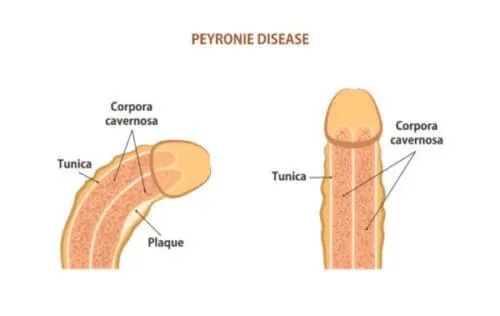
| Plaque/lump | No | Yes – scar tissue in different places in the penis |
| Other signs | Mainly curvature | Indentation, hourglass shape, shortening |
| Non-invasive treatment | Limited, but possible | Highly effective with early intervention |
| Surgery | With severe functional impairment | With stable, significant curvature |
If the curvature is new or increasing, it points towards Peyronie’s disease – and then there is something to treat before you even need to consider surgery, with the potential side effects that may involve.
Penile curvature in 2026: What you should know before choosing treatment
In the video, I go through the most important things men are typically not told before they make the decision – and why timing matters more than the choice of method itself.
Specialised treatment of penile curvature without side effects
As a specialist in curved penis (penile curvature), I offer targeted treatment that addresses the root of the problem. Based on thousands of treatment courses, I combine advanced diagnostics with different forms of focused shockwave to correct the curvature and relieve pain – entirely without surgery. Every week I help men achieve less curvature and better sexual function.
- Diagnosis of penile curvature
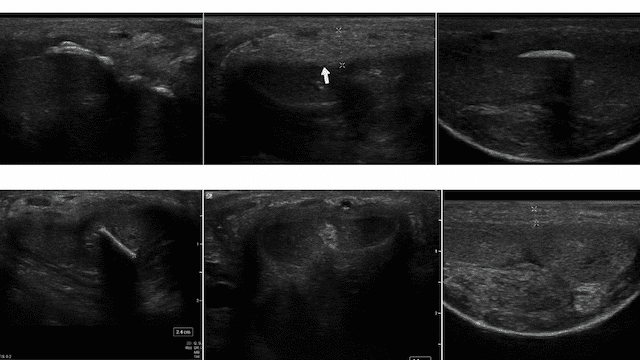
The first step is to understand your curvature. We go through your history and perform an advanced ultrasound scan of the penis. Here I find exactly the piece of scar tissue (plaque) or structure that pulls the penis crooked and assess the blood flow. This ensures that we target exactly where the curvature starts. - A plan against the curvature
No two curvatures are the same. Based on the scan, I choose the shockwave technology best suited to break down your particular type of tissue. We make a plan that takes into account both the physical changes and your lifestyle to ensure the best result. - Treatment of the tissue
A typical course for penile curvature consists of 8-15 sessions. We treat 1-2 times a week with a combination of focused shockwave and EMTT. The aim is to soften the hard tissue so the penis can give and straighten out again. Alongside this, you do exercises at home. Many notice the first improvements after just 4-6 weeks. - Follow-up & results
Correcting a curvature takes time, as the tissue needs to heal and adapt. Even when treatment stops, the body continues to work for up to 9 months. I follow you closely during the first year with regular follow-ups and new scans if you wish, so we make sure you reach your goal of a better sex life.
Do you have questions? Call me directly on +45 41 40 08 58 for a no-obligation assessment.
If the curvature is stable and so significant that intercourse is difficult, surgery may be the right way forward. I go through it honestly below – even though I do not perform the procedure myself.
Surgical methods: How surgery for penile curvature is performed
During the operation, an artificial erection is created by filling the erectile bodies with saline, so the surgeon can see the point of greatest curvature precisely. After that, the method depends on the degree of curvature and your erectile function:
Plication (counter-sutures)
The standard method for most curvatures. The surgeon makes an incision and places strong folding sutures in the connective tissue sheath on the opposite side of the curvature, so the pull is balanced and the penis is straightened. The skin sutures are dissolvable, while the internal plication sutures are permanent in many departments and can be felt as small knots under the skin. The operation takes approx. 1 hour and is typically performed as day surgery – under local, spinal or general anaesthesia depending on the department.
Important to understand: The plaque is not removed – the curvature is corrected by shortening the healthy side. The penis therefore loses length.
Graft (tissue insertion)
With very pronounced curvature or hourglass deformity, the surgeon can instead cut into the scar tissue itself and insert a piece of replacement tissue. The method preserves more length but carries a higher risk of subsequent erection problems and is therefore typically only used with good erectile function and complex deformities.
Penile prosthesis
If there are also severe erection problems that do not respond to other treatment, a penile prosthesis can solve both – the prosthesis straightens the curvature and replaces the erectile function. It is the most invasive option and is irreversible.
The operation does not improve the ability to get an erection (except a prosthesis) – it corrects the shape so that intercourse becomes possible again.
Side effects and risks of surgery for penile curvature
This is the part you need to know before you decide – the figures come from the Danish hospitals’ own patient information:
- Shortening of the penis – certain. Plication shortens the healthy side; typically up to approx. 1-2 cm, more with large curvatures. For some men it is a detail, for others it hits their self-image hard.
- No guarantee of a completely straight result. The hospitals themselves put it this way: The aim is a functional result, not a perfect one. 50-75% achieve satisfactory correction – conversely, 25-50% do not, and some develop a new curvature of the penis that requires re-operation.
- Infection and haematoma: approx. 3-4% risk.
- Knots under the skin: The permanent plication sutures can be felt – in some cases with long-lasting tenderness, and scar tissue formation on the penis can in rare cases become chronic.
- Reduced sensitivity: Sensitivity in the skin and head of the penis may be reduced for up to 6 months after the operation – in a few cases permanently. (Here shockwave may help.)
- Erection problems: The procedure can affect blood supply and nerves, especially with the graft method.
- Re-operation: The correction may fail or a new curvature may develop, making a new operation necessary – the hospitals mention this risk explicitly themselves.
As Peyronie’s is a degenerative disease, new changes can occur after the operation that may cause the penis to become curved again.
In the clinic, I have over the years treated more than 50 men after surgery for penile curvature. Many came because the result did not live up to what they had been promised – more pain, more shortening than expected or new erection problems.
The recurring pattern: They did not feel fully informed before the procedure. That is exactly why this page exists.
The process: Before, during and after surgery
- Referral and preliminary examination: In the Danish public system, surgery requires a referral from your GP to a urology department. A practical tip from the urologists themselves: Bring photos of your erect penis taken from two angles – it shows the extent of the problem better than any description. Waiting times vary; the condition must be stable before you are offered surgery.
- Preparation: Any pause in blood-thinning medication is agreed with the doctor. Hair at the base of the penis is removed at home with a trimmer or electric shaver – never a disposable razor, as cuts in the skin increase the risk of infection and can cost you the operation.
- The procedure itself: Approx. 1 hour, typically day surgery. Local, spinal or general anaesthesia depending on the department.
- The first days: The foam dressing is removed the next day, after which only a small plaster is used. Discolouration and swelling are normal and fade like a bruise over 1-6 weeks. Wear tight-fitting underwear with the penis positioned up against the abdomen – this reduces swelling and pain. Take paracetamol at night for the first 2-3 weeks; nocturnal erections can hurt, but they do not damage the wound. Showering is fine the next day; baths and swimming pools are not recommended for the first 10-14 days.
- Activity and work: Rest for the first 24 hours. Avoid hard physical work for 1 week and sport, cycling and heavy lifting for 14 days. Sick leave is rarely necessary for office work – for physical work typically 2-7 days.
- Sexual abstinence for approx. 6 weeks – the sutures must heal completely before the penis is put under strain.
- Follow-up: Varies from department to department – some discharge without follow-up, others call you in after 4-6 months. If you are dissatisfied with the result at the follow-up, bring a new photo of the curvature.
How much does surgery for penile curvature cost?
- Public hospital (Denmark): Free with a referral from your GP – subject to waiting time and the department’s referral criteria.
- Private hospital: Consultation with a urologist typically approx. DKK 1,400-1,500; the operation itself approx. DKK 22,000 under local anaesthesia and approx. DKK 27,000 under general anaesthesia (indicative prices from Danish private hospitals).
Note: The price of choosing wrongly is greater than the price of the procedure. That is why a thorough assessment before the decision is the cheapest part of the whole process.
Before you decide: 7 questions that should be clarified
- Is the curvature congenital or acquired (Peyronie’s disease)?
- Has the curvature been stable for at least 12 months?
- How large is the curvature measured in degrees – and does it actually prevent intercourse?
- How is your erectile function? (Determines the choice between plication, graft and prosthesis)
- Is there plaque, calcification or hourglass deformity? (Requires an ultrasound scan to determine precisely)
- What are your expectations for length and appearance after the procedure – and are they realistic?
- Have non-invasive options been tried or ruled out on an informed basis?
Most of the answers require an ultrasound scan of plaque, tissue and blood flow. What feels like one hard lump may turn out to be several plaque areas or tight connective tissue – and that changes both the prognosis and the choice of method. You can have that scan done with me before you talk to the surgeon.
Already had surgery? Rehabilitation after surgery for penile curvature
If you have had surgery and experience pain, tightness, shortening or weaker erections, you are not alone – and something can often be done. With shockwave, EMTT and targeted stretching/traction protocols, I work to improve tissue elasticity, tenderness and function after surgery.
My experience from 50+ operated men: The greatest improvements are seen when rehabilitation starts early. Call +45 41 40 08 58 and find out whether your case is suitable.
Get a no-obligation consultation about treatment of penile curvature today
If you would like to hear more about how we can help you, you are always welcome to contact us by phone: +45 41 40 08 58 or email: michael@msinsight.dk. Alternatively, fill in the contact form with your details and a short description of your problem. I will get back to you quickly with a tailored proposal for a solution, so together we can find the best way forward.