
Written and medically reviewed by Michael Strøm
International speaker & expert in shockwave and EMTT treatment for erectile dysfunction, Peyronie’s & CPPS. Read more about me
Nerve inflammation in feet: when tingling, burning and pain affect your everyday life – and your sex life
Are you experiencing burning feet, numb toes or stabbing pain that makes it difficult to sleep, exercise or be present in intimate situations? Nerve inflammation in the feet – also known as peripheral neuropathy or polyneuropathy – affects many men. In addition to pain and sensory disturbances, it can affect erection, desire and energy. In my clinic in Copenhagen, I meet men from all over the country who have been dealing with it alone for too long. I help you with a clear explanation, a targeted plan and treatment that takes both your body and your reality seriously. It’s not something you “just have to live with” – there’s a lot we can do to reduce pain and give you peace of mind.
In this article
- What is neuritis in feet?
- Causes of neuritis in men’s feet
- Is nerve inflammation in feet dangerous? Red flags you should react to
- How to check for nerve inflammation in feet
- Treatment with me: combinations that make sense
- What can you do now?
- Frequently asked questions about Nerve inflammation in feet
- Why choose me when you have Nerve inflammation in feet?
- Take the first step – get clarity and a plan
What is neuritis in feet?
Neuritis of the feet is an umbrella term for conditions where the nerves in the feet and lower legs are irritated, damaged or hypersensitive. Sometimes it’s due to a general effect on many small nerve fibers (polyneuropathy or small fiber neuropathy). Other times it’s a localized pinching or irritation of a specific nerve – such as tarsal tunnel syndrome at the ankle or Morton’s neuroma between the toes. The common denominator is symptoms such as tingling, burning, shooting pain, numbness and in some cases muscle fatigue or weakness. Often the symptoms start in the toes and gradually spread upwards in a ‘stocking’ pattern. Small fibers convey pain and temperature, while larger fibers are responsible for vibration, posture and strength – so you can have both hypersensitivity and impaired sensation. Some also experience autonomic signs (the involuntary nerves), such as changes in sweating, cold/hot feet or dry skin. It can all fluctuate and is affected by sleep, stress, strain and footwear.
Typical symptoms of nerve inflammation in feet
- Tingling, tingling or “electric shocks” in toes and soles
- Burning pain – often worst in the evening or at night
- Sensation of walking on cotton wool or decreased sensation
- Hypersensitivity to touch, socks or duvet (allodynia)
- Cramps, restless legs or restlessness in the lower legs
- Pain that worsens after prolonged standing/walking
- Balance hesitation and insecurity on uneven surfaces
Symptoms can vary in intensity. Some have constant pain; others feel it especially with strain or at rest. Many people describe that warm duvets or tight socks exacerbate allodynia, while light cooling or freeing your feet can ease the discomfort. It’s common to wake up at night with burning or stinging and need to move your feet to relieve the discomfort. With mechanical pinching (e.g. Morton’s neuroma), there is often more defined pain in a specific area that is provoked by certain shoes or activities.
Why is it related to erection and pelvic pain?
The nervous system is connected from the foot to the brain – and to the pelvis and penis. Small fiber neuropathy can affect both the nerves that mediate pain and the autonomic nerves that control blood vessels and thus erections. Long-term nerve pain also disrupts sleep, increases stress levels and tightens the pelvic floor, which can worsen erectile dysfunction and pelvic pain. I often find that foot pain changes the way you walk, which can create tension up through the leg, hip and pelvis. When I address the nerves and strain of the foot, it often eases symptoms in the pelvis and improves sexual well-being. I also work with breathing and relaxation to calm the autonomic nervous system – providing a better foundation for desire, intimacy and a more stable erection.
Causes of neuritis in men’s feet
Metabolic causes: blood sugar and metabolism
Diabetes and prediabetes are common causes of peripheral neuropathy. Even slightly elevated blood sugar levels over time can irritate the fine nerve fibers. Metabolic syndrome (abdominal fat, high blood pressure, disturbed cholesterol and insulin resistance) also play a role. Metabolic imbalances (e.g. low metabolism) can contribute. I regularly see that better regulation of blood sugar and weight significantly reduces burning and nighttime restlessness. Be aware that certain blood sugar-lowering drugs can reduce B12 over time – it’s worth checking if you have symptoms.
Deficiency states and lifestyle
Deficiencies of B12, B1 (thiamine) and in rare cases B6 can affect the nerves. B12 deficiency can be caused by reduced absorption from the stomach/intestine or prolonged low intake; B6 can irritate nerves in both deficiency and overdose. Alcohol can cause or worsen neuropathy, especially with high and prolonged consumption. Smoking decreases blood supply to nerves and tissues. I help you identify habits that keep symptoms going – and with realistic changes that can actually be implemented in a busy life.
Mechanical causes and pinching
Nerves can be pinched locally in the foot or ankle, for example in tarsal tunnel syndrome or Morton’s neuroma. Heavy strain, repetitive impact, tight footwear or scar tissue can irritate nerves. Nerve root impingement from the lower back (sciatica-like pain) can also cause symptoms in the legs and foot. Foot shape, a sunken forefoot, stiff big toe or very narrow shoes can increase pressure on the nerve cells between the toes. I often find that a targeted change in footwear and load in combination with nerve gliding exercises reduces the intensity of symptoms.
Medicine and diseases
Some forms of chemotherapy are known to cause neuropathy. Some other drugs can rarely affect the nerves. Autoimmune diseases, kidney and liver disease, infections and viral after-effects can also play a role. If you suspect this, I will guide you on how to talk to your doctor about relevant investigations. Never change your medication without talking to your doctor – my job is to prepare you for an informed discussion.
When the cause is unknown
In some men, your doctor and I cannot find a clear cause (idiopathic neuropathy). That doesn’t make treatment hopeless. We can still relieve pain, improve function, sleep better and reduce nerve hypersensitivity. I use a combination of neuromodulation, graded loading, sleep strategies and specific daily adjustments to calm the nervous system and give you more control over your symptoms.
Is nerve inflammation in feet dangerous? Red flags you should react to
Most cases are not acutely dangerous, but you need to react quickly:
- New-onset, pronounced muscle weakness in the foot/leg or tendency to fall
- Sudden impact on bladder/gut function or numbness in the breeches area
- Non-healing wounds on the feet or signs of infection (redness, heat, fever)
- Acute swelling, redness and pain in the calf
At these signs, you should contact emergency help. Otherwise, it makes sense to get a professional assessment and a plan to slow the progression and alleviate symptoms. If in doubt, I can help you assess whether urgent medical attention is needed.
How to check for nerve inflammation in feet
Conversation and targeted screening
I start with your story: when did the symptoms start, what makes them worse/better, sleep, work, exercise, footwear, alcohol, previous injuries, medication – and how it affects sex life and relationships. I specifically ask about pelvic and back symptoms as they are often related. You’ll have time to describe your everyday life and concerns, and I’ll gather the threads into a clear hypothesis that we can investigate further.
Clinical examination of nerves, muscles and movement
I test touch (light touch, vibration, temperature), reflexes and simple force tests. I use monofilament (light pressure) and tuning fork for vibration, among other things, so we can accurately capture patterns in the sense of touch. I assess your gait, foot mobility and load – and whether there are signs of local nerve irritation or pinching. I also examine the chain up through the ankle, knee, hip, pelvis and lower back. If nerve pinching is suspected, I test for Tinel’s signs and positions that may reproduce or ease your symptoms.
Ultrasound scan of foot/ankle and nerve pathways
With advanced ultrasound, I can assess tendons, fascia, joints and soft tissue tumors, and in many cases see thickening or irritation around nerves (e.g. tarsal tunnel or Morton’s neuroma). The scan provides a precise image that supports the choice of treatment. I can also scan dynamically during movement to see how nerve and tissue slide in relation to each other, and use color Doppler when needed to assess local blood flow.
When I include medical tests
If necessary, I will advise you to talk to your GP about blood tests (e.g. blood sugar/HbA1c, B12, metabolism, kidney and liver count) and possibly nerve conduction tests. This way we get all the pieces in place, including the tests I don’t perform in the clinic. You’ll receive a clear, written summary with suggestions on what is relevant to be examined – so nothing is forgotten.
Treatment with me: combinations that make sense
I put together a program that matches your cause, your goals and your everyday life. This may include one or more of the approaches below:
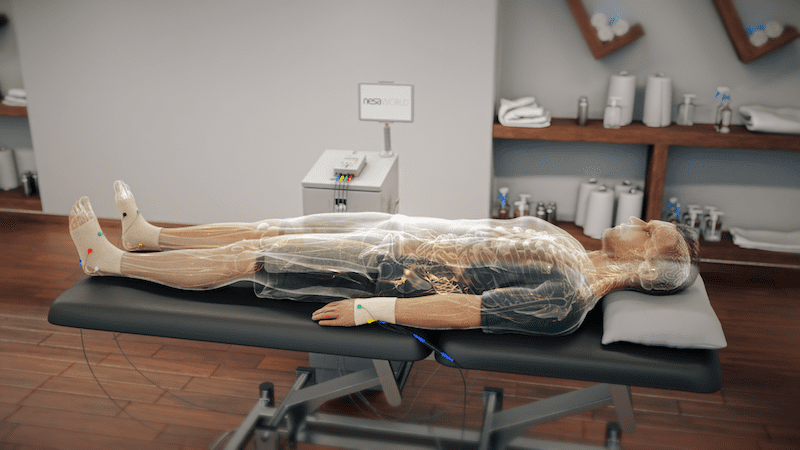
Neuromodulation to alleviate nerve pain
Neuromodulation is targeted stimulation of the nervous system to reduce hypersensitivity and pain. It can reduce burning/tingling sensations and improve sleep and function. Many describe a pleasant relief and less “alarm” in the foot after the first few sessions. The treatment is customized to your tolerance threshold and in some cases can be supplemented with a simple home remedy to maintain the effect between sessions. The goal is to calm the nerves and normalize the signals so you can use your feet more freely.
Focused sound waves and EMTT: helping mechanics and microcirculation
Focused sound waves(shockwave) can be used in selected cases for localized nerve irritation, scar tissue, Morton’s neuroma and associated conditions such as tight fascia. The aim is to stimulate the tissue healing response and improve microcirculation. EMTT (electromagnetic transduction therapy) is a non-invasive method that uses pulsed magnetic fields to support tissue and nerves in achieving better balance. The evidence is growing and in my clinical experience these techniques can be a valuable supplement when used correctly and combined with targeted training and behavioral strategies. I always set expectations with you so we know when to continue, adjust or choose a different path.
Individual foot, ankle and pelvic floor training – without provoking
I select exercises that improve blood circulation, strengthen foot stability and normalize nerve movement without triggering pain. For many, calm, graduated loading and nerve gliding exercises provide significant relief. For concurrent pelvic issues, I work gently with the pelvic floor to release unnecessary tension. Examples include gentle ankle pumps, controlled heel lifts with support, toe spreading to create space in the forefoot and simple nerve glides for the tibial/peroneal nerve. We fine-tune the dosage and pace so that the exercises feel safe and that you actually get them done.
Sleep, stress and sex life
Pain in the feet can steal sleep and energy – and affect desire and erection. I help you with concrete sleep and stress strategies to calm your nervous system. We talk openly and without taboo about how you can be sexually active in ways that respect your feet and your body while you recover. Practically, it can be fixed bedtimes, dimmed lights an hour before bedtime, simple breathing exercises in bed and agreed evenings without screens. In intimacy, small changes in posture, pace and focus on touch that don’t trigger allodynia can make a big difference to intimacy and safety.
Footwear, insoles and load management
Small changes can make a big difference: the right footwear (sufficient width, good cushioning), Morton’s neuroma relief inserts, and a plan for breaks and variation in standing/walking work. I guide you concretely so you can feel the difference in everyday life. This could be seamless, soft socks, a lightly rolled forefoot sole, a correctly placed metatarsal pad, and fixed times for short breaks to relieve pressure. We test, evaluate and adapt – so you end up with solutions you can actually use.
What can you do now?
- Keep feet warm, but avoid excessive heat directly on the skin if you have impaired sensation
- Switch to shoes with good forefoot room and a soft sole; avoid tight shoes and long periods on hard surfaces
- Limit alcohol; it can reduce both pain and progression
- Prioritize regular, moderate movement (walking, cycling); little and often is better than hard jerks
- Gently exercise the calf muscle and do circulation exercises in the ankle several times a day
- Establish regular sleep routines; pain feels worse with sleep deprivation
- Consider diets focused on stable blood sugar (vegetables, whole grains, proteins) and weight management
- Check your feet regularly for pressure marks/small wounds – especially if sensation is impaired
- Talk to your GP about blood tests (HbA1c/blood sugar, B12 etc.) if not done
Frequently asked questions about Nerve inflammation in feet
Does nerve inflammation in feet go away on its own?
It depends on the cause. For temporary irritation, symptoms may subside. For chronic conditions (e.g. diabetes), it’s about slowing progression, relieving pain and regaining function. Many experience significant improvements with the right combination of load management, training and targeted treatment. The sooner I get you seen, the sooner we can calm the nervous system.
Can neuritis cause erectile dysfunction?
Yes, it can contribute. Small fiber neuropathy and autonomic involvement can disrupt blood vessel regulation. In addition, pain, fatigue and poor sleep undermine desire and erection. When I reduce nerve pain, improve sleep and work with pelvic floor and lifestyle, many people find that their sex life becomes easier. I always include your goals and your situation so we can find practical solutions that feel safe.
Which shoes are best for nerve inflammation in feet?
Shoes with good forefoot room, soft and shock-absorbing sole and stable heel cap. For Morton’s neuroma, an insole that relieves pressure between the 2nd and 3rd toe often helps. Avoid tight, pointed or very hard shoes – and vary your footwear throughout the week. A lightly rolled forefoot can relieve pain under the footpad, and seamless socks can reduce discomfort from allodynia.
Do vitamins and supplements help?
If you have a deficiency of B12 or B1, for example, correcting it can make a significant difference. Without a documented deficiency, the effect is more uncertain. I recommend that you talk to your doctor about relevant blood tests before starting supplements. Focusing on stable blood sugar levels and a nutrient-dense diet is a safe and effective first step.
Should I rest or be active?
Both – in the right way. Nerves do best with regular, calm movement. A little daily activity, nerve gliding exercises and short breaks throughout the day are better than total rest or hard “overhauls”. I’ll help you find the amount and type of movement that reduces – not increases – symptoms.
Can focused sound waves damage nerves?
When shockwave with focused sound waves is performed correctly and on the right indications, it is generally safe. I dose based on tissue tolerance and your response. After treatment, you may be sore for a day or two; this is to be expected.
How soon will I notice the effect?
Some notice relief after a few sessions, especially on sleep and pain intensity. For longer-term neuropathy, the effect builds gradually over weeks, with the combination of treatment, exercises and everyday actions making the difference. We evaluate continuously to make sure you’re moving in the right direction.
Is it only diabetics who get neuritis in their feet?
The answer is no. Diabetes is a common cause, but far from the only one. Mechanical pinching, deficiency states, alcohol and side effects of medication are also common causes. I investigate systematically so we don’t miss anything that can be changed.
Does cold or heat help?
Some find relief with light cooling or heat. If you have reduced sensation, be careful with heat to avoid burns. I’ll guide you to safe, simple pain relief strategies at home – and how to adapt them when symptoms fluctuate.
Why choose me when you have Nerve inflammation in feet?
- I see the whole man: feet, back, pelvis, sleep and sex life – without taboos
- Advanced ultrasound scans and a thorough clinical examination
- Tailored combinations of neuromodulation, focused sound waves, EMTT and targeted training
- Practical footwear, strain, sleep and lifestyle advice you can use right away
- Safe, direct and respectful help – I know that many men prefer to “suck it up”
Take the first step – get clarity and a plan
You don’t have to walk alone with burning feet, restless legs and worries about your sex life. I’ll help you understand what’s going on and come up with a concrete plan to calm your nerves and give you more freedom in your everyday life. Contact me today for an assessment at the clinic in Copenhagen. I meet you at eye level – with professional weight, respect and focus on results that can be felt.
If you are interested in hearing more about how I can help you, you are always welcome to contact me by phone 41 40 08 58 or email michael@msinsight.dk. I’ll get back to you quickly with a customized proposal so we can find the best way forward together.
Would you like a specialist assessment of your situation?
You don’t have to figure it out alone. Call directly or write a few lines about your symptoms – I’ll get back to you within 12-24 hours with a concrete suggestion for the next step.