
Penile curvation surgery is not the first choice for those with peyronies

Curvature surgery for peyronies may be relevant for some men, especially when the curvature is stable and makes intercourse significantly difficult. But surgery is not the first or right choice for everyone.
Before considering surgery, it should be determined whether the curvature is congenital or due to Peyronie’s disease, whether it is still developing, how the erection functions and how much the problem limits sex life.
Short answer: Surgery may be relevant for stable and significant curvature, especially if intercourse is difficult or impossible.
Before surgery, disease stage, function, erection and realistic expectations should be assessed, and other non-invasive treatment options should be exhausted.
If you are not yet clear about the cause or options, you can first read about assessment and treatment of crumbling or Peyronie’s disease treatment.
- Attentive treatment in a specialized clinic for men
- Evidence-based, personalized treatment pathways
- Long-term results & lasting improvement without surgery
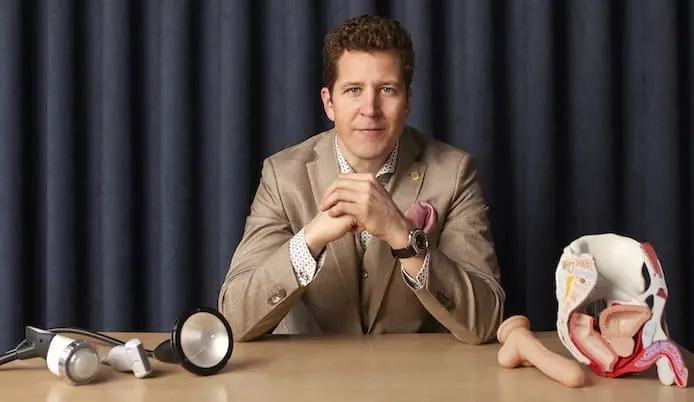
International expert in shockwave and EMTT treatment for erectile dysfunction and peyronies.
Get reduced curvature without surgery, increased length and sexual function with shockwave
Many men who suffer from crumple/peyronies at some point consider whether surgery might be the right solution for them. However, it’s important to understand what a crippling surgery involves, what consequences it can have, and why it should only be a last resort after exploring all other treatment options.
First of all, peyronie’s surgery does not remove the plaque (scarring) that has formed in the penis as a result of krummik. Instead, the surgeon attempts to straighten the curvature by either making a series of counter-stitches on the opposite side of the plaque area or by inserting a thread that attaches from the area behind the glans down to the pelvic floor.
The aim of these procedures is to equalize the pull of the tissue and thus reduce curvature, but this is often done at the expense of the length of the penis and in some cases also its functionality.
But there are other good options to try before surgery, and I can help you with that via advanced high-intensity shockwave therapy without side effects, supported by laser and EMTT. Perionies surgery should always be a last resort when other options have been exhausted.
When might surgery for crumbling be relevant?
Surgery may be relevant when a curved penis is of such a degree or shape that intercourse is very difficult, painful or not possible. This applies to both pronounced congenital curvature and Peyronie’s when the disease is stable.
In Peyronie’s, surgery should typically not be considered while the curvature is still changing or while symptoms are still in a clearly active phase. This is because the treatment goal and surgical approach may change if the deformity is not yet stable.
Before surgery: What should be clarified?
Surgery can change the shape of the penis, but the decision requires careful consideration. Before surgery, you should know the cause of the curvature, whether the condition is stable, how the erection works, and what benefits and limitations a procedure may have.
Before surgery, you should consider the following:
- Whether the curvature is congenital or due to Peyronie’s.
- Whether the curvature is stable.
- Whether you have pain or plaque.
- Whether the erection is working satisfactorily.
- Whether there is shortening, constriction or hourglass shape.
- How much sexual intercourse and sexual function is affected.
- What expectations you have for the outcome.
If the curvature is due to Peyronie’s, an ultrasound assessment may be relevant, especially if plaque, calcification or concurrent erectile dysfunction needs further assessment.
Does everyone with crumbling bones need surgery?
No, it doesn’t. A mild or moderate curvature that does not affect sex or cause pain does not necessarily require treatment. For Peyronie’s, non-invasive options may be relevant, especially when there is pain, plaque-related discomfort or an active phase where the focus is not surgery.
At MS Insight, focused shockwave and in selected cases EMTT can be included as non-invasive options when the assessment shows that it makes professional sense. In case of stable and significant functional impairment, a urological assessment of surgery may be the relevant next step.
Read more about non-invasive treatment of crumbling.
How does shockwave work for crumbs and what makes MS Insight unique with shockwave?
The focused shockwave treatment, also known as ESWT (Extracorporeal ShockWave Therapy). It works by “shooting” high-frequency sound waves via an application head into the fibrosis/plaque area. This alters the biological processes around the “ball” itself so that it breaks down into a less solid form and, in most cases, avoids a curved operation.
This means that when we affect the plaque area during the treatment, it will break down into smaller pieces and become more flexible, so that the curvature is reduced. The treatment is side-effect free and is based on basic research and specific shockwave studies. With peyronie’s surgery, there will often be a reduction in the length of the penis.
In particular, the biological processes of collagen transformation, stem cell release, cell communication and blood vessel formation are the reasons why we can use shockwave effectively for peyronies and to avoid crippling surgery.
When we combine with EMTT, it is because it has an increased general stimulation that makes the tissue more elastic and flexible. The processes that are set in motion can be enhanced by therapies such as stretching exercises, vacuum therapy and the use of penile traction devices can help to correct the curvature or bending. Choosing specific exercises will be given to you the first time you come to the clinic to ensure you understand how to do the exercises and what it can mean for your curvature in the long run.
I have 4 types of shockwave in the clinic. The advantage of having 4 types of shockwave in the clinic is that I have the opportunity to offer you a holistic course of treatment, depending on what we find on the scan, so that we get the greatest possible effect and do not just have to settle for one type, and do not go straight to a complicated operation.
Klinik MS Insight works with the best equipment on the market from Storz Medical, Elvation Piezowave and MTS Medical.
There are no other clinics offering this combination treatment in Denmark, but they offer either single standing treatments or peyronie’s surgery.
Penile curvation surgery, what are the side effects?
Regardless of the surgical method used, the penis is certain to become shorter after a curvature surgery. This is because the stitches or thread create a tighter tissue area that pulls the penis together. For some men this is a minor concern, but for others it can have a major negative impact on their self-image and sexual life.
In addition, it is important to be aware that peyronie’s surgery can cause side effects such as
Increased pain: Many people find that the pain, which in some cases was already present before surgery, worsens afterwards.
Dysfunction: Some men find that the penis feels different or has reduced sensitivity after the procedure.
Erectile dysfunction: Crippling surgery can affect the blood flow to the penis, leading to a harder or weaker erection, which can have major consequences for your sex life.
Therefore, peyronie’s surgery may not be your first choice, but for some, it may be the last resort.
Surgery for Peyronie’s disease
For Peyronie’s, surgery may be relevant if the curvature is stable and significantly affects sexual intercourse. The type of surgery that may be relevant depends on the degree of curvature, erectile function, penis length, plaque and any complex deformities such as hourglass shape or constriction.
At MS Insight, we do not perform surgical correction of curvature. Instead, we can help clarify symptoms, findings, function and relevant non-invasive options and be honest about when you should talk to a urologist about surgery.
Why get an assessment before surgery?
An assessment before surgical decision can help you understand:
- Whether the problem is due to Peyronie’s or congenital curvature.
- Whether the condition is stable enough for surgical assessment.
- Whether non-invasive options can still be relevant.
- Whether erectile dysfunction should also be investigated.
- What you can realistically expect from different treatment paths.
The goal is not to keep you from surgery if it is the right option. The goal is to ensure that the decision is made on an accurate and informed basis.
How does the first consultation take place if you need to avoid peyronies / penile curvation surgery?
When you come to the first consultation with the desire to avoid a crippling surgery, I will go in-depth with you about the whole issue, both with physical and psychological effects.
The first consultation is structured as follows to explore the possibilities of avoiding peyronie’s surgery.
- We talk about how the whole situation affects you on a psychological and sexual level.
- We talk about your general health, whether there is a family history of fibrotic disease and the impact the condition has on your erectile function.
- We take a body composition measurement and body balance and health screening with the Inbody770 system. Read more further down.
- I do a series of ultrasound scans that will explain to you the reason why the curvature is there, as well as seeing to what extent it affects tissue quality and blood flow as a whole. I also see the size of any structures inside the penis, so I know how best to treat it to avoid curvature surgery.
- We talk about your expectations for the treatment and what level we expect to be able to move you to based on the survey results and your overall health and motivation to do home exercises instead of having peyronie’s surgery as a first choice.
- We do the first treatment with shockwave and EMTT if you want to start treatment according to the agreed protocol.
We’ll go in-depth to ensure that I can implement the right treatment strategy to restore quality to your sex life and do everything possible to avoid a crippling operation.
You can always call me at 41400858 for a no-obligation conversation and guidance on how to avoid peyronie’s surgery in a gentle way.
Experiences of men with penile curvation surgery I have treated in the clinic
Over the past few years, I’ve treated over 40 men who have undergone cummerbund surgery. Unfortunately, a large proportion of them have experienced worsening of their symptoms, including increased pain, shortening of the penis and severe erectile dysfunction.
Many of them have said that they were not fully informed of the consequences before they agreed to the surgery. It has affected them deeply psychologically as men.
That’s why it’s crucial to make a considered decision and explore other treatment options before choosing a surgical solution.
Get a second opinion – free phone call to avoid peyronie’s surgery
If you are considering crumb surgery, I would strongly recommend that you get a second opinion to make sure you have all the information you need to make the right choice for you.
I offer a free phone call where we can go through your options together and find the best way forward for you. Book a free consultation here on this page.
If you choose shockwave as your treatment course instead of surgery, it will usually consist of 10-15 treatments of high-intensity focused shockwave and EMTT guided by ultrasound scanning.
In the initial phase of peyronies, when plaque and fibrosis are not fully developed, I have the opportunity to significantly limit scar tissue formation so that the problem can be avoided or reduced in the long run.
Once the scar tissue and fibrotic mass is formed, it requires higher intensity and more advanced equipment, which I am one of the few in Europe to have at my disposal.
This comprehensive treatment concept is not seen elsewhere in Europe or in the Nordic public system, which otherwise primarily offers surgery in the form of peyronie’s operation.
Find out if surgery is relevant
If you’re unsure if surgery is the right path, you can start with a confidential assessment of curvature, function and possible causes.
Read about crumb treatment and assessment Read about Peyronie’s disease treatment See prices and assessment options
Michael Strøm
This page is professionally prepared by Michael Strøm, specialist in shockwave, EMTT and men’s sexual health. At MS Insight, you meet Michael directly in the clinic, so assessment, treatment and follow-up are closely linked from the start.
The site is based on clinical experience from MS Insight, relevant research literature and an individual assessment model where symptoms, function, tissue, blood flow, nervous system and treatment goals are considered in context.
Frequently asked questions about crumb surgery
When is surgery relevant for crumbling?
Surgery may be relevant for stable and pronounced curvature that makes intercourse significantly difficult or impossible.
Can I try non-invasive treatment first?
For Peyronie’s, non-invasive options may be relevant for some men, especially for pain or plaque-related discomfort. However, for very pronounced stable curvature, surgical assessment may be necessary.
Does MS Insight perform surgery for crumbling?
Answer. MS Insight works with assessment and non-invasive options. If surgery is deemed appropriate, you should be referred for urological assessment.
Can ultrasound be relevant before surgery?
Yes, in Peyronie’s, ultrasound can help assess plaque, calcification and relevant tissue conditions. For concomitant erectile dysfunction, further assessment of function may also be relevant.
How is treatment done to avoid crumbling surgery?
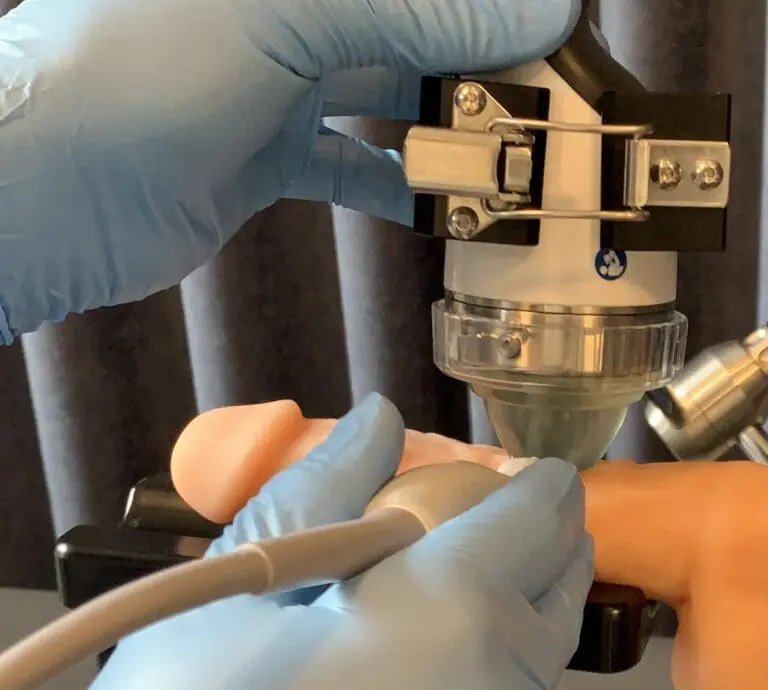
The actual treatment to avoid curvature surgery involves applying a gel to the penis where the fibrosis is located, and I then send sound waves/shockwaves into the area with plaque or fibrosis that I have identified on the ultrasound scan.
The treatment may feel like pins and needles, but is not painful as it often is after a peyronie’s operation. In rare cases, a slight soreness may be felt after treatment. You can use your penis as normal throughout the treatment and have all the sexual activity you want.
I work with several types of focused shockwave in the clinic, which allows us to target your exact needs and hit plaque with 1-2 mm accuracy depending on the choice of equipment.
Treatment to avoid crippling surgery will always be supported by ultrasound scanning, otherwise we cannot be sure that we are hitting the right structures and not wasting time or money on ineffective treatment.
Treatment options may also include medication, therapy, surgery or a combination of these. Medication can be used to reduce pain and reduce further plaque formation to avoid peyronie’s surgery.
Initial interview and first examination in Peyronie's disease
You can always call me at +4541400858 for an informal chat and guidance on Peyronie’s disease.
Why is it important to have an ultrasound scan if Penile curvation/Peyronie's is suspected?
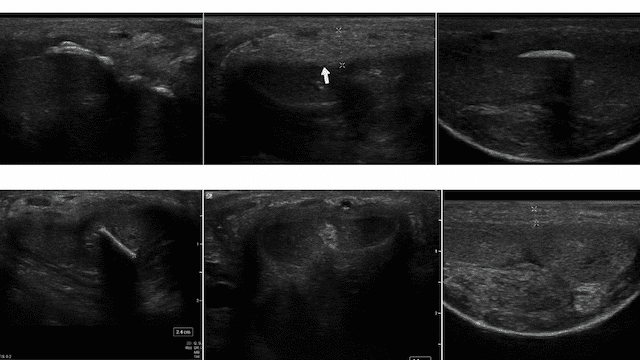
In order to determine the degree of fibrosis/plaque, it is necessary to perform an ultrasound scan, it is not enough to “just” feel. If no scan is performed, there is a possibility that important structures may be missed that could affect further treatment or ultimately necessitate a complicated surgery.
For example, what feels hard, like a “plaque” may be the connective tissue that is affected. It could also be that there are several pieces of plaque, not just one. You can’t always feel it. It can be seen with the ultrasound scan or if you open the penis during a peyronie’s operation.
By doing the ultrasound scan, we ensure that we hit the right area for the subsequent shockwave treatment. Ultrasound scanning for peyronie’s is only offered by a few clinics in Denmark, and therefore I have extensive experience and knowledge about uncovering fibrosis/plaque in the penis.
It can also identify if it is the connective tissue that is tight, which is what predicts the problem. Without an ultrasound examination, it is very difficult to choose the optimal protocol and give a prognosis on the course of treatment. I will help you clarify the problem and understand the ultrasound images afterwards so that you know what to expect.
Here are some examples of different sizes of fibrosis of the penis.
Initial interview and first examination in Peyronie's disease
What are the symptoms of Penile curvation/Peyronie's disease?
The typical symptoms of Peyronie’s include a curvature or bending of the penis during erection, scar tissue or plaques under the skin, pain during erection and difficulty achieving or maintaining an erection.
Curvature can vary in degree, from mild to severe, and it can be upward, downward or sideways. Some men also experience loss of penis length or girth. It can be treated either by peyronie’s operation/krummerik surgery or with shockwave.
Peyronie’s disease, which is not congenital, can occur during life, where the cause may be due to an autoimmune reaction. Which may be triggered by small injuries to the penis during sexual activity.
This causes thickened, tender nodules to form in the swelling, causing pain and discomfort. However, the condition is completely harmless. During the inflammation phase, it is possible to reduce the pain with shockwave and EMTT, and it is possible to slow down the condition.
Whether it’s congenital or acquired later in life, mild penile torticollis causes no symptoms or pain. It only needs to be treated in cases where the degree of deviation makes sexual intercourse difficult or impossible.
The condition usually progresses in two phases:
The first phase often lasts for a year and is characterized by painful erections, while the penis starts to curve and become deformed.
In the second phase, the soreness subsides. Here, the painful areas heal up with rigid scar tissue or plaque. The result can be an hourglass-shaped penis when erect or curvature of the penis. Peyronie’s surgery will reduce it, but there is no guarantee that it won’t come back and you will have to do further crumbling surgery.
How does the disease develop?
The condition does not heal itself very often and treatment will be required. Studies have shown that 10% experience improvement after 5-10 years, 40% experience the condition as stable and 50% experience worsening over time
Congenital significant curvature of the penis is relatively rare, affecting less than 1% of men.
In contrast, Induratio penis plastica is not uncommon. Its prevalence increases with age, affecting up to 13% of the male population in varying degrees. Not everyone experiences discomfort and it is rare that the condition is so severe that intercourse with a partner becomes difficult.
As a non-invasive treatment, shockwave is the most effective. But in severe cases, surgery is the most effective treatment for the time being, and 50-75% of curvatures will be corrected satisfactorily. However, it must be at least a year from the completion of the curvature process before curvature surgery is offered. In the clinic, I see many clients who have already had peyronie’s surgery without the desired result. Here I see an improvement in the condition with shockwave afterwards.
Self-esteem and peyronies?
A man’s penis is in many cases the source of his self-esteem and who he is. If his self-image is eroding and he feels he has no greater value in who he is or what he can accomplish because his penis doesn’t look the same or do the same, it can lead to a wide range of psychological issues. This can manifest as shame and performance anxiety and, in severe cases, depression and stress.
When self-esteem disappears and he feels inferior, the desire for sex and, in the most severe cases, the ability to have sex may disappear for him. This will only create a further downward spiral that further affects his self-image and sexual function. He will have to deal with this in order to regain successful sexual functioning.
Here Michael also helps you with the psychological impact of the condition.
Can Peyronie's be cured without treatment?
Peyronies can vary in severity and some mild cases may improve or subside over time without specific treatment, but this is only seen in about 3-10% of cases. However, it’s important to note that Peyronie’s doesn’t usually go away on its own and treatment may be necessary to relieve symptoms and prevent further progression. However, we know from the studies that we have the largest open window to make a treatment difference within the first 15 months from the first symptoms.
It is recommended to consult a doctor or specialist to assess the situation and recommend appropriate treatment options.
Can Peyronie's worsen over time?
Can Peyronie’s worsen over time? Peyronies can vary in progression and course. In some people, the condition can worsen over time with increased curvature or the development of additional plaque. In others, the condition may remain stable or even improve over time. It is important to monitor the condition closely and seek treatment if symptoms worsen or affect quality of life. Early intervention and treatment can help minimize the progression of Peyronie’s.
Get a no-obligation consultation about erectile dysfunction treatment today
Er du interesseret i at høre mere om, hvordan vi kan hjælpe dig, er du altid velkommen til at kontakte os på telefon: 41 40 08 58 eller mail: michael@msinsight.dk. Otherwise, fill out the contact form with your details and a brief description of your problem. I’ll get back to you quickly with a customized solution proposal so we can find the best way forward together.