

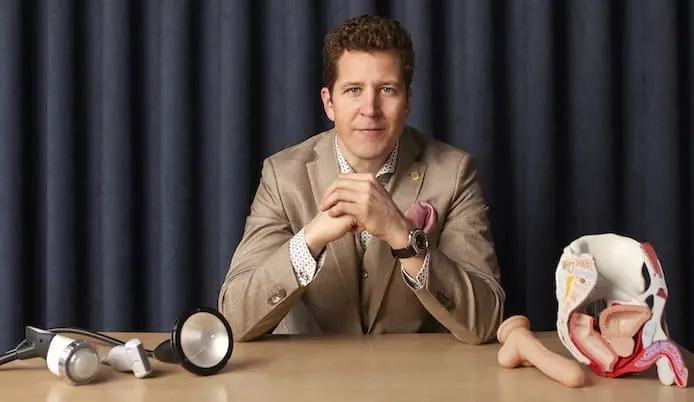
Written and medically reviewed by Michael Strøm
International speaker & expert in shockwave and EMTT treatment for erectile dysfunction, Peyronie’s & CPPS. Read more about me
Sexual dysfunction: When intimacy becomes difficult – and how I help you move forward safely
In this article
- What is sexual dysfunction?
- Common forms of sexual dysfunction
- Typical causes of sexual dysfunction – and why one solution is rarely enough
- When should you seek help?
- How I examine you – safely, thoroughly and respectfully
- Treatment in the clinic – evidence-based combinations
- Course, duration and what to expect
- Frequently asked questions about sexual dysfunction
- What makes MS Insight different?
- Next steps – get in touch today
What is sexual dysfunction?
Sexual dysfunction is a collective term for persistent challenges with erection, ejaculation, orgasm, desire or pain that get in the way of a satisfying sex life. It can manifest as erectile dysfunction (erectile dysfunction), premature or delayed ejaculation, decreased desire, pain in the penis or pelvis, curvature of the penis (Peyronie’s disease) or difficulty controlling urine during sex. Many men go it alone for far too long. You don’t have to. I specialize in men’s sexual health and offer a safe, professional and concrete way forward – without shame and without taboo.
Sexual function is an interplay between body, nerves, hormones, circulation, thoughts and relationships. When just one piece is off, the “whole system” can be affected. My job is to identify the causes and put together a targeted course of treatment that’s right for you. I emphasize taking things apart: is the desire working, but not the erection – or vice versa? Are there morning awakenings (nocturnal/morning erections) but failure to penetrate? Such details help me to identify whether the cause is primarily circulatory, nerves, pelvic floor, hormones or psychosexual factors. I work calmly, respectfully and with concrete, manageable measures that you can use from the first consultation.
Common forms of sexual dysfunction
Erectile dysfunction (erectile dysfunction)
Difficulty getting or maintaining an erection is the most common form of sexual dysfunction. It can be situational (e.g. more pronounced during penetrative sex than masturbation) or constant. Causes range from circulatory conditions and nerve interference to performance anxiety and stress. The quality of erection often tells us something about the health of the blood vessels – and deserves a thorough, respectful examination. A practical benchmark is the difference between nocturnal/morning erections and erections during sex: if nocturnal erections are preserved, it often points away from a pure circulatory cause. I use such observations actively in the assessment and organize the intervention accordingly.
Premature ejaculation
Premature ejaculation can be lifelong or occur later. It typically manifests as ejaculation within 5-30 seconds after penetration – or earlier than desired. Causes can be overactive reflex patterns, excessive pelvic floor tension, increased sensitivity or psychological factors. Fortunately, it can often be improved with specific training, neuromodulation and targeted strategies. I work with breathing and pacing, start-stop and squeeze techniques, pelvic floor relaxation and sensory “relearning” so the body gradually postpones the reflex. The goal is control without making sex a project.
Delayed or no ejaculation
When ejaculation is very delayed or absent, the causes can be medication (e.g. certain antidepressants), nerve interference, pelvic floor dysfunction or psychosexual conditions. Often a combination of regulating ejaculation “motor skills”, bodily relaxation and focused behavioral training helps. I also work on adjusting stimulation and pace to build pleasure in a way that suits your body – and with strategies to gradually reduce dependency on certain stimuli if it’s a factor.
Decreased desire (low libido)
Desire is affected by sleep, stress, relationships, hormone balance (including testosterone), medication and general health. I always distinguish between “lack of desire” and “lack of energy” – it requires different strategies. For some, it’s about creating peace and energy in everyday life; for others, it’s about removing limiting factors such as pain, worry or side effects. I work pragmatically with small changes that can actually be implemented and I help you distinguish between when the body says “can’t” and when the mind says “dare not”.
Pain in the penis or pelvis (CPPS)
Chronic pelvic pain(CPS) and pudendal nerve involvement can cause pain in the penis, scrotum, perineum, during erection or after intercourse. It can also cause sensory disturbances, burning, “burning” pain or increased urinary urgency. The nervous system and pelvic floor play a big role – and can be treated. I often find that the pain fluctuates throughout the day and is triggered by sitting still, stress or sexual activity. It’s not a sign of “weakness”, but of a nervous system that has gone into overdrive. A targeted, calm approach can reduce sensitivity again.
Peyronie’s disease (curvature of the penis)
Peyronies are caused by changes in the tissue (plaque) in the shaft of the penis, which can cause curvature, pain and erectile dysfunction. The goal in the clinic is to reduce pain, support tissue quality and improve function and comfort during sex, often as a combination of treatment and exercises. I work in a structured way with tissue tolerance, gentle mobilization and advice on how to protect the tissue in everyday life and during sex while it heals.
Urine leakage during sex
Incontinence during sex or orgasm is a taboo topic, but it’s more common than many people think. Targeted pelvic floor exercises, neuromodulation, and lifestyle changes often help. I’ll teach you to distinguish whether the leakage occurs during penetration, orgasm, or a change in position—and tailor the exercises accordingly. Simple steps like emptying your bladder before sex, adjusting your fluid intake, and better timing of your pelvic floor contractions can make a big difference.
Typical causes of sexual dysfunction – and why one solution is rarely enough
Circulation and hormones
– Atherosclerosis, high blood pressure, cholesterol and diabetes can weaken erections by affecting blood vessels and endothelial function (the vessels’ ability to dilate).
– Hormonal conditions such as low testosterone can affect desire, energy and erection quality.
– Overweight, inactivity and poor sleep aggravate hormones, blood sugar and blood vessels.
– Signs such as fewer morning wake-ups, cold hands/feet and rapid fatigue during physical activity can point to circulation and hormones as contributing factors.
Nerves and pelvic floor
– The pudendal nerve and other pelvic nerves control erection, ejaculation and bladder control.
– Too much tension in the pelvic floor can cause pain, premature ejaculation or erectile dysfunction. Too weak a pelvic floor can cause leakage and reduced power.
– Previous surgeries, cycling, tailbone falls or back problems can affect nerve function.
– Tingling, burning or worsening with prolonged sitting are classic signs that I always screen for.
Pain and CPPS
– In chronic pain, the nervous system is often “turned up” in sensitivity. It can maintain pain and erectile dysfunction even when the original irritation is gone.
– A combination of pain management, nerve modulation and gradual rehabilitation of pelvic and sexual function is typically the way forward.
– It’s not about “gritting your teeth”, but about dosing the load so that the system calms down and slowly tolerates more.
Psychosexual factors
– Performance anxiety, worries about partners, past negative experiences or stress at work can interfere with sexual response.
– The more you “push” yourself to perform, the more your body’s alarm system is activated – and the less your erection cooperates.
– A calm, concrete and shame-free approach works. I always work at eye level and give you tools that can be used immediately.
– Breathing techniques, focus shifts and simple exercises to regulate tension levels make you more present – and less trapped in your head.
Medicine and lifestyle
– Certain medications (e.g. SSRIs) can affect erection, ejaculation and desire.
– Smoking, high alcohol consumption, poor sleep and stress are classic aggravating factors.
– Everyday adjustments can be just as important as clinical treatment.
– Small, realistic steps – such as better sleep routines, more daily exercise and less nicotine – often have a quicker effect than you think.
When should you seek help?
– When the challenge has been ongoing for more than 2-3 months.
– When you worry, avoid intimacy or feel that the problem is “taking over” your everyday life.
– For pain, crookedness/curvature, sensory disturbances or urinary/semen changes.
– Sudden onset of erectile dysfunction without a clear cause – this can be an important signal of circulatory conditions that deserve attention.
– If morning awakenings disappear over time or if your curvature increases – then an assessment makes sense.
You don’t need a referral. You can contact me directly for a confidential, hands-on assessment.
How I examine you – safely, thoroughly and respectfully
Confidential conversation and targeted screening
I listen to your story and ask about symptoms, duration, health, medication, lifestyle, stress and sleep. I uncover patterns: What makes it worse/better? How do desire, erection, ejaculation and orgasm work separately? What is most important for you to improve first? When relevant, I use short, validated questionnaires and am happy to invite your partner along – if you wish. The starting point is always respect for your boundaries.
Functional examination and advanced ultrasound
I assess pelvic floor function and tension levels and examine relevant muscles and nerves. If needed, I perform ultrasound scans to look at tissues, vessels and structures in the penis and pelvis. For erectile dysfunction, I may supplement with a penile Doppler assessment to get a picture of blood flow. The examination is done calmly and discreetly, and I explain the process so you know what I’m doing – and why.
Which tests are relevant for the GP?
If there are signs of hormonal or cardiometabolic conditions, I will advise you on how to ask your GP for relevant blood tests (e.g. testosterone, long-term blood sugar, lipid profile, metabolism) and possibly a cardiovascular risk assessment. I’ll help you ask the right questions so you get the answers you need. A simple measurement of blood pressure and waist circumference can also contribute to the overall picture.
Treatment in the clinic – evidence-based combinations
I work with tailored programs, combining technologies and training to target your specific causes. The goal is not just to “put out the fire”, but to strengthen function in the long term. I prioritize a few, precise interventions at a time so you can feel what works – and stick with it.
Focused sound waves (shockwave)
Focused sound waves are used especially for vascular erectile dysfunction and pain issues. The sound waves stimulate tissue healing, blood vessel function and local repair processes. The treatment is short, well-documented for selected issues and usually has minimal side effects (slight soreness may occur). I often combine sound waves with home exercises and lifestyle advice to enhance the effect.
EMTT – electromagnetic transduction therapy
EMTT affects tissue and nerve-muscle function via fast, pulsed electromagnetic fields. I use EMTT to reduce irritation, improve tissue tolerance and support healing, for example in CPPS, pelvic floor dysfunction and erectile dysfunction, where the muscle and nerve component takes over. The treatment typically feels like gentle, rhythmic pulses and is always adapted to your tolerance.
Neuromodulation
Neuromodulation helps “turn down” overactivity in the nervous system and can reduce pain, hypersensitivity and disturbed pelvic floor coordination. It is particularly relevant for pudendal pain, chronic pain and ejaculation problems. I use both direct and indirect methods and combine with simple strategies for everyday life so that the effect lasts between sessions.
Pelvic floor: strength, control and relaxation
I teach you how to find the right balance: for some it’s about activating and strengthening, for others it’s about releasing tension and normalizing tone. I use simple exercises, biofeedback principles and breathing so you can feel the difference yourself. The focus is quality over quantity – few, precise repetitions that actually change body awareness.
Lifestyle, sleep and stress – small changes, big impact
I create a realistic plan for sleep, movement, alcohol and smoking. I give concrete advice that fits your everyday life – because what you can actually do is more important than the perfect. Small improvements in sleep hygiene, daily heart rate and recovery can measurably improve desire, erection quality and mood.
Sexual technique strategies and performance peace of mind
I teach techniques that improve erection control, ejaculation timing and pleasure – without making sex a ‘project’. You get tools to deal with performance anxiety, build desire and restore confidence in intimacy, alone and with your partner. This can include pace and focus management, communication about safe boundaries and simple exercises that bring the body into gear.
Course, duration and what to expect
How quickly do you see the effect?
– For erectile dysfunction related to circulation, gradual improvement is often seen over 4-10 weeks with a structured program of focused sound waves and home interventions.
– With CPPS and pudendal pain, I usually progress more gradually; the first signs are less pain and better tolerance in everyday life, followed by improved sexual function.
– With premature ejaculation, some can notice a change in just a few weeks with the right combination of exercises, neuromodulation and behavioral techniques.
Every man is different. I’m honest about expectations, pace and goals – and I adjust along the way to fit your everyday life.
Homework and follow-up
You get a clear plan that’s easy to follow. Typically 10-15 minutes of exercises a day, simple routines around sleep and stress – and concrete focus points for your sex life that won’t drain the romance. I regularly evaluate with you and adjust to keep the momentum going. I prefer few, measurable focus areas so you can see progress in black and white.
Side effects and safety
My treatments are gentle and well-documented for selected indications. Mild soreness or transient irritation may occur after sound waves or EMTT. I always go through the benefits and risks with you beforehand and will not treat if something is not relevant or safe for your situation. Of course, I take into account any contraindications and adapt the intervention to your state of health.
Frequently asked questions about sexual dysfunction
Is erectile dysfunction “just mental”?
The answer is no. Mental factors can exacerbate or maintain the problem, but the body almost always plays a role. I investigate both – and treat what I find. Many people experience the best effect when body and mind are addressed simultaneously.
Do focused sound waves help everyone with erectile dysfunction?
No, but for vascular causes it can be an important part of the solution. I assess relevance based on symptoms, examination and ultrasound, and I combine with other measures to increase the chance of success.
Can pelvic pain cause sexual dysfunction?
Yes. CPPS and pudendal nerve involvement can affect erections, ejaculation, sexual desire, and pleasure. I can often improve these symptoms through neuromodulation, relaxation techniques, gradual exercise, and targeted pain management.
What if I use medication that affects my sex life?
I create a strategy that takes this into account. I can advise you on how to talk to your own doctor about possible alternatives or adjustments if appropriate.
Can I train my way out of the problem?
Exercise often helps – but it needs to be precise. For some it’s about strengthening, for others it’s about releasing tension. You get exercises that fit your body and your goals.
Do you help with Peyronie’s disease?
Yes. I focus on pain relief, tissue quality, and function. The goal is a more comfortable, fulfilling sex life. If needed, I’ll guide you on which tests and options you can discuss with your doctor.
Is it too late for me?
Rarely. Regardless of age, a thorough approach almost always allows for improvement. The most important thing is that I find your path – one step at a time.
What makes MS Insight different?
– Specialized focus on men’s sexual health – with men’s everyday lives in mind.
– Advanced diagnostics, including ultrasound and functional assessment of the pelvic floor and nerves.
– Evidence-based combination therapies: focused sound waves, EMTT and neuromodulation – plus concrete tools you can use from day one.
– Safety and respect. I know that seeking help can be a daunting task. You are met without prejudice and without taboo.
– Clear direction. No fluffy advice – you walk away with a plan.
Next steps – get in touch today
If you recognize yourself in any of the above, it’s time to do something about it. Sexual dysfunction doesn’t have to define you – and you don’t have to face it alone. I offer a confidential, targeted program at my clinic in Copenhagen, where I help men from all over Zealand and the rest of Denmark on a daily basis.
Write or call and tell me briefly what you’re experiencing. I’ll work with you to find the right plan. The sooner you take the first step, the sooner you’ll feel the difference – in your body, in your peace of mind and in your sex life.
If you are interested in hearing more about how I can help you, you are always welcome to contact me by phone 41 40 08 58 or email michael@msinsight.dk. I’ll get back to you quickly with a customized proposal so we can find the best way forward together.
Would you like a specialist assessment of your situation?
You don’t have to figure it out alone. Call directly or write a few lines about your symptoms – I’ll get back to you within 12-24 hours with a concrete suggestion for the next step.