

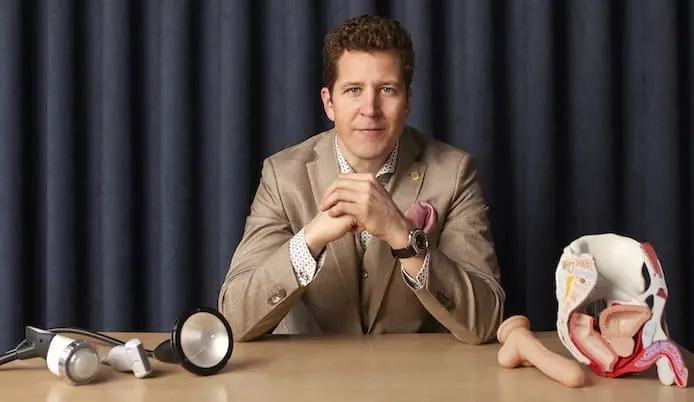
Written and medically reviewed by Michael Strøm
International speaker & expert in shockwave and EMTT treatment for erectile dysfunction, Peyronie’s & CPPS. Read more about me
Retrograde Ejaculation: understand the problem – and get targeted help
Do you experience orgasm without ejaculation, very low sperm volume or “cloudy” urine after sex? Then it could be Retrograde Ejaculation. I meet many men who are worried about fertility, erection and whether something is wrong with their body. There is often a concrete explanation. I help you understand what’s going on, calm your body and make a plan to take care of your overall intimate health – without taboos and with respect for your situation.
In this article
- What is Retrograde Ejaculation?
- Typical signs and symptoms
- Common causes of Retrograde Ejaculation
- Retrograde Ejaculation, erection and pelvic pain – how are they related?
- How is the diagnosis made?
- Treatment: what works – and what doesn’t?
- Retrograde Ejaculation and fertility
- Retrograde Ejaculation, anejaculation and low sperm volume – what’s the difference?
- Frequently asked questions (FAQ)
- When should you seek help?
- How I work at MS Insight
- Take the first step today
What is Retrograde Ejaculation?
Retrograde Ejaculation means that during orgasm, the semen flows backwards into the bladder instead of forward through the urethra. Normally, the bladder neck (the junction between the bladder and urethra) closes completely during ejaculation so that the semen can only move one way – out. In Retrograde Ejaculation, the bladder neck doesn’t close properly and the semen takes the easiest route back to the bladder. It’s not dangerous, but it can affect satisfaction, confidence and the ability to get a partner pregnant.
The condition is also called “backward ejaculation”. It is different from an ejaculation (no discharge at all). Many people retain a normal orgasmic feeling, but the actual “outlet” is missing – and this can cause insecurity. I take that insecurity seriously, because calming the nervous system is an important part of getting the body to play along.
Typical signs and symptoms
- “Dry orgasm” – orgasm with very little or no ejaculation.
- Urine that is cloudy or cloudy after orgasm (sperm in the urine).
- Low sperm volume for a longer period of time with no other explanation.
- Normal orgasm sensation or slightly altered orgasm intensity.
- Often normal erection – but some also experience erection challenges.
If you also have pain in the pelvis, testicles or around the perineum, it may be a sign of an overactive/inappropriately tense pelvic floor or nerve irritation. It can stand alone or coexist with Retrograde Ejaculation. If you experience burning, blood in the urine or fever, I always assess whether there may be other causes (e.g. infection) before I conclude retrograde ejaculation.
Common causes of Retrograde Ejaculation
Retrograde Ejaculation occurs when the bladder neck closure mechanism (controlled by the sympathetic nervous system) does not function optimally. Common causes are:
- Prostate/bladder neck surgeries, such as TURP (“peeling” of the prostate for urinary problems), open/laparoscopic procedures or procedures around the bladder neck.
- Medical treatment, typically alpha-blockers for prostate problems (e.g. tamsulosin), which lower the tension in the bladder neck and can trigger Retrograde Ejaculation.
- Nerve damage and neurological conditions, e.g. long-term diabetes with autonomic neuropathy, spinal cord injury, multiple sclerosis.
- Abdominal/pelvic surgeries, e.g. retroperitoneal lymph node dissection (after testicular cancer).
- Congenital weakness of the bladder neck (less common).
- Interacting with functional issues: overactive pelvic floor, chronic pelvic pain(CPPS) or pudendal irritation can disrupt timing, orgasm and ejaculatory reflex – and in some cases contribute to semen “backing up”.
Alcohol, stress, sleep deprivation and certain antidepressants (e.g. SSRI/SNRI) can affect the timing and force of ejaculation and cause delayed or impaired ejaculation. They rarely cause pure Retrograde Ejaculation, but can exacerbate an existing problem. I will help you get an overview of what is most likely in your situation.
Retrograde Ejaculation, erection and pelvic pain – how are they related?
Several men with Retrograde Ejaculation also experience erectile dysfunction or pelvic pain. This can be due to:
- Common nervous system: Erection, orgasm and ejaculation are controlled interactively. Disturbances in one place affect the whole.
- Medical causes that affect both nerves to the erection and bladder neck.
- Pelvic floor muscle tension that can cause pain, fatigue, decreased sensitivity and altered ejaculatory reflex.
- Psychological pressure: Worrying about “dry orgasm” can cause performance pressure, which in turn worsens erection and orgasm.
In the clinic, I work holistically: I map both the physical and functional mechanisms so that I can target my efforts – whether the focus is erection, pain, orgasm or fertility. The goal is not just “more sperm”, but an overall better sexual experience with confidence and control.
How is the diagnosis made?
Diagnosis is based on a thorough conversation, symptom profile and a few simple tests:
- History: Surgeries, medication list (especially alpha-blockers), diabetes/neurology, sperm volume over time, orgasm and urination patterns.
- Observation: “Cloudy urine” after orgasm is a classic sign.
- Urine test after orgasm: Detection of sperm in urine confirms Retrograde Ejaculation. I will guide you on how to get this test done through your GP or fertility clinic.
- Additional assessments: If needed, I use advanced ultrasound to assess the prostate, bladder neck area, seminal vesicles and pelvic floor. The aim is to rule out other causes of low semen volume while getting an overview of conditions affecting erection, blood flow and pelvic muscles.
A practical point: To avoid diluting the urine just before the test, it can be beneficial to avoid drinking large amounts of liquid just before intercourse/masturbation and only urinate after orgasm, when the urine is collected. For fertility testing, urine can be prepared (alkalinization) so that the sperm can better tolerate the environment – I typically coordinate this with the relevant clinic. If hormonal imbalances or the need for semen analysis is suspected, I will guide you on how to talk to your doctor about relevant blood tests and laboratory tests.
Treatment: what works – and what doesn’t?
The right solution depends on the cause. I’m honest about what is well-documented – and where I need to focus on optimizing what I can actually influence together with you. The goal is to increase the chance of future sperm depletion, lift overall sexual function and create more opportunities for fertility.
Medication and fertility treatments via your GP
- Medication review: If an alpha-blocker is the culprit, changing or discontinuing it (in consultation with your doctor) can often solve the problem.
- Medications that increase bladder neck closure: Some people benefit from drugs like imipramine, pseudoephedrine or midodrine. They can increase the chance of ejaculation. I will guide you on how to discuss options and contraindications with your doctor.
- Diabetes optimization: Better blood sugar control can improve nerve function over time.
- Fertility: If you want to get pregnant, sperm can be retrieved from the urine after alkalinization/preparation, or via sperm retrieval from the epididymis/testicle (PESA/TESE) at a fertility clinic. I help you understand the options and prepare the dialog with specialists.
It’s important that medication is always managed by your own doctor. My role is to clarify probable causes, describe options and sharpen your medical conversation so you can make a confident choice.
Targeted treatment in the clinic
- Functional analysis of the pelvic floor: I test strength, coordination and the ability to release tension. Overactive pelvic floor can interfere with the ejaculatory reflex, causing pain and “emptying power” issues. Individual training and relaxation can improve comfort, orgasm sensation and timing.
- Neuromodulation: Gentle nerve stimulation is used to reduce pain, normalize muscle tone and improve nerve communication in the pelvis. For CPPS and pudendal pain, it can relieve and create better conditions for orgasm/ejaculation. It is not a direct “cure” for the bladder outlet itself, but can improve overall function.
- Focused sound waves (shockwave) for erectile dysfunction: If erection is also a problem, I work with vascular optimization of penile tissue. It does not affect Retrograde Ejaculation itself, but can provide a more stable erection and better sexual experience.
- EMTT (electromagnetic transduction therapy): Used for muscular and nerve-related pain/tension in the pelvic region to reduce pain and promote tissue health.
- Sexological counseling and psychosexual well-being: I help you find peace, adjust expectations and strengthen communication with your partner. Less pressure to perform can reduce tension and improve the orgasm experience – even when semen doesn’t come forward.
It is important to be realistic: If Retrograde Ejaculation is caused by surgically altered bladder neck or severe autonomic neuropathy, there is no one mechanical “quick fix”. But I can almost always help you improve your overall sexual function, comfort and manageability – and for fertility, there are good, effective ways.
Lifestyle and self-care
- Urination schedule: For some, emptying the bladder shortly before intercourse gives a better orgasm feeling; for others, a moderately full bladder is better. I’ll help you clarify what works for you.
- Alcohol and stimulants: Hold off on sex – it improves nerve and muscle control.
- Sleep and stress management: Sleep deprivation and high stress levels inhibit erection, orgasm and ejaculation.
- Anxiety regulation: Techniques to shift focus from “will there be cum?” to pleasure and body contact can increase satisfaction and reduce tension.
- Pelvic floor training – the right way: not only pelvic floor exercises, but also the ability to let go. I teach you the correct technique.
A little tip: The color of urine can be deceiving. If you are very hydrated, your urine may look less cloudy even if there is sperm in it. Conversely, very concentrated urine can look cloudy without sperm. I take this nuance into account in the assessment.
Retrograde Ejaculation and fertility
You can be perfectly potent and have a great libido – and still have a hard time getting a partner pregnant if the sperm ends up in your bladder. Fortunately, there are solutions:
- Medical support for bladder neck closure prior to intercourse (via GP).
- Collection of sperm cells from urine after special preparation to be used for insemination/IVF.
- Surgical sperm retrieval (PESA/TESE) via fertility clinic if most appropriate.
I’ll go through the options with you, so you can confidently choose a direction and have an informed discussion with the relevant specialist clinic. The goal is to make the path to pregnancy as simple and efficient as possible – without unnecessary pressure along the way.
Retrograde Ejaculation, anejaculation and low sperm volume – what’s the difference?
- Retrograde Ejaculation: Orgasm is there, but the semen flows into the bladder. Urine is often cloudy after.
- Anejaculation: No ejaculation at all – neither forward nor backward. Causes can be neurological, medical or psychosexual.
- Low sperm volume: Little semen is coming forward. May be due to partial Retrograde Ejaculation, decreased sperm production, obstruction or short ejaculation phase.
The practical consequence: The treatment strategy is different. That’s why I prioritize precisely identifying the mechanism in your case so that the intervention hits the right spot the first time.
Frequently asked questions (FAQ)
Is Retrograde Ejaculation dangerous?
No, it isn’t. It is primarily a comfort and fertility issue. Semen is excreted in the urine and does not damage the bladder.
Can it go away on its own?
Yes, if it is caused by a medication that can be adjusted or temporary nerve damage. After certain surgeries it is permanent. I will determine this based on the cause and your situation.
Does Retrograde Ejaculation affect my desire or ability to orgasm?
Desire may be unchanged and orgasm may feel normal or slightly different. Many experience better quality when pain, tension and anxiety are addressed. I work specifically with this to give you more relaxed control.
What drugs can trigger Retrograde Ejaculation?
Most commonly alpha-blockers for prostate problems (especially tamsulosin). Other medications can affect ejaculation, but rarely cause pure Retrograde Ejaculation. I will go through your medication and point out obvious topics for the consultation.
Do focused sound waves help Retrograde Ejaculation?
No, not directly. Focused sound waves can improve erectile function but do not change bladder neck closure. I use them specifically for erectile dysfunction – and combine with other measures as needed.
Can pelvic floor exercises help?
Yes, when it’s individually adapted. For many, it’s about relearning coordination and relaxation, not just “squeezing”. It can improve comfort, pain and orgasm experience.
Can I have children?
Often yes. With medical support, urine sperm collection or help from a fertility clinic, the chances are good. The strategy is adapted to your situation.
Does Retrograde Ejaculation hurt?
In itself, no. But concurrent pelvic pain or muscle tension can cause pain during or after orgasm. I treat this specifically.
Is cloudy urine after sex normal?
Retrograde Ejaculation is typical. If in doubt, seek an assessment – I’ll help you get clarification.
When should you seek help?
- When you experience persistent “dry orgasm” or significantly lower sperm volume.
- When fertility is important to you.
- When erection, orgasm or pelvic pain affects your quality of life.
- When you want a clear answer and a plan – without taboos and guesswork.
How I work at MS Insight
I offer a calm, professional and concrete examination with a focus on men’s reality. I start with an in-depth conversation, followed by a structured examination – including advanced ultrasound and functional assessment of the pelvic floor when relevant. You’ll get a clear explanation of what Retrograde Ejaculation means for you and a personalized plan that can include:
- Informed guidance on medical options you can discuss with your doctor.
- Neuromodulation, EMTT and targeted training/relaxation for pain and muscle tension.
- Focused sound waves for concurrent erectile dysfunction.
- Practical strategies for better orgasm, less pressure and more pleasure.
- Counseling on fertility pathways and preparation for dialogue with a fertility clinic.
I meet you without prejudice. Talking about sex and sperm can feel vulnerable – but you’re far from alone, and there’s a lot you can do. I have clients from all over Denmark, especially Copenhagen and Zealand, who experience great relief by gaining knowledge, peace of mind and an action plan. You leave with an overview and concrete next steps.
Take the first step today
If you suspect Retrograde Ejaculation – or just want a clear answer to why your sperm isn’t coming out – book an appointment. The sooner I clarify the cause, the sooner you can get more peace of mind, better function and options for fertility. I’m ready in my Copenhagen clinic with a respectful, evidence-based approach – and a goal to give you back your sexual confidence.
If you are interested in hearing more about how I can help you, you are always welcome to contact me by phone 41 40 08 58 or email michael@msinsight.dk. I’ll get back to you quickly with a customized proposal so we can find the best way forward together.
Would you like a specialist assessment of your situation?
You don’t have to figure it out alone. Call directly or write a few lines about your symptoms – I’ll get back to you within 12-24 hours with a concrete suggestion for the next step.