

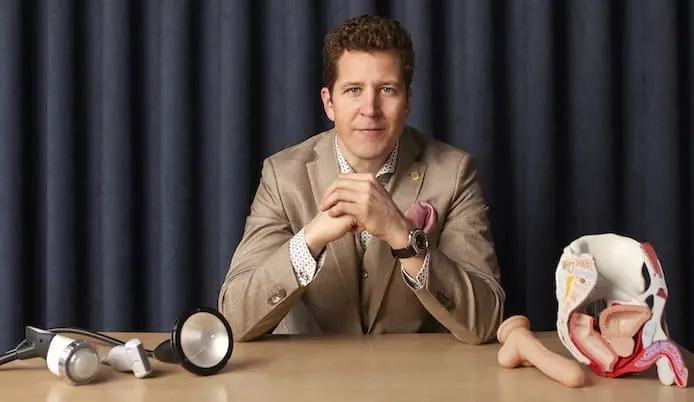
Written and medically reviewed by Michael Strøm
International speaker & expert in shockwave and EMTT treatment for erectile dysfunction, Peyronie’s & CPPS. Read more about me
Prostate orgasm: What it is and why it can be difficult (especially when the body is already teasing)
A prostate orgasm can be an intense and deeply satisfying experience – but for many men, the topic is also associated with insecurity, shame or worry. This is especially true if you’re also struggling with erectile dysfunction, pelvic pain, decreased sensitivity or performance pressure. I often meet men who are curious about prostate stimulation but find that their body doesn’t cooperate or that it all quickly becomes “too much” in their head. Here you get an honest, professional and safe overview of what a prostate orgasm is, what can typically get in the way, and how I can help you if your intimate health is out of balance.
In this article
- What is a prostate orgasm?
- Prostate, pelvic floor and nervous system: Why it’s all connected
- Can prostate orgasm help with erectile dysfunction?
- When should you pay extra attention?
- Is prostate stimulation dangerous?
- Typical concerns and questions about prostate orgasm
- How I work with men who have challenges related to prostate orgasm, pelvis and function
- When does it make sense to make contact?
What is a prostate orgasm?
The prostate (bladder neck gland) is located just below the bladder and close to the urethra. When stimulated – typically via the rectum – some men may experience an orgasm that feels different to a ‘classic’ penile orgasm. Many describe it as deeper, more ‘broad’ in the body and with a different type of intensity that involves the entire lower abdomen.
Important: A prostate orgasm is not a “goal” everyone should be able to achieve. For some, it’s curious exploration. For others, it becomes relevant because erection fails, because orgasms feel weaker, or because tension and pain in the pelvis affect desire, comfort and function. My approach is always that it should make sense to you – and feel good and safe in your body, not like another test you have to pass.
Prostate, pelvic floor and nervous system: Why it’s all connected
When I work with men’s intimate health, I see again and again that erection, orgasm, pain and control are closely linked to three areas: blood circulation, pelvic floor tension and nervous system signals. If one part is imbalanced, it can spread to the others – and sex, stimulation and orgasm experience can change significantly.
Prostate and pelvic floor
The prostate is located in an area where the pelvic floor muscles play a major role. If the pelvic floor is too tense (overactive), it can cause:
- Pain during or after ejaculation
- pressure in the perineum (perineum)
- uneasiness in the abdomen
- harder to feel pleasure and orgasm
It’s often a matter of the muscles ‘standing guard’ and not releasing when they should. Conversely, a weak or poorly coordinated pelvic floor can also affect erection, stamina and ejaculatory control. I often find that the problem isn’t an either/or, but a combination: some muscles tense too much, while others don’t activate appropriately.
Nerves (e.g. pudendal nerve) and “sensitivity”
The pudendal nerve is central to sensation and function in the penis, perineum and rectum. If the nerve becomes irritated or overloaded, you may experience tingling, burning, pain or reduced sensation. This can make both sex and prostate stimulation more difficult – or downright uncomfortable. When sensation changes, the body can also respond with extra muscle tension, which can become a vicious circle where discomfort creates more discomfort.
Can prostate orgasm help with erectile dysfunction?
A prostate orgasm is not a treatment for erectile dysfunction in itself. But it can be part of a broader understanding of what’s happening in your body. For example, if you have difficulty getting or maintaining an erection, it may be relevant to look at blood flow, nerve signaling, stress levels, sleep and pelvic floor function.
Some men find that the focus shifts from “I need to perform with erection” to “I want to feel pleasure and peace in my body”. For many, this is a great relief and can take the pressure off the situation. But if you’re also experiencing pain, anxiety, numbness or a noticeable decline in function, it makes sense to make a targeted effort to not just adapt to the symptoms, but actually get better.
When should you pay extra attention?
I recommend that you take your symptoms seriously (without panicking) if you experience one or more of the following:
- Pain in the pelvis, perineum or rectum
- pain during ejaculation or after sex
- frequent urination, burning or pressure (without clear explanation)
- decreased erection, decreased sensitivity or “flat” orgasms
- suspected Peyronie’s(curvature, pain, knot formation in the penis)
It could be chronic pelvic pain (CPPS), irritation of the pudendal nerve, pelvic floor dysfunction or a combination. Whatever it is, don’t go it alone. When symptoms affect intimacy and sexuality, they rarely just affect sex – they also affect confidence, relationships and quality of life.
Is prostate stimulation dangerous?
For most people, prostate stimulation is not dangerous if performed calmly and with respect for the body. However, there are situations where you should be cautious and clarify the cause of your symptoms before experimenting further – for example, if you have severe pain, fever, blood in urine/semen or recent, significant discomfort.
If you experience pain during prostate stimulation, it’s a signal – not something you need to “train through”. Pain can be a sign of irritation, overactive pelvic floor, inflammation/irritation or nerve impingement. In my experience, it can often be clarified and improved, but it requires taking the body seriously and working on the cause rather than pushing.
Typical concerns and questions about prostate orgasm
“Is it normal that I can’t have a prostate orgasm?”
Yes, you can. Men are different. Anatomy, sensitivity, tension level, experience and comfort all come into play. For many, it’s more realistic – and more helpful – to focus on better function, less pain and more pleasure in general rather than a specific “goal”. I’m happy to help you find a direction where you don’t feel wrong, but have a body that works better.
“Do I need an erection to have a prostate orgasm?”
Not necessarily. Some may experience orgasm without a full erection. That said, if you have erectile dysfunction, it still makes sense to work on the causes – both for your sexual function and for your overall quality of life. For many, it’s not just about erection, it’s about calming the nervous system and getting in touch with the body.
“Why does it hurt or feel uncomfortable?”
The most common explanations I see are: too much tension in the pelvic floor, tissue irritation, sensitive bowel/intestinal area or nerve irritation. Discomfort can also be exacerbated by the body going into ‘protection’ mode if you are tense or worried. Pain is an important symptom that deserves a serious assessment so you don’t end up avoiding intimacy for fear of what your body will do next.
“Does it affect my masculinity or sexuality?”
No, it isn’t. The prostate is part of your anatomy – period. Pleasure and stimulation don’t say anything definitive about your identity. The most important thing is that you feel safe and that what you’re doing feels good to you. If you have thoughts that are bothering you, I address them without making it awkward or “big” – I help you find peace and direction.
“Can it cause prostate problems?”
Stimulation itself does not typically cause prostate disease. However, if you already have pelvic, urinary or pain symptoms, stimulation can exacerbate discomfort if you push. That’s why it makes sense to understand what your body is responding to and what it takes to feel safe and comfortable again.
How I work with men who have challenges related to prostate orgasm, pelvis and function
In MS Insight, I start with your specific situation: symptoms, history, goals and concerns. Many men come with a mix of physical and mental stresses – pain, insecurity, performance pressure and frustration. I meet you respectfully and without taboo, and I’m used to talking about what can be difficult to put into words. The goal is not “perfect sex”, but a body that feels more stable, safe and well-functioning.
Advanced diagnostics with ultrasound
Ultrasound scans can provide important insights into tissue, blood flow and relevant structures in the abdomen. This makes it easier to target a plan that makes sense – instead of guesswork. For many men, it’s also reassuring to have something concrete to lean on when worries might otherwise run rampant.
Combination treatments when the body needs a boost in the right direction
Depending on your symptoms, I can work with tailored programs that may include:
- Focused shockwave therapy (focused sound waves) to support tissue response and blood circulation
- EMTT (electromagnetic transduction therapy) which can affect tissue and voltage state
- Neuromodulation focusing on “normalizing” nervous system signals when there is irritation or hypersensitivity
Advice on pelvic floor, stress, sleep and sexual well-being
When the pelvis is on alert, it can affect both erection and orgasm. I guide you in concrete strategies that can lower tension, improve body contact and give you more control – without being fluffy or moralizing. This can include understanding your patterns of tension/relaxation, calming your nervous system and taking a more realistic and friendly approach to your sexuality, so you don’t feel like you have to “deliver” all the time.
When does it make sense to make contact?
You don’t have to be “completely broken” to get help. Contact me if you recognize any of this:
- you are curious about prostate orgasm, but your body reacts with pain or discomfort
- You have erectile dysfunction and feel stuck in performance pressure
- you have chronic pelvic pain (CPPS) or suspected pudendal issues
- you experience altered sensitivity, weaker orgasms or discomfort in the lower abdomen
I help you get an overview, a realistic plan and a direction that fits your body and your everyday life. If you want to take the first step, you can call or write and briefly describe what you’re experiencing. Then I’ll work with you to figure out what makes the most sense from here.
If you are interested in hearing more about how I can help you, you are always welcome to contact me by phone 41 40 08 58 or email michael@msinsight.dk. I’ll get back to you quickly with a customized proposal so we can find the best way forward together.
Would you like a specialist assessment of your situation?
You don’t have to figure it out alone. Call directly or write a few lines about your symptoms – I’ll get back to you within 12-24 hours with a concrete suggestion for the next step.