
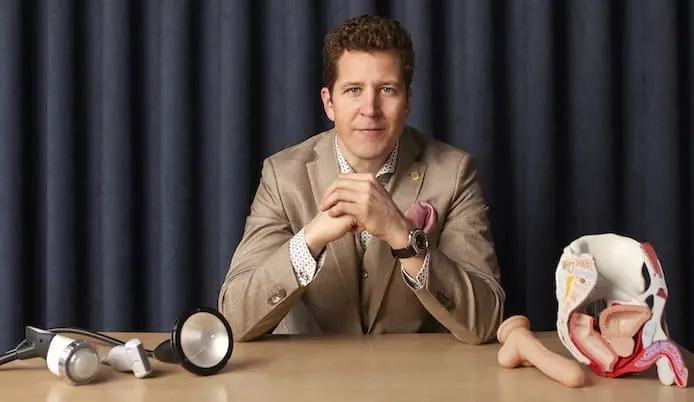
Written and medically reviewed by Michael Strøm
International speaker & expert in shockwave and EMTT treatment for erectile dysfunction, Peyronie’s & CPPS. Read more about me
Prostate and erectile dysfunction: get clarity and effective help at eye level
When erection fails or when there is pelvic pain, many men quickly land on the thought: “Is it my prostate?” I face this question every week in the clinic. I help you get an overview, separate myths from facts and make a concrete plan so that you get both peace of mind and a better body. I specialize in men’s intimate health – from erectile dysfunction and Peyronie’s to chronic pelvic pain and prostate issues – with advanced ultrasound scanning and combination treatments like focused shockwave, EMTT and neuromodulation. All customized to you, your body and your everyday life.
My starting point is simple: I want you to feel safe, understood and taken seriously. I explain everything in clear language, give you concrete tools from the first consultation and follow up systematically so we can see what works – and adjust course if something doesn’t.
In this article
- What is the connection between prostate and erectile dysfunction?
- Typical symptoms I see – and what they might mean for prostate and erectile dysfunction
- Safe and thorough examination for prostate and erectile dysfunction
- Evidence-based treatments for prostate-related erectile dysfunction
- After prostate cancer: targeted penile rehabilitation for erectile dysfunction
- Frequently asked questions about prostate and erectile dysfunction
- What can you do today for prostate and erectile dysfunction?
- Why you should contact me about prostate and erectile dysfunction
What is the connection between prostate and erectile dysfunction?
The prostate is a gland located just below the bladder. It surrounds the beginning of the urethra and is responsible for much of the seminal fluid. Nerves and blood vessels that are essential for erection (erectile function) run close by the prostate. Therefore, irritation, inflammation or treatment of the prostate can affect the quality of erection.
There are several pathways from prostate to erectile dysfunction (erectile dysfunction):
- Inflammation and pain: In prostatitis or chronic pelvic pain, the muscles and nerves in the pelvis can be overstimulated and painful. This can inhibit blood flow to the penis and make erection unstable or painful.
- Nerve involvement: Nerves that control erection run close to the prostate. Irritation, scar tissue or surgery can affect the signals.
- Blood vessels and microcirculation: Vascular changes in the area can affect the filling of the tumor bodies.
- Urinary symptoms (LUTS): Nighttime urination, after-drip, slow stream and frequent urination are frequently linked to erectile dysfunction – via common mechanisms in nerves, vessels and the pelvic floor.
- Medication and hormones: Some prostate medications (e.g. 5-alpha-reductase inhibitors) can affect libido and erection. Testosterone levels and metabolism also play a role.
- Psychology: Prolonged pain, sleep problems and worrying about “something serious” can create performance pressure and over-activation that exacerbates erectile dysfunction.
The point is not to guess – but to unravel. When I identify the dominant mechanisms, I can target my efforts and reduce the noise around everything that’s not helping you.
Prostatitis and CPPS (chronic pelvic pain) for erectile dysfunction
Prostatitis covers both bacterial infections and the much more common non-bacterial variant (CPPS – chronic pelvic pain syndrome). Many brands:
- Pain in the perineum, scrotum, penis root or lower back
- Discomfort during ejaculation, pain after sex or diffuse heaviness
- Irritated urination, interrupted stream or feeling of “not being emptied”
- Variable erection quality, harder to keep an erection or painful erection
CPPS is often a mixture of muscle tension, nerve irritation (e.g. pudendal nerve) and low-grade inflammation. Targeted pelvic floor therapy, neuromodulation of nerves and anti-inflammatory strategies can be crucial here. I work step-by-step: first relaxation and pain relief, then gradual rebuilding of function so you can trust your body again.
The most important thing is that you don’t push through pain. Small, consistent efforts work better than short, hard pushes. I give you a home plan that respects your limits and reduces flare-ups.
Enlarged prostate (BPH) and urination symptoms in erectile dysfunction
Benign prostatic hyperplasia (BPH) – a benign enlargement of the prostate – often causes urinary symptoms: weak stream, difficulty emptying, frequent trips to the toilet and nighttime urination. Many people with BPH also have erectile dysfunction. The mechanisms overlap: nerves, blood vessels and chronic pelvic floor tension can interact. Some BPH medications can help urination but affect erection. It’s all about optimizing the balance so that both urination and erection are at their best.
I also look at everyday factors: fluid habits (timing rather than just quantity), caffeine and alcohol, and relaxing the pelvic floor before urinating. Small changes can reduce night-time peeing and increase energy – and thus improve your chances of getting up.
Prostate cancer and the effects of treatment on erection
The cancer itself rarely causes erectile dysfunction, but the treatment can. After surgery (radical prostatectomy) or radiation therapy, the nerves around the prostate can be affected and the blood supply to the penis can change. “Penile rehabilitation” – a structured plan of vascular stimulation, nerve-focused therapy and exercise – is important, especially in the first 6-12 months.
I help you choose realistic measures, such as early use of PDE5 inhibitors as directed by your doctor, gentle vacuum training to maintain the tissue and targeted relaxation so the body doesn’t tense up. It’s about patience, continuity and calmness – not about “performing” from day one.
Typical symptoms I see – and what they might mean for prostate and erectile dysfunction
- Unstable erection, difficulty achieving or maintaining an erection: Can be due to vascular, nerve, pelvic floor, medication or psychological factors – often a combination.
- Pain in the perineum, penis root, testicles or rectum: Indicates CPPS, muscle tension, nerve irritation or prostatitis.
- Pain or burning on ejaculation, blood in semen: May be seen in inflammation; requires investigation.
- Frequent urination, nocturnal urination, weak stream: Typical in BPH or irritable bladder – and often linked to erectile dysfunction.
- Decreased desire and fatigue: Can be hormonal, stress or sleep related and affects erection indirectly.
Symptoms tell you something – but not everything. I’m pulling the threads together so we can avoid misconceptions that delay your recovery.
Safe and thorough examination for prostate and erectile dysfunction
I start with a conversation at eye level. I ask about symptoms, duration, urination, sex life, pain, sleep, stress and medication. It’s not about judging – it’s about understanding the whole picture. Then I use advanced but gentle methods:
- Standardized questionnaires: IIEF (erectile function), IPSS (urinary symptoms), NIH-CPSI (prostatitis/CPPS), so I can measure baseline and development.
- Ultrasound scan: I use high-resolution ultrasound to assess tissue, blood flow and any changes in the penis and pelvic area. If needed, I use Doppler to assess penile perfusion.
- Functional assessment of the pelvic floor: Are the muscles overstretched or weakened? I examine the interaction between breathing, posture and the pelvic floor.
- Nerve and pain screening: Signs of irritation of the pudendal nerve or other pelvic nerves.
- Coordination of additional tests: If applicable, I recommend blood tests (e.g. testosterone, HbA1c, metabolism), urine tests by your GP or urologist for further assessment.
The goal is to gain accurate knowledge so I can choose the right strategy together with you – without unnecessary research. You get a clear plan so you know what the next steps are and how we assess the impact.
Evidence-based treatments for prostate-related erectile dysfunction
I work with combinations because a single approach rarely solves everything. Your program is tailored based on the findings – with clear goals, simple home exercises and continuous fine-tuning.
Focused shockwave therapy (ESWT) for erectile dysfunction
Shockwave is proven effective for vascular erectile dysfunction in many men. Mechanisms include improved microcirculation, tissue repair and neurovascular stimulation. For chronic pelvic pain (CPPS), studies show improvement in pain and quality of life. The treatment is short-term, targeted and drug-free. I use focused shockwave with clinically relevant protocols and adjust the intensity according to your tolerance, so you can be there every step of the way.
EMTT (electromagnetic transduction therapy) for pelvic pain and erectile dysfunction
EMTT delivers high-energy electromagnetic pulses in depth. It can reduce inflammation, influence cell repair processes and relax deep muscle groups. Many people with CPPS describe less pain and more pelvic mobility when EMTT is combined with shockwave and neuromodulation. I use EMTT strategically around the most troublesome areas – not “everywhere” – to calm the system.
Neuromodulation and the pudendal nerve for pelvic pain and erectile dysfunction
Neuromodulation uses controlled stimuli to calm overactive nerves and normalize pain signals. For pudendal neuralgia and pelvic pain, it can reduce burning, stabbing pain and improve comfort during erection and ejaculation. I often supplement with home-based exercises to anchor the effect between sessions.
Pelvic floor training – often relaxation before strength for erection and control
Many people tense their pelvic floor too much, especially with pain and persistent urge to urinate. I teach you techniques to release tension (breathing, positions, biofeedback) and – when the time is right – targeted strength, coordination and endurance. It can improve erection quality, ejaculation control and after-drip. Timing is key: we build slowly so muscles cooperate instead of locking.
Medical treatment in collaboration with your GP for prostate and erectile dysfunction
- PDE5 inhibitors (tadalafil, sildenafil): May improve erection and at low daily doses may also affect urinary symptoms in some. Use as directed by your doctor and not with nitrates.
- Hormonal assessment: If imbalances are suspected, I recommend relevant blood tests and coordinate follow-up.
- Bacterial prostatitis: Antibiotics are a medical task; I supplement with pain and functional interventions.
- BPH medication: Alpha blockers or other agents may help – I’ll discuss pros/cons with you and work with urologist as needed.
Lifestyle, sleep and psychosexual well-being for better erection and prostate balance
Erection is a whole body function. Addressing:
- Sleep quality and recovery: Testosterone and the nervous system are sleep sensitive; regular routines help.
- Stress, performance pressure and anxiety: Concrete strategies and sexological sparring to get your body off alert.
- Exercise and circulation: Individually dosed activity without triggering pelvic pain.
- Nutrition: Anti-inflammatory habits, caffeine/alcohol dosing and wise fluid management.
- Smoking and nicotine habits: Nicotine constricts blood vessels and can worsen erection – I give you realistic alternatives.
After prostate cancer: targeted penile rehabilitation for erectile dysfunction
After prostatectomy or radiation therapy, I work with a structured rehabilitation plan:
- Early vascular stimulation (PDE5 inhibitors as directed by the doctor, possibly vacuum pump)
- Focused shockwave and EMTT to support microcirculation and tissue healing
- Neuromodulation to calm nerves and reduce dysesthesia
- Pelvic floor and breathing training to restore coordination
- Realistic timeline: Signs of recovery can come early, but nerve healing can take 6-18 months. The goal is gradual progress without pressure.
I help you set meaningful milestones (comfort, morning erections, erection with stimulation) so we can track progress – even when it’s slow.
Frequently asked questions about prostate and erectile dysfunction
- Are erectile dysfunction always prostate problems? No, they don’t. They can be caused by blood vessels, nerves, hormones, medication, smoking, diabetes, sleep, psychology – or combinations. The prostate is one important piece, but not always the cause.
- Can you have prostatitis without bacteria? Yes, you can. CPPS is very common and is often caused by muscle and nerve overactivity and low-grade inflammation, not an active infection.
- Can prostate medication affect erection? Some may. 5-alpha-reductase inhibitors can affect libido and erection in some; alpha-blockers can cause dizziness and ejaculatory changes. I weigh the pros and cons together with you and your doctor.
- I have pain after ejaculation – is it dangerous? Usually not dangerous, but it is a sign of pelvic/prostate or muscle irritation. It should be investigated, especially if it is new or severe.
- Does shockwave help with “Prostate and erectile dysfunction”? In vascular erectile dysfunction there is good evidence. In CPPS, I frequently see reduction in pain and improved function. In post-prostatectomy, shockwave is a possible supplement as part of an overall plan; aligning expectations is important.
- Do examinations and treatment hurt? Ultrasound doesn’t hurt. Shockwave and EMTT can be felt lightly, but dosed so you can go all the way.
- How quickly will I see the effect? Some notice changes within weeks; for long-term issues, I typically work for 8-12 weeks to create robust improvements. Nerve healing takes longer.
- Does testosterone play a role? Yes, especially for desire and energy. I can suggest relevant blood tests via my own doctor and adapt my efforts according to the results.
- Can cycling cause prostate problems? Long and hard cycling can irritate the pelvis and nerves for some. Often the saddle, position and dosage can be adjusted so you can continue without discomfort.
What can you do today for prostate and erectile dysfunction?
- Calm your pelvis: 5-10 minutes of calm abdominal breathing while lying on your back with your legs up on a chair. Focus on releasing tension in the perineum on exhalation.
- Caffeine and alcohol: Cut back a little, especially in the evening. It can reduce bladder problems and improve sleep and erection.
- Sitting habits: Break up sedentary periods every 30-45 minutes. Use a cushion or saddle to relieve the perineum if cycling triggers symptoms.
- Warmth and movement: Warm baths and gentle mobility can reduce pelvic pain.
- Medication list: Review your medications (including herbal remedies) and note any changes in erection or urination. Bring it with you to the interview.
- Sleep priority: A fixed bedtime and screen-free last hour can make a bigger difference than most people think.
Why you should contact me about prostate and erectile dysfunction
I know that the subject can be vulnerable. With me, there are no taboos and no finger pointing – just professionalism, respect and a clear plan. I combine advanced diagnostics (including ultrasound) with proven treatments such as focused shockwave, EMTT and neuromodulation. At the same time, you get specific advice on pelvic floor, sleep, stress, sex and lifestyle, so you feel progress in your everyday life – not just on paper.
I help men from all over the country, both those with prostate and erectile dysfunction and those who are unsure where the problem really lies. Let’s have a no-obligation consultation, review your symptoms and make a realistic plan. My goal is simple: less pain, better erection quality and more peace of mind – in a way that suits you.
If you are interested in hearing more about how I can help you, you are always welcome to contact me by phone 41 40 08 58 or email michael@msinsight.dk. I’ll get back to you quickly with a customized proposal so we can find the best way forward together.
Would you like a specialist assessment of your situation?
You don’t have to figure it out alone. Call directly or write a few lines about your symptoms – I’ll get back to you within 12-24 hours with a concrete suggestion for the next step.