

Written and medically reviewed by Michael Strøm
International speaker & expert in shockwave and EMTT treatment for erectile dysfunction, Peyronie’s & CPPS. Read more about me
PDE-5 inhibitors – what you need to know as a man before you say yes or no to pills
When erection starts to bother, PDE-5 inhibitors – such as Viagra, Cialis and the like – are often cited as the “easy solution”. But for many men, the reality is more complicated: the pills may not work, they may cause side effects, or it just feels wrong to depend on medication to have sex.
In this article, I go through what PDE-5 inhibitors are, how they work, who they can help – and when it makes sense to look beyond the pills and work more specifically on the cause of the problem to improve your body, mind and relationships.
In this article
- What are PDE-5 inhibitors – and why are so many people offered them?
- How do PDE-5 inhibitors work physiologically?
- When can PDE-5 inhibitors make sense – and when is it just a stopgap?
- The most well-known PDE-5 inhibitors: differences, duration of action and “profile”
- Typical side effects of PDE-5 inhibitors
- Why don’t PDE-5 inhibitors always work – even in erectile dysfunction?
- Mental and emotional aspects of PDE-5 inhibitors
- Alternatives and supplements to PDE-5 inhibitors for better erectile function
- Frequently asked questions about PDE-5 inhibitors
- When you’re tired of only getting “pills” as an answer
- How you can move forward – next steps
What are PDE-5 inhibitors – and why are so many people offered them?
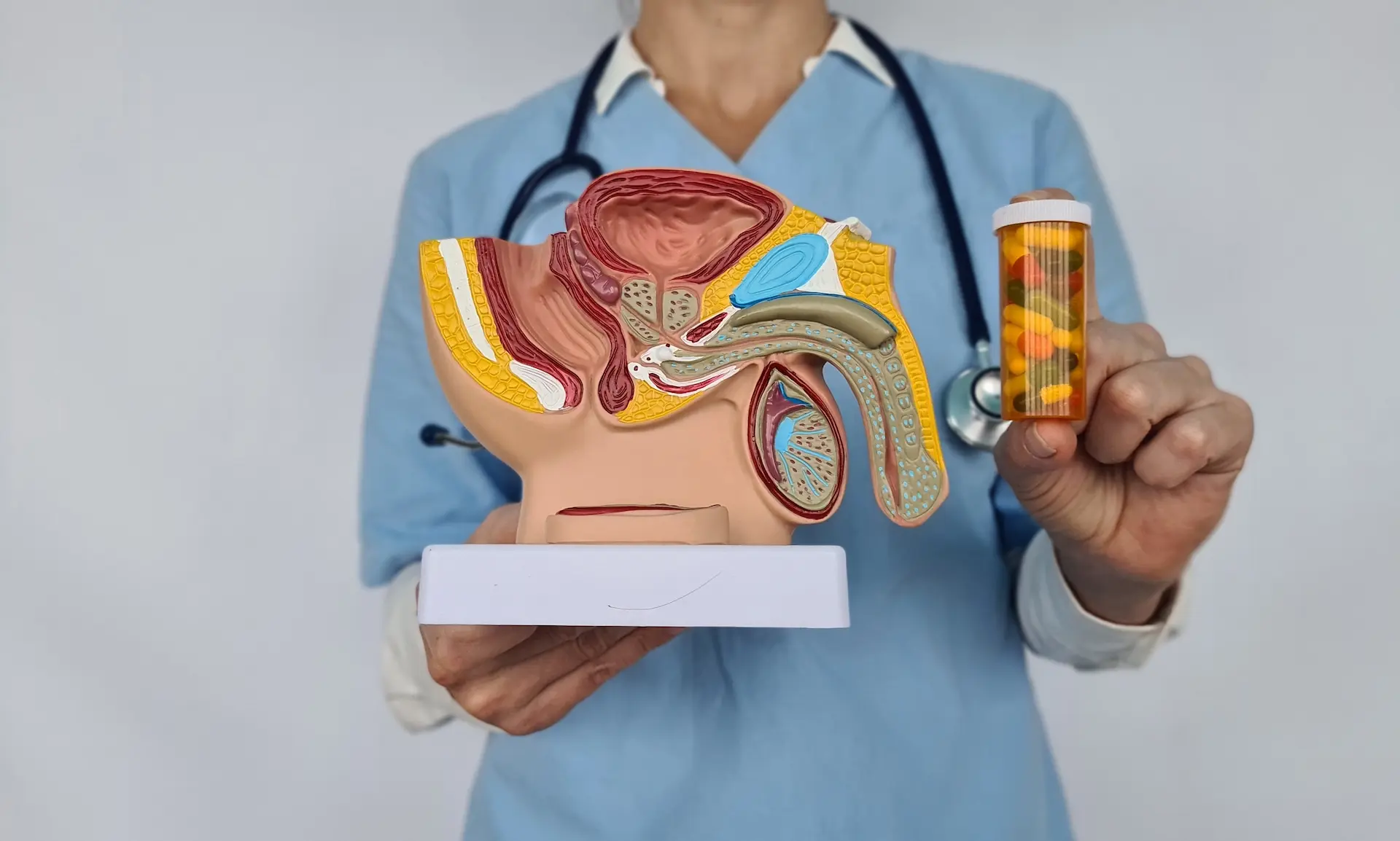
PDE-5 inhibitors are a group of medications used to treat erectile dysfunction (erectile dysfunction). The most well-known PDE-5 inhibitors are:
- Sildenafil (known as Viagra)
- Tadalafil (known as Cialis)
- Vardenafil (eg Levitra)
- Avanafil (e.g. Spedra)
They work by improving blood flow to the penis, making it easier to get and maintain an erection. That’s why PDE-5 inhibitors are often the first choice in the public health system when a man reports difficulty getting an erection.
But that doesn’t mean it’s always the best or only solution for you – especially if you also have pelvic pain, decreased sensitivity, Peyronie’s disease(curvature of the penis) or if the erectile dysfunction has been going on for a long time. In these cases, PDE-5 inhibitors are often just one piece of the puzzle and not necessarily the most sensible place to start.
How do PDE-5 inhibitors work physiologically?
To understand if PDE-5 inhibitors are relevant for you, it’s helpful to know a little about what actually happens in the body during an erection. Understanding the mechanism will also help you understand why PDE-5 inhibitors can be a good support for some – and far from enough for others.
Traveling is all about blood, nerves and brain
An erection occurs when:
- The brain registers desire and sexual stimulation
- Nerves send signals to the blood vessels in the penis
- The blood vessels in the penis dilate to allow more blood to enter
- The vein drain is partially “closed off” so the blood stays in the tumor bodies
Along the way, the body releases, among other things, nitric oxide (NO), which causes the blood vessels to relax and dilate. This activates a substance called cGMP, which is central to erection.
The PDE-5 enzymes break down cGMP. When PDE-5 is inhibited (blocked) by a PDE-5 inhibitor, cGMP can work longer and blood flow in the penis improves.
For you, this means that the processes your body is already trying to initiate are amplified – especially if your blood vessels and nerves already have a reasonable basic function.
What does a PDE-5 inhibitor actually do?
A PDE-5 inhibitor:
- Prolongs the action of the signals that dilate the blood vessels in the penis
- Makes it easier to achieve an erection during sexual stimulation
- Can help keep you erect for longer
Important: PDE-5 inhibitors do not provide an automatic erection. There still needs to be desire and sexual stimulation. The pills enhance the body’s natural response – they don’t replace it.
If your body is very stressed, you’re afraid of “failing” or you can barely feel the stimulation, a PDE-5 inhibitor may therefore feel only partially or not at all helpful, even if you take the “right” dose.
When can PDE-5 inhibitors make sense – and when is it just a stopgap?
For some men, PDE-5 inhibitors are a fine and effective tool. For others, it’s just a band-aid that doesn’t address the root cause and can keep them in a vicious cycle of insecurity, disappointment and increasing pressure to perform.
Typical situations where PDE-5 inhibitors may be relevant
- Mild to moderate erectile dysfunction without pain
- Erectile dysfunction triggered by stress, performance anxiety or intermittent strain
- Erectile dysfunction associated with certain medical conditions (e.g. diabetes or mild vascular dysfunction)
- Need temporary support while you work on lifestyle, sleep, exercise and psychosexual factors
PDE-5 inhibitors can act as a kind of “training wheels” to improve your sexual experience while you work on the causes. For some men, it’s the combination of medication and targeted action that restores peace and confidence in their bodies.
Situations where PDE-5 inhibitors are often not enough
I see many men in the clinic where PDE-5 inhibitors have not produced the desired results or have only partially helped. This is especially true for:
- Chronic pelvic pain (CPPS) – where the nerves, muscles and connective tissue in the pelvis are overloaded
- Affecting the pudendal nerve – the nerve that affects sensitivity and function in the penis and perineum
- Peyronie’s disease – where scar tissue and curvature of the penis play a major role
- Long-term erectile dysfunction – where there are real structural or functional changes in the tissue
- Erectile dysfunction in type 2 diabetes – where nerve tissue and blood vessels are damaged.
- Erection problems after cancer surgery – where there are structural changes and damage
- Significantly reduced sensitivity – where you “can’t really feel anything” during sex
In these cases, PDE-5 inhibitors are typically not a solution in themselves. A more thorough investigation is needed and often a targeted, combined treatment that works with blood vessels, nerves, tissue and the pelvic floor.
Many of the men I meet only experience real progress when I work with them to find the specific physical explanation and make a plan that is not just about pills, but about the overall function of the body.
The most well-known PDE-5 inhibitors: differences, duration of action and “profile”
Even though different PDE-5 inhibitors are similar in how they work, there are differences in how they are experienced in reality. Here are the main differences that can help you understand why your doctor or urologist recommends one over the other.
Sildenafil (Viagra and similar)
- Typically starts working after about 30-60 minutes
- Duration of effect approx. 4-6 hours
- Affected by whether you’ve eaten a large, fatty meal just before
- Can be great if you want an on-demand solution for more planned sex
I often see men underestimate the importance of timing, food and dose with sildenafil. A tablet taken right after a heavy meal can be perceived as “not working”, when it’s really about absorption in the body.
Tadalafil (Cialis and similar)
- Typically starts working within 30-60 minutes
- Duration of effect up to 24-36 hours (some experience effects even longer)
- Less affected by food intake
- Often used either as a “weekend pill” or in a low daily dose
Tadalafil can provide a more “spontaneous” experience because the time window is longer. For some men, this reduces performance pressure because sex doesn’t have to be planned down to the minute. For others, on the other hand, the longer duration of action can lead to more persistent side effects, which I help to manage or find alternatives to.
Vardenafil and avanafil
- More “fine-tuning” in terms of how fast and how long they work
- Can sometimes cause slightly fewer side effects for some men
- Used less frequently than sildenafil and tadalafil, but relevant in certain cases
The choice of PDE-5 inhibitor depends on your situation, your wishes, your other medications and your health condition. This is something I often help men understand – both in terms of expectations, realistic efficacy and how PDE-5 inhibitors can be part of an overall strategy if it makes sense for you.
Typical side effects of PDE-5 inhibitors
All drugs can cause side effects, and PDE-5 inhibitors are no exception. Most side effects are mild and transient, but for some men they become so troublesome that they stop taking the medication – often without talking to a professional about possible alternatives or adjustments.
The most common side effects
- Headaches
- Redness on the face
- Heart palpitations or a feeling of heat
- Indigestion or acid reflux
- Nasal congestion
- Slight dizziness
Other side effects that some men react strongly to
- Temporary visual disturbances (e.g. bluish tinge or blurred vision)
- Muscle pain – especially with tadalafil
- Fatigue or “hangover” feeling the next day
In addition, there are rare but serious side effects where you should seek emergency help – for example, sudden loss of vision, severe chest pain or an erection lasting over 4 hours (priapism).
If you have heart disease, low blood pressure or are taking nitroglycerin (nitrates), PDE-5 inhibitors are generally contraindicated – you should not experiment yourself, but have a clear medical assessment before even considering PDE-5 inhibitors.
Why don’t PDE-5 inhibitors always work – even in erectile dysfunction?
I meet a lot of men who say: “I tried Viagra, it didn’t work – so there’s probably nothing I can do.” It’s almost never that black and white. Often, the lack of effect is actually an important clue that points to what needs to be investigated further.
Four common reasons why PDE-5 inhibitors are not perceived as effective
- Wrong expectation
Many people believe that the pill alone should “induce” an erection. When this doesn’t happen, it’s interpreted as treatment failure – but often there isn’t enough sexual stimulation, calmness or desire present. Lying around “waiting for it to work” can actually take you further away from an erection. - Too short or too little testing
PDE-5 inhibitors often need to be tried multiple times and at the correct dose to assess efficacy. A single bad experience does not tell the whole story. I regularly see men who have been given too low a dose, taken the tablet too late or under a lot of stress – and then they give up on PDE-5 inhibitors completely, even though the potential hasn’t really been tested. - Underlying mechanical or neurological issues
If blood vessels, nerves or tissues in the penis and pelvis are affected, medication can only do so much. This is when you need to work directly with the tissue – for example with focused sound waves (shockwave), EMTT and neuromodulation, which can stimulate blood vessels, reduce irritation and help the nervous system move in a more balanced direction. - High performance anxiety and over-focus
Some men become so preoccupied with “does it work now?” that their body goes on alert. Stress response and erection are a bad combination. It often makes more sense to combine physical treatment with sexological and psychosexual support to calm your body and give you more realistic, friendly expectations of yourself.
Mental and emotional aspects of PDE-5 inhibitors
For many men, it’s not just about physiology – it’s about identity, shame, masculinity and relationships. That’s why both using and opting out of PDE-5 inhibitors can evoke strong emotions that deserve to be taken seriously.
Typical thoughts I hear from men in the clinic
- “I feel wrong when I depend on a pill to have sex.”
- “I dare not have sex without pills – what if I fail?”
- “My partner doesn’t know how much I struggle with this.”
- “I’m afraid it’s only going one way – downhill.”
These are completely understandable reactions. My focus is not to moralize about the use of PDE-5 inhibitors – but to help you find a solution that makes you feel safe, so you don’t get stuck in shame or addiction.
For many men, it’s a relief to talk openly about these thoughts with a professional who is used to hearing them and can translate them into concrete steps and realistic options.
Can PDE-5 inhibitors be a helping hand – not a lifelong crutch?
For some men, it makes perfect sense to use PDE-5 inhibitors for a period of time while I work with:
- Blood vessel function (e.g. via focused sound waves/shockwave therapy)
- Nerve function and pain (e.g. via neuromodulation and EMTT)
- Pelvic floor tension level and function
- Performance anxiety, shame and worries about sex
- Lifestyle, sleep, exercise and stress management
The goal is for you to eventually have a more robust and natural function – making medication a choice, not a necessity. For some, this means they can taper off PDE-5 inhibitors completely; for others, they can use them less frequently and more safely, without the same emotional weight.
Alternatives and supplements to PDE-5 inhibitors for better erectile function
At MS Insight, I do not prescribe medication, but optimize the very foundation of your sexual function through targeted assessment and treatment. PDE-5 inhibitors can be a relevant supplement in some cases, but my focus is on strengthening the body’s own ability to respond.
Advanced diagnostics – what I investigate
If you come to the clinic with erectile dysfunction, pain or other sexual challenges, I will typically:
- Review your medical history, symptoms and any previous treatments
- Map pain patterns, sensitivity and function in the penis, pelvis and abdomen
- Perform ultrasound scans of relevant structures, such as the penis and surrounding tissue
- Assess pelvic floor function – both tension level and coordination
- Clarify if there may be a need for further medical examinations, which you can discuss with your own doctor
For many men, it’s the first time anyone has systematically examined tissue, nerves, blood vessels and the pelvic floor in context. This overview is often the key to understanding why PDE-5 inhibitors alone have not been enough – and what exactly is needed.
Combination therapy: working on the cause, not just the symptom
Among other things, I use:
- Focused shockwave therapy (focused sound waves)
to stimulate blood vessel function, increase microcirculation and support tissue healing and regeneration in the penis and surrounding structures. - EMTT (electromagnetic transduction therapy)
to affect deep tissue, relieve inflammation and support healing processes. - Neuromodulation
to influence the nervous system, reduce overactivity/pain and improve nerve communication in the pelvis. - Training and relaxing the pelvic floor
so that the muscles are neither too tense nor too loose, but work properly during sex. - Advice on lifestyle, sleep and psychosexual well-being
so you get better conditions for desire, energy and physical peace.
In this way, PDE-5 inhibitors – if you use them – are just one piece of a bigger puzzle, not the whole strategy. The focus is to restore as much natural function as possible so that your body is not perceived as an opponent, but as a partner.
Frequently asked questions about PDE-5 inhibitors
Is it dangerous to take PDE-5 inhibitors?
For most men without serious heart disease or specific contraindications, PDE-5 inhibitors are relatively safe when used correctly. However, they are still prescription drugs and it’s important that you get clarification:
- Whether your cardiovascular situation is stable
- If you are taking medications (e.g. nitrates) that should not be combined with PDE-5 inhibitors
- Whether your symptoms could be caused by something that requires further investigation
I always recommend that you talk openly with your doctor about erectile dysfunction, medication and concerns – even if it can feel vulnerable. It’s an important part of using PDE-5 inhibitors safely.
Can I take PDE-5 inhibitors if I have pelvic or penile pain?
It depends on the cause. If you have chronic pelvic pain, pudendal impaction or Peyronie’s disease, understanding the cause is more important than just taking a pill. In some cases, PDE-5 inhibitors can be used in parallel with me working on the pain and tissue – in others it makes less sense. I assess this based on an overall assessment that includes pain, function and any risk factors.
Will my body become “lazy” if I use PDE-5 inhibitors for longer?
There is no evidence that PDE-5 inhibitors make the penis “lazy” in the way many fear. But you can psychologically feel like you can’t do anything without the pills, and that in itself can perpetuate the problem. That’s why it makes sense to combine medication – if you use it – with treatment and efforts that strengthen your own function, so you retain the feeling that it’s still your body that can.
Can PDE-5 inhibitors help with desire?
No, they do not increase sexual desire per se. They affect the mechanical requirements for erection, but desire, attraction and intimacy are completely different. Conversely, feeling more confident about erection can indirectly increase desire because you’re less nervous about “failing”. For some couples, it’s a fresh start where sex can once again be more about intimacy and pleasure than performance.
What if PDE-5 inhibitors don’t work on me at all?
Then it’s a sign that you should be taken seriously – not written off. No or very limited effect can be a key to understanding what’s really at play: blood vessels, nerves, scar tissue, pain or something else entirely. That’s where I take a more thorough approach with examination and targeted treatment, so you get concrete answers instead of just being told that “the pills should work”.
When you’re tired of only getting “pills” as an answer
If you recognize yourself in any of this – maybe you’ve tried PDE-5 inhibitors with mixed results, or you’re unsure if you even want to start – it’s a signal that you deserve a more nuanced approach than “take this prescription”.
I meet many men who for years have walked alone with their concerns about erection, pain, sensitivity or performance. For many of them, the first step is not a pill – but to be seen, heard and examined properly, without taboo and without being done wrong. It can be a great relief just to be put into words and explained what can be done.
How you can move forward – next steps
If you want to go one step further than just PDE-5 inhibitors, I offer:
- A thorough, respectful review of your situation – both physical and mental
- Advanced diagnostics, including ultrasound scanning
- Tailored treatment courses with focused shockwave, EMTT and neuromodulation
- Advice on lifestyle, sleep, stress and pelvic floor
- An open dialog about whether PDE-5 inhibitors should be part of your solution – and if so, how
You don’t have to decide whether or not you want to take PDE-5 inhibitors before you contact me. We can take the time to get an overview, clarify your options and create a realistic plan that makes sense for you and your life – whether your goal is to use PDE-5 inhibitors, reduce them or go without them in the long term.
If you’re ready to take action on your erectile dysfunction, pelvic pain or other intimate challenges – without shame and without being reduced to a prescription – feel free to get in touch with the clinic.
You’re not doing this alone, and you’re far from the only man who needs more than just a pill.
If you are interested in hearing more about how I can help you, you are always welcome to contact me by phone 41 40 08 58 or email michael@msinsight.dk. I’ll get back to you quickly with a customized proposal so we can find the best way forward together.
Would you like a specialist assessment of your situation?
You don’t have to figure it out alone. Call directly or write a few lines about your symptoms – I’ll get back to you within 12-24 hours with a concrete suggestion for the next step.