

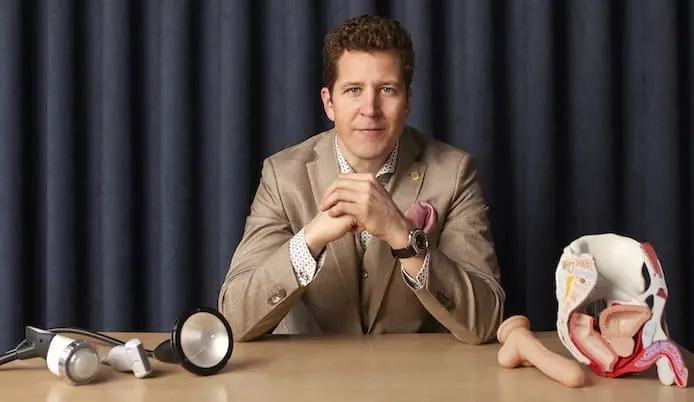
Written and medically reviewed by Michael Strøm
International speaker & expert in shockwave and EMTT treatment for erectile dysfunction, Peyronie’s & CPPS. Read more about me
Menopause and relationships: When desire and the body change
When the topic of menopause and relationships comes up, thoughts often automatically turn to women. Hot flashes, mood swings and hormonal shifts are well-known phenomena. But what about men? The truth is that men also go through significant hormonal and physical changes that can have a profound impact on intimacy and relationships. In my clinic, I often find that the silence around men’s changes creates unnecessary distance, frustration and misunderstandings in relationships.
In my work at MS Insight, I meet men every day who feel their bodies are failing them. It could be a lack of erection, loss of desire, or diffuse pelvic pain. These are not just physical symptoms; they are barriers to intimacy. My mission is to help you understand the mechanisms at work and offer concrete treatments to help you regain intimacy and balance in your life.
In this article
- Does male menopause even exist?
- The typical symptoms that strain relationships
- Partner perspective: Communication is key
- Physical causes must be treated physically
- Pelvic pain – an overlooked factor
- What can you do yourself?
- Should you talk to your GP?
- Get help regaining intimacy with MS Insight
- Frequently asked questions about menopause and relationships
Does male menopause even exist?
The term ‘male menopause’ – or andropause – can be a bit misleading if compared directly to female menopause. Where women experience a relatively abrupt stop in hormone production, men experience a slower and more gradual decline in testosterone levels. It typically starts from the age of 30-40 and continues for the rest of their lives.
But it’s not just testosterone that plays a role. With age, blood flow, tissue elasticity and nerve function in the pelvic floor also change. For many men, this means that what used to be automatic – like a spontaneous erection – now requires more stimulation or doesn’t happen at all. That’s why when I advise on menopause and relationships, I look at the whole picture: hormones, circulation, nerves and psyche. I don’t just focus on the symptom, but on the whole person behind it.
The typical symptoms that strain relationships
It can be difficult to navigate whether the changes are due to stress, normal ageing or something that requires treatment. At the intersection of menopause and relationships, I see three main areas of concern that I can help you deal with.
Erectile dysfunction and performance anxiety
Erectile dysfunction is the number one reason men seek my help. When the erection becomes insecure or not hard enough to complete intercourse, it hits the man’s self-image hard. Many physically withdraw from their partner to avoid defeat, which their partner often interprets as a lack of interest or love. This vicious cycle of performance anxiety and rejection is poison for any relationship.
I offer advanced diagnostics with ultrasound to accurately determine if the problem is due to calcifications, poor circulation or venous leakage. This gives us a concrete, factual starting point for the right treatment.
Lack of desire and intimacy
Declining testosterone levels can significantly affect libido. You may love your partner as much as ever, but the physical drive is missing. This can be extremely frustrating for both parties. It’s important to understand that lack of desire can also be a defense mechanism if you’re in pain or struggling with erection, for example. When I treat the physical dysfunctions, I often find that desire and energy return naturally.
Mood swings and energy levels
Menopause and relationships are not just about sex. Many men experience fatigue, irritability, poor sleep and feelings of depression during this phase of life. If you’re constantly tired or short-tempered, communication and closeness at home will suffer. It’s important to recognize that these mental changes often have a physiological root that we can do something about.
Partner perspective: Communication is key
As you go through these changes, your partner is often left with many unanswered questions: “Am I not attractive anymore?”, “Is there someone else?”, or “Is our sex life over?”.
Silence is the worst enemy when it comes to menopause and relationships. I always encourage my clients to be open – even when it feels vulnerable. By saying “I have a problem with my body and I’m getting it checked out,” you take the blame away from your partner. It creates an “us against the problem” rather than “you against me”. In my clinic, I create a safe space where we can talk about these things and I’m happy to advise you on how to start the difficult conversation at home.
Physical causes must be treated physically
Many men mistakenly believe that potency problems or pain is just something you have to live with as you get older. I fundamentally disagree with this. With the right technology, lifestyle and treatment, we can rebuild lost function. I use evidence-based methods that get to the root of the problem rather than just treating symptoms.
How focused sound waves and EMTT help
In my treatment of erectile dysfunction and Peyronie’s disease, I use focused sound waves, also known as shockwave. It’s a technology that stimulates the formation of new blood vessels and breaks down microscopic calcifications in the sponge bodies. It’s not a pill that works for four hours, but a regenerative treatment that rebuilds the natural function of the tissue over time.
I often combine this with EMTT (Electromagnetic Transduction Therapy). EMTT works at the cellular level by increasing cell membrane potential and improving tissue healing and function. Together, these technologies are powerful tools to counteract the physical decline often associated with male menopause. The result is often better erections, less pain and a better foundation for the relationship.
Pelvic pain – an overlooked factor
Something rarely talked about in menopause and relationships is chronic pelvic pain syndrome (CPPS) or pelvic floor tension. Stress, aging and an inactive lifestyle can manifest as chronic tension that can cause painful ejaculation, frequent urination or general discomfort in the perineum.
If it hurts to have sex, or if you fear pain afterwards, it naturally kills desire. I focus on neuromodulation and physiotherapeutic guidance to release these tensions and calm the nervous system. It’s about making your body a nice place to be again.
What can you do yourself?
While I can do a lot with my in-clinic treatments, your lifestyle plays a crucial role. Testosterone production and circulation are directly influenced by how you live.
Sleep: Prioritize your night’s sleep. This is where your body recovers and produces vital hormones.
Physical activity: Heavy strength training is proven to boost testosterone levels naturally.
Diet and weight: Excess weight, especially fat around the abdomen, converts testosterone into estrogen. Weight loss can often be felt directly on potency.
Stress: Prolonged stress kills libido. Find calm, possibly through breathing exercises, which I also guide.
When you take responsibility for your lifestyle, you also send a strong signal to your partner that you prioritize your future and health together.
Should you talk to your GP?
I specialize in the field of urology and sexology with a focus on physique and function. However, if I suspect that your challenges are largely due to very low testosterone levels or systemic diseases (such as untreated diabetes or cardiovascular disorders), I would always advise you to consult your own doctor.
I don’t work directly with your doctor, but I educate you on exactly what to ask – for example, what specific blood tests might be relevant (e.g. testosterone, blood sugar, cholesterol). This ensures that we attack the problem from all angles.
Get help regaining intimacy with MS Insight
Menopause and relationships don’t have to be a slippery slope towards less closeness. On the contrary, it can be an opportunity to take your health seriously and find new, deeper ways to be together.
At MS Insight, I meet you at eye level. I know it can be daunting to book the first appointment, but I promise you that you will be met with professionalism, discretion and no taboos. I have seen countless men regain both function and quality of life through tailored programs with focused sound waves, EMTT and competent advice.
You don’t have to accept that just because your birth certificate is getting older, your sex life is stagnating. Contact me today and let’s talk about how I can help you and your relationship get back on track.
Frequently asked questions about menopause and relationships
What are the first signs of male menopause?
Typical signs include decreased sex drive, weaker or less frequent erections, unexplained fatigue, mood swings, increased belly fat and sleep problems. If these symptoms start to affect your relationship, it’s a good idea to seek professional advice.
Can focused sound waves help with age-related erectile dysfunction?
Yes, absolutely. Focused sound waves (shockwave) are highly effective at stimulating the formation of new blood vessels (angiogenesis) and improving blood flow in the penis. This is often crucial as blood vessels naturally weaken with age.
How does menopause affect the desire for sex?
Decreasing testosterone can reduce spontaneous desire. This doesn’t necessarily mean that desire is gone, but that it may need to be more actively aroused through intimacy and touch. However, physical problems such as erectile dysfunction can also kill desire mentally due to performance anxiety.
Is it normal to have pelvic pain as an older man?
It’s not “normal” in the sense that it should be accepted, but it is unfortunately common. The prostate can grow and years of built-up tension can manifest as chronic pelvic pain (CPPS). It can and should be treated as it significantly affects quality of life.
If you are interested in hearing more about how I can help you, you are always welcome to contact me by phone 41 40 08 58 or email michael@msinsight.dk. I’ll get back to you quickly with a customized proposal so we can find the best way forward together.
Would you like a specialist assessment of your situation?
You don’t have to figure it out alone. Call directly or write a few lines about your symptoms – I’ll get back to you within 12-24 hours with a concrete suggestion for the next step.