

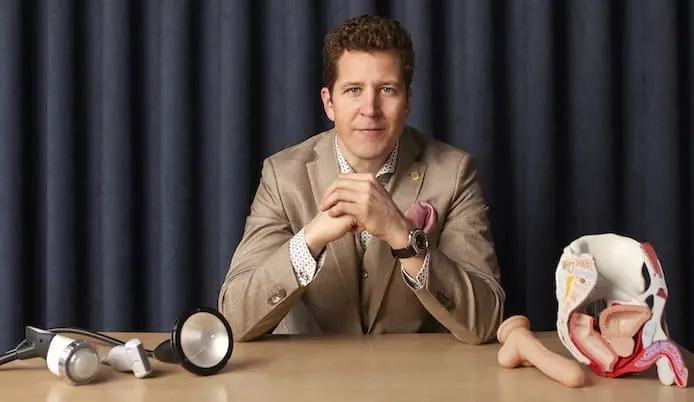
Written and medically reviewed by Michael Strøm
International speaker & expert in shockwave and EMTT treatment for erectile dysfunction, Peyronie’s & CPPS. Read more about me
Intimacy in relationships – When the body gets in the way of closeness
Intimacy in relationships is the glue that binds two people together. But for many men, this area becomes the source of deep frustration, shame and distance when their bodies don’t cooperate. If you experience erectile dysfunction, pelvic pain or penile curvature, I know that it’s rarely just about the physical. It’s very much about the feeling of losing a part of your manhood and the ability to be close to your partner. At MS Insight, I meet men every day who have withdrawn from the bedroom community because the fear of failure outweighs the desire for closeness.
In this article
- Why does intimacy disappear when physics fails?
- The physical reasons that slow down intimacy in relationships
- The consequences for relationships: Silence is the worst enemy
- My approach: I treat the cause, not just the symptom
- How we rebuild your intimate health
- Tips for maintaining intimacy during treatment
- Frequently asked questions about intimacy and physical issues
- Take the first step towards a better relationship
Why does intimacy disappear when physics fails?
When I talk about intimacy in relationships, it’s crucial to understand the mechanisms that come into play when problems arise “below the belt”. Many men associate intimacy directly with the ability to perform sexually. If you experience erectile dysfunction (erectile dysfunction) or pain during intercourse, the natural reaction is often to avoid any situation that could potentially lead to sex.
This creates an unfortunate dynamic. You may withdraw from everyday caresses, kisses and hugs because you’re afraid it will be interpreted as an invitation for sex – something you dread because your body may fail. Your partner may misinterpret this withdrawal as a lack of interest or affection, creating a rift between you. I see it time and time again in the clinic: what started as a purely physiological problem ends up becoming a serious crisis for intimacy in the relationship.
The physical reasons that slow down intimacy in relationships
To regain intimacy, I need to take a hard look at the physical barriers. It’s not “just a psychological thing” and it’s rarely something that goes away on its own without help. I work evidence-based to find and treat the root cause.
Erectile dysfunction and performance anxiety
Erectile dysfunction is one of the most common reasons why intimacy in relationships suffers. It can be caused by reduced blood flow, hormonal imbalances or nerve damage. When erection fails once, it often manifests itself as a “fear of the fear” the next time. This performance anxiety triggers stress hormones like adrenaline, which physically counteracts an erection by constricting blood vessels. Suddenly, you’re fighting both your own physiology and your psyche.
Pain in the abdomen (CPPS and Pudendus)
Men who suffer from chronic pelvic pain (CPPS) or irritation of the pudendal nerve often find that intimacy becomes associated with pain rather than pleasure. The pain can be in the perineum, penis, testicles or radiate into the groin. It goes without saying that it’s hard to maintain desire and intimacy if you fear pain when ejaculating or even just touching.
Peyronie’s disease
Crooked penis (Peyronie’s disease) can make sexual intercourse difficult or downright painful for both you and your partner. In addition to the physical discomfort, there is often a great deal of psychological strain, with many feeling ashamed of the appearance or function. Unfortunately, this leads many to shut down intimacy completely to avoid confronting the problem.
The consequences for relationships: Silence is the worst enemy
The biggest problem with lack of intimacy in relationships as a result of these conditions is silence. Many men are raised to deal with problems on their own and not talk about ‘weaknesses’. But when you don’t share your concerns, you leave your partner in the dark. Your partner may think you are having an affair or that you no longer find them attractive.
In my work, I place great emphasis on sexological counseling as an integral part of treatment. It’s about demystifying the problem. When you understand that your lack of erection is due to poor blood flow, for example, and not lack of desire, it becomes easier to explain it at home. Openness is the first step towards rebuilding trust and intimacy.
My approach: I treat the cause, not just the symptom
At MS Insight, you don’t just get a prescription and a pat on the back. I go in-depth to address the physical issues that are blocking your intimacy. My approach is holistic, combining advanced technology with professional, human guidance.
Advanced diagnostics
I always start with a thorough conversation and, where appropriate, an ultrasound scan of the vessels in the penis. This gives me a concrete picture of blood flow and tissue condition. It removes the guesswork and gives us a clear plan of action.
Effective treatment with focused sound waves
One of my core competencies is shockwave therapy using focused sound waves (ESWT). This technology stimulates the formation of new blood vessels (angiogenesis) and significantly improves blood flow. For pain issues or Peyronie’s, the sound waves help soften the tissue, break down any scar tissue and reduce pain signals. It’s a safe treatment with no side effects that has helped many men return to a functioning sex life.
EMTT and Neuromodulation
In addition, I often use EMTT (Electromagnetic Transduction Therapy) and neuromodulation. These technologies work at the cellular level and directly on the nervous system to reduce inflammation, reduce pain and optimize nerve function in the pelvic floor. It is especially effective for men with CPPS, where the nervous system is overloaded and “locked” in a pain state.
How we rebuild your intimate health
A session with me is not just about technical treatment. It’s about making you feel like a whole man again. I look at lifestyle factors such as sleep, stress and diet as these play a huge role in testosterone levels, erection performance and overall energy.
I will also guide you on which blood tests or examinations it may be relevant to discuss with your own doctor to ensure we don’t overlook metabolic factors. The treatment itself in the clinic is always tailored to your specific situation. The goal is for you to regain control of your body so that you can once again enjoy intimacy in your relationship without fear or reservation.
Tips for maintaining intimacy during treatment
Treating physiological problems takes time. The body needs time to heal and rebuild. While you’re in my program, it’s important that you and your partner don’t lose each other. Here is some concrete advice I often give my clients:
- Expand the concept of intimacy: Remember that intimacy is much more than penetration. Focus on kissing, touching, massage and intimacy without the need for it to end in orgasm or intercourse. This is called “sensate focus” and is effective in removing performance pressure.
- Be honest about the process: Tell your partner that you are actively addressing the problem. For example, say, “I’m going to therapy to fix this because I miss our closeness.” This shows drive and dedication to the relationship.
- Remove the finish line temporarily: Agree with your partner that for a period of time you have a “no intercourse rule” but a “girlfriend rule”. This removes the fear of failure, allowing the body to relax into the touch without the pressure of expectation.
Frequently asked questions about intimacy and physical issues
Can physical therapy really save intimacy in my relationship?
Yes, I see this often. When the physical barrier (e.g. erectile dysfunction or pain) is removed or significantly improved, performance anxiety often gradually disappears. When you can trust your body again, the desire and courage for intimacy returns naturally.
How soon can I feel an effect?
It varies from person to person and depends on the cause. Some notice improvement after a few treatments with focused sound waves, while others require a longer course, especially for chronic pain conditions. The most important thing is patience and following the plan we make.
Is it embarrassing to come to the clinic?
Not at all. I meet men every day with exactly the same challenges as you. At MS Insight, there are no taboos and I speak my mind in a safe environment. It’s a professional healthcare space where the focus is solely on solutions and quality of life.
What if the problem is both physical and mental?
It almost always is. The two things are inseparable. By improving physical function through shockwave and EMTT, for example, I give the mind a foundation for success. At the same time, I address the mental through counseling on performance anxiety and relationship dynamics.
Take the first step towards a better relationship
Experiencing problems with intimacy in relationships due to physical ailments is neither uncommon nor something you should accept as a permanent condition. It takes courage to reach out, but it’s the first and most important step towards regaining the life and closeness that both you and your partner deserve.
I’m ready to help you with a combination of high professionalism, advanced technology and a deep understanding of your situation. You don’t have to go it alone. Contact me at MS Insight today and let’s make a plan for your treatment.
If you are interested in hearing more about how I can help you, you are always welcome to contact me by phone 41 40 08 58 or email michael@msinsight.dk. I’ll get back to you quickly with a customized proposal so we can find the best way forward together.
Would you like a specialist assessment of your situation?
You don’t have to figure it out alone. Call directly or write a few lines about your symptoms – I’ll get back to you within 12-24 hours with a concrete suggestion for the next step.