

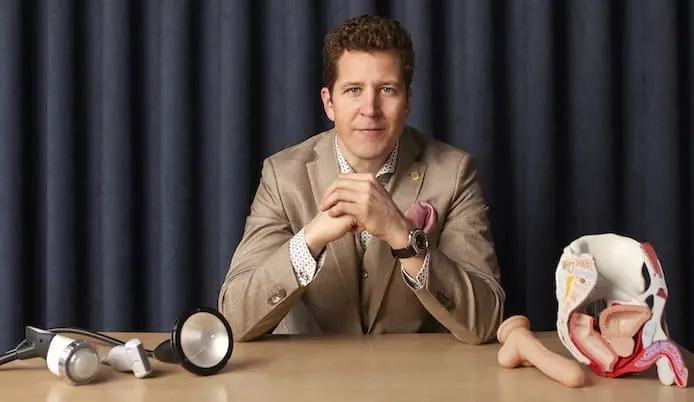
Written and medically reviewed by Michael Strøm
International speaker & expert in shockwave and EMTT treatment for erectile dysfunction, Peyronie’s & CPPS. Read more about me
Communication in relationships – the key to better intimate health
When the body doesn’t function as it should, especially when it comes to the most intimate functions like erection or painlessness in the abdomen, I see an automatic reaction in many men: they withdraw. They become silent. Communication in relationships is rarely the first thing that comes to mind when dealing with erectile dysfunction or chronic pelvic pain, but in my experience, silence is one of the biggest barriers to recovery.
In my clinic, MS Insight, I meet men every day who struggle with physical challenges but carry an equally heavy burden of unspoken words and frustrations at home. It’s natural to feel vulnerable when manhood fails or pain puts an end to intimacy. But shutting down creates a vicious cycle of performance anxiety, misunderstandings and distance, which unfortunately only exacerbates the physical symptoms.
Here I’ll walk you through why openness is crucial, how lack of communication affects your physiology, and how I can help you solve the problems – both physical and mental.
In this article
- The price of silence: When we don’t talk about the problems
- Why is it so hard for men to talk about intimacy?
- How physical symptoms affect relationships
- Concrete advice to break the silence
- The role of the partner – from counterpart to collaborator
- Holistic treatment at MS Insight
- Frequently asked questions about communication and intimacy
- Take the first step towards a better relationship today
The price of silence: When we don’t talk about the problems
It’s a pattern I see over and over again: You find that your erection is failing or you have pain during intercourse. Instead of saying “I’m in pain” or “I’m worried it might go down again,” you keep quiet. You may avoid intimacy altogether, go to bed later than your partner or make excuses to avoid close contact.
The problem is that your partner rarely guesses the real reason. Instead, your withdrawal is often interpreted as a lack of desire, infidelity or that you no longer find them attractive. This creates a deep rift in your communication in the relationship, with both parties walking around with their own erroneous conclusions.
For you as a man, this silence means enormous internal pressure. The body reacts to stress and anxiety by releasing adrenaline and cortisol. These stress hormones are direct opponents of an erection as they constrict blood vessels. By not talking about things, you are unconsciously maintaining the physical condition you are trying to hide.
Why is it so hard for men to talk about intimacy?
I find that many men have an ingrained idea that they should be able to “fix” things themselves. Sexuality is often seen as an achievement – something that just has to work. When it doesn’t, it feels like a personal defeat and addressing it feels like admitting weakness.
But the reality is that erectile dysfunction, Peyronie’s disease or chronic pelvic pain (CPPS) are real, physiological conditions. It’s not a matter of manliness, but of biology. Yet the shame is often so great that it blocks meaningful dialog.
In my clinic, I work from a philosophy that we must break down these taboos. I meet you at eye level and we talk straight to the point. Once you realize that your problems can be explained professionally – for example via my ultrasound scan or a review of the nervous system – it’s often much easier to put it into words with your partner.
How physical symptoms affect relationships
Communication in relationships is inextricably linked to how the body functions. The two most common issues I treat affect the relationship in different ways.
Erectile dysfunction and performance anxiety
When an erection fails to materialize, what is often called “spectatoring” occurs. This means that during sex you act as a spectator to your own body. Instead of enjoying the moment and intimacy with your partner, you monitor your penis: “Is it hard enough? Is it holding?” This mental state kills desire and makes it impossible for the nervous system to relax. Without communication, your partner may think it’s their fault, putting even more pressure on you next time.
Pelvic pain and sex drive
Men with chronic pelvic pain or pudendal neuralgia often live with a constant murmur or throbbing that is exacerbated by stress or ejaculation. This is where a lack of communication is disastrous. If your partner doesn’t understand that you’re in physical pain, your refusal to have sex may seem cold and insensitive. By explaining the nature of the pain, you can find other ways to be intimate together during treatment, which keeps the relationship close.
Concrete advice to break the silence
I know it can seem overwhelming to have the ‘big talk’. But good communication in relationships doesn’t have to be a long, therapeutic session. Here’s my concrete advice on how you can approach it:
- Choose the right time: Don’t have the talk in the middle of bed, right after a failed attempt at sex. The emotions are too high then. Have it over coffee on a Sunday morning or during a walk where you don’t have to make eye contact all the time.
- Keep it on your own turf: use “I” language. For example, say: “I’m having some body issues at the moment that are frustrating me. It has nothing to do with my desire for you.”
- Be specific: If you’re in pain, say so. If you’re afraid of losing your erection, say so. Honesty effectively disarms fantasies and misunderstandings.
- Invite solutions: Let them know you’re looking for help. “I’ve made an appointment with MS Insight to get it looked at so we can get it right.” It shows empowerment and responsibility.
The role of the partner – from counterpart to collaborator
When you open up, the dynamic changes significantly. Your partner goes from being an unknowing counterpart who may feel rejected to becoming a partner in your treatment process. It removes the “elephant in the room”.
I often see that when the man talks about his challenges, a stone falls from his partner’s heart. The relief that it’s “just” a physical problem that can be treated and not a lack of love is immense. This renewed confidence lowers your stress levels, which directly improves the effect of the physical treatments I perform in the clinic.
Holistic treatment at MS Insight
I don’t just treat the symptom; I treat the whole person. Although my core competence is advanced physical therapy, counseling on communication in relationships is a natural part of the process.
I always start with a thorough examination, using ultrasound to look at blood flow and tissue condition. I then put together a treatment plan, which often includes:
- Focused sound waves (Shockwave): This technology stimulates the formation of new blood vessels and nerves, which is highly effective for both erectile dysfunction and pain. It’s important to emphasize that I use focused sound waves – the most potent form of shockwave – and not just radial pressure waves.
- EMTT (Electromagnetic Transduction Therapy): Works at the cellular level to reduce inflammation and pain deep in the pelvic floor.
- Neuromodulation: A method of “restarting” nerve pathways if there are disturbances in the signal from the brain to the penis.
But machines can’t do it alone. If you go home to a relationship characterized by silence and stress, it’s counterproductive. That’s why we talk about how you feel, how you sleep and how the dialog is at home. I’m not a couples therapist, but I guide you in the physiological and sexological aspects of cohabitation to give you the best conditions for success.
If there is a need for a medical examination beyond my competencies, I will guide you thoroughly in how to talk to your own doctor so that you ask the right questions and request the relevant blood tests.
Frequently asked questions about communication and intimacy
Should I bring my partner to the consultation?
You are welcome to bring your partner, but it is not a requirement. For some men, it’s nice to have support and it can help their partner understand the physiological aspects of the problem. For others, it’s important to have a space where they can talk freely with me first. Do what feels most comfortable for you.
Can poor communication be the cause of erectile dysfunction?
Yes, indirectly. Poor communication creates insecurity, stress and nervousness. This activates the sympathetic nervous system (the fight/flight response), which chemically counteracts an erection. So while the initial cause may have been slightly physical, the psychological strain from a lack of dialog can perpetuate and significantly worsen the problem.
What if my partner doesn’t understand my pain?
Pain in the abdomen (like CPPS) is “invisible” and therefore can be difficult for others to understand. Here I can help you put it into words. I can explain to you the mechanisms that happen in your pelvic floor, so you can better communicate it to others. Knowledge and professionalism are often the key to understanding.
Take the first step towards a better relationship today
Restoring intimacy and function in the genital area often requires a multi-pronged approach. At MS Insight, I’m here to help you with the physical treatment through proven technologies like focused sound waves and EMTT, but I’ll also help you find the calm and tools to manage the mental pressure.
You don’t have to accept that silence and problems should dominate your life or your relationship. Seeking help is neither dangerous nor embarrassing – on the contrary, it’s the most responsible thing you can do for yourself and your partner.
If you are interested in hearing more about how I can help you, you are always welcome to contact me by phone 41 40 08 58 or email michael@msinsight.dk. I’ll get back to you quickly with a customized proposal so we can find the best way forward together.
Would you like a specialist assessment of your situation?
You don’t have to figure it out alone. Call directly or write a few lines about your symptoms – I’ll get back to you within 12-24 hours with a concrete suggestion for the next step.