
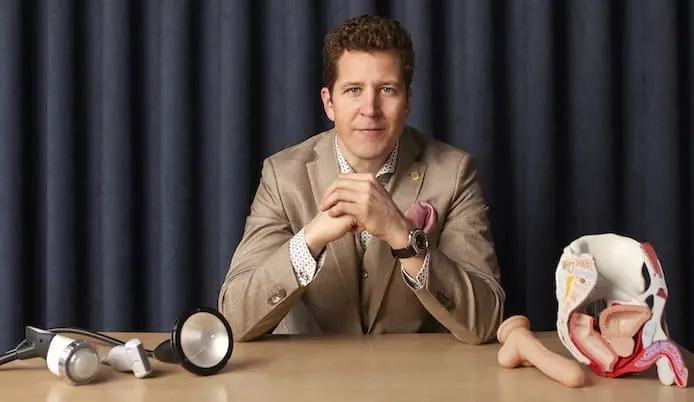
Written and medically reviewed by Michael Strøm
International speaker & expert in shockwave and EMTT treatment for erectile dysfunction, Peyronie’s & CPPS. Read more about me
Bruising on the penis – what does it mean and when should you react?
A bruise on the penis can be scary. Many men associate discoloration and soreness with something serious, and the uncertainty can affect mood, desire and erection. I see it often in the clinic – and luckily, most bruises are harmless and go away on their own. But sometimes a bruise is a sign of an injury or condition that needs to be addressed quickly. Here’s a clear overview of causes, warning signs, treatment – and how I can help you move forward with confidence. I know it can be a lot on your mind and body; my goal is for you to leave with peace of mind and a concrete plan.
What is a bruise (hematoma) on the penis?
A bruise occurs when small blood vessels under the skin burst, allowing blood to seep into the tissue. This causes a bluish, purple or greenish-yellow discoloration that typically changes color over a few days. On the penis, swelling, soreness and a feeling of “sprain” may accompany it. Uncomplicated bruising is most often the result of pressure or friction – for example during sex, masturbation or sports – and heals in 1-3 weeks. Because the skin on the penis is thin, the discoloration can sometimes spread a little the next day, which is normal. You may also find that the area feels more tender during an erection; this is to be expected as long as the pain gradually subsides. Avoid vigorous massage or “pressing it away” – this will only prolong healing.
Dangerous or harmless? At a glance
- Uncomplicated hematoma: Local discoloration and slight tenderness, gradual improvement over days/weeks.
- Signs of more serious injury: Sudden, severe pain, “cracking” sound, rapidly growing swelling, deformity/curvature, loss of erection, difficulty urinating.
- Conditions that may resemble a bruise: superficial vein thrombosis (Mondor’s disease), sclerosing lymphangitis (hard string), early stage Peyronie’s disease (local pain and later curvature) as well as skin changes and small spot hemorrhages (petechiae).
In this article
- Typical causes of bruising on the penis
- Symptoms that require quick action
- My diagnostic approach in the clinic
- Treatment – what can you do and what can I help with?
- Frequently asked questions about bruising on the penis
- Prevention: How to reduce the risk of bruising
- How I help you in practice
- When should you book an appointment with me?
- Take the next step – and get peace of mind
Typical causes of bruising on the penis
Blows or heavy friction during sex or masturbation
The most common cause is mechanical strain: an angular hand movement, hard positions, “bending” in the wrong direction or prolonged friction. The penis has many small blood vessels close to the surface, so even minor trauma can cause discoloration. It can be more pronounced if you are on blood thinners or have a low platelet count. Tight erection rings and prolonged use without breaks can also increase the risk of small ruptures in superficial vessels – especially if there is also high friction. Spare the tissue for a couple of weeks if you’ve got an obvious bruise.
Penile fracture – an acute condition
A penile fracture is not a bone break, but a tear in the tunica albuginea – the strong membrane surrounding the swelling body. Typical signs are an audible “pop” or cracking sound, sudden sharp pain, immediate disappearance of erection and the penis quickly becoming swollen and blue/purple (often described as “eggplant deformity”). This is a surgical emergency. If you suspect a penile fracture, you need to go to the emergency room right away. The faster the surgical treatment, the better the chance of maintaining normal function and avoiding curvature.
Superficial dorsal vein thrombosis (Mondor’s disease)
Mondor’s disease on the penis is a harmless but painful blood clot in a superficial vein. You’ll often notice a tender, string-like structure along the top of the penis that can be sensitive during an erection. It may be accompanied by slight discoloration. The condition usually resolves on its own within weeks. I can confirm or deny the diagnosis with ultrasound and advise on gentle treatment. Splints, light compression from tight underwear and anti-inflammatory pain management (if you can tolerate it) typically relieve discomfort.
Sclerosing lymphangitis (a hard “string” after vigorous activity)
After intense sex or masturbation, the lymphatic vessels can become irritated and form a hard, sensitive string under the skin. It can look dramatic and be sore, but is typically harmless and goes away on its own. The difference to Mondor’s disease can be determined by clinical examination and ultrasound. I’ll guide you on how long you should pause activity and how to gradually start up again without triggering the symptoms.
Injections, vacuum pump and medication
- Erection injections (ICI): Small bruises where the needle has been are common – especially if the technique or needle size is not optimal.
- Vacuum pump: Too much negative pressure or too long can cause pinpoint bleeding and bruising.
- Blood thinners: Increases the risk of hematomas and can make discoloration more pronounced and prolonged.
For injections, I recommend rotating injection sites, keeping light pressure for a few minutes after the injection and avoiding exercise or rough sexual activity right after. When vacuum pumping, it is important to follow the recommended negative pressure and time intervals and always use the appropriate cuff size and lubricant.
Bleeding disorders, diabetes and other risk factors
Some health conditions make the tissue more vulnerable or inhibit healing: bleeding disorders, low platelet count, unregulated diabetes, high blood pressure, smoking and sleep deprivation. If bruising occurs very easily or frequently without a clear cause, there may be reason to examine your overall health. I can guide you on which blood tests or examinations you may want to discuss with your doctor. Small lifestyle adjustments – such as stable blood sugar levels, better sleep hygiene and quitting smoking – can significantly improve vascular function and healing speed.
Symptoms that require quick action
Signs of penile fracture
- Sudden, sharp pain during erection
- Audible “pop” or cracking sensation
- Immediate loss of erection
- Fast growing swelling and blue-purple discoloration
- Severe deformity or significant curvature
If you experience any of the above, you need to go to the emergency room.
When the discoloration spreads or is accompanied by other symptoms
- Severe, increasing pain or widespread swelling
- Fever, redness or warmth of the skin (may indicate infection)
- Problems charging the water
- A new, hard knot/string that won’t go away
- Persistent discoloration for more than 2-3 weeks without improvement
Here, I recommend a clinical assessment and often ultrasound to clarify the cause. Early clarification prevents unnecessary worry and minimizes the risk of permanent discomfort.
My diagnostic approach in the clinic
Conversation and investigation without taboo
I start with a calm, respectful conversation about how it started, what you’re experiencing now, and whether it affects erection, desire or comfort during sex. I also ask about medication, previous injuries, activity level and any other symptoms. The examination itself is gentle and focuses on where the discoloration is, whether there is swelling, a string, a lump or signs of curvature. You set the pace – and I explain along the way so you always know what’s happening.
Advanced ultrasound scanning
Ultrasound scanning is my core competence. I use high-resolution ultrasound to assess:
- Skin and subcutaneous tissue: Whether there is a hematoma, fluid accumulation or inflammation
- Swelling bodies and tunica: Exclusion of rupture or fibrotic changes
- Superficial vessels: Signs of thrombosis (Mondor’s disease) or irritated lymphatic vessels
- Peyronie’s changes: Plaques or thickenings that may explain pain and curvature
I combine grayscale images with color Doppler to assess blood flow and compression testing of the superficial vessels for suspected thrombosis. Ultrasound helps distinguish what’s harmless from what requires targeted treatment – and gives you peace of mind because I can see exactly what’s going on.
When I recommend further testing with your GP
If the pattern of bruising seems unusual, or if I suspect an underlying factor, I advise you to talk to your doctor about relevant tests. This could be blood tests for platelet count, coagulation, blood sugar (diabetes), liver function or hormones if you also have erectile dysfunction. Frequent bruising elsewhere on the body, nosebleeds or a long bleeding time after small incisions can strengthen the indication for such tests.
Treatment – what can you do and what can I help with?
Home measures for uncomplicated bruising
- Pause: Rest the penis from sex and masturbation until the soreness is gone.
- Chill: Short ice packs (wrapped in cloth) 10-15 minutes at a time for the first 24-48 hours.
- Support: Tight-fitting underwear can reduce discomfort and swelling.
- Pain management: Gentle painkillers as needed if you can tolerate them.
- Observation: The discoloration should gradually lighten and disappear over 1-3 weeks.
Keep skin dry and use lubricant when restarting activity. Start slowly, avoid positions that bend the penis strongly and stop if the pain increases. If you experience new discoloration or worsening, pause again and contact me for an assessment.
Treatment of Mondor’s disease and sclerosing lymphangitis
For thrombosis in a superficial vein (Mondors) or irritated lymphatic vessels, the first choice is rest, temporary abstinence from sexual activity and symptom relief. I can confirm the diagnosis with ultrasound, advise on duration and ensure there is no underlying damage. Most people are symptom-free within 2-6 weeks. Warm compresses may feel soothing for some after the first few days, and light stretching of the tissue below the pain threshold may help once the soreness has subsided.
After a suspected penile fracture
If I suspect a penile fracture, I will refer you urgently for surgical assessment. Afterwards, I can help with follow-up, ultrasound checks, advice on restarting sexual activity and preventing symptoms such as pain, insecurity, erectile dysfunction or the onset of curvature. My focus is on both physical healing and mental comfort, so you can get back to your everyday life.
When a bruise points to Peyronie’s disease or chronic pain
Some men experience a bruise at first and later a gradual curvature, loss of length, stiffness difference or pain on erection. These can be early signs of Peyronie’s disease, where scar tissue/plaque forms in the tunica. I offer a structured program with ultrasound-based diagnostics, advice on load management, the role of the pelvic floor and the option of targeted treatment modalities, such as focused sound waves and EMTT, which can relieve pain and support tissue healing in selected patients. For chronic pelvic pain (CPPS), neuromodulation and a comprehensive pain and function strategy may be relevant. Timing is adapted to the phase of the disease (active vs. stable) to match your symptoms and goals.
Erectile dysfunction after trauma – focused sound waves, EMTT and neuromodulation
A bruising trauma can leave soreness, fear of recurrence and fluctuating erections. Focused sound wave therapy can – in men with vascular erectile dysfunction – stimulate vascular function and tissue repair. EMTT and neuromodulation can supplement pain and irritability in the tissue. I put together an individual program combining treatment modalities with specific advice on pace, technique, sleep and stress, so you can safely return to a good sexual life.
Frequently asked questions about bruising on the penis
Is a bruise on the penis dangerous?
In most cases, no. A common hematoma after mild trauma heals on its own. Alarm signals are sudden, severe pain, a “cracking” sound, rapid swelling and significant deformity – it could be a penile fracture and requires emergency help.
How long does a bruise last?
Typically 1-3 weeks. The color changes from blue/purple to green/yellow and gradually fades. If the discoloration does not improve after 2-3 weeks or if it increases, you should be examined.
Can a bruise cause erectile dysfunction?
Temporarily – yes, due to soreness and concern. Most people return to normal function once the tissue has healed. If the erection is still weak, painful or uneven, I will examine the vessels, tissue and any incipient plaque changes and make a plan.
Could it be an STD?
Most STIs cause sores, discharge or blisters – not bruising. However, small pinpoint bleeding can occur with irritation. If you are in doubt or have risk contact, you can get tested for STIs through your GP or testing center. I am happy to advise you on what is relevant for you.
Can I have sex when I have a bruise?
I recommend a short break until the soreness and discoloration has clearly subsided. Start slowly, use lubricant and avoid positions where the penis bends strongly. Listen to pain – it’s a signal.
Does heat or cold help best?
Cold for the first 24-48 hours can reduce swelling. Later on, light warmth may feel soothing. Avoid prolonged or intense heat/cold directly on the skin.
Can a bruise come without trauma?
Yes, if you are on blood thinners, have easy bleeding vessels, bleeding disorder or use a vacuum pump/injections. Frequent spontaneous bruising may be a sign of something that needs to be addressed. I can assess the pattern and guide you to take relevant tests via your GP.
Could it be cancer?
Penile cancer rarely shows up as a single bruise. If a lump, sore, discharge, skin changes or discoloration persists and does not go away, you should be examined. I will assess the progress and scan findings and guide you further if necessary.
Should I be concerned if there is a hard “string” on the top side?
It could be Mondor’s disease (superficial vein thrombosis) or sclerosing lymphangitis. Both are usually benign and self-limiting. An ultrasound scan can confirm the diagnosis and I provide a concrete plan for relief and gradual return to activity.
Prevention: How to reduce the risk of bruising
- Use a good lubricant during sex and masturbation – especially for prolonged activity.
- Avoid hard “bends” and thrusts; keep the penis in neutral when changing positions.
- Be moderate with the vacuum pump and follow the recommended vacuum and time.
- For injections: Use correct technique and needle size; change sides and press lightly after injection.
- Prioritize sleep, movement and blood sugar control; stop smoking – it benefits vessels and healing.
How I help you in practice
My approach is both professional and human. You get a safe environment where I talk straightforwardly about what is difficult. I offer:
- Thorough medical history and physical examination without taboo
- Advanced ultrasound scanning of penile tissues and vessels
- Clear clarification of whether it is an uncomplicated hematoma, Mondor’s disease, lymphangitis, early Peyronie’s disease – or something that needs urgent management
- A tailored plan for relief, healing and safe return to sex
- Treatment for persistent erectile dysfunction, pain or curvature with focused sound waves, EMTT and neuromodulation – as well as advice on lifestyle, sleep and pelvic floor
- Guidance to talk to your GP about relevant blood tests if there are signs of underlying factors
When should you book an appointment with me?
- If you are unsure if your bruise is harmless
- If the discoloration does not improve after 2-3 weeks or if it recurs
- If you feel a persistent hard string/knot or experience pain during an erection
- If your erection has become weak, unsteady or painful after an injury
- If you are concerned that something more serious is going on
You are welcome – whether you come for a quick check-up or a targeted course of treatment. I work in Copenhagen and help men from all over Denmark, especially from Zealand and the Copenhagen area. It’s perfectly normal to feel insecure or embarrassed. In my experience, a thorough, respectful clarification puts your mind at ease – and early intervention makes a big difference in terms of erection, pain and confidence.
Take the next step – and get peace of mind
A bruise on the penis is usually harmless, but your concern is real. Get peace of mind with a competent assessment and a plan that’s right for you. Book an appointment or contact me for a no-obligation chat. I’m ready to help you move forward safely.
If you are interested in hearing more about how I can help you, you are always welcome to contact me by phone 41 40 08 58 or email michael@msinsight.dk. I’ll get back to you quickly with a customized proposal so we can find the best way forward together.
Would you like a specialist assessment of your situation?
You don’t have to figure it out alone. Call directly or write a few lines about your symptoms – I’ll get back to you within 12-24 hours with a concrete suggestion for the next step.