

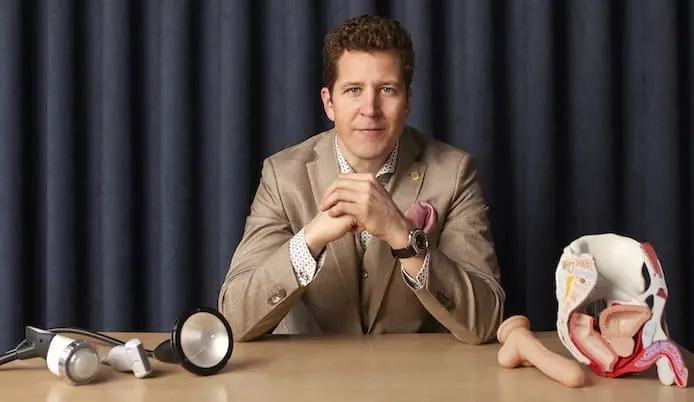
Written and medically reviewed by Michael Strøm
International speaker & expert in shockwave and EMTT treatment for erectile dysfunction, Peyronie’s & CPPS. Read more about me
Average penis: facts, peace of mind and concrete solutions
Are you experiencing doubts about size, shape or function – perhaps on top of erectile dysfunction or pelvic pain? You are far from alone. I meet many men who compare themselves to an unrealistic ideal and end up worrying, avoiding and losing confidence. Here you’ll get an honest and professional overview of what “Average Penis” really means, what’s normal, when there might be a problem, and how I can help you safely and effectively in the Copenhagen clinic.
In this article
- What does “Average penis” mean in practice?
- When is the penis out of normal?
- The mind, porn and the mirror – reality check without shame
- What if you have penile or pelvic pain?
- What specifically can I help with in the clinic?
- Frequently asked questions about Average penis
- What matters most: function, safety and quality of life
- Take the next step – discreet help in Copenhagen
What does “Average penis” mean in practice?
The term covers the middle of a wide variation – not a set list. Penis size follows a normal distribution: some are smaller, some larger, most are around average. The most important thing is that the penis works, not whether it hits a certain centimeter number. At the same time, it’s perfectly legitimate to want clarity: Am I within the normal range? Does my size affect my sex life? And what if I also have erectile dysfunction or pain?
In my experience, calmness often comes when facts, emotions and body are brought together. Therefore, you get both concrete numbers and a translation to reality – respecting that this part of life is personal and sensitive. When you understand the numbers, get to know your body and understand how it works, your shoulders will drop and you’ll be able to enjoy yourself more.
Facts and figures: length and girth of an average penis
The best data points to the following guidelines for adults:
- Erected length: average about 13 cm. Most are between approximately 11-16 cm.
- Erected circumference (thickness around the shaft): average approx. 11-12 cm.
- In a relaxed state, the length fluctuates greatly (typically 7-12 cm) depending on temperature, stress and activity.
- “Stretched flaccid length” (you gently pull out the penis in a flaccid state) correlates pretty well with erect length.
Variation is normal. A penis can be shorter and thicker – or longer and slimmer – and work just fine sexually. Your partner’s experience is very much about the whole: intimacy, technique, pace, communication and comfort, not centimeters alone. Circumference can also vary along the shaft; therefore, it makes the most sense to measure at the center of the shaft and use the number as a practical guide – not a judgment.
Large data sets also show that averages are just that: averages. In practice, the normal ranges overlap, and two penises of different lengths can feel similar in function, because erection quality, pace and stimulation matter more to pleasure than small differences in measurements.
Grower or shower – why does the penis look so different?
Some penises grow a lot from flaccid to erection (grower), others look relatively large when flaccid and grow less when erect (shower). Both are normal. Cold, nervousness, hard training or a tight elastic in your underpants can cause an otherwise “large” penis to contract significantly. It says nothing about your sexuality or health. What matters is how it works when you’re warm, safe and turned on. If you often compare your flaccid penis in a cold locker room to someone else’s, your brain is fooling you – it’s not a fair comparison.
How to measure your penis correctly – if you want a fair number
- Length: measure the upper side from where the penis meets the pubic bone (press the ruler lightly against the bone to compensate for the fat pad) to the tip of the glans.
- Do it in full erection or as “stretched flaccid length”.
- Circumference: measure the middle of the shaft with a flexible tape measure in full erection.
- Measure in a warm, calm environment and avoid measuring right after ejaculation or hard exercise.
- Stand or lie as feels most natural – be consistent so measurements can be compared.
Measure 2-3 times at different times and take the average. This avoids cold or nervousness coloring the result. The bone-pressed reference gives a more stable number because the fat pad over the pubic bone can vary with weight and tension.
When is the penis out of normal?
Actual malformation or medical abnormality is rare. However, the following may be relevant:
- Micropenis: typically defined as stretched flaccid length more than 2.5 standard deviations below average – in adults around less than 9 cm. It is rare, and most often discovered early in life.
- Significant curvature with pain or loss of length may be due to Peyronie’s disease (scar tissue formation in the tumor bodies).
- Incomplete erection makes the penis appear shorter/thinner than it actually is (classic in erectile dysfunction).
Other conditions can make the penis look smaller without the shaft actually being shorter – such as a pronounced fat pad over the pubis (so-called “buried penis”) or a very tight foreskin that inhibits erection and comfort. Most of these conditions can be addressed with targeted efforts and a clear plan.
If in doubt, I will examine you thoroughly and explain what we see – objectively and respectfully. I use advanced ultrasound to assess tissue, scar tissue and blood vessels, and I talk to you about function, feelings and expectations. My goal is for you to leave with clarity and concrete options for action.
Penis curvature: when is it natural – and when is it Peyronie’s?
A slight curvature to one side or upwards is perfectly normal. Pay attention if you experience:
- Newly added curvature (often over months)
- Pain during erection
- Knotty area or hard plaque in the shaft
- Loss of length or more difficult to complete penetration
This can be a sign of Peyronie’s disease. I often work with a combination of focused sound waves(shockwave), EMTT and targeted exercises, as well as advice on sexual technique and pace, so that sexual life becomes safe and possible again. The effect depends on the stage and tissue response, and I evaluate continuously. In some courses, gradually dosed stretching/traction and specific pain management also make sense – always adapted to your tissue and your everyday life.
Erectile dysfunction can make even an average penis feel “too small”
If you don’t get fully hard, you naturally lose both length and girth. Many people interpret this as “I’m too small”, when in reality it’s about blood flow, nerve signals, pelvic floor tension or psychological factors like performance anxiety. This is where a professional and respectful assessment makes sense: when your erection becomes more stable and full, you’ll often see right away that your size is actually fine.
I uncover typical influences such as sleep, stress, smoking, alcohol, caffeine, medication (e.g. certain antidepressants), circulatory and metabolic disorders and your physical activity. This provides a concrete plan for what you can tweak – and what I can help you with – so you notice a real difference in both confidence and function.
The mind, porn and the mirror – reality check without shame
Porn and social media create a skewed perception of what is normal. The camera, angles and casting often give the impression that “everyone else” is significantly larger. At the same time, stress, shame and worry reinforce both erectile dysfunction and body insecurity. I face it every week – and there’s a lot to do:
- Concrete facts and measurements provide peace of mind.
- Knowledge about grower/shower and normal variation often changes self-image.
- Targeted work with performance anxiety and expectation pressure can significantly improve erection and desire.
- Open conversations with your partner about pace, needs and pleasure often increase comfort and satisfaction for both of you.
Partner satisfaction is very much about presence, communication, stimulation and comfort. Techniques such as pace, positions and focus on clitoral stimulation play a bigger role than the difference between 12 and 14 cm. When comfort and connection are in place, “average penis” becomes more than enough in practice.
Condom sizing – a handy hack to improve the experience
A condom that is too tight can dampen sensation and inhibit erections. One that is too loose can slip off. Use the circumference of the erection as a guide: circumference in mm divided by approximately 2.5 equals the “nominal width” of the condom. Example: 120 mm circumference → approx. 48 mm condom; 130 mm circumference → approx. 52 mm. Small adjustments make a big difference in comfort and safety.
A few extra tips: choose a length that matches you, use plenty of lube for better comfort, and experiment with texture or thickness to suit your preferences. The right size and good friction often leads to better erections and more pleasure.
What if you have penile or pelvic pain?
Chronic pelvic pain(CPPS), overactive pelvic floor and pudendal nerve involvement can cause penile pain, urethral burning, tingling, sensory disturbances, heaviness in the scrotum – and unstable erections. Many men describe that the penis “twitches” or feels smaller on days of pain and tension. This is due to muscle and nerve impingement, not that the penis itself is too small.
In the clinic, I work with a holistic plan: mapping symptom patterns, specific pelvic floor relaxation and activation exercises, neuromodulation to dampen pain pathways, EMTT to influence tissue and healing, and graduated rehabilitation of sexual function. The goal is less pain, more control and better erections. I also teach you how to spot triggers in everyday life (e.g. certain postures, prolonged pressure from a bike saddle or stress) to prevent flare-ups and maintain momentum.
What specifically can I help with in the clinic?
I offer a calm, precise and discreet assessment – and an individual program that addresses your specific goals. Typically, it consists of:
- Thorough conversation about symptoms, sexuality, concerns and goals – without taboos.
- Advanced ultrasound scan to assess tissue, scar tissue/plaques, irritated structures and relevant blood vessels.
- Pelvic floor functional test: is it overactive, underactive or uncoordinated?
- Treatment plan: focused sound waves (shockwave) for selected erectile dysfunction and Peyronie’s, EMTT and neuromodulation for pain modulation and tissue impact.
- Guidance on sleep, stress, exercise, weight and nutrition – because it affects hormones, circulation and nervous system.
- Sexological counseling with a focus on performance pressure, desire and communication – at eye level.
If there is an indication for blood tests (e.g. testosterone, cholesterol, blood sugar) or prescription medication (e.g. PDE5 inhibitors), I will guide you on how to discuss this with your own doctor. Along the way, I follow up with small, measurable milestones so you always know if the intervention is working – and what the next step is.
Evidence, safety and realistic expectations
Focused sound waves can stimulate tissue and improve blood flow in some men with vascular erectile dysfunction. EMTT and neuromodulation can reduce pain and relieve overactivity in muscles and nerves. There is good evidence for the effect in selected cases – but no treatment is a quick fix for everyone. My job is to match the method to the problem, explain the expected effect and continuously evaluate so you can feel meaningful improvements in everyday life and in bed.
I prioritize safety and transparency: You get clear information about possible reactions, expected timeline and what you can do between sessions to enhance the effect.
Frequently asked questions about Average penis
Is my penis too small?
The vast majority are within the normal range. If it feels “too small”, it’s often due to an incomplete erection, body tension, stress or comparison to porn. An objective measurement and a chat about function usually puts your mind at ease. I can help you assess both numbers and function to give you a fair picture.
Can exercise make the penis bigger?
General strength training does not make the penis bigger. Traction-based therapy may provide minor length gains in selected Peyronie’s patients, but requires discipline and proper guidance. Bottom line: Optimize blood flow, nerves and pelvic floor – it gives fuller erections and takes advantage of your natural size. It’s the most meaningful “win” for sex life.
Does the penis get smaller with age?
Some experience a slight loss of erection fullness due to a drop in testosterone, less activity, circulatory changes or medication. Weight loss, strength and cardio training, sleep optimization and targeted therapy can reverse much of this. A large fat pad above the pubic bone can “swallow” visible length; weight loss can therefore make the penis look longer. It’s about giving the body better conditions – not chasing an unrealistic number.
Does weight loss help with “size”?
Yes – not because the shaft gets longer, but because more of the shaft becomes visible when the fat pad over the pubis is reduced. At the same time, weight loss improves blood pressure, blood sugar and hormones – all good for erections. It’s one of the most effective, natural ways to boost both health and sex life.
What role does testosterone play?
Low testosterone can affect desire, energy and erection indirectly. It doesn’t make adult penises “smaller”, but can make it harder to get a full erection. I can guide you on whether it makes sense to talk to your doctor about relevant blood tests. Often, sleep, strength training, stress reduction and weight management provide a significant boost.
Can focused sound waves make the penis bigger?
Not as cosmetic enhancement. The purpose is to improve erection quality and blood flow. As the erection becomes fuller and more stable, many people find that they get their “real” length and girth back. It feels bigger – because you are utilizing your natural capacity.
How much curvature is normal?
A slight arch is normal. New pain, rapidly increasing curvature, knots in the shaft or loss of length point to Peyronie’s – and should be assessed. Early intervention can make a significant difference. I assess tissue, pain and function and create a plan you can feel comfortable with.
Does pelvic floor training help?
Yes – but only if it’s targeted. An overactive pelvic floor can exacerbate pain and erectile dysfunction if you’re just messing around. I’ll find out if you need to train strength, endurance, relaxation or coordination – and teach you how to do it right. It’s precise alignment that makes the difference.
Are visible veins or color differences a problem?
Usually not. Visible vein strands, slight color variation and small skin folds are normal. Sudden, hard knots, persistent pain or blue discoloration after trauma should be assessed. It’s better to check once too often than once too little, so you can rest assured.
Does frequent masturbation change size or sensitivity?
No, it doesn’t. Frequent masturbation does not change the size. Sensitivity may feel different temporarily with a very hard grip; vary the technique and use lube if necessary. If you experience persistent changes, I will help you find the cause and solution.
What matters most: function, safety and quality of life
“Average penis” isn’t about living up to a number – it’s about getting your body, mind and sex life to work together. If you struggle with erectile dysfunction, pelvic pain, curvature or insecurity, there is help available. I work professionally and respectfully with ultrasound, focused sound waves, EMTT, neuromodulation, targeted pelvic floor training and specific advice on sleep, stress, diet and sexual technique. All with one goal: to give you more peace, more control and more pleasure. You deserve a sex life that feels safe and meaningful – no matter what the tape measure says.
Take the next step – discreet help in Copenhagen
I know that seeking help can be daunting. With me, you will be met without prejudice and without taboo – with clear answers and a plan that makes sense. I have clients from all over Denmark, especially Copenhagen and Zealand. Do you want an overview, a better erection and less pain? Then get in touch and book an appointment, and I’ll help you quickly move from worry to action.
If you are interested in hearing more about how I can help you, you are always welcome to contact me by phone 41 40 08 58 or email michael@msinsight.dk. I’ll get back to you quickly with a customized proposal so we can find the best way forward together.
Would you like a specialist assessment of your situation?
You don’t have to figure it out alone. Call directly or write a few lines about your symptoms – I’ll get back to you within 12-24 hours with a concrete suggestion for the next step.