

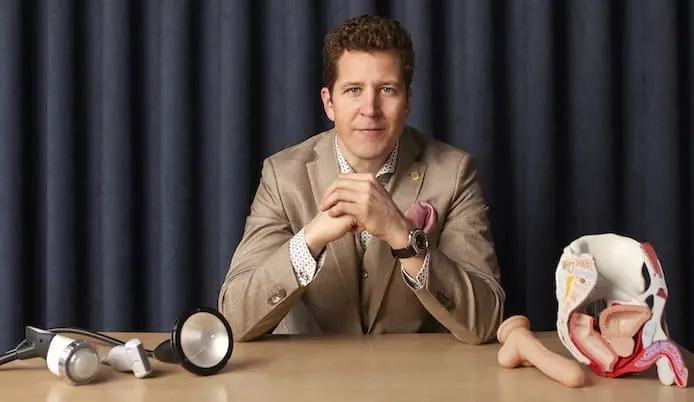
Written and medically reviewed by Michael Strøm
International speaker & expert in shockwave and EMTT treatment for erectile dysfunction, Peyronie’s & CPPS. Read more about me
Urge incontinence in men: when the sudden urge to pee rules everyday life
Urge incontinence is the type of urinary incontinence where a sudden, strong urge to urinate means you can’t hold it in – and there is a leak before you reach the toilet. It’s much more common among men than most people think. I often see it in men who also struggle with erectile dysfunction, chronic pelvic pain or body anxiety. It’s taboo, yes – but it’s also treatable. I know how draining it can be to plan your day around toilets, skipping meetings or runs and constantly being on call. You’re not alone and there is a way out. Here’s my professional overview of Urge Incontinence, why it occurs, how I investigate it and what targeted solutions I offer in the clinic.
In this article
- What is Urge Incontinence – and how does it feel?
- Why does Urge incontinence occur in men?
- How I examine Urge incontinence in the clinic
- Urge incontinence treatment: evidence, peace of mind and direction
- How long does it take to get Urge incontinence under control?
- Frequently asked questions about Urge incontinence
- When should you seek emergency help?
- How I help you move forward – peace, control and freedom in everyday life
What is Urge Incontinence – and how does it feel?
Urge incontinence (also called overactive bladder with leakage) is characterized by a sudden and severe urge to urinate that can be impossible to suppress. It is not the same as stress incontinence, where you leak when you cough, laugh or lift. With Urge incontinence, the urge is in control – and it can come out of the blue or be triggered by something as simple as the key in the front door, the sound of running water or cold. Many describe a pressure or ‘electric’ unease in the abdomen, a change in breathing and a feeling of loss of control. Often, the bladder has become accustomed to small urinations, so even small amounts feel like “full bladder”.
Typical signs I see with Urge incontinence
- You urinate frequently (frequent urination) but in smaller amounts
- You wake up at night to pee (nocturia)
- You don’t make it to the toilet in time and experience a leak
- You change routes or habits to be close to a toilet
- You feel like your bladder is “in charge” – even when you’re at work, at the gym or with your partner
Overactive bladder can stand alone, but it can also occur together with pelvic pain (CPPS), irritation symptoms from the prostate, reduced erection or sexual performance pressure. It’s often all connected – and I treat it as a whole. Some people also experience burning without infection, difficulty starting or not feeling completely empty. It’s not dangerous, but it’s important to get clarity so we can address the right problem.
Why does Urge incontinence occur in men?
The direct cause is that the bladder muscle (detrusor) contracts too early or too strongly. But there can be many triggers. My job is to identify what’s driving your symptoms so I can treat precisely. Often I see “bladder learning”, where frequent safety trips to the toilet teach the body that small amounts feel like “now and then”. Constipation, abdominal wall tension, pelvic floor tightness, and high stress levels can exacerbate the signals between the bladder and brain.
Common contributing causes
- Overactive bladder without known cause (idiopathic OAB)
- Irritation or inflammation: urinary tract infection, prostatitis or bladder irritation
- Enlarged prostate (BPH) with residual urine and secondary bladder irritation
- Pelvic floor dysfunction: an overstretched or uncoordinated pelvic floor can create a constant “alarm” in the bladder system
- Nervous conditions: pudendal nerve involvement, diabetic neuropathy, previous disc problems; rarer neurological diseases
- Stimulants and habits: coffee, energy drinks, alcohol, nicotine, artificial sweeteners, heavy fluid intake late in the day
- Stress, poor sleep and increased nervous system alertness
It’s important to differentiate between Urge incontinence and other types of incontinence – and to catch “red flags” like blood in the urine, fever or acute urinary retention. I can help you clarify this part with confidence. I also assess bowel function, breathing and bodily habits because in practice they are closely related to bladder behavior.
The Urge incontinence connection: erection, pain and performance
When the bladder makes noise, tension levels rise throughout the body. The autonomic nervous system (sympathetic/parasympathetic) affects the bladder, pelvic floor and erection. Pelvic pain can maintain an inappropriately high tone in the pelvic floor, which in turn exacerbates urgency and leakage. Fear of leaking during sex can create performance pressure that makes erection insecure. That’s why I always think holistically: we need to calm the bladder, pelvic floor and nervous system. I use specific tools to lower arousal (breath control, bodily micro-breaks and targeted relaxation) so that the body can switch from “alarm” to “calm and control”.
How I examine Urge incontinence in the clinic
My approach is structured but down to earth. We start with a thorough conversation about your symptoms, habits and concerns. I’ll then perform a targeted, functional examination focusing on the bladder, pelvic floor and nerves – and I use advanced ultrasound scanning as a key part of the diagnostic process. You’ll always know what I’m doing and why, so you can feel comfortable and empowered every step of the way.
What does the Urge incontinence examination involve?
- Symptom analysis and bladder diary: how often do you urinate, how much, what is the urge like and when does leakage occur?
- Standardized questionnaires to assess severity and impact on quality of life
- Ultrasound scan: assessment of bladder volume before/after urination (residual urine), assessment of prostate conditions and observation of pelvic floor movement patterns in real-time
- Functional assessment of the pelvic floor: coordination, tension level and ability to release
- Screening for contributing factors: fluid/caffeine, sleep, stress, medication, pain and trigger situations
Ultrasound allows me to show you what I see directly on the screen – it makes training concrete and motivating. I also assess breathing, posture and abdominal pressure because they affect bladder pressure and pelvic floor function.
Examinations outside the clinic
If there are signs of infection, blood in the urine or a need for medical investigation, I guide you to talk to your own doctor about relevant tests (e.g. urine test, blood tests including PSA according to age/history) or referral for urodynamics if necessary. I’ll help you formulate your observations so that you come to the doctor with a clear picture – saving time and making better decisions.
Urge incontinence treatment: evidence, peace of mind and direction
I tailor the program to you. I often combine behavioral strategies and training with neuromodulation and – when appropriate – targeted technologies like EMTT and focused sound waves. The goal is a calmer bladder, better control and a pelvic floor that works together – without pain and without undue pressure. You get a simple, written plan with clear steps so you always know what to do in everyday life.
Bladder training and behavioral strategies
- Planned urination and gradual postponement: I teach you to practice “urge control” in small, realistic steps so your bladder can hold more again without panic
- Urgency techniques: stop, stand steady, steady breathing and short, precise pelvic floor squeezes/relaxations – don’t go to the toilet until the urge subsides a little so the brain learns that you are in control
- Fluid management: enough fluid but smart timing; reduce caffeine/alcohol and artificial sweeteners; avoid “safety icing” all the time
- Sleep and circadian rhythm: routines that calm the nervous system and reduce nocturnal toilet visits – especially focus on rest before bedtime
- Trigger management: handle cold, stairs and key-in-lock situations with concrete tools so cravings don’t hijack you
Pelvic floor training for Urge incontinence – control and relaxation
Many men with Urge incontinence have an overactive pelvic floor. It’s not just about “squeezing more”, but about squeezing correctly – and being able to let go again. I teach you precise activation and relaxation to calm the bladder neck and calm the nervous system. With ultrasound, I can give you visual feedback on how the pelvic floor and bladder neck are moving. This makes the training safe and targeted. We also work on breathing and the feeling that the perineum can lower softly on inhalation – a simple technique that often significantly reduces cravings.
Neuromodulation for overactive bladder
Neuromodulation is a gentle method to reduce overactivity in the bladder nerve pathways. I use non-invasive stimulation, typically via skin electrodes on specific nerve pathways (e.g. tibialis- or pudendal-related routes), in courses of 12-15 sessions. Many notice a decrease in urgency, fewer night-time awakenings and better control in everyday life. The method is well documented for overactive bladder and can be combined with training and behavioral strategies. I adjust parameters and locations based on your symptoms so that the effect is as stable as possible.
EMTT (electromagnetic transduction therapy)
EMTT emits pulsed electromagnetic fields that can affect the tissue and nervous system. In practice, I use EMTT to reduce pelvic floor overactivity, modulate pain and support neuromodulation in Urge incontinence – especially when pelvic pain or muscle tension is part of the picture. It’s not a miracle cure, but for many men it works as an effective reinforcer of training and behavioral efforts. I adjust dosage and placement according to your tolerance and response from session to session.
Focused sound waves(shockwave)– when the tissue needs help
Focused sound waves can be used to target muscle tension, trigger points and scar tissue in the pelvic area. For men with chronic pelvic pain and Urge symptoms, it can provide more tissue compliance and less pain – thus calming the nervous system. I only use it when there is a clear tissue cause for the symptoms and always as a supplement to an overall plan. For pure overactive bladder without muscle or pain-dominant issues, other measures are often more important, and I help you prioritize them.
Urge incontinence medical treatment – when it makes sense
Some men benefit from overactive bladder medications such as antimuscarinics or beta-3 agonists (like mirabegron). I will discuss the benefits and possible side effects with you, and I will advise you to talk to your own doctor if medication is relevant as part of the process. The combination of medication and targeted training/neuromodulation can be powerful – and I evaluate the effect with you on an ongoing basis. For side effects such as dry mouth or constipation, we adjust the strategy to get the balance right for you.
How long does it take to get Urge incontinence under control?
The first improvements often come within 3-6 weeks when I combine bladder training, pelvic floor management and neuromodulation. Significant and more stable changes are typically seen over 8-12 weeks. Chronic conditions or complex causes may require more time. My job is to make it manageable, adjust the plan along the way and give you tools that last in everyday life. You get concrete markers of progress (e.g. longer urination intervals, fewer nighttime awakenings and greater confidence in everyday activities).
Frequently asked questions about Urge incontinence
Is Urge incontinence the same as overactive bladder?
Overactive bladder describes urgency, frequent urination and nighttime trips to the toilet. When urgency leads to leakage, it is called Urge incontinence. Many men have overactive bladder symptoms without actual leakage – but experience it as highly disruptive.
Is it normal to pee often?
It is normal to urinate about 6-8 times a day, depending on fluid intake. Much more frequent, small portions, nocturnal awakenings and strong urges point to overactive bladder. These are signs that the body is asking for help – not weakness. When the bladder is allowed to fill a little more and the pelvic floor can release, the need for constant trips to the toilet typically decreases.
Can coffee, alcohol and nicotine aggravate Urge Incontinence?
Yes, you can. Caffeine, alcohol and nicotine irritate the bladder and increase urgency. Artificial sweeteners can also play a role. I’ll help you with a realistic plan so you don’t have to live ascetically – but wisely.
Do Kegel exercises help?
Yes – but only when done correctly. Many people squeeze too hard and too often and forget to release. Urge incontinence is all about coordination: short, precise activation to quell urges – and good relaxation afterwards. I train this with you, often with ultrasound feedback.
Can Urge incontinence go away on its own?
Some have fluctuating symptoms, but persistent problems rarely go away without targeted efforts. The good news is that the combination of behavioral strategies, neuromodulation and exercise has a high success rate – especially when I also address sleep, stress and any pain.
Is leakage a sign of prostate cancer?
Urge incontinence is not in itself a sign of cancer. However, blood in the urine, unexplained weight loss or persistent pain should always be taken seriously. If necessary, I will guide you to discuss relevant tests with your own doctor.
What if I also have pelvic pain or erectile dysfunction?
It’s very common – and that’s why I work holistically. I look at pelvic floor tension levels, nervous system stress and specific sexual concerns. When pain and urgency decrease, many also see improved erection and more peace in intimacy.
When should you seek emergency help?
Seek urgent medical attention if you experience blood in your urine, fever and flank pain, sudden cessation of urination, new onset problems with feeling or strength in your legs, or severe, increasing pain. Most cases of Urge incontinence are not acute – but serious signs should always be assessed quickly.
How I help you move forward – peace, control and freedom in everyday life
Urge incontinence doesn’t have to control your life. At my Copenhagen clinic, I offer a safe, discreet and effective path from chaos to control: a thorough examination with ultrasound, a clear plan for bladder and pelvic floor training, neuromodulation and – when relevant – EMTT and focused sound waves. I also advise on sleep, stress, exercise and sex life, so that the whole you is included.
If you recognize the symptoms – even if you mostly struggle with erection, pelvic pain or performance pressure – get in touch. I meet you without taboos, at eye level and with respect for your reality. Together, I create the framework for lasting improvements so you can regain bladder control, strength in your body and your confidence.
If you are interested in hearing more about how I can help you, you are always welcome to contact me by phone 41 40 08 58 or email michael@msinsight.dk. I’ll get back to you quickly with a customized proposal so we can find the best way forward together.
Would you like a specialist assessment of your situation?
You don’t have to figure it out alone. Call directly or write a few lines about your symptoms – I’ll get back to you within 12-24 hours with a concrete suggestion for the next step.