

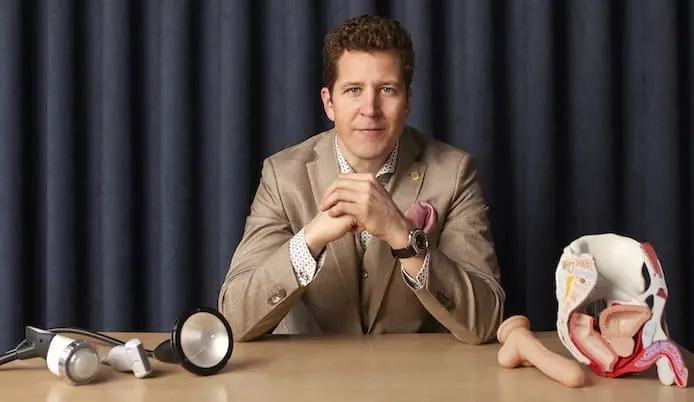
Written and medically reviewed by Michael Strøm
International speaker & expert in shockwave and EMTT treatment for erectile dysfunction, Peyronie’s & CPPS. Read more about me
Shockwave side effects – honest knowledge, confidence and realistic expectations
What is shockwave – and why are side effects important to understand?
I work with focused shockwave therapy (ESWT) for men struggling with erectile dysfunction, Peyronie’s disease and chronic pelvic pain (CPPS). Shockwave is pulsed, high-intensity sound waves that trigger the body’s own healing: improved blood flow, growth of small blood vessels (neovascularization), release of growth factors, stem cells, reduction of pain and impact on scar/fibrous tissue.
I use focused shockwave (f-ESWT), where the energy is precisely targeted to the structure we want to treat, whether it’s at 5mm or 10cm depth – and this differs from radial shockwave, which is more superficial and typically used in fitness/physiotherapy.
When considering treatment, it’s natural to ask: What are the possible Shockwave side effects?
My approach is direct and safe: most side effects are mild and transient – but you need to know them, understand why they occur and what I do to minimize them. Anesthesia is not necessary, and I constantly monitor your feedback to keep the intensity at a safe and effective level. It shouldn’t hurt.
In this article
- Is shockwave safe? What does the research and my clinical experience say
- Typical Shockwave side effects (mild and transient)
- Rare but possible shockwave risks
- Contraindications and precautions – when should I be extra careful?
- Shockwave side effects in three typical courses
- How to minimize Shockwave side effects in the clinic
- What can you do yourself before and after to reduce Shockwave side effects?
- Myths and concerns about Shockwave side effects
- The difference between focused and radial shockwave – and why it matters for Shockwave side effects
- What does a course cost – and what is the next step?
- FAQ about Shockwave side effects
- Take the next safe step
Is shockwave safe? What does the research and my clinical experience say
The research on men’s intimate health shows that focused shockwave is generally a safe treatment with a low risk of serious side effects – both for vascular erectile dysfunction, Peyronie’s-related pain and chronic pelvic pain. In my everyday practice, it’s rare that I see more than slight and short-term tenderness, a little redness or a minor bruise (less than 5% of clients).
The effect may vary from man to man, but the picture of side effects is stable: low risk and good tolerance when treatment is properly planned, dosed and performed based on thorough diagnostics. I always customize according to tissue type, sensitivity, medication usage and your daily routine. It makes a real difference to both effect and risk.
Typical Shockwave side effects (mild and transient)
Soreness, redness and heat sensation
The most common side effect is localized tenderness in the treated area – the penis, shaft, the area around the Peyronie’s curve or deeper structures in the pelvis. You may also experience slight redness and warmth of the skin. This is the body’s normal response to microstimulation and typically subsides within hours to a few days. A gentle application of a neutral, unscented moisturizer can bring comfort to the skin; I advise against strong ointments on the same day.
Temporary worsening of symptoms (“flare-up”)
Especially with chronic pain(CPPS), symptoms may flare up briefly after treatment. It may feel like more pelvic floor tension, pressure or increased pain. This is not dangerous. I plan the course and home measures to help you get through these flare-ups quickly – typically with breathing techniques, light mobilization exercises and graduated activity. I give you specific “emergency brakes” so you know exactly what to do if your body reacts. These flare-ups will usually be gone the day after treatment.
Bruising or minor hematoma
A small bruise can occur, especially if you are prone to bruising or if you are on blood thinners. It will go away on its own within a few days. I adjust the energy level and number of pulses to minimize the risk, and I avoid aggressive parameters in sensitive areas. A few minutes of light compression immediately after treatment can also help if you are prone.
Sensory disturbances (tingling, slight numbness)
Some men experience short-term tingling or slight numbness right after treatment. This is due to a temporary effect on nerve endings in the tissue (this is positive). The sensations typically normalize within 24-72 hours. If you experience persistent numbness or increasing discomfort, please let me know so I can adjust the dosage.
Fatigue or vasovagal reaction (very rare)
Some may experience brief dizziness, sweating or mild nausea (vasovagal response) – often because being in focus with intimate areas is unfamiliar. I take it easy, give breaks and adjust position and pace. Safety and calm come first. A light meal and water before treatment helps, and I make sure you get up slowly and have time before you leave.
Rare but possible shockwave risks
Nerve irritation
In rare cases, if very high energy is used, a nerve can become irritated and cause persistent exacerbation of pain or radiation (not used in the clinic as it is not relevant to the practitioner). It is typically transient, but I take it seriously: I reassess the diagnosis, adjust the dosage, change the target point – and often supplement with neuromodulation/EMTT and targeted pelvic floor relaxation to calm the nervous system. My goal is to reduce sensitivity, not provoke it.
Skin irritation or superficial tissue damage
If the skin is very thin or there is already irritation/wounds, the skin may react. I do not treat active infection or areas with severe skin irritation. I use gel and the correct applicator to protect the surface, disinfection, and always focus on glide and pressure to avoid rubbing irritation.
Worsening of curvature at Peyronies?
I hear that concern often. Focused shockwave, in my experience, does not cause worsening of the curvature when performed correctly. In Peyronie’s, the purpose is primarily to reduce pain and influence the “biology” of the plaque, not to “blow” anything up. Overdosing and incorrect targeting can irritate the tissue and increase pain – that’s why precise dosing and imaging are important. I always set realistic expectations for curvature and effect. It is rare that the penis will be completely straightened, but reductions of up to 20-50% are not uncommon. In addition, look at the increased function as a whole with peyronies, not just curvature.
Effects on urinary tract or erectile function
Focused shockwave does not harm the urethra or erectile tissue when used correctly and with the right amounts of energy. It is used precisely to improve blood flow. A temporary feeling of irritation – such as an increased urge to urinate – may occur, but will disappear again. If you experience burning or a change in the jet, I will follow up and adjust the treatment.
Contraindications and precautions – when should I be extra careful?
Blood thinners and bleeding disorders
If you are on blood thinners or bleed easily, I will plan a particularly gentle course of treatment. You should not change your medication on your own. If there is any doubt about risk, I advise you to talk to your own doctor about any adjustments or additional blood tests. I will always inform you of any signs of hematoma to watch out for.
Active infection, wound or skin disease in the area
I do not treat over active infection, severe skin conditions or localized cancer. I wait until the skin has healed or find a safe alternative. Good skin care and airing the area in the days before can reduce the risk of irritation. For wounds, shockwave can speed up the healing process and reduce scar tissue.
Implants and prosthetics
I do not treat directly over implants in the area (e.g. penile prosthesis). I adjust the targeting so that I work safely around the structures. If you have a pacemaker or other electronic implants near the treatment area, I always assess placement and safety before starting – and use imaging if needed.
Sensory impairment, diabetes and neuropathy
If you have impaired sensation, your feedback is especially important. I dose conservatively and assess tissue response continuously to avoid overtreatment. For diabetes, I also focus on skin condition and wound healing.
You can also read more about shockwave technology in general at ISMST
Shockwave side effects in three typical courses
For erectile dysfunction (erectile dysfunction)
– Typical side effects: Slight soreness in the penis/shaft, mild redness, rarely a small bruise.
– Special considerations: I distribute the impulses around the tumor bodies and vasculature, avoiding unnecessary pressure on skin and nerve pathways, and often combine with EMTT/neuromodulation to reduce hypersensitive pain pathways in men with concurrent pelvic issues.
I also adjust the frequency between sessions so that the tissue has time to respond positively before I step up.
For Peyronie’s disease
– Typical side effects: Transient tenderness in the plaque/curvature area. Slight hematomas with hard peyronie’s plaque and high energy (needed here)
– Special considerations: I use ultrasound to assess plaque location and tissue response. Dose and angle are crucial to avoid irritation. Shockwave can relieve pain; expectations of curvature are managed realistically and often in combination with other measures.
I advise on gentle handling in everyday life and sex so that the area is not unnecessarily provoked between sessions.
For chronic pelvic pain (CPPS)
– Typical side effects: Short flare-ups, increased pelvic floor tension.
– Special considerations: I ramp up energy gradually, taking into account the course of the pudendal nerve and working in parallel with breathing, relaxation and behavioral strategies to calm the nervous system.
I give you simple home tools (e.g. 4-4-4 breathing and gentle movement exercises) that complement treatment and reduce the risk of long-term reactions.
How to minimize Shockwave side effects in the clinic
Thorough diagnostics with ultrasound and clinical examination
I map tissue, blood vessels, plaques and pain points by palpation or ultrasound when appropriate. This means I can target the shockwave precisely and gently. I also assess muscle tension patterns in the pelvis so that I don’t treat on the “upper guard” system, but with it.
Individual dosing – energy, frequency and number of pulses
There is no one “right” protocol for everyone. I often start conservatively, evaluate response week by week and adjust accordingly. Too much energy too quickly is the most common cause of unnecessary side effects – I avoid that. Along the way, I ask you to describe sensations (sharp, throbbing, pressure) so I can fine-tune in real time.
Combination treatment that protects the tissue
I combine focused shockwave with EMTT (electromagnetic transduction therapy) and neuromodulation when appropriate. This can reduce pain sensitivity and promote calmness in the nervous system, which in practice means fewer and milder side effects. Some treatments also include gentle home exercises and sleep strategies to optimize healing conditions.
Structured aftercare
After treatment, I give clear, simple advice: how to dose activity and sex, what to do about soreness, and how to spot the few signs that require follow-up. You won’t leave with any doubts. I follow up on the next session to learn from your body’s response and optimize the plan.
What can you do yourself before and after to reduce Shockwave side effects?
Before treatment
– Eat light and drink water – you’ll stand/sit better throughout the session.
– Tell me about all medications and any skin problems in the area.
– Avoid applying strong creams on the day of treatment in the area I’m working on.
– Arrive well rested and avoid large amounts of alcohol the night before – it helps the body regulate pain and blood pressure.
After the treatment
– Expect mild soreness for 24-72 hours. Take breaks from hard training of the area for 24-48 hours.
– Avoid high doses of NSAIDs (painkillers like ibuprofen) for the first 24 hours unless otherwise instructed – it can theoretically slow down the healing processes I want.
– Use light heat or gentle movement rather than ice on the pelvis/penis. This increases comfort without defeating the purpose of shockwave.
– Sex? Listen to your body. If the area is sore, give it a day or two.
– If you experience a flare-up, use the agreed breathing and relaxation techniques and slow down for the rest of the day.
When should you contact me?
– If pain persistently worsens beyond 3-5 days.
– In case of major swelling, significant hematoma or increasing sensory disturbances.
– Fever, redness and warmth indicative of infection (rare in this context, but important to respond to).
I follow up and adjust the plan – early and proactively.
Myths and concerns about Shockwave side effects
Can shockwave cause erectile dysfunction?
The answer is no. Focused shockwave is used precisely to support erectile function via better blood flow. A temporary irritation soreness may occur, but it is not harmful to the erectile tissue when the treatment is performed correctly.
Does shockwave damage sperm or fertility?
There is no evidence of adverse effects on fertility with correctly dosed focused shockwave in urology. The treatment is delivered to targeted tissues for healing, not destruction.
Does shockwave cause scar tissue?
No, it isn’t. On the contrary, shockwave is used in several contexts to affect and soften fibrotic structures. For Peyronie’s, I dose conservatively and precisely to avoid unnecessary irritation.
The difference between focused and radial shockwave – and why it matters for Shockwave side effects
– Focused shockwave (f-ESWT): Precise depth, targeted energy. Used for erectile dysfunction, Peyronie’s, pelvic pain and deeper structures in the pelvis. Typically fewer superficial side effects when performed correctly.
– Radial shockwave: More superficial and diffused energy. Suitable for certain muscle tendons and trigger points, but not my first choice for targeted treatment of the penis or deep pelvic structures. In general, radial shockwave to the penis is not recommended.
The choice affects both efficacy and risk profile. I use focused shockwave because precision provides both better control and fewer shockwave side effects.
What does a course cost – and what is the next step?
The price depends on the problem, diagnostics and how many sessions are relevant. The most important first step is an honest, thorough assessment so you know what is realistic for you – both in terms of effect and potential Shockwave side effects. I’m based in Copenhagen and have men from all over Zealand and the rest of Denmark in the program. It is possible to get help with financing the course of treatment via sundhedplus.
Get in touch and I’ll arrange an appointment where you can confidently get answers to your questions and a plan that makes sense in your everyday life.
FAQ about Shockwave side effects
Does shockwave hurt?
You can feel the pressure waves as “taps” or deep pulses. I dose it so it’s bearable – without becoming a struggle. Slight discomfort is normal, strong pain is not.
How long do the side effects last?
Typically hours to a few days. With CPPS, there may be a brief flare-up, which I help you manage with simple measures.
Can I exercise after treatment?
Yes, but avoid heavy strain on the area for 24-48 hours for muscles and tendons. Listen to your body.
Are there risks with blood thinners?
There is an increased risk of minor bruising. I dose carefully. Do not change medication without an appointment – I advise you to talk to your own doctor if necessary.
Can shockwave damage nerves or make pain chronic?
It’s very rare. Should a nerve react, I adjust the plan and address the sensitivity of the nervous system. It usually turns around quickly.
Does shockwave affect sex drive or ejaculation?
Not negatively. On the contrary, some experience increased comfort and confidence during sex as pain and soreness decreases over time.
Is focused shockwave the same as “radial” treatment in the fitness industry?
I don’t. I use focused shockwave, which is more precise and suitable for intimate, deep structures. It gives better control over both effect and side effects.
Take the next safe step
If you’re considering Shockwave and want to have an honest talk about both the effects and Shockwave side effects, book an appointment with me. I meet you without prejudice, with a professional approach and a plan that takes care of both your body and your concerns. The goal is for you to leave with peace of mind – and a concrete program that helps you move forward.
If you are interested in hearing more about how I can help you, you are always welcome to contact me by phone 41 40 08 58 or email michael@msinsight.dk. I’ll get back to you quickly with a customized proposal so we can find the best way forward together.
Would you like a specialist assessment of your situation?
You don’t have to figure it out alone. Call directly or write a few lines about your symptoms – I’ll get back to you within 12-24 hours with a concrete suggestion for the next step.