
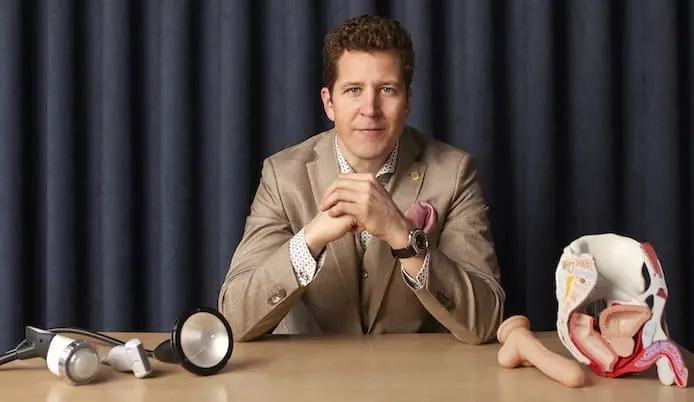
Written and medically reviewed by Michael Strøm
International speaker & expert in shockwave and EMTT treatment for erectile dysfunction, Peyronie’s & CPPS. Read more about me
Prostate anatomy – understand your bladder neck gland and why it matters for your erection, urination and well-being
When you understand “Prostate anatomy”, it’s easier to get a handle on symptoms like erectile dysfunction, thin stream, burning, pelvic pain or ejaculation discomfort. I meet many men who go it alone because they feel vulnerable. Here you’ll get a clear, respectful overview of what the prostate is, how it relates to erection, pelvic floor and nervous system – and how I help you safely and evidence-based in my Copenhagen clinic.

In this article
- What is the prostate gland? (bladder neck gland) – location, size and structure
- What does the prostate do? – Function and interaction with the rest of the system
- Prostate, erection and sexual function
- Pelvic pain (CPPS) and “prostatitis” – when the cause is not bacteria
- Enlarged prostate (BPH) – symptoms and significance
- Prostatitis and prostate cancer – anatomical overview without scary images
- How I examine you in the clinic – calm, respect and precision
- Treatment with me – combinations that work in practice
- Frequently asked questions about Prostate anatomy
- What can you do now?
- Take the next step – I help you move forward with confidence
What is the prostate gland? (bladder neck gland) – location, size and structure
Location: at the intersection of bladder, urethra and spermatic duct
The prostate lies just below the bladder and encloses the first part of the urethra (prostatic urethra). At the back is the rectum, on top of the bladder and at the front the pubic bone. This location means that the anatomy of the prostate affects urination, ejaculation and intimate comfort throughout the pelvis. The vas deferens (ductus deferentes) runs into the prostate and meets the ejaculatory ducts of the seminal vesicles as ejaculatory ducts leading to the urethra. The prostate has a capsule around it and is anchored at the neck of the bladder (base) and at the bottom towards the pelvic floor (apex). The close proximity to nerves, blood vessels and pelvic floor muscles explains why even small changes in pressure, swelling or muscle tension can be clearly felt as “prostate genes”.
Size and shape – “walnut” with age changes
In younger adults, the prostate is typically the size of a walnut (around 20-30 ml in volume). With age, the gland often grows – a natural process called benign prostatic hyperplasia (BPH). Growth in the so-called “transition zone” can squeeze the urethra and cause symptoms such as slow or interrupted stream and night-time urination. Size and symptoms don’t always correlate 1:1: Some have a large prostate with little discomfort, others have modest enlargement but significant bladder/urethra irritability. Temporary swelling from irritation or prolonged sitting can exacerbate symptoms, while rest, movement and good hydration often alleviate them.
Zones in the prostate – why it’s important
The prostate is divided into zones, each with its own function and importance:
- Peripheral zone: the largest part in adult men; where the vast majority of cancerous changes occur.
- Transition zone: the area around the urethra; this is where BPH (benign prostatic hyperplasia) occurs.
- Central zone: deeper towards the bladder; surrounds the inlet of the spermatic ducts into the prostate.
In front of the zones is also the anterior fibromuscular stroma – a muscle-rich area that can affect tension around the urethra. Knowing the zones helps me to match your symptoms with possible causes – for example, whether it’s pressure on the urethra, irritation in the tissue, or nerve involvement. This makes examinations more targeted and treatment more precise.
Nerves, blood vessels and pelvic floor – fine motor skills in practice
Around the lateral surfaces of the prostate are the neurovascular bundles: small blood vessels and erectile nerves (nervi cavernosi) on their way from the pelvic nerve plexus to the penis. They lie close to the capsule and can be irritated by inflammation, scar tissue or mechanical pressure. The pudendal nerve supplies large parts of the perineum and the external sphincter. The autonomic nerves (parasympathetic and sympathetic) control blood flow and ejaculation. The pelvic floor (levator ani and deep sphincters) work with the prostate to hold tight and control ejaculation. When the muscles become overactive or painful, it can be felt as prostate problems, even if the source is muscular. Conversely, calm breathing and targeted relaxation can lower nerve irritation and improve blood flow.
What does the prostate do? – Function and interaction with the rest of the system
Seminal fluid, PSA and fertility
The prostate gland produces a part of the seminal fluid that makes the sperm cells more mobile. The fluid contains PSA (an enzyme), citrate and zinc, among other things. PSA helps to “dilute” semen after ejaculation, allowing sperm to swim freely. The prostate secretion flows into the urethra during intercourse and mixes with fluid from the seminal vesicles. The composition and pH of the fluid contributes to an environment where sperm cells thrive. Irritation in the prostate or seminal vesicles can cause pain during or after ejaculation, pressure in the perineum and a feeling of “unease” in the pelvis.
Urethra, bladder and sphincters
Because the urethra runs through the prostate, the anatomy of the prostate affects urination. The inner bladder neck controls “open/close” and the outer sphincter (in the pelvic floor) fine-tunes. Enlargement, swelling or tight muscles around the urethra can cause a weak stream, difficulty emptying or dribbling. The nervous system also comes into play: High base tension and stress can increase the tone of the muscles around the bladder neck/urethra, causing you to “squeeze” more than necessary. Therefore, it makes sense to work with both mechanics (tissue/muscles) and regulation of the nervous system.
Pelvic floor – accelerator and brake
The pelvic floor stabilizes the pelvis, supports the organs and controls pressure around the prostate and urethra. Overactivity can cause perineal pressure, frequent urge to urinate and the feeling of “sitting on a golf ball”. Underactivity can cause dribbling and poor control when coughing or sneezing. I teach you to use the pelvic floor as both gas and brake: first release and calm diaphragmatic breathing, then timing and force when you need it – for example during urination, defecation and sexual activity. It’s underrated, but often the key to lasting relief.
Prostate, erection and sexual function
The path of nerves and why it can hurt
Erection is controlled by autonomic nerves from the pelvic nerve plexus into the neurovascular bundles. If tissue close to the prostate is irritated, it can inhibit nerve conduction and blood flow to the bulging organs. This is experienced as weak erection, “fluctuating quality” or rapid fatigue. Nerves can also send radiating pain to the penis, scrotum, inner thigh or sacrum. By calming tissue irritation and normalizing muscle tension, I free the nerves to do their job – increasing comfort and providing a more stable erection.
Pain during orgasm or after ejaculation
Tight passages, pelvic floor tension, irritation of the seminal vesicles or prostate can cause stabbing or grinding pain during and after ejaculation. Some also describe radiation to the penis, scrotum or sacrum. It’s more common than you think – and can often be alleviated with targeted treatment. Simple things like regulating the pace and tension during sex, ensuring good hydration and giving the body some rest after orgasm can reduce the after-effects. When I combine this with relaxation, neuromodulation and possibly focused sound waves, the pain flare is often noticeably reduced.
Libido vs. mechanics
You can have great desire (libido), but a body that doesn’t play along. Prostate anatomy is not about “lack of will” – it’s biology and mechanics. When nerves, blood vessels and muscles come into balance, quality often follows. I help you distinguish between desire, arousal and the physical erection so you get concrete levers and your confidence back.
Pelvic pain (CPPS) and “prostatitis” – when the cause is not bacteria
Why does my perineum hurt?
Many people are diagnosed with “chronic prostatitis” without bacteria. Often it is a combination of:
- Overactive pelvic floor and trigger points
- Irritated nerves (e.g. pudendal nerve)
- Inflammation of tissue around the prostate and seminal vesicles
- Stress, poor sleep and pain-sensitive nervous system
Symptoms can include pressure in the perineum, pain when sitting, burning sensation in the urethra, frequent urge to urinate and sexual discomfort. Many experience ‘good’ and ‘bad’ days – often triggered by prolonged sitting, intense exercise, sex without sufficient relaxation or periods of high stress. Understanding the patterns brings peace of mind and makes it easier to act wisely.
How do I work with CPPS in the clinic?
I start with a thorough conversation and a functional examination. I assess pelvic floor tension, nerve irritation and blood circulation in the area. Everything is done with respect for your boundaries and with clear explanations to put you at ease. My treatment setup is customized and can include:
- Neuromodulation to reduce nerve pain and normalize nerve conduction
- EMTT (electromagnetic transduction therapy) for tissue healing and muscle/tendon pain
- Focused sound waves (shockwave) to affect microcirculation, connective tissue and possibly scar tissue in relevant areas
- Targeted pelvic floor training/relaxation – both strength and release
- Advice on sleep, stress, strain in everyday life and sex life for lasting results
The program is evidence-based and adapted to your everyday life. Many experience gradual symptom relief and better control over both urination and sexual function. My focus is that you feel the effect in everyday life – not just on the couch.
Enlarged prostate (BPH) – symptoms and significance
Typical signs of benign prostatic hyperplasia
With BPH, you may experience:
- Slow or interrupted urine stream
- Startup hassle and afterdrip
- Frequent night-time urination (nocturia)
- Feeling of not being completely drained
BPH is common and not the same as cancer. Some can be helped with lifestyle, pelvic floor exercises and targeted treatment of the tissue around the urethra. I also use simple strategies such as calm urination without straining, double voiding (rest and try again after 1-2 minutes) and adjusting fluid intake in the evening. If I think you should have further tests such as a PSA blood test or a medical assessment, I will guide you on how to discuss this with your GP.
Prostatitis and prostate cancer – anatomical overview without scary images
Prostatitis: bacterial and non-bacterial
Bacterial prostatitis is less common, but acute and obvious (fever, marked malaise). Non-bacterial prostatitis/CPPS is more common and involves inflammation and muscle/nerve complexity. Here, a function-oriented approach often makes sense. I help you distinguish between signs of infection and patterns that are more like tension/irritation – so you neither over- nor under-treat.
Cancer: where and why we respond to signals
Prostate cancer often occurs in the peripheral zone and can be asymptomatic for a long time. Warning signs can be persistent difficulty urinating, blood in urine/semen or unexplained pain. If I suspect something, you’ll get clear guidance on how to take the next steps with your GP for relevant tests and investigations. Knowledge creates peace of mind – and early clarification creates confidence.
How I examine you in the clinic – calm, respect and precision
Interview and functional assessment
I start by understanding your story: urination, erection, pain, ejaculation, medication, sleep, training, work and concerns. I set clear goals with you – from fewer nighttime trips to the toilet to a stronger erection or pain-free ejaculation. If needed, I use simple questionnaires to qualify the symptom picture so we can follow your progress objectively.
Advanced ultrasound scanning and targeted testing
I use ultrasound scanning as a key part of diagnostics. The scan helps me assess tissue, blood circulation, any thickening or irritation in relevant structures. I can also see how the pelvic floor is working – whether you can release and activate appropriately – and whether the bladder is emptying sufficiently. It’s safe, gentle and provides a strong basis for tailoring your treatment.
Clear plan – you know what we do and why
You’ll get a realistic plan: what actions I’ll take, the expected timeframe and what you can do yourself between treatments. The goal is to combine in-clinic treatments with simple home tools so that the effect lasts. I follow up and make adjustments along the way so that we hit the mark – without wasting time.
Treatment with me – combinations that work in practice
Focused sound waves (shockwave) for erectile dysfunction and tissue irritation
I use focused sound waves to stimulate microcirculation and tissue repair. For erectile dysfunction, it can improve blood flow to the penis. For Peyronie’s disease, it can be part of a program that addresses pain and tissue quality. For pelvic problems, I can target sound waves to tendon attachments and connective tissue where there is tenderness and reduced gliding ability. The treatment is short, deliberate and combined with specific home exercises to anchor the effect.
EMTT and neuromodulation – balancing nerves and muscles
EMTT can reduce pain and promote healing in muscles and tendons around the pelvis. Neuromodulation helps “reset” nervous system overreactions to reduce pain and urinary/sexual symptoms. I use it as a calm, regulating layer in treatment – often what makes the difference between short-term relief and lasting improvement.
Advice: sleep, stress, sex life and pelvic floor
I advise on sleep rhythm, stress management, stimulus control (toilet habits), hydration and diets that affect the bladder. I also work on psycho-sexual well-being: safety, communication with your partner and realistic expectations so that body and mind pull in the same direction. Small changes can often have a big impact when they hit the right spot.
Pelvic floor training – both strength and relaxation
For many, it makes the most sense to learn to release tension first – then strength, timing and endurance. I’ll guide you step by step so you can feel the effects in your everyday life. You’ll get simple exercises that can be done in a few minutes and become a natural part of your routine, making your training sustainable.
Frequently asked questions about Prostate anatomy
How big is a “normal” prostate?
Around 20-30 ml in younger men. The size often increases with age. It’s only a problem if it causes symptoms. So I always look at size, tissue quality and how you actually feel – not just one number.
Is erectile dysfunction always a prostate problem?
No, it doesn’t. Erection depends on nerves, blood vessels, hormones and psyche. But irritation near the prostate’s nerve pathways or an overactive pelvic floor can make erections worse. I assess the whole picture and target the treatment accordingly, so you get the most effect for your efforts.
Does cycling damage the prostate?
Prolonged pressure on the perineum can temporarily irritate tissues and nerves. A good seat, breaks and variation in sitting position will help. For persistent pain, I can adjust the load, work on relaxation and treat the tissue so you can continue cycling more comfortably.
What is PSA and should I get it measured?
PSA is an enzyme from the prostate that can be measured in the blood. The level is affected by age, volume, inflammation and other factors. If your symptoms or your age suggest it, I advise you to talk to your GP about PSA and any other tests. The goal is peace of mind through relevant clarification.
Does prostate massage help?
Some experience relief, but for many the solution is to work more broadly with the pelvic floor, nerves and tissues. I recommend an individualized plan rather than “one size fits all” so you get the effect without unnecessary irritation.
Why does ejaculation hurt?
Causes can be pelvic floor tension, irritation in the seminal vesicles/prostate or narrow passages. A function-oriented examination can clarify the direction so that I treat it correctly. Often the combination of relaxation, hydration and calm progression in sexual activity helps.
Is it dangerous if the beam becomes weak?
Not necessarily, but it could be a sign of BPH, pelvic floor tension or irritation. If it persists, it’s wise to get checked so that you have a plan in time. The earlier you act, the easier it is usually to turn things around.
What can you do now?
Simple habits that support the prostate and pelvis
- Prioritize sleep – the nervous system reduces pain and anxiety when you sleep well
- Stay hydrated and limit large amounts of coffee/alcohol in the evening period
- Avoid power-tizing – relax and take your time
- Vary your sitting position, especially when working in an office and cycling
- Practice gentle diaphragmatic breathing: inhale into the belly, release into the pelvic floor
Supplement this with regular, short exercise breaks, good toilet habits (without straining), and a high-fiber diet to avoid constipation – it relieves the prostate and pelvic floor. It doesn’t replace treatment, but it can make a noticeable difference and strengthens the effect of a professional program.
Take the next step – I help you move forward with confidence
If you recognize yourself in the above, you’re not alone. Prostate anatomy is complex, but the solutions don’t have to be. At my clinic in Copenhagen, I offer advanced diagnostics with ultrasound scans and tailored combination programs: focused sound waves, EMTT, neuromodulation, and targeted advice on lifestyle, sleep, psycho-sexual well-being and pelvic floor function. I meet you at eye level – no taboos and no finger pointing.
Book an appointment or contact me for a non-binding conversation. I help men from all over Denmark, especially Copenhagen and Zealand. You deserve peace, control and a well-functioning intimate life – and it can be done.
If you are interested in hearing more about how I can help you, you are always welcome to contact me by phone 41 40 08 58 or email michael@msinsight.dk. I’ll get back to you quickly with a customized proposal so we can find the best way forward together.
Would you like a specialist assessment of your situation?
You don’t have to figure it out alone. Call directly or write a few lines about your symptoms – I’ll get back to you within 12-24 hours with a concrete suggestion for the next step.