
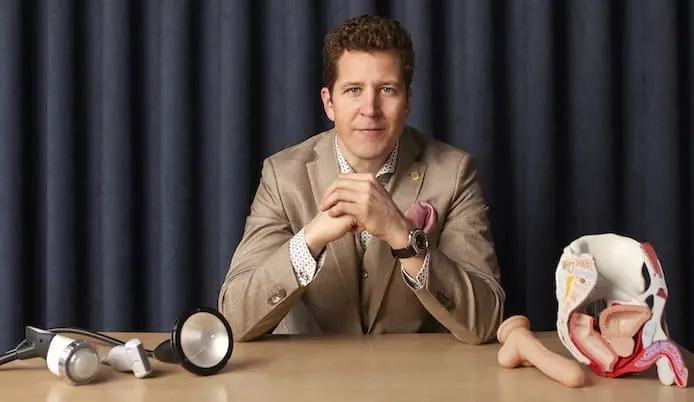
Written and medically reviewed by Michael Strøm
International speaker & expert in shockwave and EMTT treatment for erectile dysfunction, Peyronie’s & CPPS. Read more about me
Penis prosthesis – when you want a stable, reliable solution to erectile dysfunction
In this article
- What is a penile prosthesis?
- When is a penile prosthesis relevant?
- Types of Penis Prostheses
- Penile prosthesis: What can you expect in terms of function and feeling?
- Penile prosthesis: Risks and possible complications
- Penile prosthesis for Peyronie’s disease
- Penile prosthesis – the step-by-step process
- What I offer at MS Insight – also about Penis prosthesis
- Alternatives to Penis prosthesis – which I can optimize first
- Frequently asked questions about Penis prosthesis
- Who isn’t a candidate for a prosthetic penis right now?
- My approach: professionally strong and at eye level
- Take the next step – find out if a prosthetic penis is the right solution for you
What is a penile prosthesis?
A penile prosthesis (also called penile implant or erection prosthesis) is a surgical solution that is inserted into the cavernous bodies of the penis to create a stable and controllable erection. It is an option when other treatments for erectile dysfunction (ED) are not working adequately or when there are structural conditions – such as Peyronie’s disease or surgery – that make it difficult to achieve or maintain an erection. Often a urologist will quickly recommend it if you have no response to pills or injections. Even before shockwave has been tried.
A penile prosthesis doesn’t change your sexual desire or ability to orgasm, but it does make ejaculation and penetrative sex possible again for many men. For some, it’s the solution that brings peace of mind, restores confidence and stops the constant worrying about whether the erection will last. The prosthesis is placed inside the swelling and is typically made of medical silicone and elastomer with fluid-filled components in the inflatable models. The skin, nerves and glans (head of the penis) are not directly touched by the prosthesis. Therefore, most people find that the sense of touch in the skin is unchanged, while the stiffness is controlled mechanically. A penile prosthesis does not extend the penis beyond the tissue that can be safely expanded; the goal is a functional, painless and predictable erection you can rely on in everyday life.
When is a penile prosthesis relevant?
I talk to men who are considering a prosthetic penis when:
- PDE5 inhibitors (e.g. sildenafil/tadalafil) do not help or cause too many side effects
- Penile injection (alprostadil etc.) or vacuum pump does not work in practice
- There is severe vascular ED, diabetes-related nerve involvement or erectile nerve damage (e.g. after prostate surgery)
- Peyronie’s disease has caused significant curvature, shortening or pain that limits sex life
- There is a lot of performance anxiety on the back of many failed attempts and the desire is for a “reliable on/off solution”
I help you clarify whether a Penile Prosthesis is the right step – and whether there are other avenues to test or optimize first.
Types of Penis Prostheses
Inflatable 3-Piece Penis Prosthesis (inflatable)
- Consists of two cylinders in the penis, a pump in the scrotum and a fluid reservoir in the stomach.
- Benefits: Very lifelike erection and soft “flaccid” state. Good comfort in everyday life.
- Cons: Slightly more complex operation. Mechanical components may require replacement over time.
Inflatable 2-Piece Penis Prosthesis
- Cylinders and reservoir are combined; the pump is in the pouch.
- Benefits: Simple construction. Less operation than 3-piece.
- Cons: Less natural slack than 3-piece. Slightly less stiffness for some.
Semirigid Penile prosthesis (flexible rods)
- Two flexible poles that bend up or down by hand.
- Benefits: Very simple, robust solution. Minimal risk of mechanical failure.
- Cons: Penis is always semi-erect – can be less discreet in everyday life.
The choice depends on anatomy, lifestyle, hand function, preference for discretion and stiffness/feel expectations. I’ll go through the pros and cons with you so you can make a confident and informed decision. For example, if you have reduced finger strength or arthritis in your hands, a semi-rigid or 2-piece solution may be easier to handle, while the 3-piece often provides the most natural feeling at rest and during sex.
Penile prosthesis: What can you expect in terms of function and feeling?
- Erection: With an inflatable penis prosthesis, you pump the erection via a small pump in the scrotum and “release” it again after sex. With semirigid, you bend the penis up or down as needed.
- Skin sensation: The sensation of the penis skin is usually unchanged because the nerves in the skin are not affected by the prosthesis.
- Orgasm and ejaculation: The ability to orgasm is generally not affected by a penile prosthesis. Whether you ejaculate depends on whether the spermatic ducts are intact (e.g. ejaculation may be absent after certain prostate surgeries).
- Length/circumference: Some people find that the penis appears shorter than the “memory image”. The erection will be as long as the tissue that can be safely expanded during surgery. Stretching or vacuum training before surgery can help maintain length in some cases – I am happy to plan this with you.
- Visibility: An inflatable penile prosthesis cannot be seen from the outside. The scar is typically discreet (often in the scrotum or lower abdomen, depending on the technique).
- Spontaneity and timing: The pumping process typically takes less than a minute once you are trained. Many find that the calmness of being able to control the erection outweighs the “technique” and foreplay takes on a new, comfortable rhythm.
- Partner perspective: Most partners notice the difference primarily as stability. It’s a good idea to talk about pace, lubrication and comfort – especially in the start-up phase.
Penile prosthesis: Risks and possible complications
All surgeries involve risks. The main ones with penile prosthesis are:
- Infection: Relatively rare, but serious if it occurs. Good blood sugar control, smoking cessation and skin care reduce the risk.
- Mechanical failure: Pumps and cylinders can eventually fail. Many prostheses last 10-15 years or longer, but replacement may be necessary.
- Pain and healing: Soreness and bruising in the weeks after surgery is normal. Pain typically subsides gradually.
- Erosion/migration: In rare cases, a cylinder can press on the tissue from the inside; this requires surgical assessment.
- Changed length/curvature: The surgeon can often correct curvature with concomitant treatment, but realistic expectations are important.
- Bleeding/hematoma: May be seen in the days following surgery. Proper compression, ice as agreed with the surgeon and rest will help healing.
- If the penile prosthesis is removed due to infection, you may not get a new one inserted. And then your potency is lost forever.
I talk openly with you about risks, how to reduce them and what you can do specifically before and after surgery. For example, targeted optimization of blood sugar, quitting smoking well before surgery, gentle shaving without damaging the skin, antiseptic washing before surgery and a clear plan for wound care, activity, pain management and starting “cycling” (controlled inflation) when the urologist gives the green light.
Penile prosthesis for Peyronie’s disease
For Peyronie’s disease (scar tissue plaque in the penile sheath), a penile prosthesis can both restore rigidity and help straighten curvature. During surgery, the surgeon can perform “modeling” or – if necessary – release/scar reduction and place a patch (graft). For you, this means a more usable and pain-free erection. I assess curvature, scar tissue and blood flow with ultrasound and make a plan so you know what to expect. Often preparatory tissue training (stretching/vacuum) improves compliance, and realistic expectations about possible length difference and straightness are crucial for satisfaction.
Penile prosthesis – the step-by-step process
1) Investigation and decision
- Talk about symptoms, goals and concerns – without taboos.
- Advanced ultrasound scan of the penis and pelvis to assess blood vessels, tissue quality and possible scar tissue (Peyronies).
- Review of previous treatments and realism check of alternatives.
- Clear recommendation: Is a penile prosthesis probably right – or should I optimize something else first? I have previously helped clients who were set for prosthesis to cancel the surgery by using shockwave therapy first.
2) Preparation and optimization
- Pelvic floor: Many people have an overactive or weak pelvic floor. I teach you precise training and relaxation that reduces pain, improves body control and can ease the time after surgery.
- Lifestyle: Sleep, weight, blood sugar, smoking and alcohol affect wound healing. I’ll give you a realistic plan you can follow.
- Length preservation: Training program with stretching/vacuum (if applicable) to optimize tissue compliance.
- Pain management: For chronic pelvic pain (CPPS) or pudendal pain, I work with neuromodulation and targeted relaxation to calm the nervous system alarm.
3) Surgery and healing
The surgery itself takes place in a hospital or private clinic with a specialized urologist. I advise you to talk to your GP or urologist about referral, assessment and choice of prosthesis. After surgery, there is a period of rest, wound healing and gradual training in the use of the prosthesis (typically starting gently after 4-6 weeks, depending on the doctor’s plan). In the early stages, you will prioritize high leg support, ice as agreed with the surgeon, compression and short walks. You avoid cycling, bathing and swimming until the wound is healed and you follow a simple but consistent hygiene and pain management plan. I’ll help you distinguish “normal soreness” from signs that require medical assessment.
4) Back to sex and everyday life
When you get the green light, I train safe use, pace, communication with partner and any positions that are gentle on the tissue in the beginning. The focus is on glide, comfort and slow escalation. I help you find a good rhythm where you get to know the pump, regain confidence in your body and can express your needs to your partner. The goal is for you to feel in control, safe and happy – not just “technical success”.
What I offer at MS Insight – also about Penis prosthesis
I work with the whole person – both the physical and the stuff between the ears. My focus is to give you a clear basis for decision-making and a program that actually works in your everyday life.
- Advanced diagnostics: Ultrasound scan of the penis and pelvis, assessment of blood flow, scar tissue and muscle balance.
- Evidence-based treatments: Focused shockwave with focused sound waves for vascular ED and Peyronie’s, EMTT (electromagnetic transduction therapy) and neuromodulation for nerve sensitivity and pelvic pain.
- Pelvic floor and pain: precise training and relaxation if you have CPPS or pudendal-related symptoms.
- Sexological and practical advice: Performance pressure, mental blocks, communication with your partner and structure in your training.
- Decision support for penile prosthesis: Expectations, preparation (“prehab”), plan for healing and return to sex. If you want surgery, I advise you to talk to your own doctor or urologist about the next steps.
I don’t operate myself – my job is to make sure you get the right solution, at the right time, with the greatest possible peace of mind before and after.
Alternatives to Penis prosthesis – which I can optimize first
- Medication: PDE5 inhibitors, possibly combined with lifestyle adjustments. Some need correction of dose, timing and food/alcohol interaction.
- Injection therapy: Local agents directly into the tumor body can provide good stiffness if you learn the correct technique and dosage.
- Vacuum pump: Can work stably with the right ring and routine; also useful for tissue training.
- Focused sound waves: For vascular ED and Peyronie’s, it can increase blood flow and soften scar tissue.
- EMTT and neuromodulation: Reduces nerve sensitivity and muscle tension for pelvic pain, painful erections or after surgery.
- Targeted pelvic floor work: Being able to tense and – most importantly – release correctly is crucial for comfort and endurance.
- Psychosexual support: Performance anxiety, feelings of defeat and disappointment settle in the body. I give you concrete tools to get your head in the game.
If these solutions don’t give you a safe and satisfying sexual function, a penile prosthesis may be the next step. I always adapt the intervention to your everyday life and follow up with clear home tasks so that you feel progress – even before any surgery.
Frequently asked questions about Penis prosthesis
Does the surgery hurt and for how long?
You can expect soreness and swelling for 1-3 weeks. With a proper pain plan and gentle start-up, it will gradually subside. Most people are back to quiet work after 1-2 weeks, physical work later. I’ll give you a concrete plan for pain relief, cooling/relief and gradual activity so you know exactly what to do day by day.
Is my penis getting shorter?
Some experience some shortening compared to their best natural erection. With good preparation (stretching/vacuum, realistic expectations) and correct size selection, the difference is reduced. My focus is to give you a functional, pain-free erection you can rely on. I also help with strategies to improve the visual experience (trimming, positions and lighting) to make the whole experience feel better.
Can you see the prosthesis from the outside?
No, not with the inflatable type. The scar is discreet and the penis looks normal at rest. Semirigid can provide a more “full” resting state, but is still discreet in clothing. The choice is about your everyday life, clothing style and need for discretion – I will clarify this with you.
Can I orgasm and ejaculate?
Yes, usually. Orgasm is controlled by nerves and the brain, not by the prosthesis. Ejaculation depends on whether the spermatic ducts are intact. For example, if you’ve had prostate surgery, ejaculation may be affected – I’ll discuss this with you so you know what to expect and how best to maintain desire and pleasure.
How long does a penile prosthesis last?
Many last 10-15 years or more. However, mechanical parts can fail over time and replacement may be necessary. I explain how to take the best care of your prosthesis and react quickly if something seems different than usual.
Does a prosthetic penis set off metal detectors?
No, they don’t. Modern prosthetics are made of materials that don’t set off alarms at airports.
Is it MRI safe?
Most modern models are MR-conditionally compatible. Details depend on the brand. The hospital will inform you and you will typically receive a card with implant details.
What if I have chronic pelvic pain (CPPS)?
Then I need to be extra careful. An overactive pelvic floor can exacerbate pain after surgery if left unaddressed. I’ll help you calm your nervous system and muscles so that the process is more comfortable and you can start gently without triggering circles of pain.
What does a penile prosthesis cost and how do I get started?
In Denmark, insertion is often performed via a hospital after urological assessment. Private surgery varies in price. I advise you to talk to your GP or urologist about referral, assessment and practicalities.
Does a penile prosthesis affect my fertility?
The prosthesis itself does not affect sperm production. Fertility depends primarily on the testicles and spermatic ducts. If you have any questions about sperm quality or fertility, I can go through relevant options for investigation.
Who isn’t a candidate for a prosthetic penis right now?
- Untreated infection or wound in the area
- Poorly regulated diabetes or significantly impaired wound healing
- Active, untreated pelvic floor issues with high pain and muscle spasms
- Unrealistic expectations for length or function
- Health conditions where anesthesia/surgery is too risky
I’ll help you optimize the conditions I can influence so that you can – if you wish – be ready for surgery at a later date.
My approach: professionally strong and at eye level
Talking about erection, pain or concerns about self-image and sexual confidence can be uncomfortable. With me, there is no judgment, no shame. Just calm, professionalism and one goal: for you to have a sex life you enjoy. I tell it like it is – with respect for your reality – and I make a plan you can actually follow.
Take the next step – find out if a prosthetic penis is the right solution for you
If you’re considering a penile prosthesis or you just want an honest overview of your options, book a thorough preliminary examination with me in Copenhagen. I have clients from all over Zealand and the rest of Denmark, and everything is discreet and respectful.
- You get a clear diagnosis and a realistic plan.
- I’ll help you optimize the things you can influence – right now.
- If surgery is the right option, I will guide you to talk to your GP or urologist about referral and options.
You don’t have to go it alone. Contact me and I’ll take it from there – step by step, at your pace, with your peace of mind at the center.
If you are interested in hearing more about how I can help you, you are always welcome to contact me by phone 41 40 08 58 or email michael@msinsight.dk. I’ll get back to you quickly with a customized proposal so we can find the best way forward together.
Would you like a specialist assessment of your situation?
You don’t have to figure it out alone. Call directly or write a few lines about your symptoms – I’ll get back to you within 12-24 hours with a concrete suggestion for the next step.