

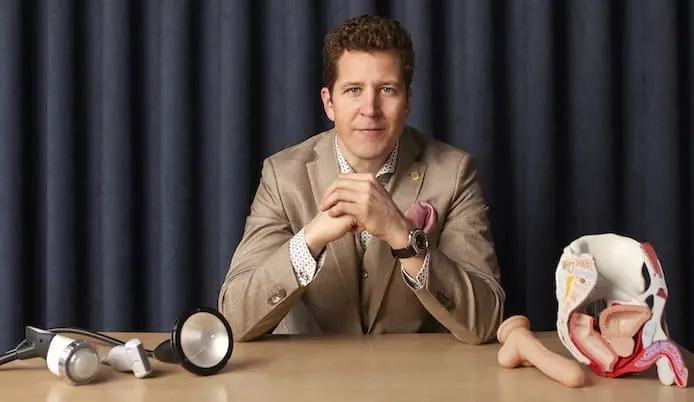
Written and medically reviewed by Michael Strøm
International speaker & expert in shockwave and EMTT treatment for erectile dysfunction, Peyronie’s & CPPS. Read more about me
Penis enlargement surgery: When does it make sense – and what are your realistic options?
Maybe you’re considering penis enlargement surgery because you’re tired of erectile dysfunction, pelvic pain or size dissatisfaction. You are far from alone. I meet many men who feel insecure, frustrated or close to giving up. I know it can be vulnerable to talk about – my job is to bring calm, clarity and a clear course of action that actually helps you. In my clinic, I work with men’s intimate health every day. I offer advanced diagnostics, targeted treatment and concrete advice to help you decide whether penis enlargement surgery is right for you – or whether other solutions will give you a more stable and satisfying result.
Many people are surprised at how much difference the way you measure makes to the perception of length. A thick layer of fat over the pubic bone can make the penis look shorter, even though the actual length is unchanged. That’s why I work with standardized measurements and images, so you get a realistic starting point – and don’t chase a change that is really about perspective, discomfort or tension in the body.
In this article
- What is penis enlargement surgery?
- Who can benefit from penis enlargement surgery – and who should be careful?
- Risks and side effects of penis enlargement surgery
- What can you realistically expect from penis enlargement surgery?
- Alternatives to penis enlargement surgery – targeted help without a knife
- Typical questions about penis enlargement surgery
- How I help you make the right choice
- When is penis enlargement surgery right?
- My recommendation – start with a safe, professional clarification
- Get in touch – discreetly, respectfully and targeted to your reality
What is penis enlargement surgery?
The term covers surgical and semi-surgical procedures that aim to increase the length, thickness or both of the penis. There are several methods with very different benefits and risks. In general, the procedures fall into two categories: surgical lengthening and thickness enhancement. Some combine the techniques. It’s important to know that the vast majority of procedures primarily change the appearance in the flaccid state. Gains in the erect state are limited and often modest.
It is also important to understand what can – and cannot – be changed. Surgery typically affects the shaft, not the glans (head of the penis), and proportions can therefore change. The goal for many is better sex life and confidence, but surgery primarily changes appearance, not necessarily function. This is where a thorough assessment makes a big difference to your satisfaction.
Extension: Release of the suspensory ligament (ligamentotomy)
The surgeon loosens a ligament that “holds” the penis against the pubic bone. The result can be more visible length in the flaccid state, often in the centimeter range. In the erect state, a significant length gain is rarely seen. Risks include altered erection angle (the penis may point more downwards), less stability during erection, scar tissue formation and the need for prolonged use of traction (stretching device) afterwards to maintain the effect.
To reduce the risk of tissue retraction, many surgeons’ aftercare programs require daily, patient stretching for months. This is not a “quick fix”. There may also be changes in the hairline of the shaft if the skin is mobilized, and some experience more sway or “tent pole effect” where the stiffness feels different. It’s crucial to be prepared for disciplined aftercare if you choose this route. Shockwave can also be part of the solution here, as it can increase fullness and help with tissue regeneration.
Increasing thickness: Fat grafting (lipofilling)
Own fat is harvested and injected around the shaft. This can provide a visible increase in circumference. Cons: Some of the fat is reabsorbed by the body, often with unevenness, asymmetry or the need for repeated treatments. Lumps (nodules), hardness and uneven sensation may occur.
The result depends on the quality of the fat harvested, the healing process and your body’s tendency to redistribute fat over time, among other factors. Weight fluctuations can affect circumference, and overfilling to compensate for later uptake can itself give an uneven appearance. If the expression changes over time, it may require touch-ups – with corresponding healing and uncertainty.
Increasing thickness: Fillers (e.g. hyaluronic acid)
A non-permanent solution that can provide temporary perimeter increase. Requires maintenance. Risks include unevenness, migration of the material and in rare cases inflammation or infection.
A potential advantage of hyaluronic acid is that the material can be re-dissolved with an enzyme if the result is not satisfactory. However, this requires that the product is correctly selected and placed in the right tissue layers. Poor technique, wrong products or inadequate aftercare can cause permanent cosmetic problems, even when the material is temporary.
Skin and tissue grafts for penis enlargement
Some clinics use tissue grafts (e.g. acellular dermal matrices) to increase circumference. The technique is more invasive and can cause scars, tightness, decreased sensitivity and longer healing time. Results vary considerably.
Grafts can sometimes shrink (contract) or feel tighter than the surrounding tissue. Revisions are complex and healing times are longer than with fat and fillers. Therefore, this solution requires extra careful consideration of expectations – not least in terms of proportions and sensation.
High-risk materials for penis enlargement (e.g. permanent silicone or PMMA)
I strongly advise against permanent, non-biological materials. They can cause chronic inflammation, granulomas, stiffness, deformity and difficult reoperations. The cosmetic complications can be irreversible.
Once permanent materials are placed, they can be very difficult to remove completely and residue left behind can continue to cause discomfort. From time to time I see men who end up in long courses of pain, swelling and corrections. It’s not a risk I recommend taking.
What about penile implants?
Penile implants are a well-established treatment for severe erectile dysfunction or after severe cases of peyronies. They are not an actual penis enlargement surgery, but can improve function and thus perceived fullness. Implants should only be considered for treatment-refractory ED where other measures do not work.
Implants require the swelling bodies to be adapted to the cylinders, and this is an irreversible solution. Basically, the swelling is cut to make room for the implant, and that damage cannot be undone. Sometimes it is seen that the tissue becomes infected and the cylinder has to be taken out again. In this case, the erection will be lost forever. For the right candidate, they can be life-changing, but the goal is erectile function – not cosmetic augmentation. It’s important to distinguish.
In the clinic, I have previously helped men with erectile dysfunction avoid surgery with the help of intensive shockwave and EMTT treatment.
Who can benefit from penis enlargement surgery – and who should be careful?
Some men may actually benefit from surgery, such as those with severe length loss after trauma or severe Peyronie’s disease, where scar tissue shortens the penis. Men with micropenis may also be candidates. But for the vast majority of men with “normal” variation, the challenge is often functional (erection, pelvic pain, tension, reduced blood flow) or psychological (performance pressure, body insecurity). Here, I often see that non-surgical treatments provide greater satisfaction, fewer side effects and more robust effects in everyday life.
I recommend particular caution with unrealistic expectations, body dysmorphic tendencies (obsessing over a minor “flaw”), smoking, uncontrolled diabetes or poor wound healing. In these situations, the risk of disappointment and complications is particularly high.
Before you decide, I help you get the facts straight: standardized measurements (e.g. stretched flaccid length), objective photos, assessment of the fat pad above the pubic bone, and an open conversation about what you hope will change – in the mirror, in bed and in your courage. When it becomes concrete, uncertainty decreases and the decision becomes easier.
Risks and side effects of penis enlargement surgery
All procedures involve risk. Typical complications I go through with men considering surgery are:
– Changed erection angle and feeling of less stability, especially after ligamentotomy.
– Reduced sensitivity, pain, prolonged soreness.
– Scarring, asymmetry, unevenness and lumps (especially with fat/fillers).
– Infection, bleeding, swelling – and in rare cases, serious complications that require reoperation.
– Partial loss of effect over time (e.g. resorption of fat), which can lead to repeated interventions.
– Psychosexual disappointment if expectations do not match the realistic outcome.
Then there are the general risks of anesthesia and surgery, as well as the human aspect: if you’re already hard on yourself, small bumps can feel big. That’s why I always talk about how we measure success – not just in centimeters, but in calmness, desire and function.
What can you realistically expect from penis enlargement surgery?
What most people hope for is a clear, lasting difference in both flaccid and erect state – without risking function. The reality is more nuanced:
– Elongation: Often visible in the flaccid state. In the erect state, the gain is limited or absent for many. The angle of erection may become lower.
– Increased thickness: Visible effects can be achieved, but materials such as fat and temporary fillers change over time and may require maintenance. Unevenness is not uncommon.
– Sexual function: Some experience cosmetic satisfaction, but not necessarily better erection or more pleasure. For others, sensation or stability may deteriorate.
Shine is typically not magnified and it can cause some difference between head and shaft. For partners, communication, intimacy and stable erection often mean more than raw goals. That’s why it’s crucial to clarify what you really long for: more length in the mirror – or better sex life, safer erection and less pain. Often the latter is the goal, and surgery is rarely the first choice.
Alternatives to penis enlargement surgery – targeted help without a knife
I work with holistic, evidence-based approaches that target what most often stands in the way of a good sex life: blood flow, nerve balance, tissue healing, pelvic floor and psychological safety.
My approach is practical: I find the cause, implement a plan and follow up until we can document a difference – in your experience, in objective measurements and in your everyday life.
Advanced diagnostics with ultrasound
I offer ultrasound scans of the penis and relevant structures to assess blood supply, scar tissue (e.g. Peyronie’s) and mechanical conditions. A thorough functional examination of the pelvic floor and the pudendal nerve helps identify tensions, pinch points and sources of pain that can cause erectile dysfunction and decreased sensitivity.
I supplement with standardized before/after measurements so you can see real changes – not just daytime fitness. If needed, I’ll also discuss nocturnal emissions and hormone signs as pieces of the puzzle.
Focused sound waves (shockwave), EMTT and neuromodulation
– Focused sound waves: Targeted for vascular erectile dysfunction and Peyronie’s-related tissue damage. The aim is to stimulate blood vessel formation, nerve stimuli and tissue remodeling.
– EMTT (electromagnetic transduction therapy): Can support tissue healing and pain reduction and amplifies the effect of shockwave as a whole.
– Neuromodulation: Helps regulate nervous system overactivity in chronic pelvic pain and pudendal pain.
I typically combine the treatments in a course and customize to your situation, so I work on the real cause – not just the symptom. Side effects are usually mild (soreness, redness) and I adjust the intensity and frequency until your tissue can tolerate it.
Pelvic floor, traction, pump and lifestyle
– Pelvic floor training: Properly guided training (including relaxation) can improve erection quality, stamina and pain perception. Many people tense too much – not too little.
– Traction and penis pump: Can provide moderate improvements in length/circumference and support erectile function with regular, safe use. I will instruct you on protocols that are realistic and safe.
– Weight and sleep: A reduced fat layer over the pubic bone can make the penis look longer, and better sleep and fitness boost hormones, blood flow and libido.
With pull and pump, I prefer to work frequently and gently rather than hard and infrequently. The skin should never hurt, and a change in color or numbness is a sign that you need to reduce the intensity. When the technique is right, many people experience a calmer body and more predictable erections.
Psychosexual counseling and performance
Performance pressure, self-doubt and negative experiences can perpetuate erectile dysfunction. I work in a solution-oriented way with concrete strategies to help you calm your body and be present during sex. When the nervous system calms down, erection often follows.
I use simple exercises to unlearn over-focus on performance and reconnect with pleasure and connection – alone or with a partner. These are practical tools you can take home with you.
Hormonal conditions
If your history suggests hormonal imbalances (e.g. low testosterone), I advise you to have an informed discussion with your doctor about relevant blood tests. By getting a handle on basic health markers, we create a better framework for the effect of other treatment.
Hormones rarely stand alone, but once they are in place, the rest of the process becomes easier. I can help you clarify whether an assessment makes sense and how to approach your doctor.
Typical questions about penis enlargement surgery
Does penis enlargement surgery make the penis longer when erect?
For many, elongation will primarily be seen in the flaccid state. In the erect state, the gain is often minimal. It’s important to clarify this so that you’re not chasing a result that the surgery can’t realistically deliver. I always go through how we measure so that expectations and reality are aligned.
Is my erection or sensitivity getting worse?
What can happen. Altered erection angle, decreased stability and reduced sensitivity are known risks, especially with ligamentotomy and certain graft techniques. Therefore, function should always weigh heavily in the decision. I’ll help you assess your baseline function so you know what you risk trading off.
How much does it hurt and how long is the healing time?
Most people experience pain, swelling and bruising in the weeks following. Full healing can take months and many will have a follow-up course of traction or massage to maintain the results. Sexual activity is typically discouraged for a period of time. I recommend that you plan for calmness, help in everyday life and patience in the aftermath.
Are the results permanent?
Some changes can be permanent (e.g. scars and angle changes), while circumferential augmentation with fat or fillers often requires maintenance. “Permanent” materials carry high risks and can be difficult to correct. I always discuss durability, aftercare and scenarios if you change your mind.
Can scars be seen?
The placement is tried to be discreet, but any surgery can leave visible scars. Healing quality varies from man to man. If you are prone to heavy scarring, it is relevant to take this into consideration.
What does penis enlargement surgery cost?
Prices vary depending on technique, surgeon and aftercare. What matters is not just the price, but the overall value and risk. I help you clarify what questions you should ask a surgeon so you can make an informed choice.
Who should avoid surgery?
Men with unrealistic expectations, pronounced body dysmorphic tendencies, poor wound healing, active infection, uncontrolled diabetes or who smoke should typically avoid or postpone surgery. For many, functional treatment will be a better first step. I’m happy to help you create a plan to get you ready for surgery – if it makes sense later on.
I’ve already had surgery and am unhappy – can you help?
Yes, you can. I assess function, scar tissue, pain and erection quality and offer targeted courses to optimize blood flow, nerve balance and tissue healing. I create a realistic plan with you to give you the best possible starting point. For problems after hyaluronic acid fillers, I also discuss the possibility of resolution with the relevant practitioner.
How I help you make the right choice
My goal is not to persuade you on or off penis enlargement surgery. My goal is to make sure you get what you really want: more peace, better function and higher satisfaction in your sex life. This is how I work:
– Thorough conversation about goals, symptoms and concerns – without taboos.
– Ultrasound examination and functional assessment of pelvic floor, nerves and blood flow.
– Clear plan with concrete actions: focused sound waves, EMTT, neuromodulation, exercise/relaxation, traction/pump, sleep and lifestyle strategies and psychosexual counseling.
– Continuous follow-up on effect, so I adjust until you notice real improvements.
– If you’re still considering surgery, I’ll guide you on what information and questions you need to know when talking to a surgeon so you can make an informed decision.
I document the starting point and progression so you can see what works – and what doesn’t. This gives you peace of mind and helps you choose the next step with confidence.
When is penis enlargement surgery right?
When there are specific anatomical or scar tissue-related conditions, surgery may be relevant – especially if functional treatment is not sufficiently effective. But the decision should always be made with a full understanding of the risks, expected outcomes and alternative pathways. For many men, the greatest benefit is to improve erection, reduce pain and regain self-confidence – without compromising function.
I often recommend a step-by-step approach: first optimize blood flow, nerve balance and pelvic floor; then re-evaluate length/circumference and well-being. If you still want surgery, you go into it with a fitter body, a more realistic goal and a clear aftercare plan.
My recommendation – start with a safe, professional clarification
If you’re considering penis enlargement surgery, let’s start with a calm, fact-based clarification. I look at the whole picture: your body, your symptoms, your goals and your feelings about it. Then you’ll get a concrete answer to whether surgery makes sense for you – or if I can most likely help you go further without a knife. In my experience, when the causes are addressed in a targeted way, both function and confidence follow.
You don’t have to face the doubts alone. Knowing your realistic options makes the decision easier – whatever you choose.
Get in touch – discreetly, respectfully and targeted to your reality
I run a specialized clinic in Copenhagen with clients from all over Denmark. You will be met at eye level, without prejudice. If you’re curious about alternatives to penis enlargement surgery, want a second opinion, or want a program that focuses on erection, pelvic pain, Peyronie’s disease, incontinence or performance pressure – you’re welcome. Book a consultation and I’ll make a plan with you that makes sense for your reality.
If you are interested in hearing more about how I can help you, you are always welcome to contact me by phone 41 40 08 58 or email michael@msinsight.dk. I’ll get back to you quickly with a customized proposal so we can find the best way forward together.
Would you like a specialist assessment of your situation?
You don’t have to figure it out alone. Call directly or write a few lines about your symptoms – I’ll get back to you within 12-24 hours with a concrete suggestion for the next step.