
Written and medically reviewed by Michael Strøm
International speaker & expert in shockwave and EMTT treatment for erectile dysfunction, Peyronie’s & CPPS. Read more about me
Pelvic anatomy in men – why it matters for erection, pain and control
When men come to me with erectile dysfunction, pelvic pain, after-drops or uncertainty about sex, I almost always start with the same foundation: pelvic anatomy. The better you understand what’s actually happening in the pelvis – bones, muscles, nerves and blood vessels – the faster I can help you find the cause of your symptoms and create a targeted plan. My focus is practical and solution-oriented: translating the complex anatomy into something you can feel, understand and act on.
In this article
- Pelvic anatomy at a glance: bones, joints and stability
- Anatomy and function of the pelvic floor
- Nerves and blood vessels in the pelvis – pudendus, autonomy and supply
- Prostate, urethra and penis – anatomy in context
- When pelvic anatomy turns into symptoms
- What I examine in the clinic – with a focus on pelvic anatomy
- Treatment strategies that work in practice
- Typical questions about pelvic anatomy
- Signs that you should seek help now
- Why men in Copenhagen and Zealand choose MS Insight
- Take the next step – book a clarifying conversation
Pelvic anatomy at a glance: bones, joints and stability
Pelvic bones and joints
The pelvis is a strong ring of bones that connects the upper body to the legs and protects organs and nerves. It consists of:
- The ilium, ischium and pubis, which meet in the hip socket
- Sacrum and coccyx (tailbone)
- SI joints (sacroiliac joints) posteriorly and pubic symphysis pubica anteriorly
This ring must be both stable and flexible. Too stiff or too loose stability changes the strain on the pelvic floor muscles, nerves and blood vessels – and can end up as pain, weakened erection or urinary problems. I often find that small asymmetries in the hip or SI joints put strain on the perineum during seated work or exercise, and that adjusting movement patterns can relieve a surprising amount of strain.
Pelvic ligaments and fascia – strong structures you feel indirectly
Strong ligaments and connective tissue (fascia) hold the pelvic ring together. The sacrotuberous and sacrospinal ligaments in particular are closely related to the pudendal nerve. Tight or irritated structures here can cause radiating pain to the penis, scrotum or around the rectum. The fasciae in the pelvis also act as a ‘sheath’ for nerves and vessels – if they become thickened or tender, they can cause mechanical irritation and pain sensitization.
I often examine these structures indirectly through movement, cough or tension tests and gentle palpation of the perineum and gluteal region. For example, if you experience shooting pain with prolonged sitting, but relief when switching to a saddle with a hole or a softer seat surface, this often points to fascia and ligament involvement rather than joint damage.
Anatomy and function of the pelvic floor
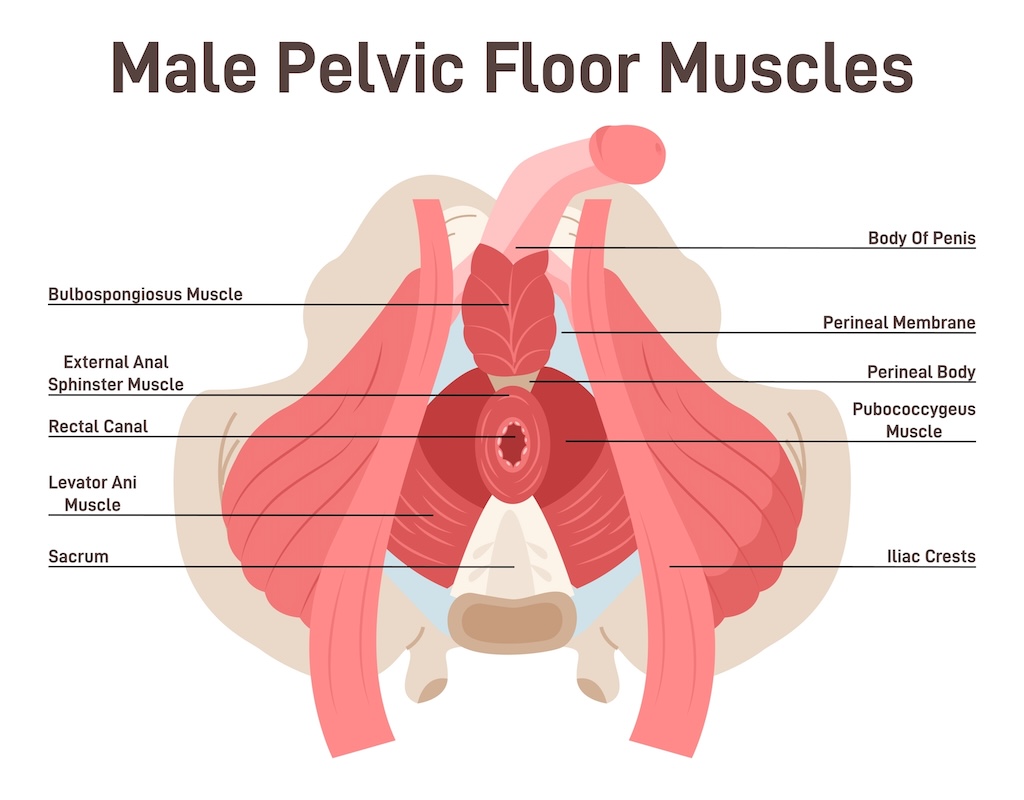
The pelvic floor is the body’s “inner hammock” of muscles and connective tissue that closes the pelvis downwards. It holds organs in place, ensures continence, affects erection and has a major impact on pain or tension in the abdomen. When the pelvic floor is functioning well, it responds automatically and flexibly – it tightens when you need support and releases when you need to urinate, defecate or feel pleasure.
Levator ani and coccygeus
- The levator ani group consists primarily of the puborectalis, pubococcygeus and iliococcygeus.
- The coccygeus lies posteriorly and supports the coccyx.
These muscles control the pressure balance in the abdominal cavity, work with the diaphragm (the respiratory muscle) and stabilize the pelvis under load. An overactive (too tense) pelvic floor can cause burning, soreness, erectile dysfunction and rapid ejaculation – and paradoxically also leakage because the sphincters cannot work effectively when everything is in constant tension. A typical sign is that it feels difficult to let go completely when urinating or after ejaculation – as if your body is “holding back” even though you’re trying to let go.
Perineum and the external pelvic muscles
- Bulbospongiosus: surrounds the root of the penis shaft and helps with ejaculation and emptying the urethra of the last drops.
- Ischiocavernosus: compresses the veins at the shaft of the penis and helps keep blood trapped in the erection (veno-occlusive mechanism).
- The deep transverse perineal muscles: contribute to the stability and coordination of the bottom.
When these muscles work in a rhythmic and coordinated way, you get better erection quality, controlled ejaculation and minimize after-drip. When they’re sore, tight or uncoordinated, you often experience pain, twitching, tingling, a “ball in the rectum” feeling or an annoying tingling in the head of the penis. I teach you to feel the difference between “tension” and “support” so you can shift from chronic readiness to smooth control.
Sphincters and pelvic control
The external urethral sphincter and the external rectal sphincter are voluntary. They work together with the pelvic floor and breathing. When the pressure in the abdominal cavity increases (coughing, lifting, exercise), the pelvic floor and sphincters must respond immediately. Mistiming is a common cause of leakage and after-drip.
A simple benchmark is the “cough test”: if you cough and feel a short, natural lift at the bottom without over-extending your stomach, the timing is often good. If instead you tighten your stomach and then feel heaviness or seepage, the coordination is lacking. I train exactly that timing with you – calmly, purposefully and at a level that suits your everyday life.
Nerves and blood vessels in the pelvis – pudendus, autonomy and supply
The pudendal nerve: your “main conduit” in the perineum
The pudendal nerve (S2-S4) supplies the skin, muscles and sphincters of the perineum and the dorsal nerve to the penis. It runs through narrow passages around the pelvic ligaments and can be irritated by pressure (cycling), scar tissue, muscle tension or sedentary work. Symptoms can include:
- Burning, stinging or sharp pain in the penis, scrotum, perineum or around the anus
- Aggravated by sitting, relieved by standing/lying
- Sensory disturbances, tingling or hypersensitivity
- Problems with erection or ejaculation due to pain signals and muscle protection
I guide you in finding tolerable sitting positions, adjusting the saddle/work chair and relaxing the muscles that squeeze the nerve. Small changes can make a big difference when the nerve is given time to heal.
Autonomic nerves for erection and orgasm
- Parasympathetic nerves (S2-S4) via the pelvic splanchnic nerves initiate erection – rest and digest.
- Sympathetic fibers via the hypogastric plexus play a greater role in triggering and bleeding – fight or flight.
Stress, sleep deprivation and persistent pain pushes the balance towards the sympathetic system, making it harder to achieve and maintain an erection. That’s why I always work both physically and with calmness in the nervous system. Simple tools like longer exhalations, calm nasal breathing and short “micro-breaks” during the day can reduce sympathetic overdrive and provide a better foundation for erections.
Blood supply to the penis and pelvis
The internal pudendal artery supplies the penis and perineum. The veins, including the deep dorsal vein, must be effectively “squeezed” by the tunica albuginea and surrounding muscles to keep blood in the penis. Impaired vessel function, stiff tunica or poor muscle coordination can lead to vein leakage and unstable erections.
Typical signs of impaired vascular function are fewer or weaker morning erections, slow “build-up” and faster bleeding. I always assess whether there are signs of vascular impairment – and target the treatment to provide optimal conditions for vessels, nerves and muscles.
Prostate, urethra and penis – anatomy in context
The prostate encloses the first part of the urethra and affects urination and ejaculation. Irritation in the prostate area can cause pressure, frequent urination and diffuse pelvic pain. The shaft of the penis consists of two corpora cavernosa and a corpus spongiosum around the urethra. The strong tunica albuginea holds the pressure during erection. In Peyronie’s disease, scar tissue (plaques) forms in the tunica, which can cause curvature, pain and erectile dysfunction – often in conjunction with tension in the perineal muscles. I always distinguish between symptoms that primarily point to the prostate (e.g. pressure and urgency) and those that point to nerves or muscles – because the solution is rarely the same.
Corpora cavernosa, tunica albuginea and Peyronies
For an erection to be hard and painless, blood filling, vein closure and the elasticity of the tunica must work together. Small micro-traumas over time (e.g. rough sex, sports impact or years of cycling) can trigger problems. Here, a combination of tissue therapy, focused sound waves and targeted muscle relaxation often provides noticeable improvement.
I emphasize gentle progression: normalizing pain, creating better blood flow and regaining elastic glide between skin, fascia and tunica. This calms the tissue and provides better conditions for a straight, durable erection.
When pelvic anatomy turns into symptoms
Erectile dysfunction and “vein leakage”
When erections fail, it’s often a combination of vessels, nerves and muscle coordination. Typical anatomical-related causes:
- Insufficient arterial inflow
- Insufficient vein closure due to tunica or muscle coordination
- Pudendal impact with decreased sensitivity or pain
- Overactive pelvic floor that “fights against” blood flow
A good starting point is to note the difference between solo and partner sex, changes in morning erections and whether positions with less pressure on the perineum feel better. These details help me to find the root cause – and to intervene where the effect is greatest.
Chronic pelvic pain (CPPS) and pudendal impingement
CPPS is prolonged pain in the abdomen without obvious infection. Often I see a mixture of:
- Trigger points in pelvic floor and hip adductors
- Connective tissue tightening around the course of the pudenda
- Breathing mistiming and increased abdominal pressure
- Stress and sleep problems that increase pain sensitivity
The result is pain when sitting, during erection/ejaculation or after sex, as well as bladder and rectal discomfort. I help you break the pain cycle with dosed activity, relaxation and nerve-friendly sitting strategies – so you can gradually do more without flare-ups afterwards.
Incontinence, dribbling and difficulty urinating
After-drip is often caused by poor coordination between the bulbospongiosus, urethral sphincter muscle and pelvic floor timing. An over-tightened pelvic floor can ironically cause leakage because the muscles can’t tighten further when you really need it.
I teach you to release the bottom first – and then build strength and timing. Small habits like giving yourself 10-15 seconds of rest after urinating, a few gentle squeeze-release cycles and light pressure behind the scrotum can help the urethra finish emptying without provoking more tension.
Sexual performance: ejaculation, control, sensitivity
Premature ejaculation, decreased sensitivity in the head of the penis or painful orgasm is often about nerve irritation and muscle tone. By normalizing tension levels and improving blood flow, control and pleasure can be regained.
I use simple, concrete strategies: breath control to reduce sympathetic pressure, relaxation of the perineum between stimulations and gradual exposure to the movements that tend to trigger. The goal is not “perfection”, but a stable, safe experience without pain.
What I examine in the clinic – with a focus on pelvic anatomy
Conversation, questionnaires and clear goals
I start with a thorough conversation about your symptoms, sexual function, sleep, stress, exercise, medication and previous injuries. I use specific questionnaires for erection, pain and urination to get an accurate starting point. You’ll have a safe space to talk, and I’ll help you translate your symptoms into concrete, measurable goals we can work towards.
Ultrasound scans and functional tests
Advanced ultrasound allows me to see tissue and vessels, assess tunica, scar tissue, fascial conditions and muscle thickness and movement. I supplement with simple functional tests of the pelvic floor, hips, back and breathing to see how the body works together in practice.
I often use dynamic scanning – for example during squatting, coughing or calm breathing – to see if the muscles are supporting at the right time and place. This gives a clear picture of whether the problem is primarily strength, timing, mobility or nerve irritation.
Assessment of pelvic floor, breathing and posture
I look at your natural breathing, abdominal pressure control and pelvic mobility. Often the key is getting your breath, bottom and abdomen to work together – instead of straining against each other. You’ll learn to feel how your bottom moves with your breath and how a small adjustment to your standing or sitting position can take pressure off your perineum.
When does it make sense to get blood tests and imaging?
If there are signs of a systemic cause of erectile dysfunction, it may be relevant to have testosterone, metabolism, blood sugar, cholesterol or a urological assessment. I advise you to talk to your own doctor about the tests or referrals that can supplement the assessment. The point is not to “test everything”, but to test what is most likely to change your treatment.
Treatment strategies that work in practice
Focused sound waves (shockwave)
I use focused sound waves to stimulate blood vessels, reduce pain and affect scar tissue in the penis and surrounding fascia. The technique is well documented for erectile dysfunction and Peyronie’s disease and is often included in my combination treatments. The treatment typically feels like short, controlled pulses – I dose according to your tolerance and adjust the target area according to ultrasound findings.
EMTT – electromagnetic transduction therapy
EMTT affects tissues and nerves through a pulsed electromagnetic field. It can increase blood flow, reduce tension and support healing – especially for chronic pain and pelvic floor muscle overactivity. Many people experience a pleasant “deep” relaxation during and after the treatment, which makes it easier to train properly afterwards.
Neuromodulation and pain relief
With targeted neuromodulation, I influence pain pathways and muscle reflexes. This helps the nervous system out of “alarm mode” and creates calm, so you can train better and regain normal function. I use it both to calm acute flare-ups and to stabilize the effects of other treatments.
Exercise, relaxation and homework
The exercises are individual and simple. The focus can be on:
- Relaxation and stretching of the pelvic floor, hip adductors and hip flexors
- Coordination between breathing, abdomen and pelvic floor
- Specific strength and timing to improve vein closure during erection
- Gradually relearn sex-related movements without pain
You get short, realistic exercise blocks that fit into a busy schedule. I follow up, adjust the dosage and make sure you feel progress – not just do more exercises.
Lifestyle, sleep and psychosexual well-being
I advise on sleep, stress management, alcohol, nicotine and exercise – and I talk openly with you about porn and masturbation habits, performance pressure and couple dynamics. Sexual function is both biology and psychology; you get concrete tools for both. The goal is to create safety, intimacy and resilience – not perfection.
Typical questions about pelvic anatomy
Can a tense pelvic floor cause erectile dysfunction?
Yes, you can. Overactivity can inhibit blood flow, cause pain and reduce sensitivity. Relaxation, better breathing and targeted muscle control can improve erection and stamina. I’ll show you how to feel “let go” in practice before you start strengthening.
Do Kegel exercises always help?
No, it doesn’t. Kegels (pure tension) can aggravate an already tight pelvic floor. The key is to know if you need to learn to release first – and then strengthen. I test and adapt the exercises to your situation.
How does pudendal neuralgia feel?
Typically burning, sharp pain, tingling or numbness in the penis, scrotum, perineum or around the anus – worse when sitting. Often accompanied by tenderness in the perineum and problems with sex or urination. I’ll help you distinguish it from other causes and make a plan that takes nerve healing into account.
Are my symptoms “just psychological”?
The answer is no. Pain and erectile dysfunction always have a physical component. Stress and worry can amplify them, but they rarely come out of nowhere. I address both the physical and mental factors with you.
Can cycling cause pelvic problems?
Prolonged or hard cycling can irritate the pudendal nerve and perineum. Saddle adjustments, changes in training volume and targeted tissue therapy often help. You rarely need to give up cycling completely – it’s all about dosage and technique.
What if I have both back and hip problems?
Pelvic anatomy is closely linked to lower back, hip and rib movement. A locked lower back or tight hips can force the pelvic floor to compensate. I always examine the whole chain so that we don’t overlook the cause – and so that the treatment works where your system is really stressed.
Signs that you should seek help now
- Persistent pain in the penis, scrotum, perineum or anus – especially when sitting
- Increasing erection problems, changes in angle/hardness or curvature
- Frequent urination, dribbling or burning without infection
- Painful orgasm or pain after sex
- Feeling of “ball in the rectum” or constant tension in the lower abdomen
Early intervention makes the process shorter and the results better. The sooner I see you, the sooner we can target our efforts.
Why men in Copenhagen and Zealand choose MS Insight
- I work specifically with men’s intimate health – without taboo or prejudice
- Advanced diagnostics with ultrasound and functional tests
- Tailored combination courses: focused sound waves, EMTT and neuromodulation
- Concrete strategies for pelvic floor, breathing, sleep, stress and sex life
- Practical tools you can use at home – realistic in a busy life
I meet you at eye level, explain the context of your symptoms and help you safely from the first session to lasting results.
Take the next step – book a clarifying conversation
If you recognize yourself in the above, it’s not “just something you have to live with”. Pelvic anatomy gives us answers – and targeted treatment gives you control, peace of mind and better function. Contact me in Copenhagen for a consultation so we can create a plan that fits your body and your everyday life. You deserve a well-functioning sex life, less pain and a body that plays along – not against.
If you are interested in hearing more about how I can help you, you are always welcome to contact me by phone 41 40 08 58 or email michael@msinsight.dk. I’ll get back to you quickly with a customized proposal so we can find the best way forward together.
Would you like a specialist assessment of your situation?
You don’t have to figure it out alone. Call directly or write a few lines about your symptoms – I’ll get back to you within 12-24 hours with a concrete suggestion for the next step.