

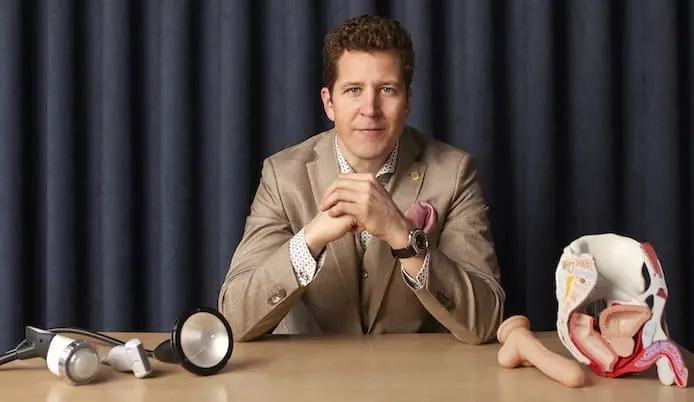
Written and medically reviewed by Michael Strøm
International speaker & expert in shockwave and EMTT treatment for erectile dysfunction, Peyronie’s & CPPS. Read more about me
Menopause in men: understand the body – and get targeted help for your intimate health
Does your body feel different than before? Less desire, weaker erections, tiredness, restlessness – maybe also pelvic pain or frequent urination. Many men call it “Menopause in men”. I encounter it every week in my clinic in Copenhagen. My focus is simple: I help you understand what’s happening and I offer targeted, evidence-based treatment for your specific symptoms – erectile dysfunction, pain, curvature of the penis(Peyronies), incontinence, performance pressure – so you can regain peace of mind and control your intimate health.
If this is new to you, it’s completely understandable that you’re worried. I work calmly, respectfully and concretely: a few manageable steps that work in your everyday life. You don’t need to have “everything in place” before you come – I’ll help you create an overview and a plan that can be felt.
In this article
- What does “Menopause in men” mean – and does it exist?
- Typical symptoms of menopause in men
- Is it testosterone – or something else?
- How I assess the situation – step by step
- Evidence-based treatment at MS Insight
- What can you realistically expect?
- Frequently asked questions about “Menopause in men”
- When should you react – and who do I help?
- This is how a course with me works
- Take the first step
What does “Menopause in men” mean – and does it exist?
Menopause in men is often used as a catch-all term for the changes many men experience with age: decreased sex drive, weaker erections, less energy, less sleep, mood swings and physical changes. Unlike women, men don’t have an abrupt hormone shutdown. On the other hand, testosterone levels drop about 1% per year from the age of 30-40 for many. For some this is insignificant, for others it causes obvious symptoms. When testosterone is significantly low and accompanied by typical symptoms, it is often called “late-onset hypogonadism”.
Testosterone circulates in the blood bound both to transport proteins (e.g. SHBG) and as “free” testosterone. It is mainly the free fraction that is biologically active. SHBG can be affected by weight, alcohol and certain medications, among other things – therefore total and free testosterone can point in opposite directions. Measurements should be taken in the morning on two different days to be accurate because the level fluctuates naturally in the circadian rhythm.
Important: Menopause in men is not just hormones. Erectile dysfunction is most often caused by vascular disease in the penis, pelvic floor tension, nerve pain, medication side effects, sleep apnea, stress – or a combination. My job is to distinguish what’s what and target your efforts so that you get practical results. I always keep an eye on the big picture and, if necessary, I also recommend a medical assessment of vascular health and medication. We always want to work on the cause of the problem, not just the symptom and a quick pill or gel.
Typical symptoms of menopause in men
Sexual function
Many describe:
- Weaker or unstable erections (difficulty getting or keeping an erection)
- Fewer morning erections (related to the nervous system as well, not just testosterone)
- Decreased desire (libido) and lower orgasm intensity
- Delayed or rapid ejaculation
It can affect confidence, intimate relationships and the desire to even try. You’re not alone – and there is help available. As a simple rule of thumb, fewer/missing morning erections are often related to hormones, stress and sleep, while problems holding an erection during sex are more often related to vessels, nerves or the pelvic floor. I use these patterns actively in my assessment.
Bodies
- More fatigue, lower energy and reduced physical performance
- Less muscle mass and more fat around the stomach
- Soreness, slower recovery, possibly joint pain
- Hot flushes in some (less often than in women)
These changes are not a sign that you are “past your prime”. They’re a sign that your body is calling for adjustments. Small, targeted tweaks in exercise, sleep and diet, combined with treatment of vessels, nerves or muscles, can make a surprising difference – even if you’ve been struggling for a long time.
Sleep and mind
- Restless or interrupted sleep, early awakenings
- Depressed, less drive, short temper
- Stress, performance pressure and worries about “being able to”
Sleep is central to hormone balance and nerve function. I screen for signs of sleep apnea and help you with specific sleep habits that you can implement. At the same time, I work to reduce performance pressure and restore a safer connection to the body so that nervousness does not interfere with desire and erection.
Pelvis and abdomen
- Tight or sore pelvic floor
- Pain in the penis, scrotum, perineum or lower abdomen (chronic pelvic pain/CPPS)
- Irritative urination (frequent urge to urinate, after-drip, weak stream)
This discomfort can feel like ‘male menopause’, but the causes are often mixed and can be treated specifically. I work specifically on getting the muscles and nerves in the pelvis working together again and give you simple techniques to improve urination, reduce pain and relax without losing strength.
Is it testosterone – or something else?
Low testosterone can contribute to decreased desire, fewer morning erections, fatigue and lower muscle mass. But erectile dysfunction is frequently the cause:
- Vascular conditions: reduced blood flow in the tumor bodies
- Tight or overactive pelvic floor
- Nerve irritation, e.g. impact on the pudendal nerve
- Peyronie’s disease (curvature due to scar tissue/plaque in tunica)
- Sleep apnea, obesity, metabolic disorders
- Side effects from medications (e.g. certain blood pressure reducers, SSRIs, etc.)
- Stress, performance anxiety or negative experiences
That’s why I always start with a thorough assessment. The goal is to find your root cause and take action where it will have the greatest effect. Often the solution is multifactorial: a little better sleep, a more relaxed pelvic floor and a strong focus on vascular health can combine to significantly improve erection – even if your testosterone is not perfect.
How I assess the situation – step by step
Thorough conversation and targeted questionnaires
I review your symptoms, history and everyday patterns. I talk to you about sleep, work, exercise, alcohol/smoking, medication, trauma, surgical history and sexuality. I use validated questionnaires (e.g. IIEF for erection, ADAMS for testosterone, IPSS for urination and symptom profile for pelvic pain) so I get a clear starting point. If you want to involve your partner, I create the framework for a safe conversation.
Advanced diagnostics in the clinic
I use high-resolution ultrasound to assess tissues in the penis and perineum, including signs of Peyronie’s disease (plaque/scar tissue) and local tissue conditions that may explain pain or mechanical restrictions. If needed, I also assess blood flow with Doppler function. I screen the pelvic floor for tension, weakness and coordination and test the sensitivity of the nervous system. The aim is to see if your discomfort is mainly vascular, muscular, neural – or a combination.
Relevant blood tests – via your GP
If there are any signs of hormonal imbalance, I advise you to talk to your GP about blood tests. Typically: total and free testosterone (morning tests, preferably two separate measurements), SHBG (transport protein that affects “free” testosterone), LH/FSH (control hormones from the pituitary gland), prolactin, metabolism (TSH), long-term blood sugar (HbA1c), vitamin D and lipid profile. The tests are best taken at rest and fasting. This way, you can clarify whether a hormone trace is relevant to pursue with your doctor – while I take care of your specific symptoms here and now. I also have the option of ordering an express blood test in private with full co-payment.
Evidence-based treatment at MS Insight
I offer tailored programs with proven approaches. I combine technologies and training with behavior and habit changes to make the effects last in everyday life. We set clear goals (e.g. IIEF score, erection quality and pain profile) so you can track progress – and I adjust the plan based on your results.
Erectile dysfunction with vascular cause: focused sound waves
Focused sound waves (focused shockwave therapy) is a well-documented method for vasculogenic erectile dysfunction. The sound waves stimulate tissue repair and new microscopic blood vessels (neovascularization) and can improve blood flow in the erectile tissue. The result for many is firmer and more sustained erections. The course is typically 6-12 sessions depending on your starting point and goals. The treatment is short, well-dosed and without significant side effects. The effect builds gradually over weeks. I always assess candidacy based on clinical findings so that the intervention fits your particular type of ED.
EMTT – electromagnetic transduction therapy
EMTT can complement the treatment of pain, tissue overload and healing problems in pelvic and penile tissue. The rapidly changing electromagnetic fields affect cell regeneration processes and can help tissues and nerves normalize. You typically feel a light, rhythmic pulse in the area. I use EMTT when clinical evidence suggests benefit by combining it with focused sound waves or neuromodulation.
Neuromodulation and pelvic floor
For chronic pelvic pain(CPPS), pudendal nerve involvement or overactive pelvic floor, I work with neuromodulation to calm hypersensitive nerves and restore normal muscle tone. This can reduce pain, improve erection, ejaculation and urination. You also get specific training: not just kegels, but the right strategy for your pelvic floor – relaxation, coordination and strength in the order your body needs. I couple this with breathing techniques and simple everyday routines so your pelvis learns to release at the right times.
Peyronie’s disease (penile curvature)
I use ultrasound to identify plaque and assess tissue condition. Treatment can consist of focused sound waves and EMTT combined with stretching/traction guidance and pain management. The goal is to reduce pain, improve tissue quality and optimize function – and provide clear strategies for sex without fear of deterioration. I measure the angle, follow the progress systematically and adjust the intervention as the tissue responds.
Sexological bias and performance pressure
When the brain “monitors” performance, it can inhibit nerve signals to the bulging organs. I work with concrete techniques to break the performance spiral, build trust in the body and restore desire. You get simple exercises, structure for gradual exposure and – if you wish – advice for communication with your partner. I help you move away from the “spectator role” in bed, so that presence and desire can take over again.
Lifestyle, sleep and systemic factors
Strength training, fitness, weight management, alcohol/smoking and sleep hygiene have a direct effect on testosterone balance, vascular health and nervous system. You get specific recommendations that match your everyday life – not ideals on paper. Small steps, big effect. For example, I suggest short, structured strength sessions, a realistic fitness routine, regular bedtimes and a simple caffeine and alcohol plan that you can actually stick to.
What can you realistically expect?
- Vascular ED: Many notice improvements 3-12 weeks into a course of focused sound waves, often progressing further after completing the series.
- Pelvic pain/CPPS: Neuromodulation and targeted training can provide noticeable symptom relief in 4-8 weeks; stabilization occurs over a longer period of time.
- Peyronies: Pain relief is often seen early on; changes in tissue and function require patience and systematics.
- Lifestyle/sleep: 6-12 weeks for initial effects; 3-6 months for lasting results.
No treatment can guarantee a specific outcome – but a precise plan, implemented properly, moves the needle for most people. Starting points (age, duration, health and medication) matter and I take that into account. I follow up closely and adjust the course as needed so that the effort always matches your development.
Frequently asked questions about “Menopause in men”
Is there a male menopause?
Not in the same way as in women. In men, testosterone decreases gradually. Some develop symptoms of low testosterone (late-onset hypogonadism), others do not. At the same time, vessels, nerves, muscles, sleep and psyche play a major role. I assess the whole picture so that you don’t end up in an “either-or” situation, but get a solution that works in practice.
When does it start?
Some notice changes in their 30s, more in their 40s and 50s. For some it’s due to lifestyle and stress; for others it’s hormones or vascular health. It’s individual – that’s why I start with a thorough assessment. You don’t have to guess; I help you find the causes.
Should I have testosterone therapy?
It depends on symptoms and blood tests. I don’t prescribe hormones, but I will advise you to talk to your own doctor about relevant tests if necessary. Either way, your specific symptoms can often be effectively treated in the clinic. The focus is on improving function and quality of life – with or without hormones.
Can focused sound waves help if I have low testosterone?
If the erection problem is primarily vascular, focused sound waves can make a significant difference – independent of testosterone. If hormones are also involved, I can work in parallel: I address the mechanical/neural while you clarify blood tests with your doctor. Many people find that the combination gives the best effect.
Do the treatments hurt?
Focused sound waves and EMTT are typically well tolerated. With neuromodulation, intensity is adjusted to your limits. The goal is effect with comfort. You’ll always know what I do – and why – before I do it.
How many sessions do I need?
It depends on your situation. Vascular ED: often 6-12 sessions. CPPS: typically a series with close follow-up. Peyronies: variable, combined with home intervention. I make a clear plan from the start so you know what the next step is.
Can I combine with potency medication?
Yes, many do it for a transition. For some, the need decreases as tissue and vascular health improves. I’ll create a strategy that fits your everyday life and coordinate with your GP if needed.
Does pelvic floor training help?
Yes – if it’s done right. Many people tense too much. I teach you to relax, activate and coordinate in the right order so you get function instead of additional tension. It’s about timing, not just strength.
What if it’s “in your head”?
Body and mind are connected. Even under performance pressure, I work physically with blood vessels, nerves and muscles – along with a simple, concrete plan to break mental patterns. It works best in combination. I focus on confidence and small successes that rebuild self-confidence.
When should you react – and who do I help?
Don’t wait if you’ve had erectile dysfunction for more than three months, if you have penile/pelvic pain, new or increasing curvature, unresolved incontinence or significant decrease in desire/energy. Erectile dysfunction can also be an early warning sign of vascular health, so I often recommend a GP check for blood pressure, blood sugar and cholesterol – in parallel with my program. I help men of all ages, from all over Denmark – especially Copenhagen and Zealand – who want a clear plan and noticeable effect.
This is how a course with me works
Initial consultation: I review your goals and challenges, run relevant tests and ultrasounds if needed, and create a concrete plan. I’ll let you know what to expect week by week. The treatment combines technologies (focused sound waves, EMTT, neuromodulation) with exercises and adjustments to sleep, exercise and habits. You get precise at-home guidance – short, practical and easy to follow. I follow up, measure progress and adjust. Everything is done safely, discreetly and with respect for the fact that this can be vulnerable to talk about.
Take the first step
Menopause in men doesn’t have to mean saying goodbye to desire, strength and intimacy. With a targeted, evidence-based approach, you can get your journey back on track, reduce pain, sleep better and feel more like yourself again. Contact me today and get a plan that’s right for you. The clinic is centrally located in Copenhagen and I have clients from all over Zealand and the rest of the country. Your intimate health is important – and you can do something about it now.
If you are interested in hearing more about how I can help you, you are always welcome to contact me by phone 41 40 08 58 or email michael@msinsight.dk. I’ll get back to you quickly with a customized proposal so we can find the best way forward together.
Would you like a specialist assessment of your situation?
You don’t have to figure it out alone. Call directly or write a few lines about your symptoms – I’ll get back to you within 12-24 hours with a concrete suggestion for the next step.