

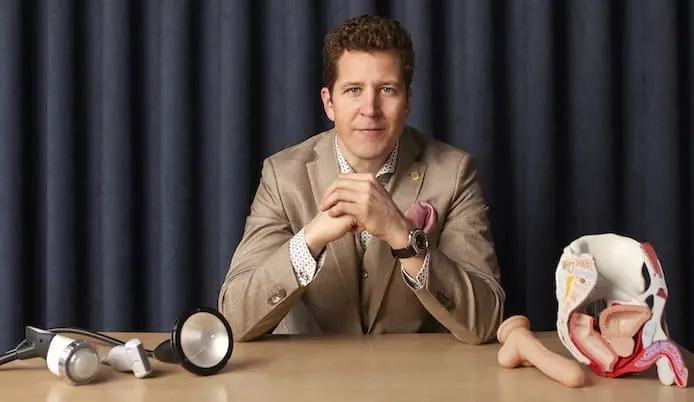
Written and medically reviewed by Michael Strøm
International speaker & expert in shockwave and EMTT treatment for erectile dysfunction, Peyronie’s & CPPS. Read more about me
Lichen sclerosus in men – when the skin on the penis hurts, tightens and creates insecurity
Lichen sclerosus in men is a chronic skin disease that typically affects the foreskin and head of the penis. It can cause pain, burning, itching, scratching, tight skin and problems with erection, sex and urination. Many go too long alone with it – due to shame, insecurity and because the symptoms can be difficult to understand.
I work with men who experience these types of intimate problems: pain, erectile dysfunction, altered sensitivity, fear of sex and worries about their body “breaking down”. I know how much it can take its toll – in everyday life, in relationships and in self-esteem.
In this article
- What is Lichen sclerosus in men?
- Typical symptoms of Lichen sclerosus in men
- Causes of Lichen sclerosus in men – what is known?
- How is lichen sclerosus diagnosed in men?
- Possible complications of untreated Lichen sclerosus
- Lichen sclerosus treatment – what can I help you with?
- Frequently asked questions about Lichen sclerosus in men
- When does it make sense to seek help?
- This is how a course with me works
- Take the first step – you don’t have to do it alone
What is Lichen sclerosus in men?
Lichen sclerosus in men is an inflammatory (inflammation-like) skin disease that most commonly affects the genital area – especially the foreskin, head of the penis and the area around the urethral opening. The skin becomes thin, tender and whitish and can feel tight, less elastic and fragile.
The condition is chronic but can often be controlled with the right treatment, care and attention to symptoms. It’s all about getting to know your skin, reacting in time to exacerbations and getting help for both the physical and sexual consequences.
Typical areas affected
In men, I typically see Lichen sclerosus on:
- The foreskin (inside)
- Penis head (glans)
- The ridge between the foreskin and the head of the penis
- Around the urethral opening (meatus)
- In some cases, further down the shaft and towards the pelvic floor and testicles.
This is an area that is already vulnerable – both physically and emotionally. That’s why relatively “small” changes can feel very drastic in everyday life. Even minor blemishes, slight tightness or a single painful tear can be enough to make you lose your desire for sex or avoid being seen naked.
Is Lichen sclerosus contagious?
Answer. Lichen sclerosus in men is not an STD and is not transmitted through sex. You haven’t “caught it” from a partner and you don’t pass it on.
It’s important to clarify because many people feel unfounded guilt – or avoid sex for fear of infecting others. This can create unnecessary distance in a relationship, even if there is no risk of infection. It’s often reassuring to be able to say to yourself and your partner: “This is a skin disease, not an infection.”
Typical symptoms of Lichen sclerosus in men
Symptoms can vary greatly from man to man. Some have mostly cosmetic changes, others have significant pain and functional problems with both erection and urination.
It’s also common for symptoms to fluctuate – periods of calm and periods with more irritation, tearing or burning, for example after sex, sports or high friction.
Skin changes on the penis
- White, porcelain-like or “marble-like” spots on the foreskin or head of the penis
- Skin may appear thin, shiny or parchment-like
- Small cuts or cracks, especially after sex or masturbation
- Large wounds can form and may have difficulty healing
- Scarring and tightening of the skin over time
Some men also find that the skin feels less mobile or that the head of the penis changes appearance and color. It can be hard not to constantly check and compare – and many report that they become more concerned with how the penis looks than how it feels.
Pain, burning and itching
- Burning when touched or during sex
- Burning pain, especially with erection
- Itching or irritation that may come and go
- Pain when urinating if the urethral opening is affected
It can also feel like the skin “cracks” when you get stiff or like there is a constant soreness in the area, even without touching. Repeated pain can cause the body to tense up and expect it to hurt – even in situations where the skin is actually relatively calm.
Tight foreskin and erectile dysfunction
In some men, lichen sclerosus develops a degree of phimosis:
- The foreskin can be difficult or impossible to fully retract
- Erection can hurt because the skin can’t give way
- Fear of cracking skin can in itself inhibit desire and erection
I often talk to men who describe a vicious spiral:
pain → insecurity → less desire → worse erection → even more worry.
Whether Lichen sclerosus is the cause of your erection problems or “just” a contributing factor, I can work with it in a structured way. The goal is not only a better erection, but that you can be intimate again without worrying if it will hurt or go wrong.
Emotional reactions
When something changes on the penis, it often has a direct impact on a man’s identity. Many describe:
- Shame about the appearance of the penis
- Fear that your partner will react negatively
- Worrying about the penis “breaking” or being destroyed forever
- Fear of sex – and some avoid intimacy altogether
These are perfectly normal reactions. But you don’t have to deal with them alone. My job is to take care of your body professionally and give you a safe space to talk about anything you may not have said out loud before. For many men, it’s a relief just to put their fears into words and hear what’s actually realistic and what’s “just” catastrophic thoughts.
Causes of Lichen sclerosus in men – what is known?
There is no single explanation as to why Lichen sclerosus in men occurs. But there are some factors that seem to increase the risk:
- Autoimmunity – the body can react inappropriately to its own skin
- Genetic predisposition – it’s more common in some families
- Repeated irritation or microtrauma to the skin (e.g. friction, tight foreskin, rough sex or masturbation)
- Possible association with other skin conditions or hormonal fluctuations
Lichen sclerosus in men is not your fault. It’s not about poor hygiene, “wrong” sex life, or anything to be ashamed of.
Instead, it makes sense to look at how you can minimize irritation, take care of the skin, while addressing the functional issues – erection, pain, sensitivity and pelvic function. This can give you a sense of control in a situation that can otherwise feel very unpredictable.
How is lichen sclerosus diagnosed in men?
Diagnosis is typically based on medical history and skin examination. Sometimes a tissue sample (biopsy) is taken to be sure and rule out other conditions.
If you come to me suspecting Lichen sclerosus in men, I will focus on both the skin changes themselves and any associated problems you may have.
What I typically ask about
- When you first noticed changes on your penis
- Development over time – is it worse, stable or fluctuating?
- Pain, burning, itching, scratching and tightness
- Problems with erection, intercourse or masturbation
- Difficulty urinating – thin stream, burning, drip after urination
- How it affects you mentally and in your relationship
It’s important to me that you can talk openly – even about what you might find embarrassing, exaggerated or “not manly”. The more I know, the better I can help you with a concrete plan.
Examinations in the clinic
At the clinic, I perform a thorough but respectful examination. You are clothed, except when the genital area itself needs to be seen and examined – and we take it at a pace where you always know what is going to happen.
I can assess, among other things:
- Degree and prevalence of skin changes
- Whether the foreskin is tight and how much
- Whether there are signs of scarring, contractions or narrowing around the urethra
- Pelvic floor tension – many men with pain in the penis and around the crotch also have an overactive pelvic floor
In some cases, I will recommend that you talk to your GP or a dermatologist (dermatologist) about tissue sampling, medical treatment or assessment in relation to surgery (e.g. circumcision), if relevant. I’m happy to help you formulate what you should ask so that you’re not alone when meeting with other practitioners.
Possible complications of untreated Lichen sclerosus
Lichen sclerosus in men can be mild and stable, but if it develops untreated, complications can occur:
- Pronounced phimosis – where the foreskin can barely retract
- Narrowing of the urethral opening – difficult or thin urine stream
- Chronic pain during erection and sex
- Severely reduced sensitivity or reverse hypersensitivity
- Chronic non-healing wounds
There is also a slightly increased risk of certain types of penile cancer with long-term and untreated Lichen sclerosus in men. This doesn’t mean you “get cancer” because you have the condition – but it does emphasize that it is a condition that should be taken seriously, monitored and treated, not ignored.
Early intervention is therefore about both reducing daily discomfort and preventing unnecessary long-term complications.
Lichen sclerosus treatment – what can I help you with?
The classic treatment of Lichen sclerosus in men is often medical (e.g. stronger adrenal cortex hormone creams) and in some cases surgical (e.g. circumcision for severe phimosis). It is typically managed by a dermatologist and urologist.
In MS Insight, I work with the functional and pain-related consequences – and with strengthening your overall intimate health. I look at how your body, muscles, nerves and sexuality react to the disease and how best to get them to work together again.
1. Clarification: What is the problem – and how big is it?
The first step is always a thorough conversation and examination. My focus is to build a complete picture:
- How does Lichen sclerosus affect your everyday life?
- Is pain or burning during an erection the biggest problem?
- Is it travel that’s failing – or the fear of pain that’s blocking?
- Is the pelvic floor tense and helping to maintain the pain?
- How are you feeling emotionally and sexually (confidence, desire, relationship)?
Based on this, I customize the course for you. No two men with male lichen sclerosus are the same, and neither should the treatment be.
2. Pain relief, pelvic floor and nervous system
Many men with Lichen sclerosus develop hypersensitivity in the nerves and muscles in the area – the body goes into “protection mode”. This can increase pain and make erectile dysfunction worse.
Here I work with:
- Neuromodulation – gentle stimulation of nerves and pain pathways to reduce overactivity
- Pelvic floor training – both relaxation and control (not just “squats”)
- Shockwave to reduce scar tissue and increase blood flow and healing ability
- Guidance on posture, touch and pace for less pain and more control
- Strategies to regulate the nervous system – such as breathing and exercises you can use before sex
The goal is for the body to once again associate touch and intimacy with something safe and pleasant – not with alarm and pain.
3. Erectile dysfunction and sexual function
If Lichen sclerosus in men affects erection, it can be both:
- Physical pain and tightness in the skin
- Reduced blood flow due to lack of use and muscle tension
- Performance anxiety, fear of pain, shame or bad experience
I can help with:
- Targeted guidance to rebuild confidence around erection and sex
- Work plan for gradually resuming sexual activity without straining the body
- Possible combination with focused shockwave therapy (focused sound waves) or EMTT for men where there is also evidence of blood vessel or tissue problems affecting erection – always assessed specifically
Shockwave therapy and EMTT are not a treatment for Lichen sclerosus itself as a skin disease, but can in selected cases support tissue healing and erectile function if there is also erectile dysfunction, microcirculation problems or muscle/tendon involvement in the area. What matters is that you get a realistic assessment of what can help you.
4. Intimate skin care and strain management
Even small adjustments can make a big difference to your skin:
- Gentle washing and skin care guide – what helps and what irritates
- Tips to minimize friction and microtrauma
- Advice on lubricants, condoms and the gentlest products
- Help to adjust sexual activity to make it less painful but still present
When you know your triggers – such as certain positions, dry sex, certain soaps or clothes – you can better prevent flare-ups and create more stable periods of skin calm.
5. Psychosexual support – when thoughts outweigh symptoms
Lichen sclerosus in men is not just a skin condition. It also affects self-image, the desire and courage to be close to another person.
I work with:
- Translating the academic into something concrete you can relate to
- Clarifying what you’re afraid of – and what’s actually realistic
- Finding ways to be sexually active that fit your body in the moment
- Involve your partner if you wish – so you’re not alone with the explanation
For many men, it’s crucial to feel that intimacy, pleasure and a good sex life are still possible – even if the body no longer functions as it used to.
Frequently asked questions about Lichen sclerosus in men
Does Lichen sclerosus go away on its own?
No, Lichen sclerosus is considered a chronic condition. However, symptoms can fluctuate – and with the right treatment and care, disease activity can often be brought down to a level where you have little or no discomfort in everyday life.
It’s not “just something that goes away” if you ignore it. On the contrary, early and consistent management is beneficial because it can slow down deterioration and reduce the risk of complications.
Can I still have sex?
Yes, in many cases you can continue to have a satisfying sex life – but often it requires adjustments. Some periods, sex may be more difficult or painful.
I can help you find out:
- Which types of touch and positions are the least annoying
- How you can use lube and pace wisely
- How to get desire and pleasure back without your body going on alert
The goal is not that you just “bite the bullet”, but that you have a sex life that feels safe, respectful and realistic in relation to your body.
Is it dangerous to have Lichen sclerosus?
The skin condition itself is not life-threatening. However, left untreated, it can significantly reduce quality of life: pain, sexual problems and difficulty urinating.
There is a slightly increased risk of certain penile cancers with long-term and untreated Lichen sclerosus in men, so it’s important to have suspicious changes assessed and monitor progress. Attention and follow-up is a strength – not a sign of weakness.
Can I exercise, play sports and live normally?
Yes, you can. Most people can lead an active life. However, some experience worsening of symptoms with activities that cause a lot of friction or pressure in the area (e.g. cycling for long hours, tight clothing, intensive sports without breaks).
Here I can help you make adjustments – so you can take care of yourself and keep doing what’s important to you. It can be about equipment, breaks, clothing choices or the way you structure your training.
Is circumcision the only solution?
For some men with pronounced phimosis and severe symptoms, circumcision can be a good and effective solution. For others, medical treatment, proper skin care and management of pain and tension may be sufficient.
My role is not to push you in a particular direction, but to help you get a professional overview so you can make decisions that make sense for you – and to support you before and after surgery, if you choose that path. I also look at how best to maintain or rebuild your sexual function after surgery.
When does it make sense to seek help?
You don’t have to have “severe” symptoms to get in touch. You can benefit from a program with me if you:
- Diagnosed with Lichen Sclerosus and unsure what it means for your sex life and future
- Feeling pain, burning or tearing during erection, sex or masturbation
- Experiencing erectile dysfunction related to the skin changes
- Worried about the appearance of the penis and avoids closeness or sex
- Have pelvic pain, pressure, tightness or burning sensation in the crotch
- Need a professional but human conversation about all the things you can’t talk about with other therapists
Many people wait a long time because they hope it will pass on its own or because they don’t know who to turn to. Feel free to come earlier than you think is “necessary” – it can make the road ahead shorter and gentler.
This is how a course with me works
I know that talking about the penis, skin changes, erections and sex can feel uncomfortable. That’s why the clinic is simple, respectful and taboo-free. My goal is for you to feel that you can be honest from the first meeting – without being made wrong or feeling weak.
First consultation
- You tell your story – at your pace
- I clarify with you what you specifically want help with
- I do the research that is relevant – only what we agree on
- You get a professional assessment and a plan for the next steps
After the first consultation, you’ll leave with an overview: what Lichen sclerosus in men means for you and what your options are right now.
Further progress
A typical course may include:
- Working with pain and pelvic floor
- Shockwave treatment to increase healing and reduce pain
- Workouts and exercises you can do at home
- Advice on sex, touch and relationships
- Possible technology-based treatment such as neuromodulation or EMTT if it makes professional sense in your particular situation
- Continuously adjust your strategy according to your reactions and needs
I follow up with you so you’re not left alone with exercises, doubts or new questions along the way. The goal is for you to gradually experience more peace, less pain and greater freedom in your intimate life.
Take the first step – you don’t have to do it alone
Lichen sclerosus in men is a vulnerable diagnosis to receive. It hits right where many men feel most vulnerable – and too many end up withdrawing, hiding and letting the symptoms rule their lives.
You deserve something else: knowledge, peace and a concrete way forward.
If you recognize yourself in anything you’ve read here, feel free to get in touch. In a program with me you get:
- Professional help to understand your body and your diagnosis
- Support to manage pain, erectile dysfunction and anxiety
- A confidential space where you can talk openly about what’s on your mind – without shame
You don’t need to have all the details figured out before you call or write. The important thing is that you’re not alone anymore.
I’m happy to help you take the next step.
If you are interested in hearing more about how I can help you, you are always welcome to contact me by phone 41 40 08 58 or email michael@msinsight.dk. I’ll get back to you quickly with a customized proposal so we can find the best way forward together.
Would you like a specialist assessment of your situation?
You don’t have to figure it out alone. Call directly or write a few lines about your symptoms – I’ll get back to you within 12-24 hours with a concrete suggestion for the next step.