
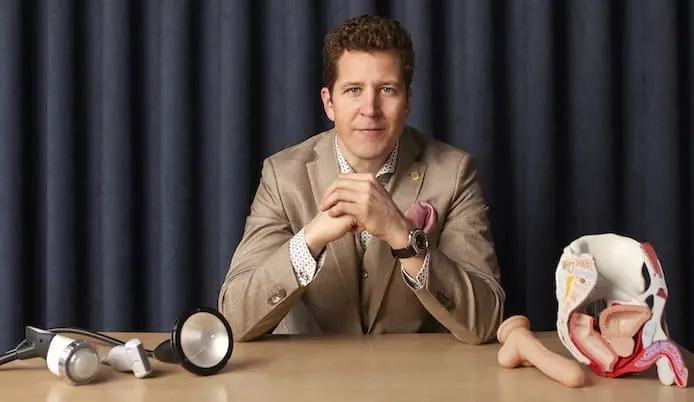
Written and medically reviewed by Michael Strøm
International speaker & expert in shockwave and EMTT treatment for erectile dysfunction, Peyronie’s & CPPS. Read more about me
Bruising on the penis – what does it mean and when should you react?
Bruises on the penis can look dramatic, but are often harmless and resolve on their own. At the same time, they can be a sign of congestion, microtrauma or underlying issues in the tissue, blood vessels or pelvic floor. I meet many men who struggle with erectile dysfunction, pelvic pain or concerns about changes on the penis – and who therefore get extra worried when discoloration or “bruising” occurs. My approach is calm, professional and direct: I help you understand what’s going on, investigate the cause and make a plan so you can move forward with confidence. Note that even a small bruise can cause a lot of discoloration because the skin on the penis has many small blood vessels – the color may also “shift” slightly in the days following as the blood breaks down and gravity causes it to sink slightly into the skin. I talk about it without reservation or shame – your safety and function are paramount.
In this article
- Typical causes of bruising on the penis
- Alarm signs – seek emergency help right away
- Examination in the clinic – calm, professional and precise clarification
- Treatment – from calm and ice to targeted therapy
- Prevention – how to reduce the risk of bruising on the penis
- Typical questions about bruises on the penis
- Why choose me – and next steps
Typical causes of bruising on the penis
Stroking or overstretching during sex or masturbation
The most common cause is a direct blow, hard pressure or a twist that causes small blood vessels in the skin to burst. This can happen with vigorous movements, a “bent” penetration, handling with too much pressure or positions where the penis suddenly slides out and hits the pubis or perineum. The result is a classic bruise (hematoma) in the skin or subcutaneous tissue, possibly with slight swelling and tenderness. The discoloration may spread or change color over a few days – this may seem alarming, but is typically a normal part of healing. However, if there is significant swelling, deformity or difficulty achieving an erection, you should be assessed quickly.
Erection training equipment: penis ring and vacuum pump
Penis rings and vacuum pumps can be great aids, but improper use can cause pressure marks and bruising – especially if the ring is too tight or used for too long, or if the vacuum in the vacuum pump is too high. I will guide you on safe use: correct size, time under 30 minutes and gradual habituation to protect the tissue. If you experience pain, numbness, cold or darkening, remove the ring immediately. With foreskin ringing, you ensure that the foreskin can slide freely both before and after use to avoid it getting stuck behind the glans (paraphimosis). With a vacuum pump, it’s important to start with low negative pressure, use plenty of lube and accept small, slow increases; small reddish dots (petechiae) are a sign of too much vacuum.
Injections for Erection (ICI)
Intracavernous injections (e.g. alprostadil) may cause slight bruising at the injection site, especially at first if the technique is not quite right or if you are prone to light bleeding. Small discolorations are normal and will disappear within a few days. If you are in treatment or considering it, I can teach you a gentle technique and help you minimize the risk. I recommend switching sides, aiming for the “10 o’clock or 2 o’clock” position on the shaft, avoiding visible vessels and keeping light pressure on the injection site for 2-3 minutes after injection – especially if you are on blood thinners. If you see a rapidly growing hematoma or significant pain, you should contact me or your doctor for assessment.
Blood thinners and bleeding disorders
Medications such as ASA, clopidogrel, warfarin or NOACs (e.g. apixaban, rivaroxaban) can make bruising more pronounced and longer lasting. Less commonly, a coagulation disorder can cause a tendency towards unexplained bruising. In this case, I will assess your situation and – if relevant – advise you to talk to your doctor about blood tests that can clarify the bleeding tendency. Please note that some supplements (e.g. fish oil, ginkgo and garlic) can also increase bleeding tendency – I always ask about supplements. If you bruise easily, extra compression for a few minutes after minor injuries or injections can help.
Mondor’s disease (thrombosed superficial vein)
Superficial phlebitis with a blood clot in a cutaneous vein on the penis can cause a tender, string-like thickening. The color can vary from normal to slightly red/bluish and the area is often tender. The condition is usually benign and resolves on its own with rest and care. I can ultrasound scan and assess the progress so you know how to best care for the area until it’s all gone. Most people benefit from reducing activity, avoiding the penis ring/vacuum pump temporarily and using warm compresses for comfort; pain relief can be with paracetamol. If the pain or redness/heat increases, you should be reassessed.
Peyronie’s disease and micro injuries
Peyronie’s disease often starts with microdamage to the tunica albuginea (the strong membrane around the tumor bodies), which triggers inflammation and can later cause plaque formation and curvature. In the early stages, some men experience pain and slight discoloration after straining. If you have bruising, pain on erection and the onset of curvature, you should be assessed – I have extensive experience in diagnostics and gentle treatments. I explain what you can do (and avoid) during the active phase to protect the tissue: gentle sex, avoid aggressive stretching and focus on good blood flow.
Sports, pressure and repetitive strain
Prolonged pressure, for example from cycling or contact sports, can irritate the tissue in the crotch and penis and trigger minor bruising. It’s more common if you also have pelvic floor tension or sit on a saddle that puts pressure on the perineum. I often see links between pelvic pain, reduced blood flow and hypersensitive tissue, which can be effectively treated with a combination of neuromodulation, exercises and adjustments in equipment and technique. Small changes often help: cut-out saddle, correct height/angle, frequent breaks from the saddle and supportive underwear during activity.
Alarm signs – seek emergency help right away
Although most bruises are harmless, there are situations where you shouldn’t wait:
- A sudden “pop” during sex, followed by pain, rapid loss of erection and severe swelling/deformity (suspected penile fracture).
- Blood in urine or from the urethra, severe swelling or rapidly increasing discoloration.
- Severe pain, fever or signs of infection in the area.
- Persistent or recurring bruising with no known cause.
- A hard, tender string on the penis with significant pain and aggravation.
In these cases, emergency assessment is crucial. If in doubt, I’ll help you determine the right next step – and if you suspect an acute condition, seek emergency care immediately. If a ring remains in place and the foreskin swells behind the glans, this is also an emergency; remove the ring immediately and seek help if it cannot come off without pressure.
Examination in the clinic – calm, professional and precise clarification
Conversation at eye level
I start with a discreet and thorough conversation: How did the discoloration occur? Do you have pain, changes in erection, curvature, swelling or sensory disturbances? Do you use a penis ring, vacuum pump or medication? I ask about your everyday life, exercise and any pelvic pain. I also ask about skin conditions (e.g. dry skin/eczema), circumcision/ foreskin, previous surgeries, systemic diseases and supplements. This gives me a clear picture of the cause and direction of treatment.
Clinical examination
I examine the skin, subcutaneous tissue and shaft for hematomas, striae, swelling or tenderness. I assess for signs of tissue damage, superficial vein thrombosis or incipient Peyronie’s. I also look for wounds, signs of infection and areas of decreased sensation. The examination is respectful and takes place in a safe environment.
Ultrasound scan and doppler
I offer advanced ultrasound scanning that can visualize hematomas, tissue quality, plaque formation and blood vessels. With Doppler, I assess blood flow and look for signs of vein thrombosis or other vascular changes. The scan is painless and provides a solid basis for choosing the right treatment. I can distinguish between superficial skin changes and deeper tissue changes, measure the extent and monitor healing over time to avoid unnecessary worry.
Pelvic floor and nerve impingement
Tension in the pelvic floor and impact on the pudendal nerve can make tissues more vulnerable and reactive to pain. I screen for muscle tension, nerve irritation and pain patterns that may explain why small traumas cause disproportionate symptoms – and address it in a targeted way during the course. The goal is to calm the nervous system, improve blood flow and create more resilient tissue.
Treatment – from calm and ice to targeted therapy
Self-care for minor bruises
- Calm: Avoid sex, hard masturbation and direct pressure on the area for the first few days.
- Cool: Cold compresses for 10-15 minutes at a time for the first 24-48 hours to reduce swelling and soreness.
- Compression: A soft support bandage around the shaft can sometimes relieve slight swelling (without tightening).
- Pain management: Paracetamol is often sufficient. Be aware that certain painkillers can increase bleeding tendency.
- Observation: Most bruises fade within 1-2 weeks.
It is normal for the color to change from blue/purple to green/yellow before it disappears. Avoid hot baths and strenuous exercise for the first 24 hours and wear soft, supportive underwear. If you experience increasing pain, significant swelling or sensory disturbances, contact me for an assessment.
When there is a large hematoma or suspected fracture
Significant swelling, change in shape or severe pain requires urgent assessment. I’ll help you identify the warning signs and next steps, but if you suspect a ruptured tunica (penile fracture), don’t wait – it’s an emergency condition that requires rapid treatment to protect erectile function. Here, I provide targeted referrals to the right place so you can move forward quickly.
If bruising is related to erection problems
Some people develop bruising because they overcompensate during sex, use too tight equipment or struggle with unstable erections. Here, I work on two tracks: gentle symptom relief now – and strengthening erectile function in the long term. I offer evidence-based programs with focused sound waves to improve blood vessel and tissue healing in erectile dysfunction, EMTT (electromagnetic transduction therapy) to stimulate tissue regeneration and neuromodulation to reduce overactive pain and tension response in the pelvis. At the same time, I look at habits, sleep, stress, medication and exercise to give you robust, long-lasting results. I also review safe ring/pump use and advise on good, controlled positions.
Peyronie’s disease: pain, curvature and discoloration
If you have bruising along with pain on erection or new curvature, I check for Peyronie’s. With ultrasound, I uncover plaque formation and possible calcification. The treatment plan is adapted to your phase and goals: focused sound waves can in many cases reduce pain in the active phase and stimulate tissue healing; EMTT can support regenerative response; and a structured exercise and stretching program can help with elasticity. I am realistic about effects and set clear expectations – the goal is less pain, better function and control over the process. For assistive devices for pulling/stretching, I advise on gentle intervention and correct dosing to avoid further microtrauma.
CPPS and an overactive pelvic floor
Chronic pelvic pain and a tense pelvic floor make tissues more vulnerable and can exacerbate both pain and bruising from minor trauma. I combine neuromodulation, targeted relaxation and breathing exercises, guidance on ergonomics/saddle choice and pelvic floor training to calm the nervous system and improve tissue tolerance. Advice on pacing (dosed activity) and gradual exposure helps you regain confidence in your body.
Mondor’s vein thrombosis – when a “string” hurts
In the case of superficial phlebitis, the course is typically self-limiting. I assess with a clinic and ultrasound, advise on rest, adaptation of activity and pain relief, and the expected time frame. Most people are symptom-free within weeks, but follow-up ensures that you reach the finish line. Until the pain is gone, I recommend avoiding anything tight around the shaft and resuming activity gradually once the soreness has subsided.
Prevention – how to reduce the risk of bruising on the penis
- Good communication and pacing: Avoid sudden, deep thrusts and “bending” movements.
- Ample lube: Reduces friction and micro-damage.
- Safe positions: Choose positions with good control, especially if your erection is fluctuating.
- Penis ring: Correct size, max. 30 minutes at a time and stop if discomfort occurs.
- Vacuum pump: Start with low vacuum, short time and gradual acclimatization.
- Training and recovery: Avoid prolonged pressure from bike saddle – adjust equipment and technique.
- Strengthen blood vessels: Sleep, anti-inflammatory diet, exercise, quitting smoking and moderate alcohol support vascular function.
- Keep an eye on medication: If you are on blood thinners, be extra gentle and react to excessive bruising.
Typical questions about bruises on the penis
How long does a bruise on the penis last?
Small bruises typically disappear within 7-14 days. The color changes from blue/purple to green/yellow and eventually normal skin color. If the discoloration doesn’t improve after two weeks – or if it worsens – you should be assessed. It’s normal for it to look most noticeable after 1-3 days and for the discoloration to “sink” slightly towards the root or scrotum.
Is it dangerous to have sex with a bruise?
It’s rarely dangerous, but as a general rule, I recommend pausing until soreness and discoloration have clearly subsided to avoid further damage. Resume sexual activity gradually and gently. Use plenty of lube, choose positions with good control, and avoid ring/pump until the area is completely calm.
Can erection pills cause bruising?
PDE5 inhibitors (e.g. sildenafil/tadalafil) don’t bruise per se, but a firmer erection can make an accident more noticeable. If you’re prone to bruising, it’s often about technique, pace and equipment – not the pill itself. I’m happy to walk you through safe strategies so you can get results without unnecessary risks.
Is it normal to bruise a vacuum pump or penis ring?
Small, short-term discoloration may occur during start-up or incorrect use. Persistent or large bruises indicate too much negative pressure or too tight/too long use of the ring. I can help you set it up correctly so you get the effect without damage. Look out for signs of over-pressurization: darkened skin, tingling and changes in sensation.
What if the bruises come back again and again?
Repeated bruising should be investigated. The cause may be microtrauma, a tense pelvic floor, the onset of Peyronie’s, fragile vessels or medication. A targeted examination with conversation and ultrasound allows for prevention in the future. I also look at lifestyle factors, sleep and exercise habits so that we can reduce stresses where they actually occur.
Can a bruise be a sign of cancer?
Penile cancer typically shows up as a lump, sore, thickening or persistent skin change – not as a classic bruise. But anything that doesn’t heal as expected should be assessed. I will take your concerns seriously and clarify it safely.
Why choose me – and next steps
I run MS Insight in Copenhagen with a special focus on men’s intimate health. You will meet professionalism with weight and a safe, open-minded environment. I offer:
- Accurate diagnostics with ultrasound scanning and doppler.
- Tailored treatment pathways – from gentle self-care to targeted technologies like focused sound waves, EMTT and neuromodulation.
- Concrete advice on safe sex positions, equipment, pelvic floor, sleep and habits – everything that really makes a difference.
- Clear expectations and ongoing follow-up so you know where you stand.
If you experience penile bruising, pelvic pain, erectile dysfunction or are just worried: Get in touch. I’ll help you figure out the cause and create a plan that suits you and your everyday life. Whether you live in Copenhagen or come from far away, I have clients from all over Zealand and the rest of the country. Book an appointment and let’s take the first step towards calm, better function and more confidence in your body.
If you are interested in hearing more about how I can help you, you are always welcome to contact me by phone 41 40 08 58 or email michael@msinsight.dk. I’ll get back to you quickly with a customized proposal so we can find the best way forward together.
Would you like a specialist assessment of your situation?
You don’t have to figure it out alone. Call directly or write a few lines about your symptoms – I’ll get back to you within 12-24 hours with a concrete suggestion for the next step.