

Nitric oxide and erectile dysfunction are closely linked, and I know how frustrating it can feel when your body doesn’t respond the way you want it to. In this article, I’ll give you a concrete explanation of why nitric oxide is so crucial for a stable erection, what symptoms to look out for, and how lifestyle, blood vessels, nerves and psyche all play a part. I’ll show you how I work with advanced diagnostics and customized treatment for erectile dysfunction so you can regain more control, confidence and pleasure in your sex life. Read on to understand your body better – and find out what you can realistically do to get your erection back.
Nitric oxide is a neurotransmitter that relaxes the blood vessels in the penis, allowing blood to flow in and create a stable erection.

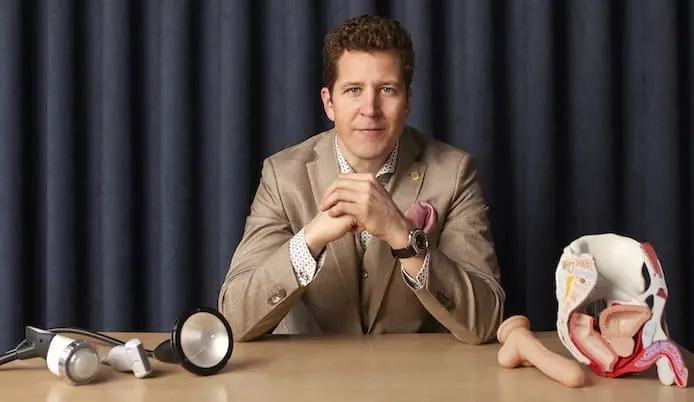
International speaker & expert in shockwave and EMTT treatment for erectile dysfunction, peyronies & CPPPS.
When an erection starts to fail, most men feel it in a very real way: soft erection, difficulty holding it, weaker orgasms or pelvic pain. It can feel like a defeat, as if the body suddenly doesn’t want to cooperate – and it affects self-esteem, desire for intimacy and sometimes even mood in everyday life.
Behind what you experience in bed, there is often a very concrete biological explanation – and nitric oxide (NO) plays a key role.
I work with men every day who struggle with erectile dysfunction, pelvic pain and other intimate health challenges. In this article, I explain what nitric oxide is, why it’s so crucial for erection – and what you can realistically do if you’re affected.
Nitric oxide is a neurotransmitter produced by the body itself. It is not a dietary supplement and not something you can “take” directly – it is a gas that forms in blood vessels and nerves and is used to regulate blood flow and blood vessel tension (tone).
When I talk about nitric oxide and erectile dysfunction, it’s all about one function: the ability to relax the blood vessels in the penis, allowing blood to flow in and create a firm, stable erection that you can rely on.
An erection is essentially a blood pressure system that either works – or doesn’t work. When you are sexually stimulated:
If your body doesn’t make enough nitric oxide or your blood vessels don’t respond properly to it, your erection becomes weak, unstable – or non-existent. You may find that you can get some fullness, but it doesn’t “lock in” or disappear quickly when you change position or get distracted.
Nitric oxide isn’t just about sex. It’s also important for:
That’s why I often see that erectile dysfunction is an early sign of problems in the blood vessels – for example, the onset of atherosclerosis. Many men don’t realize something is wrong until their erection fails. Then high blood pressure, high cholesterol or pre-diabetes may be discovered during a subsequent medical examination.
In this way, nitric oxide and erectile dysfunction can act as a kind of “warning signal” from the body – not just about sex life, but about health in general.
When nitric oxide and erectile dysfunction are linked, it rarely shows up as a single thing. There is typically a pattern over time. I often meet men who describe some of these signs:
At the same time, there may be other signals from the body that indicate that the blood vessels and NO system are not functioning optimally:
It’s not like you can “feel” your nitric oxide directly. But the combination of erectile dysfunction and several of the above symptoms makes it more likely that the circulatory, nervous and NO systems play a significant role.
For many men, it’s a relief to have it put into words and explained – so it doesn’t just feel like “I fail as a man”, but as a concrete, impressionable system in the body.
There is rarely a single cause. Erectile dysfunction is often caused by a combination of physical, mental and lifestyle factors. Here are some of the most common physical causes that affect nitric oxide and the ability of blood vessels to function:
Atherosclerosis and stiff blood vessels reduce the ability to produce and respond to nitric oxide. This means:
Men with diabetes, high blood pressure, high cholesterol, obesity or long-term smoking have an increased risk of this type of problem. Many report that their erection has “just slowly gotten worse” – without one specific episode where it all broke down. This fits well with a slower progression in the blood vessels.
Long-term, low-grade inflammation in the body (for example, metabolic syndrome, obesity or chronic stress) and oxidative stress can break down nitric oxide faster than the body can produce it.
It’s a bit like you actually produce NO – but it’s “burned off” before it can do its job in the blood vessels. The result is that you have a harder time getting the full dilation of the blood vessels, even though you’re actually sexually aroused and want to.
Testosterone affects nerves, blood vessels and sexual desire, among other things. Reduced testosterone in itself does not automatically cause erectile dysfunction, but it can:
I don’t work with hormone therapy, but I can advise you on what symptoms you should be aware of (e.g. low desire, fatigue, less muscle mass) and how you can start a dialog about relevant investigations elsewhere if necessary. This way, we can get an overview of how much of your erectile dysfunction is due to hormones – and how much is related to blood vessels, nerves, pelvis and psyche.
Several types of medication can affect circulation, nerves and thus erectile function – including certain blood pressure medications, antidepressants and drugs for enlarged prostate. This doesn’t mean that you should just stop your medication, but that it may be relevant to look at alternatives with your doctor.
In addition, the following can negatively affect nitric oxide:
It’s typically not about perfection, but about small adjustments that lift your system overall. Even moderate changes can provide noticeable improvements in erection and energy levels.
Although nitric oxide is physical, it is indirectly affected by the mental. If you are:
… your nervous system is often on “alert”. This makes it harder to activate the calm, parasympathetic nervous system, which is actually necessary for the erection and nitric oxide system to function.
Working with the body, nerves and the psychosexual part is key – not just with pills. For many men, it’s an eye-opener to discover that bodily calm, security and less pain can actually do just as much for erection as medication.
As a man, you can’t just go down and have “your NO number” measured in the same way you have your cholesterol measured. In practice, I assess instead:
With advanced ultrasound, I can see how the blood actually moves in and around the tumor bodies. Among other things, I can assess how fast the blood is flowing in and how well it is ‘contained’. This gives a concrete picture of whether the problem is likely to be in the blood vessels and NO system, in the nerves, in the pelvis – or a combination.
This means that you not only get an explanation, but also a plan based on your specific findings – and not just general assumptions.
There are supplements marketed as ‘NO boosters’, often with amino acids such as L-arginine or L-citrulline. They can support the NO system in some cases, but:
I’m happy to help clarify if supplements make sense for you – but my approach is always to first understand the mechanism behind your erectile dysfunction before I start “throwing supplements at it”. This saves you both disappointment and unnecessary trials.
PDE5 inhibitors (e.g. Viagra, Cialis) work by prolonging the effect of nitric oxide produced by the body. However:
I meet many men where the pills either don’t work well enough, cause side effects or don’t feel like the right long-term solution. For them, it often makes more sense to work directly with blood vessels, nerves, pelvic floor and lifestyle – so they don’t have to rely on a pill every time they want to be intimate.
When people talk about “nitric oxide therapy”, it’s often about:
In my clinic, I work with a comprehensive strategy. I rarely find that one single approach is enough. Sustainable results typically come when I combine multiple approaches – targeting what’s actually causing you, not just what’s on an ad.
My starting point is always that you need to understand what’s happening in your body – and that you don’t just get a standard course of treatment. I adapt the treatment to your situation, your symptoms and your wishes, so we address both the physical and emotional aspects.
First, I’ll talk to you about:
There’s room for it all: frustration, anger, sadness, shame, hope. It’s not my job to judge, but to understand – and help you move on. Many men find that putting into words what they have been dealing with alone, perhaps for years, gives them peace of mind.
If needed, I perform ultrasound scans of the penis and pelvic area to assess:
It gives us a concrete picture of how much the blood vessels and thus the NO system play a role in your erectile dysfunction. When you can see your own scans and have them explained in a language you can understand, it often becomes much clearer why your body reacts the way it does – and what we can do about it.
I offer several types of advanced treatment that can support circulation, nerves and pelvic function:
The combination of these treatments allows you to affect blood vessels, nerves and tissue – the entire system around the erection, not just one joint. The goal is for you to experience more natural, spontaneous erections that feel like your own.
Nitric oxide and erectile dysfunction cannot be separated from the rest of life. That’s why I also work with it:
For many men, it’s a great relief when erectile dysfunction doesn’t just become “a mechanical problem” but is also seen as part of their overall well-being – where there are actually several buttons I can help you turn, step by step.
Treatment in the clinic can do a lot – but you can also do a lot yourself. Some of the most effective measures are:
I’m happy to help you prioritize what makes the most sense for you – without preaching. It’s not about living perfectly, but about choosing the places where we can realistically make a difference, so you can feel the difference both in bed and in everyday life.
You don’t have to wait until the erection is completely gone before you take action. Consider getting in touch if:
Many men go too long alone with erectile dysfunction because it feels shameful or vulnerable to talk about. In my clinic, it’s everyday life. You are far from alone – and it’s possible to do something, whether your nitric oxide and erectile dysfunction is new or long-standing.
If you recognize yourself in the description of nitric oxide and erectile dysfunction, pelvic pain or general insecurity about your intimate health, feel free to get in touch.
I start by uncovering what’s happening in your body – and create a plan that can include:
My goal is for you to not only get a better erection, but also more peace, more confidence and more control over your own body. You should be able to be sexually active in a way that feels dignified, safe and realistic for you.
If you are interested in hearing more about how I can help you, you are always welcome to contact me by phone 41 40 08 58 or email michael@msinsight.dk. I’ll get back to you quickly with a customized proposal so we can find the best way forward together.
I will get back to you within 12-24 hours.
Are you unsure about what’s causing your symptoms, or whether a specialized treatment program at our clinic in Copenhagen would be right for you? If so, you can start with a brief, confidential consultation. During this consultation, we’ll assess whether your symptoms align with the areas I specialize in at MS Insight and determine what the next appropriate step might be.
The initial consultation is not a full consultation, diagnosis, or treatment plan. It is intended for those who would like a thorough assessment of whether it makes sense to proceed with a more in-depth examination, an ultrasound scan, and a personalized plan at our clinic in Copenhagen.