

When you search “Prostate and medication”, you may experience changes in erection, pain or urination that affect your everyday life and confidence. I help you understand how medication can affect your prostate and sexual function and what you can do to regain control. With targeted treatment and individualized guidance, you’ll have hope and a plan that creates noticeable improvement in both body and mind.
Prostate and medication are closely linked because prostate medication can both relieve symptoms and affect sexual function, but with the right effort, side effects can be effectively managed.

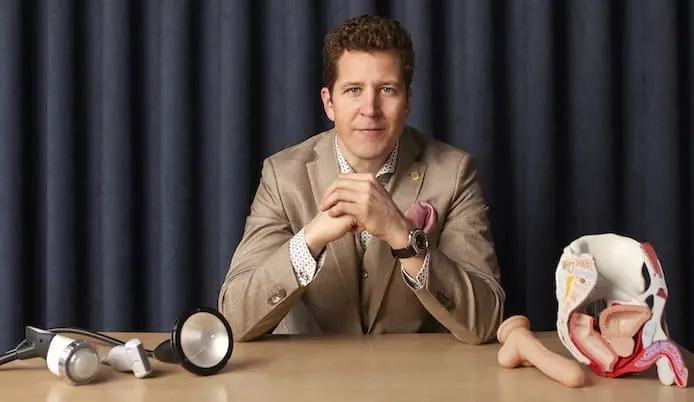
International speaker & expert in shockwave and EMTT treatment for erectile dysfunction, peyronies & CPPPS.
When you Google “Prostate and medication”, it’s often because something doesn’t feel the same: erection fails, pelvic pain, orgasm feels different – or you have to pee all the time. Many men deal with it alone for too long because it’s hard to put into words or because they hope it will go away on its own. I work with men’s intimate health every day, and my goal is to make it concrete, safe and solution-oriented: What can medicine do for prostate and sexual function – and what can you do to take back control?
The prostate is a small gland under the bladder that contributes to seminal fluid and is located close to the urethra. Therefore, the prostate, urination, pelvic floor and sexual function are often closely linked. Medication can be a great help, but it can also affect the body in ways that are clearly felt “down there”. For some, these are expected side effects. For others, it’s a signal that the cause may be different, or that the treatment needs to be adjusted to target the problem more precisely and be as gentle as possible on their sex life.
Benign prostatic hyperplasia (BPH) can cause a weak stream, frequent trips to the toilet, nighttime urination and a feeling of not being able to empty the bladder properly. Medication is often the first choice, but some medications can affect erection, ejaculation and the experience of orgasm. It’s important to know that sexual changes don’t say anything about “manliness” – they say something about how the body responds to treatment.
Many men say “prostatitis” when they have pain in the lower abdomen, perineum, penis, testicles or when ejaculating. Some of these cases are not a classic bacterial infection, but rather chronic pelvic pain (CPPS), where muscles, nerves (e.g. pudendal nerve) and stress response play a role. Medication can help some – but far from all. I often find that a holistic, evidence-based approach makes the most sense here, where I address the symptoms, everyday stresses and the way the pelvic floor “holds on”.
Some come because they are undergoing a check-up and are unsure of the cause of their symptoms: is it the prostate, the medication, or something else entirely? This is a common and legitimate concern. I often find that anxiety decreases significantly when I go through the symptoms systematically and link them to your specific medications, dose changes and the overall pattern in the body.
Alpha-blockers relax the muscles around the prostate and bladder neck, making it easier to urinate. Typical side effects include dizziness, fatigue and altered ejaculation – some experience ‘dry’ ejaculation or semen going backwards in the bladder (retrograde ejaculation). For some, it also affects the orgasm experience because the sensation of ejaculation changes even though the desire may be the same.
Over time, these drugs can make the prostate smaller. On the other hand, there is a known risk of decreased libido, erectile dysfunction and altered sperm quality/ ejaculation. Not everyone experiences side effects and many tolerate the treatment well. But if your sexual function changes after starting treatment, I take it seriously because it has a direct impact on quality of life, relationships and self-confidence.
For bacterial infections, antibiotics may be necessary. The challenge is that many men with pelvic pain end up with multiple courses of antibiotics with no clear effect because the problem is not primarily bacterial. This can be frustrating and confusing. It can be a relief to get an explanation that makes sense – and a plan that doesn’t just repeat the same thing, but actually makes a difference in everyday life.
NSAIDs (e.g. ibuprofen) can reduce inflammation and pain in some, but rarely solve the cause alone. If the pain is about muscle tension, nerve irritation or pelvic floor dysregulation, it often requires a different type of intervention. In particular, I see that the body can go into “protection mode”, where tension and pain reinforce each other, and where calm, relaxation and targeted treatment become key elements.
Important: Erectile dysfunction, decreased desire and dry orgasm can also be affected by antidepressants, blood pressure medication, antihistamines or hormones. That’s why “Prostate and Medicine” is often about looking at your entire medication list – and the connection between symptoms, nervous system, blood flow and pelvic floor. Often there is no single explanation, but an interplay that can be decoded when you ask the right questions.
I see three patterns in particular:
It can be difficult to distinguish for yourself, especially when there are worries on top of it. That’s why it makes sense to meet with someone who works with these issues – and who can translate symptoms into a concrete action plan that you can feel in your everyday life.
First of all, it’s not “in your head” and you’re not alone. When your sex life changes, it often affects your identity, intimacy and security. I help you get an overview of the possibilities without shame and without pointing fingers.
Depending on your situation, we can work with:
I don’t promise miracles. What I do promise is a serious, evidence-based approach and a safe space where I take your symptoms seriously and work systematically on the things that stand in the way of a better sex life.
No, it isn’t. Some side effects are tolerable, others are not. The important thing is that you don’t have to face the consequences alone. I help you understand what might be at stake and what can realistically be done. If tests or adjustments are needed outside of the clinic, I guide you to talk to your own doctor about relevant tests or options so that you are in a stronger position in the conversation.
Yes, certain types can – especially 5-alpha reductase inhibitors can affect libido and erection in some. Alpha-blockers more often affect ejaculation and orgasm experience. At the same time, the prostate problem itself, pain and nervous system disorders can also affect erection. That’s why I always look at medication, symptoms and context before pointing to one explanation.
Not necessarily. Many pains stem from chronic pelvic pain syndrome (CPPS), where the pelvic floor, breathing, nervous system and possible pudendal irritation come into play. Here, a combination of diagnostics, targeted treatment and habit change often makes the most sense because it’s about breaking a pattern of tension, irritation and worry that can maintain symptoms.
In many cases: yes, in one form or another. Some get their erection back, others gain control over pain, and many get peace of mind and a plan that makes sex possible again. It requires us to take the problem seriously and work systematically – not for you to “pull yourself together” and not for you to go on hoping for months.
I recommend that you reach out if you experience:
“Prostate and medicine” is rarely just about taking a pill. It’s about understanding the whole picture: prostate, blood flow, nerves, pelvic floor, sleep and psychological safety in the body. I meet you without taboos and without prejudice. I listen, investigate and create a plan that fits your life and your goals – whether it’s a stable erection, less pain or just feeling like yourself again.
Do you want my assessment of what is most likely driving your symptoms – and what options you really have? Then get in touch and let’s start with a conversation and a thorough clarification.
If you are interested in hearing more about how I can help you, you are always welcome to contact me by phone 41 40 08 58 or email michael@msinsight.dk. I’ll get back to you quickly with a customized proposal so we can find the best way forward together.
I will get back to you within 12-24 hours.
Are you unsure about what’s causing your symptoms, or whether a specialized treatment program at our clinic in Copenhagen would be right for you? If so, you can start with a brief, confidential consultation. During this consultation, we’ll assess whether your symptoms align with the areas I specialize in at MS Insight and determine what the next appropriate step might be.
The initial consultation is not a full consultation, diagnosis, or treatment plan. It is intended for those who would like a thorough assessment of whether it makes sense to proceed with a more in-depth examination, an ultrasound scan, and a personalized plan at our clinic in Copenhagen.