
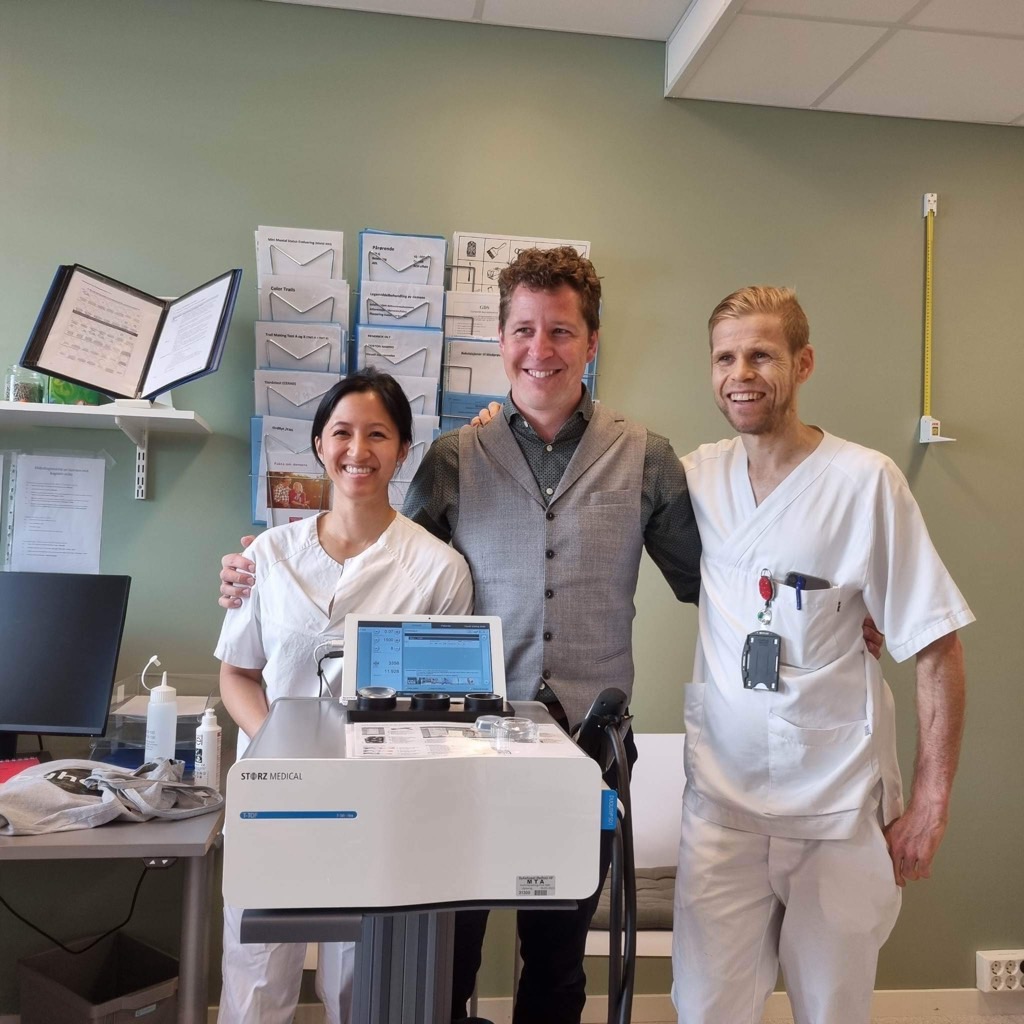
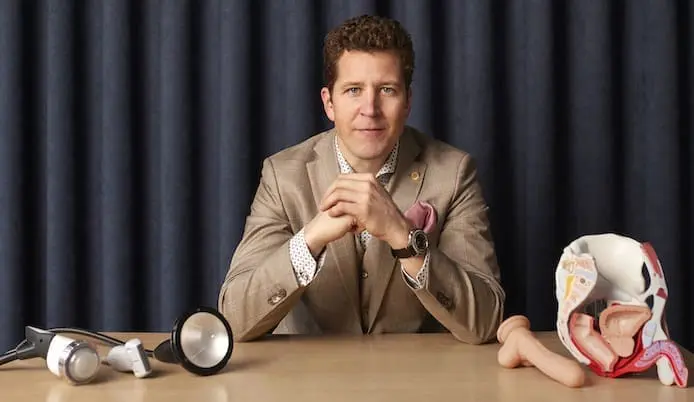
Educator: Michael Strøm
International speaker & expert in shockwave and EMTT therapy for erectile dysfunction, Peyronie’s disease, and CPPS. Learn more about me
Focus of the Instruction
The training focused on ESWT technology and evidence regarding ED and Peyronie’s disease, risk factors, sexological counseling, examination, and treatment planning. I emphasized the differences between technologies, energy delivery, and practical patient selection rather than presenting a one-size-fits-all protocol. When I teach, the goal is for participants to be able to explain why a particular treatment is chosen, for whom it is suitable, and when a different approach is more appropriate.
Why this is relevant to a patient’s journey
For a man with erectile dysfunction The crucial question is not merely whether a particular treatment can be used, but why the erection has changed. Blood flow, nerve function, medications, metabolic disorders, hormones, the pelvic floor, and psychosexual factors can all play varying roles. Therefore, treatment should only be selected once the pattern has been clarified through a consultation, a relevant clinical examination, and, if necessary, targeted ultrasound. When Peyronie’s disease and newly developed curvature The clinical assessment is at least as important as the choice of treatment itself. Plaque, calcification, pain, stability, erectile quality, and the degree of curvature should be evaluated as a whole. It is precisely this type of differentiation that makes it possible to explain to the patient what shockwave therapy can and cannot realistically be expected to change.
I therefore use teaching as an ongoing professional quality assessment of my own clinical model. When I have to explain my choice of technology and indication to other clinicians, both the strengths and limitations become clearer.
From Education to Clinical Quality
When teaching takes place on an international level, differences in practice become apparent: which patients are referred, how they are examined, which devices are available, and how results are evaluated. This variation is valuable because it serves as a reminder that sound clinical decisions should not rely on a single manufacturer, a single protocol, or a single explanatory model.
Another important element is managing expectations. In areas such as sexual function, chronic pain, and incontinence, two patients with the same diagnosis may have vastly different causes and prognoses. Therefore, it is important to be precise about which problem is being addressed, how progress is measured, and when a lack of response should lead to a reassessment rather than simply continuing with the same treatment.
I also emphasize the importance of distinguishing between mechanism, clinical evidence, and marketing. The fact that a technology can biologically affect tissue does not mean that it has a documented effect on all indications. Conversely, clinical evidence may be relevant without being directly transferable between different devices, doses, or patient groups. This distinction is crucial both in teaching and in conversations with patients.
It is the professional connection between education and clinical practice that I want these educational activities to demonstrate: not a promise of results, but experience in critically evaluating technology, following the evidence, and translating it into more precise decisions for each individual patient.
Read more: Ultrasound in clinical assessment · The evidence for shockwave therapy
Documentation: This article is based on publicly available event materials and/or LinkedIn posts. Sources: secma.dk
Would you like a specialist evaluation of your situation?
You don’t have to figure this out on your own. Call me directly or send a brief message describing your symptoms—I’ll get back to you within 12–24 hours with a concrete recommendation on the next steps.