

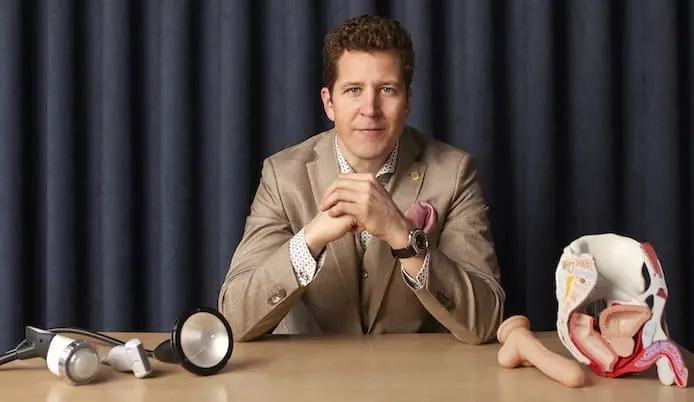
Written and medically reviewed by Michael Strøm
International speaker & expert in shockwave and EMTT treatment for erectile dysfunction, Peyronie’s & CPPS. Read more about me
Penis surgery: When does it make sense – and what alternatives do you have?
Are you considering penile surgery because your erection is failing, your penis is painful or curved, or you are bothered by foreskin or frenulum? You are not alone. In my clinic in Copenhagen, I meet many men from all over Zealand who need an honest, professional and safe overview: What can penile surgery really solve – and are there effective, less invasive alternatives? My approach is simple: I help you get clarity, I work evidence-based, and I only recommend surgery if it’s the best choice for you in the long run.
In this article
- What does “Penis surgery” cover?
- When is penis surgery relevant – and when is it not?
- Advanced examination before deciding on penile surgery
- Treatment without penile surgery: evidence-based options with me
- If penis surgery is right: what can you expect?
- Risks and side effects of penile surgery
- Frequently asked questions about penis surgery
- How I help you move forward – confidently, professionally and without taboo
What does “Penis surgery” cover?
“Penis surgery” is a broad term that covers several types of surgery – both medically necessary and cosmetic. Here are the most common procedures:
- Erectile dysfunction: Penile prosthesis implantation (inflatable or semi-rigid) for severe, treatment-resistant ED.
- Peyronie’s disease: Corrective surgery for significant curvature, e.g. tunicaplication (Nesbit-like technique) or incision/cutting of plaque with subsequent transplantation (grafting).
- Foreskin and frenulum: Circumcision for phimosis or frenulotomy for short frenulum (frenulum breve).
- Acute conditions: Penile fracture repair (emergency) and surgery for severe injuries.
- Urethra: Urethral surgery for stricture (narrow urethra) if urination is affected.
- Cosmetic procedures: For example, lengthening via suspensory ligament release and/or thickness increase with fat/fillers. These require special consideration due to uncertain efficacy and high risk of side effects.
Knowing which category you fall into is the first step. This is where a thorough, targeted assessment helps – not gut feelings. My focus is to clarify whether your goals are about pain relief, function, appearance or a combination, as this will guide both the choice of treatment and the expected outcome.
When is penis surgery relevant – and when is it not?
Surgery may be the right solution in specific situations, but often there is much to be gained by optimizing non-surgical approaches first.
- Erectile dysfunction: Penile implants may be relevant if medication, injections, vacuum training, shcokwave and targeted rehabilitation do not work – or are not tolerated. An implant is generally irreversible and requires a mature decision with clarification of everyday life, partner dynamics and expectations. It should be an absolute last resort
- Peyronie’s disease: Surgery is considered for severe curvature that prevents penetration and when the disease is stable (i.e. pain and curvature have been unchanged for months). Mild to moderate curvature can often be managed with conservative measures and adjustments to sexual technique.
- Foreskin/frenulum: Repeated tearing, pain, inflammation or impossible foreskin retraction may make circumcision or frenulotomy relevant. For mild discomfort, targeted hygiene and medical ointment prescribed by your doctor may be sufficient.
- Acute injuries: Sudden “pop” in the penis during sex with subsequent swelling and discoloration requires urgent surgical assessment.
- Urethral problems: Strictures affecting urination should be evaluated by a urologist; reconstructive surgery may be necessary.
- Cosmetic wishes: Realistic expectations are crucial here. Many people are more satisfied through functional improvement, pain relief and better body awareness – without surgery.
My job is to help you make an informed decision – not to pressure or dissuade you from surgery, but to ensure that you choose based on facts, your values and what matters most to your quality of life.
Advanced examination before deciding on penile surgery
In the clinic, I work systematically to clarify the causes of your symptoms so we can choose the right path:
- Initial conversation: Your symptom history, sexual habits, medication, sleep, stress, exercise, pain and goals for treatment. I also clarify what has helped in the past – and what hasn’t.
- Ultrasound scanning: I use high-resolution ultrasound to map tissue, scar tissue/plaque (for Peyronie’s), blood vessels and structures in the penis and pelvic area. If needed, I perform penile Doppler ultrasound to assess blood flow and suspected venous leakage.
- Pelvic floor and nervous system: Screening for overactive/underactive pelvic floor, pudendal nerve involvement and myofascial trigger points, which often play a role in erectile dysfunction and pain. I also assess breathing and body habits that may be holding tension.
- Validated questionnaires: e.g. IIEF in ED, pain questionnaires and functional tests so I can measure progress over time. I can supplement with an erection diary or photo documentation (at home) to objectify changes.
- Hormonal and medical clarification: If relevant, I guide you to talk to your GP about blood tests (e.g. testosterone, metabolism) and other medical assessments that are not performed in the clinic.
The result is a concrete plan: what can you try without surgery, what is realistic to expect – and in which scenarios penis surgery makes the most sense for you. I communicate this in clear language so you know what the next step is and why.
Treatment without penile surgery: evidence-based options with me
Erectile dysfunction: rebuild erection step by step
ED rarely has a single cause. In practice, I work in multiple tracks:
- Targeted pelvic floor rehabilitation and neuromuscular control to improve nerve-muscle interaction. You learn how to activate and relax correctly to facilitate blood flow and maintenance of erection.
- Focused sound waves to the penis for vascular ED, which can stimulate tissue regeneration and blood vessels. I often combine with EMTT (electromagnetic transduction therapy) and neuromodulation to improve nerve and tissue response. Efficacy depends on the cause and the length of the course, and I set clear expectations for timeline and goals.
- Vacuum training and ring use in a safe, structured way. I teach you technique, duration and frequency to avoid side effects and maximize the effect.
- Lifestyle optimization: Sleep, weight, alcohol, smoking, exercise and stress. Small adjustments can have a big impact, especially when combined with targeted treatment.
- Medication options: I guide you to talk to your doctor about PDE5 inhibitors or injection therapy, if applicable, and how you can use them strategically to support you during rehabilitation.
The goal is to restore as much natural function as possible – and only consider implants if the potential for improvement without surgery has been exhausted. You’ll be given a simple plan so you can follow your progress from week to week.
Peyronie’s disease: pain relief, function and realistic goals
Peyronies typically develop over months, from an active phase with pain to a stable phase with persistent curvature. What I offer:
- Ultrasound-based mapping of plaque, scar tissue and overall tissue condition and assessment of phase (active/stable). This makes it clearer when it is wise to intensify the intervention.
- Focused sound waves can relieve pain in the active phase. The evidence for correcting curvature without surgery is limited; therefore, I set clear expectations and supplement with other measures.
- Training and traction techniques (penile traction) that can support tissue adaptation over time. I guide in duration, intensity and safety.
- Advice on injection treatments (e.g. collagenase) as an option in some places; I help you make a clear decision so you know what the benefits and risks are.
If the curvature is massively hindering sex, I’ll go through the pros and cons of surgery – plication vs. grafting – so you can choose informed and at ease.
Chronic pelvic pain (CPPS) and nerve impingement
Surgery rarely helps functional pelvic pain. Instead, I work with:
- Neuromodulation and EMTT to reduce pain and normalize nerve activity.
- Targeted pelvic floor relaxation and rehabilitation as well as myofascial therapy.
- Sleep, stress and load management to calm the pain system and improve erection/endurance. You get concrete tools for everyday life so that the effect lasts.
Foreskin and frenulum: clarification and safe way forward
If you experience discomfort from the foreskin or short frenulum, you will receive a clear, professional assessment. Some can be helped by simple, non-surgical measures; in other cases, surgery is the best option. I will guide you on how to talk to your GP about treatment options (e.g. steroid cream for phimosis) and referral if surgery is relevant. You’ll get advice on wound care and gradual return to activity.
If penis surgery is right: what can you expect?
Penile implant for severe erectile dysfunction
Implants are available as inflatable systems with a pump in the scrotum or semi-rigid rods. Pros: high user satisfaction, reliable erection independent of nerves/blood vessels. Cons: infection and mechanical failure may require revision; sensation and orgasm are typically preserved, but natural erection cannot be recreated after implant. The decision is a big one – I’ll help you get clear on the benefits, risks, learn the pump/valve usage curve and everyday life with an implant, including how to talk to a partner about it in a safe way.
Peyronie’s surgery: plication vs. grafting
Plication (e.g. Nesbit technique) corrects the curvature by “shortening” the long side. It is technically simpler, but can result in perceived loss of length. Grafting is used for severe curvature or deformation, where the short side is “lengthened” with a tissue graft after plaque has been opened or partially removed. Grafting is more complex and may increase the risk of erectile dysfunction. With both procedures, there is a risk of sensory changes, residual curvature or relapse. Sexual activity is usually resumed after 4-8 weeks depending on the surgeon’s instructions, and I can help you with gentle mobilization and rehabilitation when the time comes.
Circumcision and frenulotomy
For severe phimosis or a short, painful frenulum, surgery can provide a permanent solution. Healing time is typically 2-6 weeks. Expect temporary soreness, swelling and altered sensitivity for a period of time. I’ll give you practical advice on hygiene, wound care and gradual return to masturbation and sex to avoid unnecessary discomfort.
Cosmetic penile surgery: a sober assessment
Ligament release and fillers (fat/fillers) can at best change the appearance at rest, but rarely provide real functional benefit and can cause unevenness, asymmetry, scar tissue, pain and erectile impact. In my experience, many people achieve greater satisfaction by working on function, painlessness and sexual confidence – without surgery. If you’re still considering cosmetic penile surgery, I’ll give you a realistic risk/benefit overview and support you in choosing what will serve you best in the long term.
Risks and side effects of penile surgery
All surgery carries risks. The most common across procedures are:
- Bleeding, swelling, infection and pain during the healing phase.
- Scar tissue formation, sensory changes or decreased sensitivity.
- Aesthetic nuisances: asymmetry, unevenness or expectations that don’t match the result.
- Specific risks: For implants e.g. erosion, mechanical failure and revision. With Peyronies surgery, residual curvature, length change and affected erection quality may occur. In circumcision, too much/too little foreskin may be removed or tightness/uneven scar tissue may occur.
My focus is for you to understand both options and pitfalls – and to choose what provides the greatest overall value for your life and sexuality. I also go through how to minimize risks with good preparation and aftercare.
Frequently asked questions about penis surgery
Does penis surgery hurt – and for how long?
You will experience discomfort and soreness in the days following the procedure. Pain is usually effectively managed with painkillers as directed by your surgeon. Most people are significantly better within 1-2 weeks, but full healing may take longer depending on the procedure and your overall health.
When can I have sex again after penis surgery?
It depends on the type of surgery. For Peyronies surgery or implants, 4-8 weeks of abstinence is often recommended; shorter for minor procedures. Always follow the surgeon’s specific guidelines. I’ll help you with realistic timelines, scar and tissue management, and rehabilitation to get you back on track.
Can penis surgery make my penis longer?
Surgery for Peyronie’s can in some cases preserve or restore functional length, but plication often involves perceived length loss. Cosmetic length surgeries rarely provide stable erection length and can lead to complications. My advice is to chase function and pleasure rather than centimeters – and to get an honest assessment of expectations before choosing surgery.
Can I correct curvature without penis surgery?
In mild/moderate cases, combining focused sound waves for pain relief, traction and targeted guidance can provide improvement. For severe curvature that impedes sex, surgery is often most effective. I’ll help you assess the likely benefit in your particular situation and make a concrete plan.
What if my erection is bad after penis surgery?
It depends on the procedure and the process. With implants, erection is mechanical, while with Peyronie’s surgery, erection still depends on blood vessels and nerves. Focused sound waves, neuromodulation, pelvic floor exercises and lifestyle optimization can be relevant aftercare. I work with you to create a plan that supports healing and function.
What does penis surgery cost?
Prices vary depending on the procedure and location. In some cases, surgery may be publicly funded for clear medical indication; private procedures vary in price. With me, you don’t get surgery, but a thorough examination and a clear plan so you can make an informed decision and have an overview of the expected costs if you choose a surgeon later.
Am I too old for penis surgery or enhancement?
Age is rarely the deciding factor. Health status, goals and motivation level matter more. Many men in their 50s, 60s and 70s enjoy significantly improved function – often without surgery. I assess the potential soberly and help you choose the most gentle option that works.
How do I best prepare for penis surgery?
Stop smoking, optimize sleep and exercise, stabilize weight, and follow specific instructions from the surgeon. In the clinic, I prepare your body and nervous system so you heal better and faster – whether you end up having surgery or not. You’ll be given a checklist so nothing important is overlooked.
How I help you move forward – confidently, professionally and without taboo
Seeking help for intimate problems can feel overwhelming. With me, you will be treated respectfully, directly and without prejudice. I offer advanced diagnostics with ultrasound scans and tailored, combined programs with focused sound waves, EMTT and neuromodulation, complemented by advice on lifestyle, sleep, psychosexual well-being and pelvic floor function. If penis surgery is the right choice, I will help you get clarity and guide you on how to talk to your doctor about relevant next steps.
You don’t have to live with pain, curvature or erectile dysfunction. Book a consultation at my clinic in Copenhagen and get a plan that makes sense for you and your life. And remember: If you have an acute injury (e.g. suspected penile fracture), you should go to the emergency room right away. For everything else, you are welcome here – safe, professional and without taboo.
If you are interested in hearing more about how I can help you, you are always welcome to contact me by phone 41 40 08 58 or email michael@msinsight.dk. I’ll get back to you quickly with a customized proposal so we can find the best way forward together.
Would you like a specialist assessment of your situation?
You don’t have to figure it out alone. Call directly or write a few lines about your symptoms – I’ll get back to you within 12-24 hours with a concrete suggestion for the next step.