

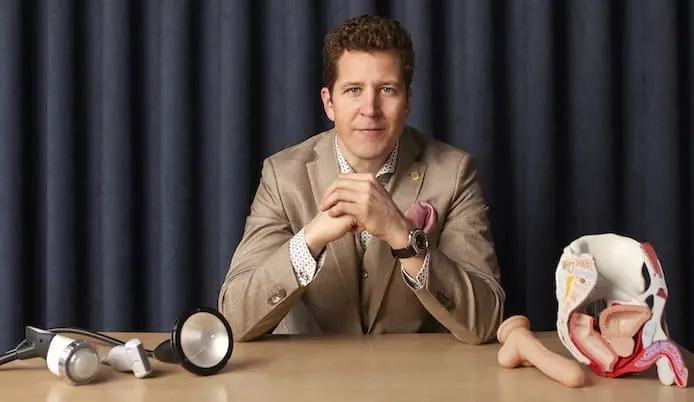
Written and medically reviewed by Michael Strøm
International speaker & expert in shockwave and EMTT treatment for erectile dysfunction, Peyronie’s & CPPS. Read more about me
Involuntary erection: What is it and is it normal?
When I talk about men’s health and sexuality, I often find that many topics are still taboo and uncertain. One of the topics I often come across is involuntary erection. It’s a situation that most men have experienced, but it can be a source of confusion, shame and unnecessary worry. In my clinic, MS Insight, I meet men every day who have questions about their erection quality and penis function. Some are concerned because they get an erection at inappropriate times, while others are deeply frustrated that it doesn’t come when they want it. I want to emphasize right away: an involuntary erection is basically a sign of health. It shows that your vascular and neurological systems are working. However, it’s also important that I help you distinguish between healthy, natural reactions and conditions that require treatment.
In this article
- Why does involuntary erection occur?
- Nighttime erection is an important health sign
- Priapism: When a persistent erection becomes dangerous
- The connection between pelvic floor, nerves and erection
- How I examine and treat your symptoms
- Frequently asked questions about involuntary erection
- Gain confidence and control over your body with MS Insight
Why does involuntary erection occur?
To understand why you experience an erection without conscious desire or stimulation, we need to look at the mechanics behind it. An erection is a complex interplay between hormones, blood vessels, nerves and the psyche. It’s not always your conscious mind running the show, and it can be a relief to know that the body often takes on a life of its own.
The body has its own reflexes. An involuntary erection often occurs because the parasympathetic nervous system – the part of the nervous system that is active when you relax – sends signals to the penis to relax the smooth muscles. This allows blood to flow into the cavernous bodies. It can be triggered by many factors that are not necessarily sexual:
- Physical stimulation: Even light friction from pants or underwear can activate the sensitive nerves.
- Full bladder: Many people experience “morning wood”, which is partly because a full bladder presses on the nerves in the pelvis and stimulates an erection from within.
- Hormonal fluctuations: Especially in younger men, but testosterone levels also fluctuate in adult men throughout the day, which can trick the system.
When I assess clients in my Copenhagen clinic, I put a lot of emphasis on identifying when these erections occur. Is it during the day? Is it at night? The answer gives me an important insight into your overall health.
Nighttime erection is an important health sign
A specific form of involuntary erection is the nocturnal erection (Nocturnal Penile Tumescence). It is perfectly normal for a healthy man to have between 3 and 5 erections during a night’s sleep. These erections typically occur during REM sleep and serve an important physiological purpose: they oxygenate the tissues of the penis. When the penis is flaccid, the oxygen supply is limited, but during an erection, oxygen-rich blood flows through, keeping the tissue supple, elastic and healthy.
In my work with erectile dysfunction (erectile dysfunction), one of the most important questions I ask is about nighttime erections. If you wake up with morning or nighttime erections, it tells me that the “hardware” (blood vessels and nerves) is basically working. It often suggests that problems during intercourse may be due to performance anxiety, stress or pelvic floor tension, rather than serious circulatory problems.
When spontaneous erections disappear
On the other hand, if you find that the involuntary nocturnal erections are completely absent, it could be an early warning sign of incipient cardiovascular challenges, low testosterone or nerve damage. In these cases, it’s important to act before the problem grows bigger. In the clinic, I use advanced ultrasound scanning to examine the blood flow in the penis so I can see exactly how the tissue is doing and whether intervention is needed.
Priapism: When a persistent erection becomes dangerous
While I often refer to lack of erection as the problem, there is a condition in the other direction that should be taken very seriously: priapism. This is an involuntary, persistent and often painful erection that lasts for more than four hours and is not related to sexual desire.
Priapism occurs because blood gets trapped in the penis and cannot flow back into the body. This creates a lack of oxygen in the tissue, which can lead to permanent damage and, in the worst case, permanent impotence if not treated urgently.
If you experience a painful erection that has lasted for several hours without subsiding, you should seek medical attention or go to the emergency room right away. This is not something I treat in my clinic as it is an acute medical condition. In my practice, I work with the chronic conditions, optimizing function and rehabilitation of the tissue – not acute vascular collapse.
The connection between pelvic floor, nerves and erection
One angle that is often overlooked when the conversation turns to involuntary erection or erectile dysfunction is the condition of the pelvic floor. Many of the men I see in MS Insight suffer from what is called CPPS (Chronic Pelvic Pain Syndrome) or an overstretched pelvic floor.
When the muscles in the pelvis are constantly tense, they can irritate the pudendal nerve – the main nerve that supplies the genitals. An irritated nerve can send confusing signals. For some men this means pain, but for others it can manifest as strange sensations in the penis, “hard flaccid” (where the penis feels hard but is flaccid) or sudden half erections that feel involuntary and uncomfortable.
Here it is not desire that drives the work, but a mechanical squeezing of nerves and vessels. It’s crucial for me to convey that this is not “in your head”. It’s a physical condition that requires a physical treatment to loosen up.
How I examine and treat your symptoms
If you’re experiencing problems with your erection – whether it’s inappropriate, painful or not coming when you need it – I always start with a thorough assessment. I’m not one for guesswork. I want to know exactly what’s going on in your body so we can target the right place.
Diagnostics with ultrasound
I use high-frequency ultrasound to visualize the swelling, blood vessels and any calcifications or scar tissue (as in Peyronie’s disease). This gives me a concrete picture of your physiology and forms the basis for a targeted treatment plan that you can feel comfortable with.
Combination therapy that works
Depending on the cause of your symptoms, I put together a tailored program. My core competencies include:
- Focused sound waves (Shockwave): This technology uses focused sound waves to stimulate the formation of new blood vessels (angiogenesis) and activate stem cells in the tissue. It is highly effective in improving blood flow and can also break down microscopic calcifications that inhibit function.
- EMTT (Electromagnetic Transduction Therapy): A technology that works at the cellular level by increasing cell membrane potential. It reduces inflammation and is great for normalizing nerve function, which is crucial if your involuntary erections or pain are caused by nerve irritation.
- NanoVi: A technology that helps repair cell damage and reduce oxidative stress, supporting the whole body healing process.
If you have pelvic floor tension, I’ll also guide you through specific exercises and techniques to get your nervous system back in gear. I look at the whole person – sleep, lifestyle and stress levels play a huge role in your intimate health.
Frequently asked questions about involuntary erection
Is it embarrassing to get an erection during a treatment?
No, absolutely not. It’s a completely natural physiological response. When I work on the tissues around the penis and pelvic floor, I increase blood flow and stimulate the nerves. If you get an erection during an ultrasound or shockwave treatment, I just see it as a positive sign that your reflexes are working. I am a professional and I never judge. There are no taboos in my clinic.
Can medication cause involuntary erection?
Yes, certain medications, including antidepressants and blood pressure medications, can affect the erection mechanism. If I suspect that your medication is playing a role, I would advise you to talk to your own doctor about possible alternatives or adjustments. It’s important that you don’t stop medication yourself without medical advice.
What if I never get a morning departure?
If you don’t experience morning or nighttime erections for a long period of time, it should be investigated. This is often one of the first indicators that blood vessels are not functioning optimally, which can be the precursor to erectile dysfunction. The sooner I can intervene with things like focused sound waves and lifestyle changes, the better the prognosis for regaining full function.
Gain confidence and control over your body with MS Insight
Whether you’re struggling with missed periods or uncomfortable sensations in the lower abdomen, the uncertainty is often the worst part. Going it alone with your thoughts about intimate health can be draining on both your self-esteem and quality of life.
At MS Insight in Copenhagen, I meet you at eye level. I specialize in men’s genitalia because I know how important it is to a man’s overall well-being. You don’t have to accept that “it’s probably just age” or “something mental”. With the right diagnostics and modern technology, I can do a lot to optimize your function.
Contact me today for a consultation. Let’s get to the root cause of your symptoms so you can regain confidence and control.
If you are interested in hearing more about how I can help you, you are always welcome to contact me by phone 41 40 08 58 or email michael@msinsight.dk. I’ll get back to you quickly with a customized proposal so we can find the best way forward together.
Would you like a specialist assessment of your situation?
You don’t have to figure it out alone. Call directly or write a few lines about your symptoms – I’ll get back to you within 12-24 hours with a concrete suggestion for the next step.