

Low self-esteem in relationships affects many men, especially when the body fails in intimate situations like erectile dysfunction or pelvic pain. I know how hard it is to carry that insecurity – but there is hope. By treating both the physical causes and the mental, I help you regain confidence in your body and strengthen your relationship. Read on and discover how you can take back control.

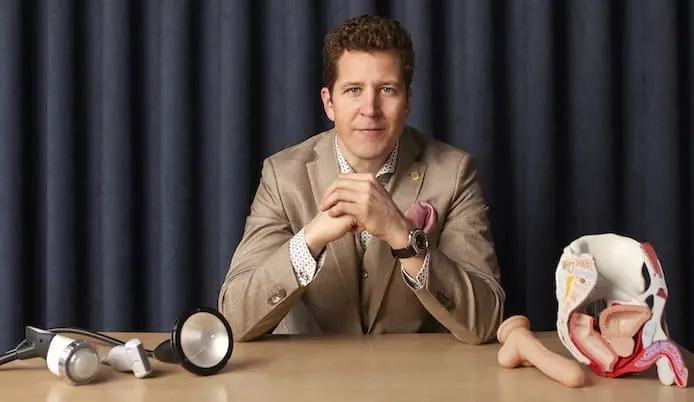
International speaker & expert in shockwave and EMTT treatment for erectile dysfunction, peyronies & CPPPS.
Low self-esteem in relationships is a topic we often hear about, but rarely from a man’s perspective – and almost never in the context of the physical challenges that hit below the belt. Erectile dysfunction, chronic pelvic pain or Peyronie’s disease are not just physical conditions; they are direct attacks on self-image. In my clinic, MS Insight, I meet men every day who are fighting this silent battle. When the body fails in the most intimate of situations, it strikes directly at the core of manhood, and the insecurity rarely stays in the bedroom. It slowly seeps out and colors the entire dynamic of the relationship.
Maybe you know the feeling of physically pulling away from your partner because you fear what will happen – or not happen – if you get close to each other? Maybe you feel that the fuse is shorter or that you feel “less worthy” as a husband and boyfriend. These are completely natural reactions to an unnatural state. However, in my experience, it rarely helps to just “pull yourself together”. Quite the opposite. We need to understand that there is often a concrete, physiological cause behind the problems and that the way out of low self-esteem requires us to treat both body and mind as a whole.
For many of the men I talk to, the ability to perform sexually is inextricably linked to their identity. When an erection fails to materialize or pelvic pain makes sex a pain rather than a pleasure, it doesn’t just feel like a “technical glitch”. It feels like a deeply personal defeat. I often find that my clients carry around a huge sense of shame, which quickly develops into chronic low self-esteem in the relationship.
Unfortunately, shame acts as a wall. Instead of talking openly about the problem, many men close themselves off like an oyster. This creates a vicious circle: you withdraw to avoid another defeat, your partner feels rejected and unwanted, and the distance between you grows day by day. Low self-esteem is fueled by silence and the constant fear that “it will happen again”.
When self-esteem dips, performance anxiety automatically rises. If you’ve ever had your erection disappear mid-act or pain put an end to play, your brain will be on overdrive the next time intimacy is on the horizon. Your body goes on alert and stress hormones like adrenaline and cortisol pump through your bloodstream. It’s poison for an erection. Suddenly you’re not just dealing with a physical dysfunction, but a mental block that keeps the problem alive and further drains your confidence.
Low self-esteem doesn’t always show up as sadness or introversion. In men, I often find that it manifests itself in ways that can be confusing for both you and your partner. The typical signs I see in the clinic include:
Do you recognize these patterns? Then it’s important for me to say that you are not alone and that your personality has not changed permanently. It’s a reaction to an underlying issue and we can do something about it.
One of my most important tasks is to demystify the problem. Many men mistakenly believe that their lack of desire or ability is just “between the ears”, often because they have been told in the past that “it’s probably just mental”. But the truth is often far more nuanced.
Conditions such as erectile dysfunction (ED), Peyronie’s disease (crooked penis/scar tissue) or chronic pelvic pain (CPPS) have specific physiological causes. It can be due to poor circulation, calcifications, nerve damage or tension in the pelvic floor. When I find the physical cause through an advanced ultrasound scan, something often happens to your self-esteem: you realize that your “manhood” is not defective, but that there is a biological explanation that we can actually treat.
In the clinic, I work with technologies that correct physical injuries rather than just treating symptoms. For example, I use focused shockwave therapy, which uses sound waves to stimulate the formation of new blood vessels and break down any scar tissue. It’s an incredibly effective way to restore function, whether the challenge is erectile dysfunction or pain.
I often combine this with EMTT (electromagnetic transduction therapy) and neuromodulation to address tissue, nerves and muscles in depth. When function returns, self-esteem often follows on its own. It’s undeniably easier to feel valuable in your relationship when you can trust your body to do the right thing again.
Although technique and physics are the foundation, we can’t ignore the mental aspect. I work from a holistic approach. This means that I don’t just “fix” a penis; I help the whole person.
Low self-esteem in relationships thrives in darkness and silence. That’s why I also include the sexological conversation as a natural part of the process. We talk about how you navigate intimacy during treatment. How you can be close to your partner without the massive performance demands hanging over your head. When we remove the pressure that sex has to follow a certain recipe (the one we know from movies), shoulders are often lowered significantly.
It’s about rediscovering the joy of your own body. I give you concrete tools to deal with anxiety if it arises and advise you on how to communicate your needs to your partner without feeling weak or inadequate.
Understanding how your low self-esteem affects your partner is crucial. When you pull away due to shame over things like lack of erection, your partner rarely interprets this as you feeling bad about yourself. They usually interpret it as you no longer find them attractive or interesting.
This creates a kind of “double loneliness” in the relationship where both partners feel rejected. By taking responsibility for your intimate health and seeking help, you send an incredibly powerful signal to your partner: “I prioritize us and I want to do something about this.” Often it’s the action itself – that you’ve booked an appointment and are taking the problem seriously – that starts the healing in the relationship, long before we finish the treatment itself.
Yes, unfortunately, there is a well-documented link. If potency problems persist over a long period of time, it can lead to depression, stress and, in worse cases, real depression. Low self-esteem permeates everyday life and you slowly lose interest in life in general. That’s why it’s so crucial to react and seek help before it gets to that point.
My best advice is to be honest and tell it like it is: that it’s about your body, not about your desire for him or her. For example, you could say: “I’m experiencing some issues with my body at the moment that make me feel insecure. It has nothing to do with you, but it’s affecting my mood and my energy.” This takes the blame off your partner’s shoulders and opens up a constructive dialog.
You don’t need a referral to see me at MS Insight. Many people choose to come directly to the clinic. Should I find signs of underlying diseases during my examination, such as untreated diabetes or heart problems, I will always advise you to contact your GP for relevant blood tests. We always need to be sure that your entire system is healthy.
Living with low self-esteem in relationships due to intimate issues is exhausting. It drains energy, joy and intimacy. But it’s not a condition you have to accept as permanent. In my clinic, I meet you at eye level. There are no taboos and I guarantee you that I’ve heard it all before. I’m not here to judge, but to find concrete solutions.
With the right combination of professional diagnostics, effective treatment such as focused sound waves and expert advice, you can regain control. It’s not just about getting your erection back or removing the pain. It’s about being able to look yourself in the mirror – and your partner in the eye – with peace and confidence.
If you are interested in hearing more about how I can help you, you are always welcome to contact me by phone 41 40 08 58 or email michael@msinsight.dk. I’ll get back to you quickly with a customized proposal so we can find the best way forward together.
I will get back to you within 12-24 hours.
Are you unsure about what’s causing your symptoms, or whether a specialized treatment program at our clinic in Copenhagen would be right for you? If so, you can start with a brief, confidential consultation. During this consultation, we’ll assess whether your symptoms align with the areas I specialize in at MS Insight and determine what the next appropriate step might be.
The initial consultation is not a full consultation, diagnosis, or treatment plan. It is intended for those who would like a thorough assessment of whether it makes sense to proceed with a more in-depth examination, an ultrasound scan, and a personalized plan at our clinic in Copenhagen.