

Do you feel lonely in your relationship even though you’re together? I know how physical challenges like erectile dysfunction, pelvic pain or Peyronie’s can create distance and isolation, affecting both your confidence and intimacy. In this article, you’ll learn why the body can create distance and how my shockwave therapy, EMTT and sexological counseling can break the cycle and restore intimacy. Read on and find your way back to connection.

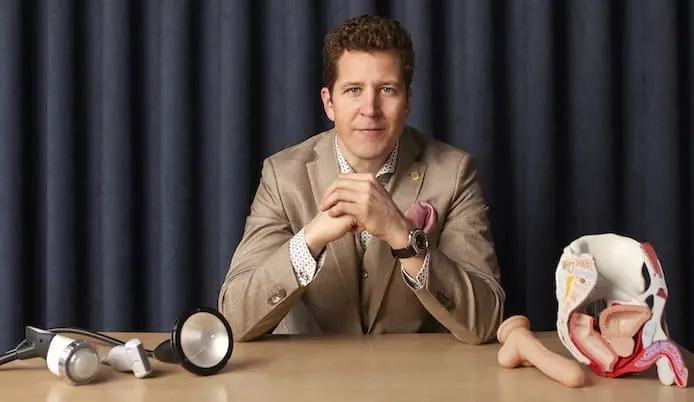
International speaker & expert in shockwave and EMTT treatment for erectile dysfunction, peyronies & CPPPS.
It’s a phrase that comes up a lot in my clinic and often lies just below the surface for the men I treat: “I feel lonely in my relationship”. It seems paradoxical to feel alone when you live with a partner you care about. But loneliness is rarely about whether there are other people in the room; it’s about the depth of connection. For many men, this feeling of isolation occurs when the body stops functioning the way it used to – especially when it affects the most intimate functions.
When erection fails, when pelvic pain makes intimacy an affliction, or when a curvature of the penis creates deep insecurity, many men respond by withdrawing into themselves. It’s a natural defense mechanism, but it digs a chasm between you and your partner. In my clinic, I meet men every day who are trapped in this dynamic. I know that physical problems and emotional well-being are inextricably linked. That’s why my focus is always twofold: I treat the physical symptoms effectively, but I also help you understand how they affect your psyche and your relationship.
Saying out loud “I feel lonely in my relationship” is often taboo. Many men are brought up with the ideal of being decisive and infallible. Therefore, when we experience problems in the underbelly, it strikes directly at our identity and masculinity. Instead of sharing the concern, you may be carrying it alone.
Many of my clients tell me that they avoid physical closeness to avoid being confronted with the problem. If you have erectile dysfunction, you may avoid hugging and kissing because you fear it sets the stage for sex you can’t complete. If you suffer from chronic pelvic pain (CPPS) or Peyronie’s disease, the fear of pain or shame about your appearance may cause you to reject your partner.
Unfortunately, your partner often interprets this withdrawal as a lack of interest or love. This creates a distance where you are left with shame and frustration while your partner feels rejected. This is where loneliness takes root. It becomes an ‘elephant in the room’ that no one talks about, but which takes over everything in everyday life.
In my work at MS Insight, I clearly see how specific conditions directly feed the feeling of loneliness. It’s not “just in your head” – it often starts physically in the body.
Erectile dysfunction is one of the most common reasons why men withdraw. When you can’t trust your erection, the bedroom becomes a place of examination and anxiety rather than pleasure and intimacy. You may feel “wrong” or “defective”. This shame makes it incredibly difficult to be vulnerable with your partner, which is a prerequisite for breaking the loneliness.
Men with chronic pelvic pain or pudendal nerve irritation often live with an invisible pain that is difficult to explain to others. The pain can be in the perineum, penis, testicles or around the rectum. It can hurt to have sex, to sit down or even to go to the toilet. When sex is associated with pain, it’s natural to avoid it. But without an explanation, it leaves you isolated with your pain while the relationship is drained of intimacy.
Peyronie’s disease, where scar tissue forms a curvature on the penis, can make penetration difficult. But just as often, it’s about changing self-image. Many men feel a deep sadness that their genitals have changed. Allowing their partner to see or touch the area can feel invasive, leading to a significant physical and mental distance.
The most dangerous thing about thinking “I feel lonely in my relationship” without acting on it is the silence. Silence is a breeding ground for misunderstandings. When you don’t put your physical challenges into words, your partner starts to draw their own conclusions: “He’s not into me anymore”, “he’s seeing someone else”, or “he doesn’t love me”.
At the same time, stress and loneliness exacerbate the physical symptoms. Stress hormones cause blood vessels to constrict (exacerbating erectile dysfunction) and increase tension in the pelvic floor (exacerbating pain). You end up in a vicious circle where the body affects the mind and the mind affects the body negatively. It’s this circle that I help you break.
At MS Insight, I meet you at eye level. I know it takes courage to walk through the door, and I have deep respect for your situation. My approach is professional, direct and solution-oriented.
It all starts with me mapping out the exact problem. I use advanced ultrasound scanning to examine the blood flow in the penis and pelvic floor. I need to know exactly what we’re dealing with. Are there any calcifications? Is there scar tissue? How is the blood flow? But just as important is the conversation. I ask about your wellbeing, your lifestyle and how the problem affects you mentally. We need the whole picture to create lasting results.
Once the cause is determined, I create a tailored treatment plan. I work with evidence-based technologies that target and correct the physiological damage:
These treatments are painless or associated with minimal discomfort and have no side effects. The goal is to restore the body’s function so you can regain confidence in your manhood.
Technology can rarely stand alone. I also advise you on sleep, diet and exercise as these factors play a huge role in your hormonal balance and circulation. If you need blood tests or examinations that I don’t perform in the clinic, I will thoroughly prepare you for the dialog with your own doctor so that you get the right assessment.
I also include the sexological aspect. How can you get close to your partner again? How do you rebuild intimacy while in treatment? I give you concrete tools to deal with performance anxiety and communication.
If you’re thinking “I feel lonely in my relationship”, the first step is to recognize that loneliness often stems from what you’re not saying. Opening up can feel overwhelming, but it’s often liberating.
Start by telling your partner that you’re struggling with your body and that it’s affecting your mood. You don’t need to have all the answers or a ready-made solution. Just saying: “I’m withdrawing because I’m frustrated with my body, not because I don’t want you,” can take a huge burden off your relationship. It removes the guesswork and makes you allies instead of adversaries.
It’s a myth that men have to do everything themselves. In my clinic, I see men every day who take responsibility for their health and their relationships by seeking professional help. This is not a sign of weakness; on the contrary, it’s taking back control.
When I treat the physical causes – whether it’s erectile dysfunction, Peyronie’s or pain – I often see the fog lift. As the body begins to function again, confidence returns and the ability to be present in the relationship grows. Loneliness gives way to renewed intimacy.
Contact me at MS Insight if you want a professional assessment and a real solution to the problems that create distance in your life. You don’t have to accept stagnation and loneliness as a permanent state.
Yes, it’s very normal. Many men closely associate their ability to get an erection with their identity. When it fails, many feel less worthy and withdraw socially and emotionally from their partner, which leads directly to feelings of loneliness.
Absolutely, absolutely. By treating the underlying physical issues (e.g. with focused sound waves for ED or pain), I remove the primary stressor. When you regain trust in your body, it becomes much easier to engage in intimacy and break the isolation that has occurred.
It’s a barrier for many. In my clinic, we can talk about how best to approach it. It often helps to know that there is a physical cause that can be treated. It makes it easier to present it as a specific health problem rather than a personal failure.
No, you don’t need a referral to come to MS Insight. You can book an appointment directly. If I decide that you need additional blood tests or similar from your GP, I will make sure you know exactly what to ask for.
If you are interested in hearing more about how I can help you, you are always welcome to contact me by phone 41 40 08 58 or email michael@msinsight.dk. I’ll get back to you quickly with a customized proposal so we can find the best way forward together.
I will get back to you within 12-24 hours.
Are you unsure about what’s causing your symptoms, or whether a specialized treatment program at our clinic in Copenhagen would be right for you? If so, you can start with a brief, confidential consultation. During this consultation, we’ll assess whether your symptoms align with the areas I specialize in at MS Insight and determine what the next appropriate step might be.
The initial consultation is not a full consultation, diagnosis, or treatment plan. It is intended for those who would like a thorough assessment of whether it makes sense to proceed with a more in-depth examination, an ultrasound scan, and a personalized plan at our clinic in Copenhagen.