

Finasteride and prostate are closely linked when it comes to treating enlarged prostate and hair loss, but side effects such as decreased sex drive and erectile dysfunction can hit hard. In this article, I review how medication affects your body and how my advanced treatments can restore your sexual function and quality of life. Read on for insights on how you can regain control and masculinity without taboo.
Finasteride shrinks the prostate by inhibiting the conversion of testosterone to DHT, but can also weaken sex drive and erections by affecting the hormonal balance in the body.

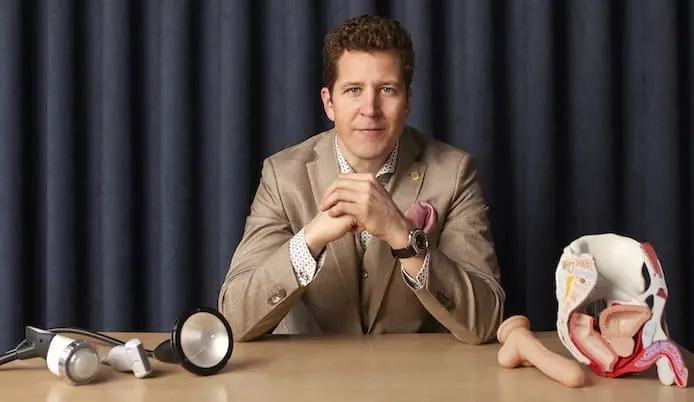
International speaker & expert in shockwave and EMTT treatment for erectile dysfunction, peyronies & CPPPS.
In my work with men’s health, the topic of “Finasteride and the prostate” is a recurring theme that comes up a lot. Finasteride is a common drug often prescribed for enlarged prostate (BPH) or hair loss, and for many, it works effectively to address these issues. But there is a flip side to the coin. I regularly meet men in my clinic in Copenhagen who feel that the cost of treatment has been too high. They are left with sexual side effects, erectile dysfunction and a quality of life that has taken a serious hit.
Here I will go through the relationship between Finasteride and the prostate, what side effects you should be aware of, and most importantly, how I can help you if you feel your body is no longer responding. It’s crucial for me to emphasize that you are not alone with these challenges. There are effective, evidence-based treatments that can help you return to a life of greater wellbeing, intimacy and masculine confidence.
To understand why the problems occur, we need to look at the mechanism of action of the medication. Finasteride belongs to a group of drugs called 5-alpha-reductase inhibitors. In simple terms, the drug works by blocking the conversion of the male sex hormone testosterone to dihydrotestosterone (DHT).
DHT is a potent hormone that, among other things, causes the prostate to grow. In benign prostate enlargement, Finasteride can therefore be effective in reducing the size of the gland and thus facilitate urination. Since DHT also plays a role in hereditary hair loss, it is also used in smaller doses to slow it down.
While shrinking your prostate or preserving your hair sounds smart, medication directly interferes with your hormonal balance. DHT isn’t just a ‘bad guy’; it’s also a hormone that’s important for your sex drive and erectile function. This is where the challenges arise – challenges that I help men overcome on a daily basis.
When you manipulate your sex hormones, your body often responds. Not everyone experiences side effects from Finasteride, but for those who do, it can have a profound impact on their self-image. In my practice, I see a clear trend of the following problems related to Finasteride and prostate treatment:
By far the most common problem is erectile dysfunction. Because DHT plays a crucial role in sexual function, many people find that their erections become weaker, more unstable or that they can’t achieve an erection at all after starting the medication. It can be deeply frustrating to solve a urinary problem only to be left with a debilitating sexual problem instead.
In addition to the ability to erect, many men experience a significant drop in sex drive (libido). It often feels like the ‘spark’ or natural drive simply disappears. In addition, the amount of ejaculate can drop drastically, which for some can be distressing and take away the pleasure of ejaculation.
This is an issue I take very seriously. Some men find that the sexual side effects – as well as symptoms such as brain fog, depression and anxiety – continue even after they stop taking the medication. Although science is still working to pinpoint the exact mechanisms behind PFS, I fully recognize the symptoms my clients present with. If you’ve stopped treatment but are still feeling the consequences, it’s not “just your imagination”. It’s a real physical condition we can work with.
One aspect that is often overlooked when talking about Finasteride and the prostate is the connection with pelvic pain (CPPS) and the nervous system. Hormonal changes can negatively affect tissue health and elasticity.
If you’ve been struggling with erectile dysfunction or anxiety about whether the “equipment works” for a long time, there is often an unconscious tension in the pelvic floor. This constant tension can pinch nerves and blood vessels, further aggravating the problem. It becomes a vicious circle: the medication affects hormone balance, causing erectile dysfunction, which leads to performance anxiety and physical tension that further shuts down blood flow.
I often see men who have been told by their doctor that “the numbers look fine” but are still in pain or not functioning sexually. It’s my job to look at the whole picture – physiological, mental and tissue.
When you come to me at the clinic, we always start with a thorough conversation. I meet you at eye level and there are no taboos here. We need to find out exactly how your treatment with Finasteride has affected you and what your goals are for the future.
My approach is based on advanced medical technology combined with a deep understanding of the male body:
I often start with an ultrasound scan of the penile vessels and pelvic floor. This gives us a concrete, visual picture of blood flow and tissue condition. Are there incipient calcifications? What does the blood flow look like? This gives us a fact-based starting point for treatment, so we don’t fumble around in the dark, but intervene exactly where needed.
One of my core competencies is the use of focused shockwave. This technology is highly effective in stimulating the formation of new blood vessels (angiogenesis) and improving blood flow in the penis naturally. If Finasteride has caused the tissue to ‘hibernate’, the focused sound waves can help bring it back to life by increasing cell activity and regeneration. It’s a painless treatment with no side effects.
If you suffer from pelvic pain or decreased sensitivity, I often use EMTT (Electromagnetic Transduction Therapy). It works deeper than shockwave and can normalize nerve function and reduce inflammation in the pelvic floor. Together with neuromodulation, we can “reboot” the connection between brain and penis, which is crucial if you have lost the mental and physical connection to your sexuality.
In addition to the physical treatment in the clinic, I advise you on lifestyle. It may be relevant to look at your sleep, stress levels and physical activity, all of which affect testosterone levels and your overall health. If blood tests or medication adjustments are needed, I’ll educate you on exactly what to ask your own doctor so you can have the right dialog.
I know that seeking help for issues involving intimacy and potency can be a big hurdle to overcome. With me, you’re not just a social security number in the system. I specialize exclusively in men’s health, and I’ve seen and heard it all.
My clinic is a free space where we approach the problem with professional seriousness, but in a relaxed and safe tone. I combine the latest technologies with a holistic understanding. It’s not just about getting your erection back; it’s about regaining confidence in your own body and your masculinity.
For the vast majority of people, the side effects disappear when they stop taking the medication. However, there is a small group of men who experience persistent symptoms (Post-Finasteride Syndrome). Whether your symptoms have occurred during or after treatment, we can actively work to improve tissue quality and blood flow to optimize your function.
Yes, you can. In fact, it can be a very good idea. While Finasteride works to shrink the prostate, with focused sound waves we can work to maintain or rebuild erectile function by ensuring optimal blood flow in the penis, while shockwave provides increased stimulation to the nervous system. This can help counteract the negative effects of medication on potency.
My primary expertise is sexual function and pelvic pain. If your urinary problems are caused by a very tight pelvic floor (which is often misinterpreted as prostate-related only), my EMTT and neuromodulation treatments can often have a positive spillover effect on the urge to urinate. However, the size of the prostate itself is treated medically or surgically – here I advise you to talk to your own doctor.
It’s a natural feeling, but for me there is no shame. I work with this every single day. It’s my professional pride to create a space where you feel safe and understood. The first step is to book an appointment – we’ll take it from there.
Are you experiencing Finasteride side effects or are you dealing with prostate-related issues that are affecting your sex life? You don’t have to accept that this is “just the way it is”.
If you are interested in hearing more about how I can help you, you are always welcome to contact me by phone 41 40 08 58 or email michael@msinsight.dk. I’ll get back to you quickly with a customized proposal so we can find the best way forward together.
I will get back to you within 12-24 hours.
Are you unsure about what’s causing your symptoms, or whether a specialized treatment program at our clinic in Copenhagen would be right for you? If so, you can start with a brief, confidential consultation. During this consultation, we’ll assess whether your symptoms align with the areas I specialize in at MS Insight and determine what the next appropriate step might be.
The initial consultation is not a full consultation, diagnosis, or treatment plan. It is intended for those who would like a thorough assessment of whether it makes sense to proceed with a more in-depth examination, an ultrasound scan, and a personalized plan at our clinic in Copenhagen.