
Male incontinence: treatment, causes and options

Incontinence in men means involuntary urination. It can manifest as dribbling after going to the toilet, leakage when coughing, sneezing or lifting, a sudden urge to urinate or a feeling that the bladder never empties completely.
Many men wait a long time to seek help because the symptoms feel private or embarrassing. But incontinence is not something you just have to live with. There are several treatment options, from pelvic floor and bladder training to medical treatment, surgery and clinical treatment with Pelvic Chair, shockwave and EMTT.
- Attentive treatment in a safe clinic
- Evidence-based, personalized courses
- Long-term results & lasting improvement
Facts about male incontinence:
- Types: Stress incontinence, urge incontinence, overflow incontinence and incontinence after prostate surgery are among the most common types.
- Diagnostics: Assessment of symptom pattern, pelvic floor function, prostate history, urination pattern and possibly ultrasound scan.
- Treatment: Pelvic floor training, bladder training, Pelvic Chair, focused shockwave and EMTT Magnetolith.
- Impact: 79% of clients experience improvement within 4-8 weeks.
- Who does it affect? Men of all ages, including after prostate surgery, prostate enlargement, neurological effects, trauma, age or weakened pelvic floor.
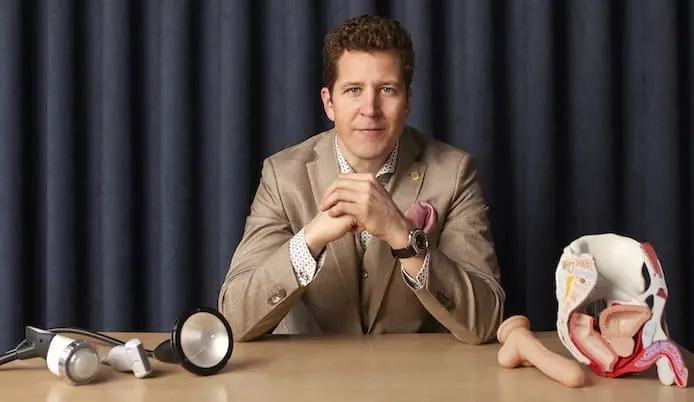
International speaker & expert in shockwave and EMTT treatment for incontinence.
Male incontinence is common, but it needs to be taken seriously
Urinary leakage in men can have many causes. For some, it’s due to an overactive bladder. For others, it’s related to the prostate, age, neurological conditions, medication, surgery or a weakened pelvic floor.
Especially after prostate surgery, incontinence can be a big part of everyday life. It can affect exercise, work, sex life, social activities and sense of freedom. Many also experience after-drips or insecurity because they don’t know when the leak is coming.
At MS Insight in Copenhagen S, treatment doesn’t start with a package deal, but with understanding what is most likely driving your symptoms. Pelvic floor, nerves, tissues, tension patterns, prostate history and bladder function can interact in different ways. Therefore, treatment must also be individually tailored.
The goal is to find the cause of your symptoms and create a thoughtful plan that fits your body, your history and your goals.
What is male incontinence?
Incontinence means that you can’t fully control urination. It can be a few drops in your underwear, leakage during straining, a strong urge you can’t hold back, or trickling urine because your bladder is not emptying properly.
The discomfort can be mild, moderate or severe. Some men only experience small drips after urination. Others use pads daily or avoid certain activities for fear of leakage.
The most important thing is to find out what type of incontinence it is. Treating male incontinence depends on whether the problem is caused by the bladder, prostate, sphincter, pelvic floor, nerves or a combination.
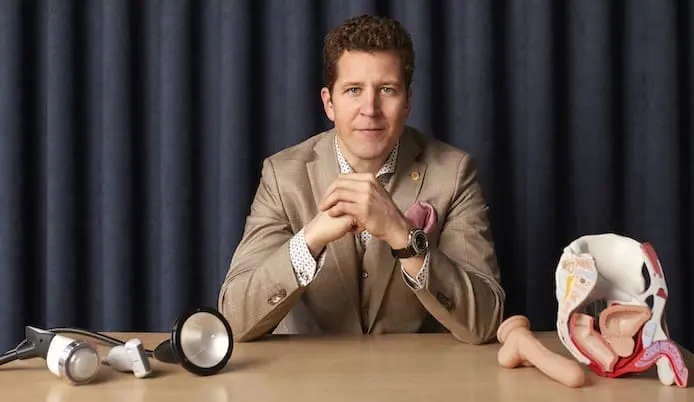
Få en gratis specialist-vurdering på 15 min.
Typical symptoms of male incontinence
Incontinence can look different from man to man. The most common symptoms are:
- Drip after urination
- Leakage when coughing, sneezing, laughing, lifting or physical activity
- Sudden and strong urge to urinate
- Frequent toilet visits during the day
- Nighttime urination
- Feeling that the bladder is not emptying completely
- Seeping leak between toilet visits
- Need for inserts or extra change of underwear
Symptoms can be affected by fluid intake, caffeine, alcohol, stress, sleep, medication, prostate conditions and physical strain. That’s why it’s important to look at the whole picture and not just the leak itself.
Types of incontinence in men
Stress incontinence
Stress incontinence means that you leak urine during physical exertion or sudden pressure increases. This can happen when you cough, sneeze, laugh, lift, stand up quickly or play sports.
In men, stress incontinence is particularly common after prostate surgery, where the closure mechanism and pelvic floor support function may be affected.
Urgency incontinence
Urgency incontinence is also called urge incontinence or urge incontinence. It is a sudden, strong urge to urinate that can be difficult to hold back.
This type of incontinence is often associated with an overactive bladder. It can also be seen with prostate enlargement, bladder irritation, neurological diseases or changes in bladder function with age.
Overflow incontinence
Overflow incontinence occurs when the bladder does not empty properly. Residual urine can remain and when the bladder becomes overfilled, seepage can occur.
In men, overflow incontinence can be related to benign prostatic hyperplasia, also known as BPH, where the prostate presses on the urethra and makes it harder to empty the bladder.
Incontinence after prostate surgery
Incontinence after prostate surgery is a major cause of urine leakage in men. It is especially common after prostate cancer surgery, where the closure mechanism and tissue around the urethra can be affected.
For some, symptoms gradually improve over time. For others, the leak persists and requires targeted training, assessment and possibly treatment.
Mixed incontinence
Mixed incontinence means that you experience both leakage with straining and sudden urge to urinate. Treatment must therefore address both pelvic floor function and bladder signaling.
Neurogenic incontinence
Neurogenic incontinence is caused by damage to the nerves that control the bladder and pelvic floor. This can be caused by neurological diseases, back problems, surgery or trauma. It is particularly important to assess the nervous system, pelvic floor function and bladder pattern.
Causes and risk factors of male incontinence
Incontinence in men is often caused by several factors at the same time. These include changes in the prostate, a weakened sphincter, overactive bladder, impaired nerve function, side effects from medication or a weakened pelvic floor.
Prostate enlargement
Benign prostatic hyperplasia, also known as BPH, can press on the urethra and make it harder to empty the bladder. It can cause frequent urination, weak stream, nighttime urination, urgency and in some cases overflow incontinence.
Prostate surgery
After prostate surgery, the sphincter, pelvic floor function and the tissue around the urethra can be affected. This can cause stress incontinence, postvoid dribbling or uncertainty during physical activity.
Timing, technique and targeted rehabilitation are important here. Many men benefit from pelvic floor training, but if there is no progress, a more comprehensive assessment may be needed.
Age and muscle weakness
Pelvic floor muscles and sphincter function can weaken with age. At the same time, the bladder can become more sensitive and nerve control can change. This can increase the risk of both urgency and leakage.
Neurological diseases
Diseases such as Parkinson’s disease, multiple sclerosis, stroke, herniated discs or other neurological conditions can affect the nerves that control the bladder, urethra and pelvic floor.
Medicine and lifestyle
Certain medications can affect urination. For example, diuretics, some blood pressure medications or medications that affect the nervous system. Caffeine, alcohol, obesity, smoking and constipation can also worsen symptoms.
How do you find the cause of male incontinence?
A good assessment starts with clarifying the pattern: When do you leak? How much do you leak? Is it with strain, sudden urges or after going to the toilet? Have you had prostate surgery, prostate enlargement, pain, infections or neurological symptoms in the past?
Urination diary
A urination diary can provide a clear picture of your symptoms. Make notes for 2-3 days:
- When you drink and how much you drink
- How often you go to the toilet
- When leakage occurs
- Whether leakage occurs under load or sudden urge
- If you have nighttime urination
- Whether coffee, alcohol or certain habits make symptoms worse
Assessment in the clinic
At MS Insight, the first visit starts with a thorough conversation about your symptoms, daily life, previous surgeries, medications, fluid habits, sleep, stress, pain and sexual function. The goal is to understand what is most likely driving the problem.
When appropriate, I use ultrasound to assess relevant structures, pelvic floor function and tissue condition. This may also include assessment of tension patterns, nervous system, body composition and the factors in everyday life that can affect bladder control.
This means that treatment is not chosen based on a standard package, but on an overall assessment of your situation.
What can you do for incontinence yourself?
Pelvic floor training for men
Pelvic floor training is not just for women. Men also have pelvic floor muscles and they play an important role in the urethra, sphincter function, after-drip, erection and pelvic stability.
You find the muscles by imagining that you want to hold in a fart and at the same time stop the urine stream. You should feel a slight inward and upward lift in the perineum, not a downward pressure.
You can read more in the guide on pelvic floor exercises for men.
Bladder training
Bladder training can be especially relevant for urgency incontinence. Here you work with fixed toilet intervals and gradually lengthening the time between urination.
The goal is to re-train the bladder to hold more urine and curb the sudden urge. It takes patience, but for many it offers better control in everyday life.
Lifestyle changes
Small changes can reduce strain on the bladder and pelvic floor:
- Reduce caffeine and alcohol if it makes cravings worse
- Distribute fluid intake evenly throughout the day
- Work on weight loss if excess weight increases pressure on the pelvic floor
- Avoid constipation as pressure can strain the pelvic floor
- Stop smoking if chronic cough triggers leakage
- Talk to your doctor if you suspect medication is affecting urination
When is self-training not enough?
Pelvic floor training is often an important first step. But there are situations where self-training is not effective enough or where symptoms require a more targeted assessment.
It may be relevant to seek professional help if:
- You’ve been training for 3 months without noticeable progress
- You are unsure if you are activating the right muscles
- You only tense your stomach, buttocks or thighs when you try to squeeze
- You have incontinence after prostate surgery
- You have drips or leaks that affect your everyday life
- You have urgency, frequent toilet visits or nighttime urination
- You also have erectile dysfunction, pelvic pain or decreased sensation in the lower abdomen
When training doesn’t work, it doesn’t necessarily mean you’re doing something wrong. It could be reduced muscle contact, weakened tissue, affected nerves, altered blood flow or a bladder that reacts too quickly.
Pelvic Chair, shockwave and EMTT at MS Insight
Incontinence in men is not always just about a weak muscle. Especially after prostate surgery, bladder function, pelvic floor muscle control, nerve function and tissue quality can all be affected.
That’s why I work with a combined approach where the treatment is chosen based on your situation. This can be Pelvic Chair HIFEM for neuromuscular rehabilitation, shockwave for tissue and blood flow stimulation and EMTT for deep electromagnetic therapy.
The combination is used purposefully when it makes sense. The goal is not to give everyone the same treatment, but to assess whether your symptoms are primarily about muscle activation, nerve function, tissue, tension patterns, bladder habits or several factors at once.
Pelvic Chair HIFEM: neuromuscular rehabilitation
Pelvic Chair uses HIFEM technology, which stands for high-intensity focused electromagnetic stimulation. The technology activates the pelvic floor muscles while you sit fully clothed in the chair.
The treatment may be relevant if you have difficulty activating the pelvic floor yourself, if the muscles are weakened, or if regular pelvic floor exercises have not provided sufficient progress.
A treatment typically lasts 30 minutes and requires no recovery.
Shockwave and EMTT: tissue, blood flow and nerve function
Shockwave uses focused sound waves to stimulate tissue. EMTT uses electromagnetic pulses to affect cells and tissue in depth.
In selected cases, these treatments can be used together with Pelvic Chair, especially if symptoms are related to tissue damage, pain, reduced blood flow, nerve irritation or concurrent sexual dysfunction.
Who can benefit from combination therapy for incontinence?
- Men with incontinence after prostate surgery
- Men with stress incontinence without sufficient progress with pelvic floor training
- Men with post-drainage or impaired pelvic floor control
- Men with age-related urgency or bladder disorder where a comprehensive assessment is relevant
- Men who also have erectile dysfunction, pelvic pain or reduced sexual function
- Men who want a non-invasive treatment option with no waiting list
How a course at MS Insight works
The first step is to thoroughly understand your situation. You’ll always meet Michael directly in the clinic, so assessment and treatment are closely linked from the start.
- Consultation and assessment
We review your symptoms, previous surgeries, medications, lifestyle, fluid habits, sleep, stress, pain, sexual function and what you want to achieve. There is nothing wrong or embarrassing to talk about in the clinic. - Examination and ultrasound
When appropriate, I perform ultrasound and functional assessment of the pelvic floor, tissues and relevant structures. Scanning and clinical assessment are used to create a clearer picture of which treatment path makes the most sense. - Individual treatment plan
The treatment plan may consist of pelvic floor exercises, bladder strategies, Pelvic Chair, shockwave, EMTT, neuromodulation or adjustments in everyday life. It depends on what is likely driving your symptoms. - Follow-up and adjustment
The program is continuously adjusted according to your response. The goal is a realistic and measurable plan so you can follow the development of leakage, control, urination patterns and quality of life.
I will get back to you within 12-24 hours.
More treatment options for male incontinence
Treatment of male incontinence depends on the type, cause and severity. Some need primarily exercise and habit adjustment. Others need medication, urological treatment, surgery or technology-assisted clinical care.
Assistive technology and support
Liners, diapers, catheters or other assistive devices may be relevant if the leak is a big part of everyday life. Aids don’t necessarily solve the cause, but they can provide comfort while you work on treatment.
Medical treatment
In the case of urgency incontinence, medication can in some cases calm an overactive bladder. Examples include anticholinergics. For prostate enlargement, your doctor may consider treatment with medications that affect the prostate and urination.
Medical treatment should always be assessed and prescribed by a doctor. It may be relevant on its own or as part of an overall plan.
Surgical treatment
For moderate to severe stress incontinence, especially after prostate surgery, surgical solutions may be relevant in some cases. For example, sling surgery for men or an artificial sphincter.
For severe urgency incontinence, treatment such as sacral nerve modulation or other urological procedures may be considered. Surgical solutions are assessed by a urologist and require thorough investigation.
Technology-assisted clinical treatment
At MS Insight, I offer non-invasive treatment with Pelvic Chair HIFEM, shockwave and EMTT when appropriate. The aim is to work with both pelvic floor muscle activation, tissue response, blood flow and nerve function.
The treatment may be relevant if you want a targeted clinical intervention without starting with surgery or if you have tried self-training without sufficient effect.
Frequently asked questions about male incontinence
Can you train your pelvic floor as a man?
Yes, you can. Men have pelvic floor muscles and they can be trained with pelvic floor exercises. The training is about being able to activate, hold and release the muscles correctly. Pelvic floor training can be relevant for post-drainage, stress incontinence, incontinence after prostate surgery and decreased control.
What causes incontinence after prostate surgery?
After prostate surgery, the sphincter, pelvic floor function and the tissue around the urethra can be affected. This can cause leakage when coughing, sneezing, lifting, physical activity or movement. For some it improves over time, while others need targeted rehabilitation and treatment.
When are knee exercises not enough?
Pelvic floor exercises are not always enough if you have been exercising for 3 months without progress, if you cannot activate the right muscles or if the incontinence has occurred after prostate surgery. An individual assessment can determine whether Pelvic Chair, shockwave, EMTT or other treatment is relevant.
Does Pelvic Chair help with male incontinence?
Pelvic Chair may be relevant for some men with impaired pelvic floor activation, weakened muscle control or lack of progress with regular pelvic floor exercises. Whether it is relevant for you depends on the cause of the incontinence and is assessed individually.
How does MS Insight decide which treatment I should receive?
Treatment starts with a thorough conversation and assessment of symptoms, history, lifestyle, medication, pelvic floor function and relevant tissue or nerve conditions. When it makes sense, ultrasound scans are used. The plan is then individually customized so that the treatment does not become a one-size-fits-all solution.
Have a no-obligation conversation about male incontinence
Are you unsure if your pelvic floor exercises are working – or would you like to know if Pelvic Chair is relevant for you? You are always welcome to contact me by phone: 41 40 08 58 or email: michael@msinsight.dk. Otherwise, you can fill out the contact form with your details and a brief description of your problem. I’ll get back to you quickly with a customized solution proposal so we can find the best way forward together.
I will get back to you within 12-24 hours.