
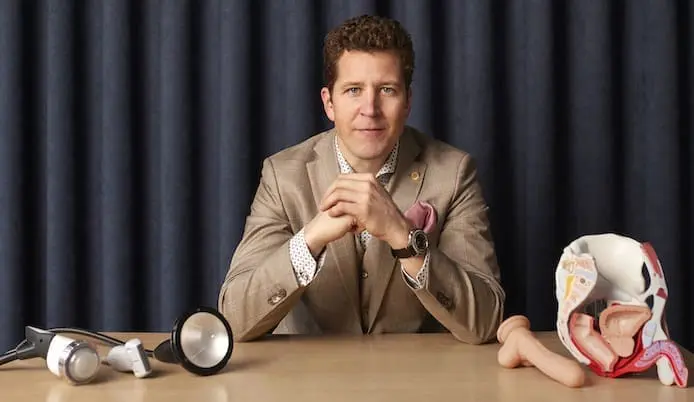
Michael Strøm
International speaker and expert in shockwave and EMTT treatments for men's sexual health.
In this article
Why can a scar feel tight long after surgery?
When a wound heals, the body forms new tissue. The new tissue structures do not always have exactly the same elasticity or sensitivity as before. In some people, the transition between the skin, subcutaneous tissue, and other tissue layers becomes more sensitive or less mobile. In others, it is primarily muscle tension patterns or a compromised nerve that causes symptoms.
A tight or painful area does not necessarily mean that adhesions have formed. The perceived tightness must be evaluated in conjunction with the type of surgery, the timing, wound healing, symptoms, and relevant examination findings.
Typical complaints I can help assess
For example, you may find that:
- the scar pulls when you turn, walk, run, or engage in physical activity
- the area becomes tender to the touch
- the surrounding muscles are tense or sore
- mobility in the hip, pelvis, or abdomen is reduced
- you’ve developed new issues with tension or function following surgery in the pelvic area
If the symptoms indicate complications, infection, a hernia, a nerve disorder, or other conditions that should be medically evaluated, I recommend appropriate further evaluation.
Here’s how the evaluation works
I’ll start with your surgical history: What was operated on, when, how did the wound heal, and how have your symptoms progressed? Next, I’ll examine the area causing discomfort, including relevant movements, tissue sensitivity, muscle activity, and other possible causes.
In some cases, an ultrasound scan can provide additional information about superficial tissues or anatomical conditions. However, ultrasound alone cannot explain all types of scar tissue or pain issues. The goal is to gather the information and determine what the next logical step should be.
What treatment might be appropriate?
Treatment depends on the findings. For some, guidance, gradual movement, and targeted rehabilitation are most important. For others, manual treatment of the surrounding structures may be part of the treatment plan.
When clinically relevant and safe, energy-based technologies can be used as a supplement. Among other things, I use HumanTecar to work on the soft tissues while simultaneously performing manual therapy.
I do not promise that device-based treatment can remove scar tissue or break up adhesions. The goal is to address the function and symptoms I can influence, and then follow up to see if you actually experience a meaningful improvement.
When scar tissue is linked to pelvic problems
After surgery on the prostate, pelvis, abdomen, or groin, symptoms can be complex. Tissue sensitivity, the pelvic floor, nerves, and movement can all influence one another. Therefore, a patient’s condition may need to be evaluated in the context of pelvic pain, urinary symptoms, incontinence, or changes in sexual function.
I can help with a targeted assessment of these interrelationships and recommend the appropriate next step—including when another healthcare professional or specialist should be consulted. Read more about connective tissue and fascia.
When should you see a doctor first?
If you experience a new or worsening area of swelling, redness, fever, oozing, an open wound, unexplained severe pain, or a sudden change in function, contact your doctor. Newly occurring neurological deficits, rapidly developing symptoms, or suspected surgical complications should also not be treated as routine scar tissue treatment.
Have the cause of your discomfort evaluated
Is the scar or the area around a previous surgery still causing you discomfort?
You don’t need to know whether scar tissue, muscles, or nerves are involved.
Start with a no-obligation consultation about your symptoms, and I’ll assess whether an examination at MS Insight is the right next step.