
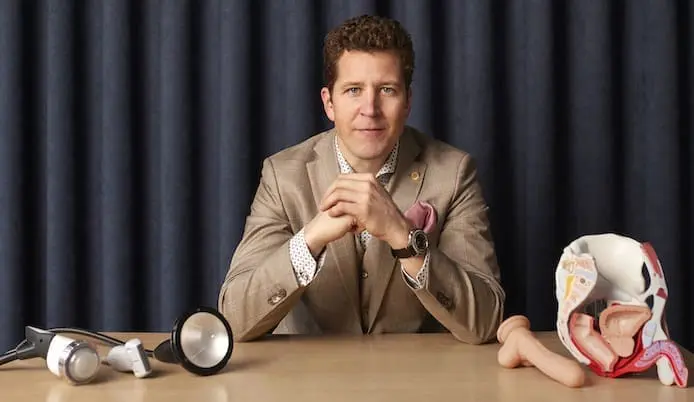
Michael Strøm
International speaker and expert in shockwave and EMTT treatments for men's sexual health.
In this article
Why does physical function change with age?
Muscle strength, muscle mass, cardiovascular fitness, balance, and reaction time can change throughout adulthood. These changes depend, among other things, on activity level, illness, exercise, recovery, and other individual factors. Some people maintain high physical capacity well into old age, while others experience limitations earlier.
The key is not to measure a single “biological age” using a single device. Rather, it’s about identifying the functions that matter in your daily life and working specifically on them.
A functional profile as a starting point
An assessment may include a discussion about health, activity, and goals; relevant tests of strength and balance; and an evaluation of range of motion. When it is relevant to the plan, I may use InBody to assess body composition. The measurements are viewed as part of the overall picture and interpreted with an awareness of their inherent uncertainty.
For one person, the goal might be to maintain the ability to run and ride a bike. For another, it might be to get up safely from a chair, walk with greater confidence, or improve endurance. We agree on goals that are both realistic and meaningful.
The most important tool is activity
Strength training, appropriate cardiovascular training, balance exercises, and relevant mobility training are key elements in functional rehabilitation. The content and intensity must be tailored to the individual and any health-related limitations. When necessary, the program is coordinated with your primary care physician or other healthcare providers.
A program may therefore include guidance on how to gradually increase and monitor your training. The goal is not a high number of sessions, but an approach you can apply in your daily life.
What role do treatment technologies play?
In cases of pain, stiffness, or localized tissue issues, targeted manual therapy or selected technologies may, in some cases, be used as a supportive measure to make it easier to work on function and movement. HumanTecar and other treatment methods are not a substitute for strength and conditioning training, and they have not been proven to reverse biological aging.
If your primary goal is a program to maintain strength, balance, and physical capacity, active interventions are therefore the focus. If you have specific tension or discomfort, you can read about muscle tension, connective tissue, and fascia.
What should I follow up on?
I track your progress using a small number of relevant tests and compare it to your starting point. For example, these might include:
- the sit-to-stand test
- balance
- gait function
- practical strength measures
For repeated measurements, I use the same method and conditions as much as possible. Measurements can make progress and challenges clearer, but they are not a diagnosis in and of themselves. I adjust the plan if your goals, health, or functional level change.
Who can benefit from a functional assessment?
A functional assessment may be relevant for active adults who want a baseline, for people who have experienced a loss of strength or mobility, and for those who want to take concrete steps to maintain their physical independence.
If you have unexplained symptoms, acute pain, or other issues that require a medical evaluation, those should be addressed first.
Get a clear starting point for your physical function
What would you like to be able to do today—and in five or ten years?
Start with a no-obligation conversation about your goals and your current situation.
I’ll help you determine whether a functional assessment at MS Insight is relevant for you and which tests and interventions make sense for you.