
Written and medically reviewed by Michael Strøm
International speaker & expert in shockwave and EMTT treatment for erectile dysfunction, Peyronie’s & CPPS. Read more about me
Nerve inflammation in the arm – when the nervous system is noisy and it affects energy, work and intimacy
Do you experience tingling, numbness, burning pain, or weakness in your arm or hand—along with issues such as erectile dysfunction, pelvic pain, or general discomfort in your body? You’re not alone. I meet many men for whom “nerve inflammation in the arm” isn’t just a localized problem, but part of a nervous system that’s been working overtime. This can affect your energy levels, sleep, concentration—and your desire for and ability to be intimate. At my clinic in Copenhagen, I’ll help you manage your symptoms, understand the causes, and develop a concrete plan that you can actually implement in your daily life. Many people report that their symptoms fluctuate throughout the day, often getting worse at night or when in certain work positions. This creates uncertainty: Can I hold tools? Function at work? Be present at home? Here, you’ll find peace of mind, direction, and tools—without unnecessary restrictions and with respect for your reality.
In this article
- What is Arm Neuritis – and what do I call it in practice?
- The link between arm neuritis, erectile dysfunction and pelvic pain
- Is it really “inflammation”? Pinching vs. irritation
- When should you seek help – and what red flags should you know?
- How I examine you in the clinic
- Treating MS Arm Neuritis Insight – calm tissue and calm nervous system
- Course, duration and realistic expectations
- Frequently asked questions about Nerve inflammation in the arm
- What makes my approach different?
- Take the step today – get peace of mind and peace of mind in your body
What is Arm Neuritis – and what do I call it in practice?
The term “Arm nerve inflammation” is used interchangeably. For many, it’s not really inflammation of the nerve, but irritation, pinching or overstimulation of nerves in the hand, forearm, elbow, shoulder or neck. Technical terms can be neuritis (inflammation), neuropathy (nerve damage/impingement) or entrapment (pinching), for example carpal tunnel syndrome. I often see it as a combination: the nerve is sensitive and the surrounding structures (tendons, tendon sheaths, fascia and muscles) are tight or swollen so the nerve doesn’t glide freely – a bit like a wire in a tight pipe. Whatever the word, the point is the same: The nerve is protesting and it is felt as pain, tingling, sleeping, reduced strength or loss of fine motor skills. My focus is to clarify where the impact comes from and what interventions can most effectively lower the noise level in both tissue and nervous system.
Typical symptoms of Nerve inflammation in the arm
Symptoms can vary, but men often experience them:
- Tingling, tingling or “sleeping” hand/fingers (typically in thumb, index and middle finger in carpal tunnel; ring and little finger in ulnaris involvement)
- Burning, shooting or icy pain in hand, forearm or up towards elbow/shoulder
- Power loss, grip failure, dropping things or tool/keyboard issues
- Night pain and the need to shake your hand to “wake” it up
- Pain that worsens with certain positions or repetitive movements
- Cold/heat hypersensitivity or altered sweating of the hand (signs of autonomic nerve involvement)
Symptoms can come in waves: good days followed by irritation days. This is common and doesn’t say anything about your strength or “tolerance limit” – it tells you that the nerve needs rest, space and better glide.
Common causes – from pinch points to systemic factors
The most common causes of Arm Nerve Inflammation I see are:
- Carpal tunnel syndrome (pinching of the median nerve in the wrist)
- Ulnar neuropathy at the elbow (cubital tunnel syndrome)
- Radialis impact or “drop hand” after pressure or overload
- Nerve root involvement in the neck (cervical radiculopathy), often C6-C7, with radiation to arm/hand
- Thoracic outlet syndrome (pinched structures between neck and shoulder)
- Overload and static work: mouse/keyboard, tools, repetitive gripping
- Diabetes, B12 deficiency, alcohol overuse and certain medications that can affect nerve health
- After infection (e.g. shingles) or shoulder/elbow injuries
For many, several things come together: a slight pinch, tight muscles/tendons, lack of sleep and a stressed nervous system. Then the signals become strong – and the body interprets them as danger. My job is to find the most important pieces and prioritize your efforts so that you feel progress without having to change your whole life.
The link between arm neuritis, erectile dysfunction and pelvic pain
Why am I mentioning intimate symptoms in an article about the arm? Because the nervous system is one interconnected system. When pain and sensory disturbances from the arm take over, the body is on high alert. This can worsen pelvic pain, make the pudendal nerve more sensitive and affect erection quality through stress, poorer sleep and less bodily peace. Conversely, men who already struggle with pelvic pain or erectile dysfunction may be more vulnerable to overload in the arm and neck – the nervous system’s “volume button” is already high. I therefore work both locally with the arm and systemically with nervous system regulation, breathing and load management. When your body is calmer, the noise in both arm and pelvis typically decreases – and you’ll find it easier to be close and intimate again.
Is it really “inflammation”? Pinching vs. irritation
It is rarely an actual infection. Nerve inflammation in the arm usually refers to irritation or pinching where the tissue around the nerve (tendon sheaths, connective tissue and muscles) is thickened, tense or swollen. The nerve becomes more sensitive, slides less smoothly and sends stronger signals. This is where a combination of local tissue treatment, movement, relief and neuromodulation can help – so both the tissue and the brain have a more friendly dialog. I’ll explain what’s happening along the way so you understand why a quiet, controlled progression often works better than “no pain, no gain”.
When should you seek help – and what red flags should you know?
Seek assessment if symptoms last more than a few weeks, disrupt your sleep or limit work/training. Seek emergency help by:
- Sudden pronounced loss of strength in the arm or hand, new “drop hand” or difficulty stretching fingers/wrist
- Neck trauma followed by severe pain, sensory disturbances in both arms or loss of balance
- Fever, redness, warmth and significant swelling in the arm (may indicate infection or other acute condition)
- Pressing chest pain radiating to the left arm, shortness of breath, sweating and nausea – call 112
Red flags are fortunately rare, but they should be taken seriously. When in doubt, I’ll help you quickly assess the situation and direct you to the right place.
How I examine you in the clinic
I start with a thorough conversation: when did the symptoms start, what aggravates and relieves, work, training, sleep, stress level and any intimate discomfort. This gives me a clear picture of how I can best help both your arm and your overall wellbeing.
The physical examination includes:
- Neurological screening: hand/arm strength, reflex and sensation
- Specific provocation tests: e.g. Phalen/Tinel (carpal tunnel), Spurling (neck nerve roots), ulnaris stretch test, etc.
- Assess neck, shoulder and chest mobility and tension patterns
- Soft tissue ultrasound: I assess tendons, tendon sheaths, muscles and nerve surroundings for swelling, thickening or sliding pain. This helps me to target treatment
If further investigation is needed, I guide you to talk to your GP about relevant tests, such as blood tests (B12, blood sugar), nerve conduction studies (EMG/ENG) or MRI scans. I explain the benefits and limitations so you know when a test really makes a difference.
Treating MS Arm Neuritis Insight – calm tissue and calm nervous system
I work with tailor-made, evidence-based combination programs. The goal is to reduce pain and sensory disturbances, improve nerve gliding and function – while lowering the alert level of the nervous system. You get a simple plan with a few effective actions that fit into your everyday life. I follow up closely, adjust as needed and give you clear criteria for when you can step up.
Focused sound waves (shockwave)
Focused sound waves can be used to affect the structures that pinch or irritate the nerve, such as tendon sheaths, fascia and muscles around the wrist, elbow and shoulder. The method can stimulate tissue healing, blood flow and pain relief. For entrapment issues such as carpal tunnel syndrome, there is growing evidence that sound waves can be a relevant non-surgical intervention for symptom relief in selected patients. I always assess the indication and dosage individually. The treatment itself takes a few minutes and can feel like controlled, deep pulses – often followed by short-term soreness that subsides within 24 hours.
EMTT (electromagnetic transduction therapy)
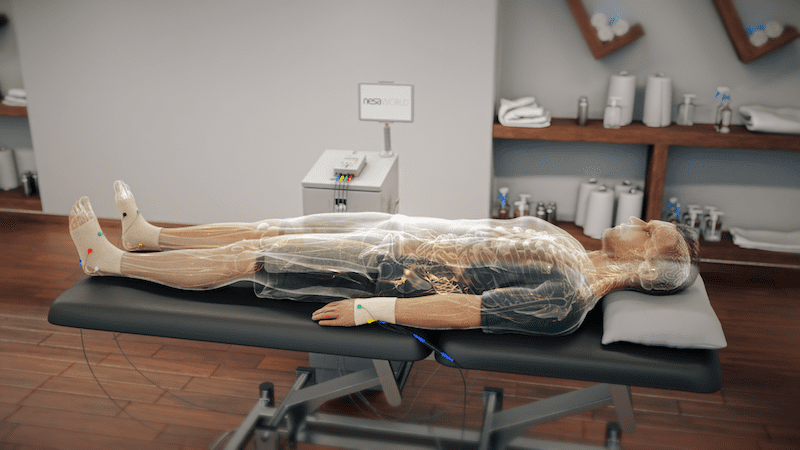
EMTT is a non-invasive treatment that uses alternating magnetic fields to affect cellular energy metabolism and can support tissue healing and pain relief. I use EMTT around the elbow, forearm and wrist for overload-related discomfort and nerve irritation as part of an overall treatment program. The treatment takes place over clothing, is over quickly and is typically combined with exercises and ergonomic adjustments to maintain the effect in everyday life.
Neuromodulation – when the nerve needs to be “tuned down”
Neuromodulation is about reducing hypersensitivity in the nervous system. With targeted stimulation and training techniques, I can help you reduce the interpretation of pain and give the nervous system more confidence. I use breathing exercises, graduated exposure to movement, pace and attention management, and simple strategies to decouple pain from fear. This is especially important if you also have pelvic pain or erectile dysfunction, where the system is often on guard.
Gentle exercises and nerve slippage
I teach you simple, gentle exercises that improve nerve gliding (“nerve flossing”), loosen surrounding tissue and strengthen the muscles that protect the nerve without provoking. For the median nerve, this could be controlled open/close with a neutral wrist position, and for the ulnar nerve, gentle elbow and wrist movements in a pain-free area. I dose the exercises so that they relieve rather than trigger – a little and regularly rather than a lot and rarely.
Relief, ergonomics and night support
Small grips can make a big difference: correctly adjusted workstation, relief from repetitive grips, variation in movements and micro breaks of 30-60 seconds every 20-30 minutes. A more neutral grip (larger handle diameter) can provide relief, and for carpal tunnel syndrome, a neutral wrist splint at night can often reduce nocturnal symptoms. I’ll guide you in selection and use, so you feel the effect without feeling restricted.
Sleep, stress and anti-inflammatory habits
Nerves love calm, oxygen and a stable environment. Quality sleep, regular meals, moderate strength training, fewer alcohol binges and stress reduction can significantly reduce symptoms. I give concrete, realistic advice that fits your everyday life – without any finger pointing. Small routines like a regular bedtime, calm nasal breathing 5 minutes before bedtime and short walks in daylight can do more than you think.
Medication and injections?
Non-steroidal anti-inflammatory drugs, local steroid injections for entrapment or medication for nerve pain may be relevant in certain cases. I do not prescribe medication, but I am happy to advise you to talk to your own doctor if I think it is relevant to your situation. The goal is always to minimize side effects and maximize function.
Course, duration and realistic expectations
Most programs last 4-8 weeks, and many people experience gradual improvement within the first few weeks when the right measures are taken. The program can consist of 4-6 sessions of focused sound waves and/or EMTT combined with neuromodulation, exercises and ergonomics. If you’ve had symptoms for a long time, or if there are systemic factors (e.g. diabetes, severe sleep deprivation), I can plan a longer program – and I set clear milestones so you can feel the right direction. We track simple measures such as night-time sleep, grip strength and symptom frequency, so you can see the progress.
If you don’t improve as expected despite targeted efforts, I’ll talk to you about next steps, such as nerve conduction studies, further imaging or assessment of surgical options for severe pinching. Here I will guide you on how to continue the dialog with your own doctor.
Frequently asked questions about Nerve inflammation in the arm
Can nerve inflammation in the arm go away on its own?
Some cases resolve with relief, posture adjustments and better sleep. But if symptoms are interfering with everyday life, it’s wise to have a targeted plan to prevent it from becoming entrenched. The sooner you get a handle on the causes and habits, the easier it is to turn things around.
Is tingling in your fingers dangerous?
Not necessarily, but it is a sign of nerve impingement. Persistent sensory disturbances or weakness should be assessed to avoid ongoing discomfort. If the sensation becomes more widespread or your grip fails, you need to react quickly.
What exercises help?
Gentle nerve gliding exercises and light strengthening around the shoulder blade, forearm and hand can help when dosed correctly. I’ll show you exactly what’s right for your type of nerve irritation and how to adjust the amount so you can progress without relapse.
Can I continue training?
Yes, but smart. I cut down on provocative holds and static poses, adjust volume and choose exercises that support healing instead of pushing the system further. You’ll get clear guidelines on when you can crank it up again.
Do focused sound waves help with carpal tunnel syndrome?
For some with mild to moderate pinching, focused sound waves can relieve pain and improve function as part of an overall plan. I assess indications on a case-by-case basis and combine with exercises and relief to maintain the effect.
Does Arm Neuritis have anything to do with my erectile dysfunction?
Directly – as in the same nerve – typically not. Indirectly – via stress, poor sleep, pain and an overactive nervous system – yes, often. That’s why I always think both locally and systemically, so that the body as a whole is in better balance.
Should I have a scan or EMG?
Not always. Clinical examination and soft tissue ultrasound often go a long way. In case of doubt about diagnosis or persistent severe symptoms, EMG/ENG and MRI may be relevant. I advise you to discuss this with your own doctor.
Which supplements make sense?
If you have a documented deficiency, B12 may be relevant. Otherwise, sleep, nutrition and alcohol moderation are often more important than pills. I’ll help you with a plan that’s realistic and sustainable.
Does a night wrist splint work?
For carpal tunnel syndrome, a neutral splint at night can reduce symptoms. I’ll help you choose and fit it correctly so that it supports without discomfort.
Can it be my heart when my left arm hurts?
If you have chest pain radiating to the arm, shortness of breath, cold sweat or nausea: call 112. If it’s “just” your arm, I will check for local and cervical causes and help you with a targeted plan.
What makes my approach different?
I work in a structured and non-taboo way, taking into account the man’s reality: work, training, family and intimacy. You get a clear plan that combines advanced diagnostics – including ultrasound – with well-documented treatments such as focused sound waves, EMTT and neuromodulation, as well as concrete advice on sleep, stress and habits. I meet you without prejudice and I evaluate the effects with you on an ongoing basis, so you can clearly feel the progress and know what the next step is.
Take the step today – get peace of mind and peace of mind in your body
If Nerve inflammation in your arm is affecting your everyday life – and maybe also your desire, erection or general well-being – then it’s time to get a plan that works. I have a clinic in Copenhagen and help men from all over Zealand and the rest of Denmark. Book an appointment or contact me for an informal chat about your situation. You will be met with respect, professionalism and a solution that takes into account all of you – not just your arm.
If you are interested in hearing more about how I can help you, you are always welcome to contact me by phone 41 40 08 58 or email michael@msinsight.dk. I’ll get back to you quickly with a customized proposal so we can find the best way forward together.
Would you like a specialist assessment of your situation?
You don’t have to figure it out alone. Call directly or write a few lines about your symptoms – I’ll get back to you within 12-24 hours with a concrete suggestion for the next step.