

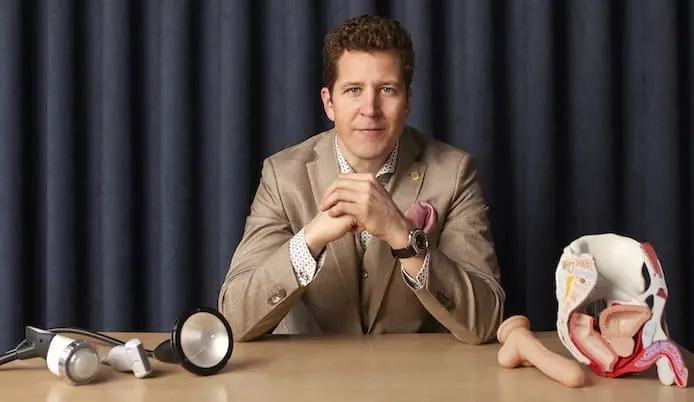
Written and medically reviewed by Michael Strøm
International speaker & expert in shockwave and EMTT treatment for erectile dysfunction, Peyronie’s & CPPS. Read more about me
What is inflammation of the prostate?
I meet many men who struggle with pelvic pain, difficulty urinating or erectile dysfunction – and are unsure if it could be inflammation of the prostate. “Inflammation of the prostate” is also called prostatitis. It is an umbrella term for conditions where the prostate gland and surrounding tissues are irritated, inflamed or infected. The prostate is a gland under the bladder that produces fluid for semen. It is not the same as ‘enlarged prostate’ (BPH), which mainly causes difficulty urinating for mechanical reasons. Prostatitis can occur at any age and can cause significant discomfort even when there is no actual infection.
In general, I distinguish between:
- Acute bacterial prostatitis: Sudden onset of infection with fever, malaise and significant urinary symptoms. Requires prompt medical attention and antibiotics.
- Chronic bacterial prostatitis: Recurrent infections with bacteria, often with milder but persistent symptoms.
- Chronic prostatitis/chronic pelvic pain syndrome (CP/CPPS): Long-term pain and discomfort in the pelvis without detectable infection. Pelvic floor muscle tension, nerves (e.g. the pudendal nerve) and stress levels often play a key role. Here, shockwave and EMTT are the preferred solution along with pelvic floor training.
- Asymptomatic inflammation: Inflammatory markers in the prostate without symptoms – usually an incidental finding and rarely requiring treatment.
Regardless of the category, it affects everyday life – and often sex life too. My job is to clarify what’s going on with you and come up with a plan that actually helps. I always assess both the “hard data” (examination findings and tests) and the “soft signals” from the body (tension, pain behavior, sleep, stress) because this gives the most accurate picture of what it takes to move you forward.
In this article
- Typical symptoms of inflammation of the prostate
- Why does inflammation of the prostate occur?
- Is it dangerous? And what about prostate cancer?
- Prostate inflammation and erectile dysfunction
- When should you seek emergency help?
- How I examine you in the clinic
- Evidence-based treatment options
- Frequently asked questions about inflammation of the prostate
- Why choose me and MS Insight?
Typical symptoms of inflammation of the prostate
Symptoms can vary, but I often see a combination of symptoms:
- Pain, pressure or tenderness in the perineum (the area between the scrotum and rectum), at the root of the penis, in the scrotum, lower abdomen, around the anus or in the lower back
- Burning or stinging urination, frequent urges, feeling of not emptying the bladder completely
- Pain during or after ejaculation, altered semen volume or scrotal tenderness
- Erectile dysfunction (erectile dysfunction) or decreased desire due to pain, anxiety and tension
- Exacerbation after prolonged sitting, cycling, stress, alcohol or strong coffee
Acute infections often cause fever, chills and heavy urination. In chronic cases, the picture is more insidious and can fluctuate from “okay” to “really bad” over weeks. Many people describe that the urine stream is weaker in the evening, that the pain increases after prolonged periods of sitting, or that bowel movements/constipation affect the symptoms. I distinguish between irritable (stinging/sweating) and “obstructive” (weak stream, after-drip) urinary symptoms – it helps me target my efforts.
Why does inflammation of the prostate occur?
There is rarely a single cause. I typically see one of these underlying mechanisms:
- Bacterial infection: Bacteria from the urethra or bladder can infect the prostate. It requires medical assessment and often antibiotics.
- Tight pelvic floor: Prolonged tension in the pelvic floor muscles can cause pain, irritation of nerves and “false” signs of infection, even without bacteria.
- Nerve impingement: The pudendal nerve and other nerves in the pelvis can become pinched or hypersensitive. This causes radiating pain and aggravation when sitting.
- Stress and strain: The nervous system goes into alarm mode. This increases muscle tone, pain sensitivity and the urge to urinate.
- Other factors: Constipation, long-term sexual abstinence or very frequent masturbation, new cycling habit, heavy lifting, urinary tract infections or sexually transmitted infections.
The point is: the cause must be found – and the treatment must match it. For example, antibiotics don’t help an overactive and painful pelvic floor. I also see that central sensitization (the nervous system’s “volume knob” is set too high) can keep symptoms going even after a triggering infection is gone. That’s why I look at the whole picture: tissues, nerves, muscles, bladder habits and mental stresses. Small adjustments can significantly lower the “system noise” and calm the bladder and pelvic floor.
Is it dangerous? And what about prostate cancer?
Most cases of prostatitis are not dangerous, but they are debilitating if allowed to persist. Acute fever and severe pain should be taken seriously – you need to be assessed by a doctor quickly. But prostatitis is not the same as prostate cancer. Many people worry about cancer when they feel changes “down there”. I understand that – and I’ll help you calm your nerves with a targeted assessment and refer you to a urologist if necessary. Suspected cancer is assessed based on symptoms, blood tests (e.g. PSA), age and examination findings. I explain what the numbers mean and when it’s wise to wait, repeat tests or proceed with urological assessment.
Prostate inflammation and erectile dysfunction
Inflammation, pain and anxiety in the pelvis affect erection via several pathways:
- Sympathetic activation: The body goes into “fight/flight”, which counteracts the relaxed blood flow that an erection requires.
- Pain and avoidance: Sex is associated with pain or discomfort, reducing desire and quality.
- Muscle dysfunction: A tight pelvic floor can squeeze nerves and vessels, reducing blood flow and making nerves hypersensitive.
I work both to reduce inflammation/irritation and to retrain a calm, well-functioning pelvis – so that the erection gets the best conditions again. For some, a short period of PDE5 inhibitors (in collaboration with a doctor) provides a useful “window”, while relaxation, breathing and gradual resumption of sexual life brings the body back to comfort and normal function.
When should you seek emergency help?
Contact your doctor or emergency services immediately:
- Fever, chills, general malaise
- Severe pain in the abdomen
- Acute urinary retention (you can’t urinate)
- Blood in urine or semen along with fever/pain
Here, acute bacterial prostatitis or a complication that requires prompt medical treatment is suspected.
How I examine you in the clinic
I work in a structured and evidence-based way – with an eye for both your body and your mental state.
Thorough conversation and standardized questionnaires
I start with your story: when did the symptoms start, what makes it worse/better, how does it affect your sex life and work? I use the NIH-CPSI (Prostatitis Symptom Score) and relevant urination charts to get a clear starting point. I also review fluid intake, toilet habits, sleep, medications and any previous infections. A short bladder chart (urination and fluid diary) over a few days can quickly reveal patterns that can be changed.
Physical examination and ultrasound
- Pelvic floor: I assess tension levels, tender points and coordination in the pelvic floor and surrounding structures. If needed, I test whether you can release tension as easily as you can activate the muscles.
- Ultrasound: I use advanced ultrasound to assess bladder emptying (residual urine), tissue conditions in the perineum and blood flow in the penis when needed. It helps distinguish between mechanical/neuromuscular issues and more widespread inflammation.
- Nerve status: Signs of pudendal impingement or nerve hypersensitivity are mapped. Among other things, I look at whether pain is provoked in certain positions or by prolonged pressure on the perineum (sitting time).
If there are signs of infection, I would recommend the following via your GP.
- Urine samples/urine culture and possibly semen sample
- Blood tests (e.g. infection count, PSA if indicated)
- Testing for sexually transmitted infections
- If a complication (e.g. abscess) is suspected, refer to a urologist for imaging (TRUS/MR).
I always summarize findings in clear language so you know what’s next and why we’re doing it. This gives you both direction and peace of mind.
Evidence-based treatment options
My goal is to provide you with a clear plan that both relieves quickly and creates lasting recovery. Treatment combines targeted exercises, nerve management, pain relief and lifestyle adjustments – and medication if indicated.
Antibiotics – when does it make sense?
Antibiotics are relevant for proven or strongly suspected bacterial prostatitis. Here I coordinate with the doctor/urologist on choice and duration. Whenever possible, treatment is adjusted according to culture results. If repeated courses of antibiotics do not help, it often points to a non-bacterial cause that needs to be treated differently. I help you avoid unnecessary courses and instead focus on the mechanisms that are actually driving your symptoms.
Pelvic floor relaxation and neuromodulation
Many people with CP/CPPS have an overactive, painful pelvic floor. I work purposefully with:
- Individual exercises for relaxation and coordination
- Breathing techniques that dampen sympathetics and lower muscle tone
- Neuromodulation (TENS/guided nerve stimulation) to reduce overactive pain pathways and improve bladder urgency
- Graduated exposure to seating position and activity so you can safely return to what you miss
I teach you very specific “emergency interventions” to lower tension throughout the day (e.g. 4-6 calm breaths, “release” signals to the pelvic floor and small movement pauses). This makes you less vulnerable to flare-ups.
Focused shockwave and EMTT for chronic pelvic pain
I offer focused shockwave therapy and EMTT (electromagnetic transduction therapy) as part of combination therapy for chronic pelvic pain. The aim is to:
- Reduce pain and muscle tension in the perineum and around the prostate area
- Improve microcirculation and tissue healing
- Create a ‘window’ of relief so you can implement exercises and lifestyle changes with greater impact
The evidence for shockwave in CPPS is growing and promising for pain reduction and symptom scores. EMTT is a newer supplement that I use selectively when your symptom picture fits. Especially for the more chronic conditions, it’s a big game changer. I follow the effect closely with you and adjust the course if your body asks for a different path.
If you are interested in hearing more about how I can help you, you are always welcome to contact me by phone 41 40 08 58 or email michael@msinsight.dk. I’ll get back to you quickly with a customized proposal so we can find the best way forward together. You can also continue reading on this page.
Pain relief, warmth and movement
- Pain plan: Over-the-counter medication can provide relief for a period of time (to be clarified in relation to health/medication).
- Heat: For example, heat wraps/sit-baths increase blood flow and reduce tension.
- Gentle movement: Walking, mobility and light strengthening. Too much rest often makes the pain worse.
I organize the level of activity to avoid both overload and over-cautiousness. Small, frequent doses of movement are often far more effective than a few large efforts.
Lifestyle: sleep, stress, diet and habits
Small touches can make a big difference:
- Sleep and stress: Quality sleep and daily breaks dampen nervous system alarms.
- Fluids: Drink regularly, but avoid overtipping. Cut down on alcohol, strong coffee/tea and very spicy food if you notice worsening.
- Bowel: Avoid constipation – fiber, fluid and movement help.
- Cycling and sitting: Choose a pressure-relieving saddle, vary positions and possibly use a sitting ring for a period of time.
- Sexual activity: Moderate, pleasurable sex or masturbation may relieve pressure in some; in others it temporarily irritates. I will adapt the recommendation to your reaction.
I’ll help you find a realistic everyday life where symptoms are less prominent – without feeling like you have to live on a “pain diet”.
Sexual counseling and couple perspective
When pain, worry and erectile dysfunction mix, it often affects the relationship. I counsel on:
- Communicating with your partner – without shame and performance pressure
- Gentle positions and pacing sex life
- Possible use of PDE5 inhibitors (in collaboration with doctor) as a bridge to rebuild confidence and function
I often find that calm, knowledge and simple agreements in the relationship quickly reduce the pressure on sex life – and make room for desire again.
Frequently asked questions about inflammation of the prostate
Is prostatitis contagious?
Prostatitis itself is not contagious. If the cause is a sexually transmitted infection, it can be contagious – that’s why I recommend testing and safe sex until you are cleared. But CP/CPPS without infection is not contagious.
Can it go away on its own?
Acute cases can improve with proper treatment within weeks. Chronic cases rarely go away on their own, but I often see clear improvements when I work with you to combine targeted relaxation, neuromodulation, shockwave/EMTT when needed and habit adjustment.
Can I have sex when I have prostate inflammation?
Basically, yes – as desired. Some people get relief from regular ejaculation, others experience temporary worsening. If you have an acute infection with fever or if sex triggers significant pain, I pause and resume gradually.
How long does it last?
- Acute bacterial prostatitis: Typically weeks, but you may feel tired afterwards.
- Chronic bacterial: Can take months to get under control and requires a prevention plan.
- CP/CPPS: Fluctuating over months – with the right effort I often see 50-80% symptom reduction over 8-16 weeks. The duration depends on how long you’ve had symptoms and how consistently you can work the plan.
What if antibiotics don’t help or haven’t helped?
Then it points to a non-bacterial cause. Here I change focus: pelvic floor, nerves and lifestyle – no more “blind shots” with antibiotics. I often find that symptoms decrease when we hit the right mechanisms.
Do supplements help?
Some experience relief with e.g. quercetin, pollen extract or D-mannose for recurrent urinary tract irritation. The evidence is mixed. I first prioritize interventions that have the greatest documented effect (relaxation, neuromodulation, targeted exercise, shockwave/EMTT if needed) – and add supplements as a “nice-to-have” if you tolerate them and they do not conflict with other medications.
Can I ride my bike?
Yes – but with care. Use a pressure-relieving saddle, vary positions, pedal regularly and start with shorter rides. If cycling is very provocative, I pause temporarily and step up again when symptoms are calmer.
Why choose me and MS Insight?
Specializing in men’s intimate health
I work every day with men struggling with prostate inflammation, erectile dysfunction, chronic pelvic pain and urinary tract problems. The clinic is located in Copenhagen and I help clients from all over Zealand and the rest of the country. There are no taboos here – just professionalism, respect and a plan that fits your life.
Advanced diagnostics and combination therapy
I use ultrasound scanning where it adds value and combine manual techniques, neuromodulation, focused shockwave and EMTT with counseling on sleep, stress, activity and sexual well-being. When needed, I collaborate with general practitioners and urologists for tests and medical treatment. This gives you one comprehensive plan – without you having to be the project manager of your own treatment.
Peace of mind, discretion and clear results
Talking about pain and problems in the abdomen can feel overwhelming. I meet you at eye level, explain everything in Danish without technical jargon for technical jargon’s sake – and I measure progress so you can see that the efforts are working.
Next steps – get in touch today
If “Prostatitis” is a big part of your life – with pelvic pain, urinary discomfort or erectile dysfunction – get in touch. I’ll start by understanding your situation, clarifying the causes and creating a plan that gives you back control and peace of mind. You don’t have to go it alone.
I offer appointments in Copenhagen and online clarification interviews. Write or call and I’ll work with you to find a solution that suits you best – and get the process started.
If you are interested in hearing more about how I can help you, you are always welcome to contact me by phone 41 40 08 58 or email michael@msinsight.dk. I’ll get back to you quickly with a customized proposal so we can find the best way forward together.
Would you like a specialist assessment of your situation?
You don’t have to figure it out alone. Call directly or write a few lines about your symptoms – I’ll get back to you within 12-24 hours with a concrete suggestion for the next step.