

Distrust in relationships often arises when physical challenges such as erectile dysfunction or pelvic pain create distance between you. I know how heavy it can feel when silence grows and suspicion takes over. In my treatment, I combine advanced physical therapy with conversations to help you regain both your function and trust in your relationship. Read on to find out how we can break the cycle together.

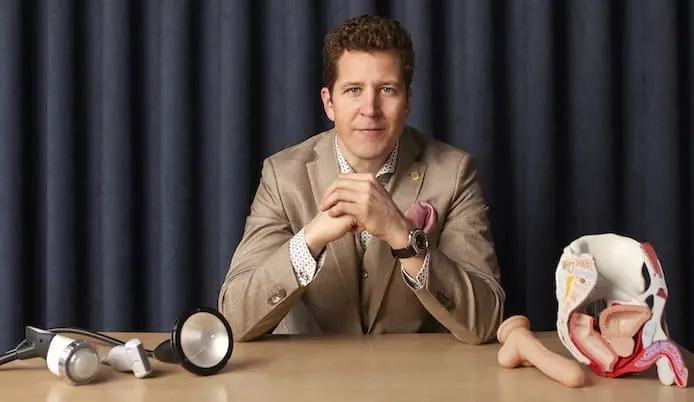
International speaker & expert in shockwave and EMTT treatment for erectile dysfunction, peyronies & CPPPS.
Relationship distrust is one of the most debilitating feelings that can affect a relationship. It can feel like the foundation underneath you is crumbling while the silence grows. In my clinic, I meet men every week who are in the midst of this crisis. Many mistakenly believe that the cause is to be found solely in communication or emotional life, but the reality is often different. I see time and time again how physical challenges like erectile dysfunction, chronic lower abdominal pain or curvature of the penis (Peyronies) are the real root of the problem. When your body isn’t working properly, you instinctively withdraw. This creates a void where your partner’s insecurities, jealousy and mistrust are given free rein.
It may seem paradoxical that a physical disorder like erectile dysfunction can end up destroying trust between two people. Unfortunately, the mechanism is both simple and deeply human. When you experience a loss of potency or painful intimacy, you often react by avoiding the situations that trigger the defeat. You stop initiating sex, you stay up later at night to avoid bedtime, or you make excuses to avoid intimacy.
From your partner’s perspective, the reality is completely different. Your partner can’t feel your pain or your inner fear of failure. They only feel your rejection. When you withdraw without articulating why – often because it feels shameful and taboo – your partner’s thoughts start to run in circles: “Is he not into me anymore?”, “Has he found someone else?”, “Why is he shutting me out?”.
This is where distrust arises. What to you is a desperate struggle to maintain your dignity and hide a problem is interpreted by your partner as secrets or lack of love. In my practice, I work purposefully to break this vicious circle. To overcome mistrust in relationships, it’s rarely enough to just talk – we also need to fix the physical cause that started the problem.
I see it as my primary task to make the invisible visible. Many of the men I help have been dealing with their problems for years without letting their partner in on the full extent. This creates a divide that only deepens over time.
Erectile dysfunction remains a massive taboo. If you experience erectile dysfunction, it often comes with immense shame. Instead of saying “I have trouble keeping it hard,” many men choose to shut down intimacy completely. When you repeatedly reject your partner’s initiatives without an honest explanation, it automatically sows distrust. Your partner feels unwanted and begins to doubt your relationship, while you’re really just trying to protect yourself from another defeat in the bedroom.
Chronic pelvic pain (CPPS) or irritation of the pudendal nerve are conditions that significantly reduce quality of life. It’s incredibly difficult to be a present, loving and attentive partner if you’re in constant pain. Pain can make you short-tempered, irritable and tired. If your partner doesn’t understand the extent of your pain – perhaps because you’re holding it in for fear of appearing weak – your change in behavior will seem incomprehensible. The distrust arises here because your personality seems to have changed and your partner can’t reconcile it with the man they fell in love with.
In my work with men’s health, I see clear patterns when relationships are strained by physical challenges. It’s crucial to recognize the signs of distrust in time so we can act on them. You may recognize the following:
If you recognize this pattern, it’s time to seek help. It’s not just about saving the relationship, but about feeling good in your own body again.
I approach the problem from two sides. We can’t remove distrust in the relationship if we don’t remove the cause of your withdrawal. At the same time, there’s no point in only treating the physical if the damage to the relationship and trust has already been done. That’s why I combine advanced physical treatment with my professional knowledge as a sexologist.
The first thing I do is take your symptoms seriously through a thorough examination. I use ultrasound scanning to see exactly what’s going on beneath the surface. Are there any calcifications? Is blood flow reduced? Is the pelvic floor chronically tense?
Once I know the cause, I initiate a targeted treatment plan. I often use focused sound waves (shockwave), which is a highly effective method to stimulate the formation of new blood vessels and break down calcifications. It’s a technology that can make a significant difference to both erectile function and pain conditions. In combination with EMTT (electromagnetic transduction therapy) and neuromodulation, I can often restore function and eliminate pain completely or partially.
While I treat your body with focused sound waves and magnetic therapy, we talk about what’s difficult. I help you put your experiences into words so that you are able to explain them to your partner. It’s been my experience that when the man finally gets to say: “I’m not having an affair and I’m still into you – but I have erectile dysfunction and I’m ashamed,” a lot of the distrust evaporates instantly.
Rebuilding trust requires patience and action. It doesn’t happen overnight, but the process starts when you take responsibility for your health. Here’s how I work with it in the clinic:
When you know something is physically wrong with you – like Peyronie’s or ED – you have a concrete cause to refer to. It’s no longer “you that’s wrong” or “you that won’t”, but a physiological condition that needs to be treated. This makes it much easier to be honest and vulnerable with your partner.
Although the treatment itself takes place in my office, I often encourage you to share the process with your partner. Tell them what I do with the focused sound waves and what exercises you’ve been given. It shows empowerment and signals to your partner that you prioritize your sex life and future together.
Sometimes it takes a neutral third party to get to the heart of the matter. I use my sexology background to give you the tools to navigate those difficult conversations. We’ll talk about how you can be intimate without performance demands while you’re in treatment with me.
If you’re reading this and you’re resonating with the feeling of distrust in your relationship due to intimate issues, here’s my immediate advice for you:
Distrust in relationships doesn’t have to be the end of the line. On the contrary, this crisis can be the start of a deeper and more honest relationship, but you need to act on it now.
I always meet you at eye level, and with me, no question is too embarrassing. My clinic is designed to put you at ease and, of course, I have complete confidentiality. I’m here to help you regain function through effective, evidence-based methods like focused sound waves and EMTT, but also to help you become the man and partner you want to be.
If you are interested in hearing more about how I can help you, you are always welcome to contact me by phone 41 40 08 58 or email michael@msinsight.dk. I’ll get back to you quickly with a customized proposal so we can find the best way forward together.
I will get back to you within 12-24 hours.
Are you unsure about what’s causing your symptoms, or whether a specialized treatment program at our clinic in Copenhagen would be right for you? If so, you can start with a brief, confidential consultation. During this consultation, we’ll assess whether your symptoms align with the areas I specialize in at MS Insight and determine what the next appropriate step might be.
The initial consultation is not a full consultation, diagnosis, or treatment plan. It is intended for those who would like a thorough assessment of whether it makes sense to proceed with a more in-depth examination, an ultrasound scan, and a personalized plan at our clinic in Copenhagen.