

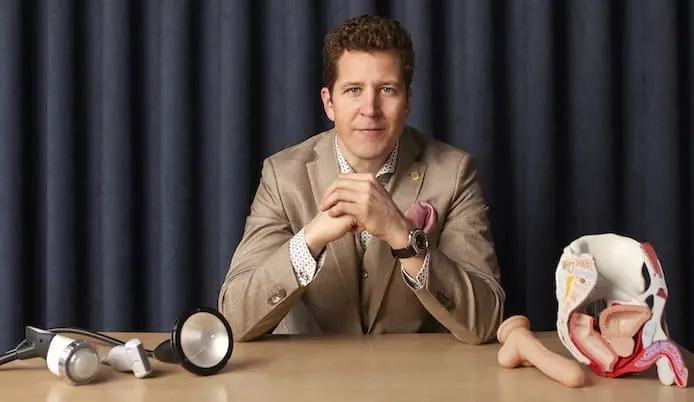
Written and medically reviewed by Michael Strøm
International speaker & expert in shockwave and EMTT treatment for erectile dysfunction, Peyronie’s & CPPS. Read more about me
PTSD and relationships: When trauma settles in the body and intimacy
Living with PTSD is often like being in a constant state of alert. For many of the men I treat in my clinic, everyday life is not just about flashbacks or poor sleep. The challenges also manifest themselves when the body needs to find peace to be close to a partner. PTSD and relationships are complex precisely because the trauma often creates a physical barrier to intimacy. This typically manifests as erectile dysfunction, lack of desire or chronic pelvic floor tension and pain. At MS Insight, I meet you right where it hurts – both physically and mentally – and my job is to help you regain control over your own body.
In this article
- Your body remembers, even if you try to forget
- When erectile dysfunction creates distance
- Chronic pelvic pain and tension (CPPS)
- My approach: Treating both body and nervous system
- How to talk to your partner about it
- Guidance for doctor visits
- Frequently asked questions about PTSD and intimate health
- Take the first step towards a better relationship
Your body remembers, even if you try to forget
When I counsel on PTSD and relationships, we always start by understanding the body’s physiological response. Post-traumatic stress disorder (PTSD) locks your nervous system into a chronic state of stress – what we know as ‘fight or flight’ mode. Your autonomic nervous system is overactive, which means your body is constantly pumping stress hormones like cortisol and adrenaline around your system.
This condition is poison to your sexual function. In order to get and maintain an erection, the body needs to be at rest. The parasympathetic nervous system (the body’s “rest and digest” system) should be dominant. But if your brain and body perceive the world as an unsafe place, it shuts down functions that are not strictly necessary for survival – including sex and reproduction.
I often find that men mistakenly think there is something physically “broken” on their penis. In reality, they are struggling with a nervous system that refuses to relax. It’s a natural survival mechanism, but in a loving relationship this mechanism becomes a huge strain.
When erectile dysfunction creates distance
The typical pattern I see in the clinic is a man who starts to withdraw. Perhaps you’ve experienced a lack of arousal in the middle of the act, or a lack of arousal at all, even though the desire for your partner is there. For a man with PTSD, this can feel like another defeat – another proof that control has been lost.
To avoid this defeat, many start avoiding intimacy altogether. You may go to bed later than your partner, make excuses or turn your back. In the PTSD relationship, this behavior often creates a deep rift. Your partner may feel rejected, unloved or mistakenly believe that you no longer find them attractive.
Without the right communication and treatment, the bedroom risks becoming a battle zone rather than a safe space. My mission is to help you break this cycle by effectively treating the physical symptoms so you can feel safe in your own body again.
Chronic pelvic pain and tension (CPPS)
Another, and often overlooked, consequence of PTSD is chronic pelvic pain, also known as CPPS (Chronic Pelvic Pain Syndrome). When you are in a constant state of alert, you unconsciously tense your muscles. Many men “keep themselves safe” by constantly tensing their pelvic floor without realizing it.
When this tension persists over months or years, the muscles develop myoses (knots) and become shortened. This can pinch the nerves, especially the pudendal nerve, causing pain in the perineum, penis, scrotum or radiating pain into the groin.
This pain naturally kills the desire for sex. Who wants intimacy if you fear pain or if you have a constant grumbling sensation in your lower abdomen? In my clinic, I focus on releasing these deep tensions, which are often the direct physical manifestation of your trauma.
My approach: Treating both body and nervous system
At MS Insight, I differ from traditional therapists by combining advanced medical technology with sexological counseling. I know from experience that we can’t solve the problems of PTSD and relationships by talking about them alone – we need to get the body involved.
I offer a combination of treatments tailored to calm the nervous system and restore function:
Focused sound waves (Shockwave)
I use focused shockwave therapy, which is based on high energy sound waves. It is important for me to emphasize that this is not painful, but an effective method to increase blood flow and stimulate the formation of new blood vessels (angiogenesis). For erectile dysfunction, the sound waves can “wake up” the tissue and significantly improve erectile function. For pelvic pain, I use the technology to release tension and trigger points deep in the pelvic floor, often providing significant pain relief.
Neuromodulation and EMTT
For men with PTSD, neuromodulation is often a crucial factor. Using EMTT (Electromagnetic Transduction Therapy), I can positively influence the signal transmission of nerves. This helps to dampen the overactive nervous system and reduce pain sensitivity. It’s basically about teaching the body that it can relax again. When the level of tension in the pelvis decreases, function often returns.
The sexological angle
Technology doesn’t do it alone. As a regular part of the program, we talk about how to deal with performance anxiety. I give you concrete tools to navigate intimacy so that it doesn’t become a performance requirement, but a space for enjoyment. This is where I build the bridge between your body’s reactions and your relationship.
How to talk to your partner about it
The hardest step is often being open with your partner. Many of the men I meet struggle to put into words why their body reacts the way it does.
When talking about PTSD and relationships, you don’t necessarily need to go into detail about the trauma itself if you’re not ready for it. The most important thing is to explain the mechanism to avoid misunderstandings:
1. Acknowledge the problem: Tell your partner that you know intimacy is difficult right now and emphasize that it’s *not* about not wanting him or her.
2. Explain the “Alert state”:* For example, say: “My body is on constant alert because of my PTSD. It makes me physically unable to relax and it blocks my ability to get an erection.”
3. Share your plan: Tell them you are seeking professional help to manage the physical symptoms. It shows drive and a dedication to making the relationship work.
Knowing that it’s not “them that’s wrong” and that you’re actively working on a solution gives your partner peace of mind.
Guidance for doctor visits
It is important for me to clarify that although I have extensive experience with the physical effects of PTSD, I am not a psychologist or psychiatrist. My treatment specifically addresses the physical, urological and sexual symptoms.
In some cases, it may be relevant to have your hormone levels (e.g. testosterone) tested or to discuss medical support. I will guide you thoroughly on what to ask your doctor specifically, so you are well prepared for that dialog. I’ll make sure you know exactly which blood tests or examinations may be relevant to rule out other causes so that we can target your treatment with me in the best possible way.
Frequently asked questions about PTSD and intimate health
Can shockwave cure my PTSD?
No, focused sound waves cannot remove the psychological trauma underlying your PTSD. But the treatment can remove the “physical symptoms” that the trauma has put in your body – such as erectile dysfunction and tension. However, when your body functions better and you are free from pain and defeat in bed, many people find that they have much more mental energy to work on their mental health.
Does the treatment hurt?
No, it isn’t. Neither shockwave nor EMTT is associated with pain. Some may feel a slight tingling or deep “work” in the tissue, especially if I treat sore pelvic floor muscles, but I always adjust the intensity so that you are safe and comfortable throughout.
How quickly do I see results?
It’s individual and depends on how long you’ve had the symptoms. Many notice an improvement in pain levels after just a few treatments. Erectile dysfunction often requires a course of 6-8 weeks as the tissue needs time to regenerate. I make a realistic plan with you so you know what to expect.
Take the first step towards a better relationship
Having PTSD doesn’t have to mean the end of a good sex life or a close relationship. But it does require that you dare to deal with the physical reactions your body has acquired over time. At MS Insight, there are no taboos. I’ve heard it all and I know how debilitating it can feel when your genitals don’t work.
You don’t have to go through this alone. By combining the right physical treatment with an understanding of the psychological mechanisms, I can help your body back into balance.
If you are interested in hearing more about how I can help you, you are always welcome to contact me by phone 41 40 08 58 or email michael@msinsight.dk. I’ll get back to you quickly with a customized proposal so we can find the best way forward together.
Would you like a specialist assessment of your situation?
You don’t have to figure it out alone. Call directly or write a few lines about your symptoms – I’ll get back to you within 12-24 hours with a concrete suggestion for the next step.