

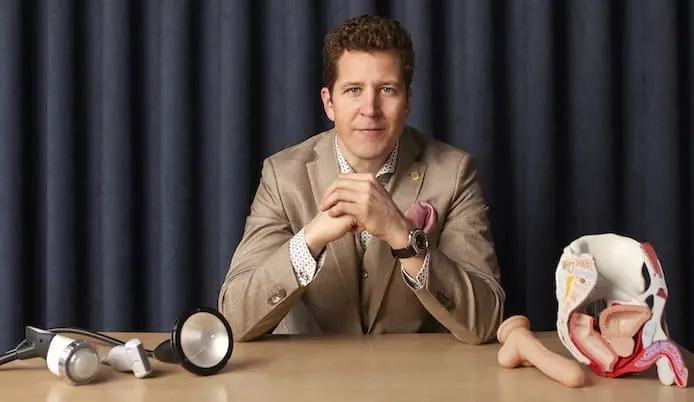
Written and medically reviewed by Michael Strøm
International speaker & expert in shockwave and EMTT treatment for erectile dysfunction, Peyronie’s & CPPS. Read more about me
Penile lump – understand the causes, get comfortable with the symptoms, and get targeted help
You’re not alone – and it’s okay to ask for help
When I feel a lump in a patient’s penis, I know that thoughts often turn to the worst. Maybe it hurts with an erection, maybe the penis suddenly curls, or maybe it feels like a hard “string” on the top. It can be anxiety provoking and affect desire, erection and confidence. My focus in the clinic is to create calm, clarify what the knot is, and make a concrete plan to help you move forward – without taboo, without finger pointing.
I run MS Insight in Copenhagen and work with men’s intimate health every day – from erectile dysfunction and Peyronie’s disease to chronic pelvic pain. I use advanced ultrasound scanning and I offer tailored programs with focused sound waves(shockwave), EMTT (electromagnetic transduction therapy), neuromodulation as well as pelvic floor, lifestyle and sexuality advice. Men come to me from all over Denmark, especially Copenhagen and Zealand.
In this article
- Penile nodule – when should it be assessed?
- When a nodule in the penis is caused by Peyronie’s
- How is a nodule in the penis assessed?
- Can a nodule or plaque be treated?
- When should you react?
- The most common causes of a knot in the penis
- Typical symptoms of a nodule in the penis
- How I examine a nodule in the penis – safely and accurately
- Penile nodule treatment – what works and what do I offer?
- What can you do now?
- Frequently asked questions about “knot in penis”
- Why men choose MS Insight
- Book an appointment – I’ll help you move forward with confidence
Penile nodule – when should it be assessed?
Feeling a lump or a hard change in the penis can cause great concern. The change can be caused by several things, and it’s not possible to determine the cause with certainty based on sensation alone. Some lumps are superficial or transient. Others may be plaque or scar tissue associated with Peyronie’s disease. Especially if the nodule is accompanied by new curvature, pain on erection, notching, shortening or altered erection, it should be assessed more precisely.
A nodule in the penis can be caused by scar tissue, plaque, superficial vascular changes or other local conditions. If the nodule also causes pain or a change in the shape of the penis, Peyronie’s disease may be a possible explanation.
Read more about Peyronie’s disease and plaque
When a nodule in the penis is caused by Peyronie’s
In Peyronie’s, a nodule or hard strand may be a sign of plaque in the tissue surrounding the penile corpus cavernosum. The plaque can affect how the penis stretches during an erection, leading to pain, curvature, notching or altered function.
Signs that a nodule may be related to Peyronie’s include
- That the penis has also become more crooked.
- That you have pain with erection.
- That the penis has an indentation or hourglass shape.
- That the erection has become less stable.
- That sex has become more difficult or uncomfortable.
Read more about crooked penis and new curvature or scar tissue and plaque in the penis.
How is a nodule in the penis assessed?
An assessment is based on how long the lump has been present, whether it changes, whether it hurts, and whether there are other symptoms such as curvature or affected erection. If plaque or Peyronie’s is suspected, ultrasound scanning may be relevant. The scan can help assess location, obvious tissue changes and possible calcification. If the nodule is associated with skin changes, ulceration, bleeding or other atypical signs, appropriate medical evaluation should be prioritized.
Can a nodule or plaque be treated?
If the nodule is found to be plaque associated with Peyronie’s, non-invasive treatment options may be relevant in some men.
Focused shockwave can be targeted, especially when pain or plaque-related tissue changes are part of the problem. Recent research shows promising results for pain relief and reports improvement of plaque and curvature in some patients.
However, treatment is not chosen based on the presence of a lump alone. What matters is how the change affects pain, shape, erection and function.
Read more about Peyronie’s disease treatment.
When should you react?
You should have a penile lump assessed if:
- It’s new or growing.
- It’s hard and doesn’t go away.
- You have pain with erection.
- Your penis has also become crooked.
- You experience notching, shortening or altered erections.
- There are skin changes, wounds or bleeding.
- You are concerned and want professional clarification.
The most common causes of a knot in the penis
Peyronie’s disease (scar tissue/plaque in the tumor body)
Peyronie’s disease occurs when scar tissue (a so-called plaque) forms in the tunica albuginea – the membrane surrounding the tumor body. It often feels like a flat, hard lump or stripe in the shaft. Typical signs:
- Curvature change during erection (penis bends to the side, upwards or downwards)
- Pain in the early phase
- Shortening or retractions during erection
- Harder to achieve/maintain an erection
Peyronie’s is not dangerous in itself, but it can be psychologically stressful and affect sex life. There are options, and the earlier I get it checked out, the better I can plan a targeted approach. In practice, I distinguish between an active phase (pain and changes in the curve) and a stable phase (when the changes no longer develop over time). The risk is increased by repeated microtrauma during sex, smoking, metabolic and connective tissue tendencies and certain lifestyle factors. It’s not your fault – but it’s helpful to know the contributing factors so we can address them.
Superficial vein thrombosis (Mondor’s disease)
A sudden, tender “string” on the top of the penis may be a blood clot in a superficial vein – called Mondor’s disease. It is generally harmless and usually resolves itself within weeks. It may hurt with erection or touch. Ultrasound can confirm the diagnosis and provide reassurance. It is often triggered by vigorous or prolonged sex, rubbing without adequate lubrication or pressure from tight clothing. The nodule typically feels like a firm, tender string, which can be more obvious when the penis is flaccid and less prominent when the swelling subsides.
Lymphocele after sex or masturbation
A small, hard, mobile lump after vigorous sexual activity can be caused by a temporary blockage in a lymphatic vessel (lymphocele). It is harmless and typically goes away on its own with rest and care. Where a vein thrombosis often feels like a tighter, tender string, a lymphocele can feel like a small “bead” that may move slightly when touched. I’ll assess with examination and ultrasound if you’re in doubt – just to separate the two conditions and avoid unnecessary worry.
Inflamed hair follicles and sebaceous nodules
Small bumps or firm, round lumps close to the hairline may be inflamed follicles (folliculitis) or sebaceous cysts. They can be sore, but are usually harmless. Good hygiene and rest often help. If it persists, you may need medical treatment, which you can discuss with your doctor. Avoid squeezing or poking – this can aggravate the inflammation and cause unnecessary scar tissue.
Cysts, calcium deposits and scar tissue after trauma
A blow to the penis, microscopic trauma during sex or previous inflammation can cause local changes – small cysts, calcium in the tissue or scar tissue. Here, ultrasound is useful to clarify the type and rule out anything else. Some changes are stable and only require observation; others can cause discomfort, where I help with a plan for gentle relief, symptom relief and follow-up.
Infections and STDs
Certain infections (e.g. hard sores, warts or nodules) can be related to sexually transmitted infections. If you suspect this, I advise you to talk to your doctor about relevant tests and treatment. Typical signs can be non-healing sores, blisters, burning pain, discharge or scaly skin changes. It’s important to find out the cause, both for your own safety and to protect a partner.
Penile cancer (rare, but important to take seriously)
Penile cancer is rare, but signs can be a non-healing lump or ulcer, bleeding, foul odor, altered skin or fast growing change. If suspected, I prioritize quick clarification. I can scan and assess, and I will advise you to contact your GP for further investigation (e.g. tests/biopsy), which is not performed in the clinic. Risk factors can include prolonged irritation, certain viral skin conditions and tobacco; this makes early assessment extra important so you can act in time.
Typical symptoms of a nodule in the penis
- Hard or tender knot in the shaft
- “Stringy” on the upper side of the penis (especially in Mondor’s disease)
- Pain with erection or touch
- Curvature, retraction or shortening during erection (Peyronies)
- Erectile dysfunction due to pain or anxiety
- Redness, warmth, oozing or sores (suspected infection)
- Anxiety, worrying or avoiding sex – completely natural reactions that I take seriously
How I examine a nodule in the penis – safely and accurately
Conversation at eye level
I start with a thorough, respectful conversation about your symptoms, when you first felt the lump, any pain, erection and intercourse history, previous injuries and your current concerns. You decide the pace and details. You are also welcome to bring discreet pictures of your erection (e.g. side and front view) if you experience curvature – this can make the assessment more accurate without creating discomfort in the clinic.
Clinical examination
A calm, gentle examination helps me locate the lump, assess its size, tenderness and consistency. I explain everything along the way so you know what’s happening. I’ll feel for skin/subcutaneous tissue, blood vessels, lymphatic vessels or changes in the tumor bodies themselves, and I’ll note what makes your symptoms worse or better.
Ultrasound scanning and Doppler
I use high-resolution ultrasound to see skin, subcutaneous tissue, tumors, veins and any plaque formation. With Doppler, I assess blood and vein flow (e.g. if Mondor’s disease is suspected). For Peyronie’s, ultrasound can show the location of the plaque and any calcium deposits. This gives a clear picture and a safe plan. When relevant, I mark the change on the skin so we can follow the progress at a later check-up.
When it takes more
If the findings point to something that requires tests, prescription medication, injection therapy or surgery, I will guide you to talk to your doctor about the next steps. My role is to clarify as much as possible and ensure you move forward in the right way. I’ll also help you with a short, concise summary for the doctor so you don’t have to explain everything from scratch.
Penile nodule treatment – what works and what do I offer?
Peyronie’s disease: goals, opportunities and realistic expectations
The goal is to reduce pain, protect erectile function and optimize the mechanical function of the penis. In the early, painful phase, I work with:
- Focused sound waves (shockwave): Can reduce pain and influence tissue healing response. Evidence primarily shows pain relief; I talk openly with you about realistic expectations regarding curvature.
- EMTT: Electromagnetic pulses that can stimulate tissue repair and blood flow.
- Neuromodulation and pain management: If the nervous system is “up and running”, targeted neuromodulation and pain management strategies help.
- Advice on penis traction and mechanical stretching: Can help with length and curvature over time in some cases when used consistently and gently.
- Erectile support: Advice on aids and habits that protect erection.
- Dialogue with your doctor: If you need medication or specialized treatments (e.g. prescription drugs or injections), I advise you to talk to your doctor.
In the stable phase, the intervention is tailored to your goals – pain relief, function, cosmetics and comfort. I prioritize practical actions you can stick to and follow up so we can adjust if something isn’t working for you.
Mondor’s disease (superficial vein thrombosis)
Treatment is usually conservative:
- Calm and temporary break from rough sexual activity
- Warm compresses and possibly mild anti-inflammatories (discuss with your doctor if in doubt)
- Ultrasound follow-up for peace of mind
Most people are symptom-free within 3-6 weeks. The condition is not contagious and rarely causes lasting discomfort. I advise on lubrication, pace and postures when you start up again to minimize the risk of relapse.
Lymphocele
Typically, it just requires calmness, good moisturizing/lubrication during sex or masturbation and a little patience. I’ll help you distinguish between what is harmless and what needs further investigation. If the lump quickly changes shape and disappears within days, it points to a lymphatic issue rather than a vein problem – and that’s good news.
Infections, sebaceous nodules and skin changes
Good hygiene, air and gentleness often help. For persistent, painful or atypical lesions, I’ll advise you to talk to your doctor about things like cultures, STI tests or medical treatment. I’ll also go through what you can do at home (e.g. avoid shaving during the healing period, switch to mild soap and use breathable underwear).
Chronic pelvic pain and pelvic floor tension
A knot in the penis can coexist with chronic pelvic pain (CPPS), pelvic floor tension and pudendal nerve involvement. Here I combine:
- Neuromodulation to calm the nervous system
- Focused sound waves and EMTT at selected pain triggers
- Pelvic floor training/relaxation and guidance on sex and pain management
The goal is less pain, better function and more peace in the body. When the body calms down, anxiety typically decreases – and symptoms become easier to manage.
What can you do now?
- Observe: Note when the lump occurred, if it changes size, if it is tender, and if there is a correlation with sex/erection rate.
- Protect the penis: Avoid rough sex and masturbation until I’ve looked at it. Use good lubrication.
- Warmth and rest: For sore, string-like knots on the upper side, warmth and light relief can help.
- Document wisely: Consider a neutral photo of the penis in erection (side and front view) if the curvature worries you – it makes my assessment easier.
- Avoid squeezing: Leave the knot alone; pressure and “massage” can irritate the tissue.
- Beware the anxiety spiral: Anxiety is normal, but it can make erectile dysfunction worse. Don’t go it alone.
- Seek emergency help for: Sudden throbbing during sex, rapidly growing swelling and severe pain (suspected penile fracture), persistent severe redness/fever or wounds that won’t heal.
Frequently asked questions about “knot in penis”
Is a knot in the penis dangerous?
Often no. Mondor’s disease, lymphocele, sebaceous cysts and Peyronie’s plaque are typical, non-dangerous causes. However, some changes require rapid assessment. That’s why a clinical examination and ultrasound provide peace of mind.
Will it go away on its own?
Mondor’s disease and lymphocele usually do. Peyronies often stabilize after months; pain is typically relieved while the curvature may persist. Other nodules require specific treatment or follow-up.
Is it contagious?
Only if the cause is an infection (e.g. certain STIs). If suspected, I advise you to talk to your doctor about relevant tests and treatment.
Can I have sex?
Yes, but gently. In case of pain or aggravation, I recommend taking a break and using plenty of lubrication. For Mondor’s disease, a shorter break is often an advantage.
Can masturbation make it worse?
Heavy mechanical stress can exacerbate pain in certain conditions. Listen to your body and proceed gently until I have examined you.
Does exercise or supplements help?
A relaxed pelvic floor and good sleep/stress management help healing processes. Specific supplements have limited evidence. I advise individually, so we focus on what actually works for you.
Does the survey hurt?
No, I examine gently and explain along the way. Ultrasound is painless and without radiation.
How quickly can I get an appointment and is it discreet?
I offer quick appointments and a discreet process. You will be treated with respect – this is everyday life for me, even if it is vulnerable for you.
Why men choose MS Insight
- Specializing in men’s intimate health: Erectile dysfunction, Peyronie’s disease, pelvic pain and related issues.
- Advanced diagnostics: Precise ultrasound scans of the penis and vessels.
- Evidence-based combination treatments: Focused sound waves, EMTT and neuromodulation – customized for you.
- Holistic approach: I look at tissues, nerves, pelvic floor, sleep, stress and sexuality – and translate knowledge into concrete steps.
- Down-to-earth, safe environment: You get straight answers, without taboo, with respect for your reality.
Book an appointment – I’ll help you move forward with confidence
A knot in your penis doesn’t have to control your sex life or your peace of mind. Let me examine it properly, explain what’s happening, and make a realistic plan for relief and function. Whether you live in Copenhagen, Zealand or elsewhere in the country, you are welcome at MS Insight. Get in touch and make an appointment – the sooner you get clarity, the sooner you can move forward with peace, strength and confidence.
If you are interested in hearing more about how I can help you, you are always welcome to contact me by phone 41 40 08 58 or email michael@msinsight.dk. I’ll get back to you quickly with a customized proposal so we can find the best way forward together.
Would you like a specialist assessment of your situation?
You don’t have to figure it out alone. Call directly or write a few lines about your symptoms – I’ll get back to you within 12-24 hours with a concrete suggestion for the next step.