

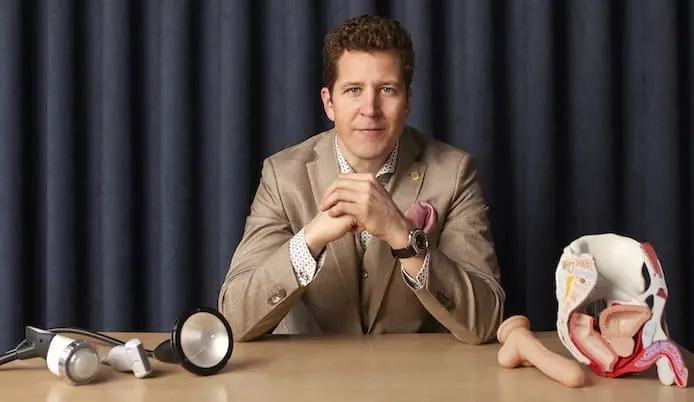
Written and medically reviewed by Michael Strøm
International speaker & expert in shockwave and EMTT treatment for erectile dysfunction, Peyronie’s & CPPS. Read more about me
Penis becomes flaccid during intercourse – understand the causes and get a solution that works
You are not alone – and there is help available
When the penis becomes flaccid during intercourse, it affects more than just your sex life. It affects confidence, intimacy and desire. I meet men every week who struggle to maintain an erection or lose it mid-act. It can be intermittent, situational or a problem that has developed over months or years. Wherever you are, I can address it with you – calmly, professionally and without shame.
I offer a safe, professional and solution-oriented approach. With advanced ultrasound, targeted treatment and a focus on your body, nerves and psyche, I help you return to a stable and satisfying sex life – without unnecessary detours. My goal is for you to trust your body again, find peace in the situation and feel the joy of intimacy.
In this article
- Typical reasons why the penis becomes flaccid during intercourse
- When is it serious? Red flags you should not ignore
- How to find the cause – targeted investigation at my location
- Treatment that works – tailored to you
- What can you do now?
- Frequently asked questions about flaccid penis during intercourse
- Take the next step – get professional help for flaccid penis during intercourse
Typical reasons why the penis becomes flaccid during intercourse
Blood vessels and circulation
An erection depends on blood being able to flow freely into the cavernous bodies and stay there. When you lose your erection during sex, it’s often due to:
- Reduced blood supply: e.g. due to atherosclerosis, high blood pressure, high blood lipids or diabetes.
- Venous leakage: blood leaks back out too quickly, making it difficult to maintain the erection – typically felt as the erection decreases when changing position or after a few minutes of penetration.
Men with incipient cardiovascular disease may experience erectile dysfunction before other symptoms appear. That’s why I always take my circulation seriously. A simple rule of thumb: mornings, masturbation and erection during foreplay can be better than erection during penetration if the venous system relaxes too quickly. This helps me to target your treatment.
Nerves, muscles and pelvic floor
The nervous system controls erection. Irritation or impingement of the pudendal nerve, pelvic floor tension or chronic pelvic pain (CPPS) can make it difficult to get and maintain an erection. Many also describe tingling, burning, discomfort in the perineum or pain during ejaculation. When pain and tension activate the body’s “alarm”, erection typically decreases during intercourse.
Signs of nerve and muscle interference can be unintentional tension in the buttocks, abdomen or pelvic floor, sitting a lot during the day, or cycling making symptoms worse. “Pulling yourself together” rarely helps here – instead, I work to silence the alarm, loosen the tissue and retrain the natural erection reflex.
Structural conditions of the penis
- Peyronie’s disease: Connective tissue changes in the tumor body can cause curvature, “strings” or pain. This can make erection unstable or painful.
- Microtrauma over time: Repeated small injuries – for example, from severe bending or pressure – can affect tissue and erection quality, even if there hasn’t been one obvious accident.
Hormones and medication
- Low testosterone can affect desire and erection quality, but is rarely the sole cause.
- Certain medications (e.g. SSRI antidepressants, antihypertensives, antihistamines and some prostate medications) can affect erection and orgasm. I always review your medication list and discuss realistic alternatives with you and possibly your doctor.
Psychosexual factors
Performance pressures, worries, conflicts, porn habits, stress and sleep deprivation can derail the erection reflex. Many people function well during masturbation but lose their erection during intercourse – this is a strong sign that the nervous system is in “watch mode” and that comfort, pace and focus need to be adjusted. I help you with concrete strategies so that the body can once again take control – without the brain overriding with control and criticism.
Temporary triggers
Alcohol, a very large meal, fatigue, recent illness or extended periods without sex can cause a flaccid penis during intercourse. It’s normal sometimes – the problem is when it becomes a pattern. I’ll help you distinguish between one-off incidents and persistent causes.
When is it serious? Red flags you should not ignore
Seek emergency help if you experience:
- Sudden slamming of the penis during sex, followed by immediate flaccidity, pain and swelling (suspected penile fracture).
- Recent severe curvature, significant pain and rapid deterioration.
- Chest pain, shortness of breath, dizziness or fainting during intercourse.
- Newly emerging neurological symptoms in the lower body (pronounced sensory disturbance, loss of strength, difficulty urinating/defecating).
Otherwise, it applies: The sooner I determine the cause, the better I can help.
How to find the cause – targeted investigation at my location
Conversation and questionnaires
I start with a calm, respectful conversation. I ask about the pattern: Does erection work in the morning? Is there a difference between masturbation and intercourse? Do you lose your erection when changing positions? Do you have pain, sensory disturbances or problems ejaculating? I use validated tools like the IIEF/SHIM to grade the problem and follow the development over time. Feel free to bring your partner if it feels right – it can provide valuable insight and peace of mind.
Clinical examination and pelvic floor
I assess the level of pelvic floor tension, coordination and endurance. An overactive pelvic floor can explain erectile dysfunction, premature ejaculation and pain. You’ll get a concrete explanation of what I see – and what it means for your erection. At the same time, I examine the hips, lower back and nerve pathways that can affect the signals to the penis.
Advanced ultrasound scanning of the penis and pelvis
With high-resolution ultrasound, I assess tissue, vessels and any plaques (Peyronie’s). I can also assess the blood flow in the penis to see if this is the problem. It’s painless and gives a clear picture of what I need to treat. Where appropriate, I will take before/after measurements so you can see your progress in black and white.
Nerve and pain diagnostics
I test the course of the pudendal nerve and look for trigger points and sensitive structures in the pelvis that can “short-circuit” the erection reflex. If necessary, I use neuromodulation tests to assess nervous system activity and map out which positions and movements provoke – and which ones relieve.
Blood tests and hormones
If indicated, I will collaborate on blood tests (testosterone, metabolism, long-term blood sugar, lipids). I make a plan in collaboration with your own doctor/urotherapist so that you get a holistic assessment.
Treatment that works – tailored to you
There is no one solution for everyone. I combine proven methods to give you both fast symptom relief and long-term recovery.
Medical options
- PDE5 inhibitors (e.g. sildenafil/tadalafil): Increases blood flow and can stabilize erection during sex. Dose, timing (e.g. distance to meals) and combination with behavioral strategies make a big difference.
- Local aids: Vacuum pump and penis ring can be useful for venous leakage – proper guidance is crucial for both efficacy and comfort.
- Injection therapy (selected cases): Collaborate with urologist if tablets do not work or are not tolerated.
I’ll advise you on the benefits, risks and practical use – and how medication best interacts with other treatments. Never stop prescribed medication without consulting your doctor.
Focused shockwave therapy (ESWT)
Short, controlled acoustic pulses stimulate microcirculation, tissue repair and new blood vessel formation in the penile shaft. In men with vascular erectile dysfunction, shockwave can improve erection quality and response to PDE5 inhibitors. The treatment is quick, without anesthesia and with minimal discomfort. A course is typically 6-8 sessions and I often supplement with targeted home exercises to enhance the effect.
EMTT – electromagnetic transduction therapy
EMTT uses high-energy magnetic fields to affect cellular healing processes and nerve signaling. I use EMTT specifically for pelvic pain, nerve irritation and muscular tension that can cause the penis to become flaccid during intercourse. The therapy is non-invasive and most people find it comfortable and relaxing.
Neuromodulation
With gentle, controlled stimulation, I help the nervous system “get back on track” to reduce pain and muscle tension and improve parasympathetic calm (which promotes erection). This can be crucial for CPPS and pudendal pain and can be combined with breathing and awareness techniques that you take home with you.
Pelvic floor – strength and relaxation
It’s not just a question of “squeezing”. Many people actually need to learn to let go. I instruct you in individual exercises for coordination, timing and breathing so that the pelvic floor supports – not inhibits – erection. You’ll get simple at-home exercises that can be discreetly integrated into everyday life and specific cues to use during sex so your body works with you.
Psychosexual counseling and performance peace of mind
I work in a down-to-earth way:
- Pace and confidence in foreplay and penetration – slow and steady rather than fast and forced.
- Realistic expectations and communication with your partner – so you can work together without pressure.
- Techniques to maintain bodily presence (e.g. stop-start, breathing and focusing on pleasant sensations rather than monitoring).
- Adjusting porn and masturbation habits if they get in the way of erection during intercourse.
When needed, I include sexological tools and referrals for complex couple or trauma issues.
Lifestyle that lifts the journey
- Sleep 7-8 hours: Hormones and nervous system work for you, not against you.
- Exercise: 150 min/week moderate or 75 min/week intense – preferably strength + cardio.
- Nicotine cessation and moderate alcohol: Direct effect on blood vessels and nerve function.
- Diet for vascular health: Green vegetables, whole grains, fish, healthy fats.
- Weight and blood sugar control: Reduces inflammation and improves blood flow.
- Medication review with your doctor if side effects are suspected.
Small, consistent changes can be the difference between an erection that fades and an erection that lasts.
What can you do now?
- Shift focus from “do I need to perform?” to “what feels good?” – Slow down and take breaks.
- Ensure longer foreplay and stimulate the penis continuously when changing positions.
- Avoid heavy meals and alcohol before sex.
- Try a penis ring (wisely) to keep the blood in the cavernous bodies – but no more than 30 minutes at a time.
- Note patterns: when do you lose your erection and what happens just before? This helps me target the treatment.
Frequently asked questions about flaccid penis during intercourse
Is it “just age”?
Age increases the risk of circulatory changes, but it’s not a judgment. Many 50-60+ men get a solid and lasting erection again with targeted efforts.
PDE5 inhibitors don’t work on me – what then?
If tablets don’t work, it is often due to dose/timing, venous leakage, nerve interference or psychological overactivation. The solution may be combinations: e.g. shockwave, pelvic floor, neuromodulation and behavioral strategies. Alternatively, injection therapy or assistive devices may be relevant.
Can cycling cause erectile dysfunction?
Prolonged and hard cycling can irritate the pudendal nerve. Proper saddle fit, posture variations and customized training reduce the risk. For persistent symptoms, targeted treatment can help.
How fast does shockwave therapy work?
Some feel the effect after 3-4 sessions, but typically I see full effect 4-12 weeks after completing the program. The results depend on the starting point and other measures.
Can I have sex during treatment?
Yes – and it’s often part of the “training”. I help you adapt pace and technique to your situation.
Should I stop my medication if I think it affects my erection?
Never stop yourself. Talk to me and your doctor. Often there are alternatives or adjustments.
Do you help with Peyronie’s disease and curvature?
Yes, you can. I combine ultrasound diagnostics, focused shockwave, EMTT, tissue care and exercises. I can often reduce pain and improve function, and in some cases reduce the impact of curvature on sex life.
What about discretion and practicality?
Discretion is a matter of course. You get appointments that fit your schedule, and courses are planned efficiently. I have clients from all over Denmark – especially Copenhagen and Zealand.
Take the next step – get professional help for flaccid penis during intercourse
If your penis becomes flaccid during intercourse, it’s not a sign of weakness – it’s a signal. With the right assessment and a targeted plan, you can get your erection and calm back. I meet you without prejudice, with professional weight and a clear focus on solutions that work in your reality.
Contact me today for a no-obligation conversation or book an appointment. The sooner I get started, the sooner you’ll get your traveling under control – and your intimacy, desire and quality of life.
If you are interested in hearing more about how I can help you, you are always welcome to contact me by phone 41 40 08 58 or email michael@msinsight.dk. I’ll get back to you quickly with a customized proposal so we can find the best way forward together.
Would you like a specialist assessment of your situation?
You don’t have to figure it out alone. Call directly or write a few lines about your symptoms – I’ll get back to you within 12-24 hours with a concrete suggestion for the next step.