

Prostate cancer is one of the most common cancers among men, and the fear of diagnosis can feel overwhelming. I’ll guide you through the typical symptoms, how you can gain clarity and confidence, and how my treatment with a focus on rehabilitation and new technology can help you regain quality of life and manhood. Read on to find out how I can support you – whether you’re undergoing assessment or rehabilitation after treatment.
Prostate cancer is a slow-developing cancer of the prostate gland that most commonly affects men over the age of 50; early detection and modern treatments offer good chances of survival and quality of life.

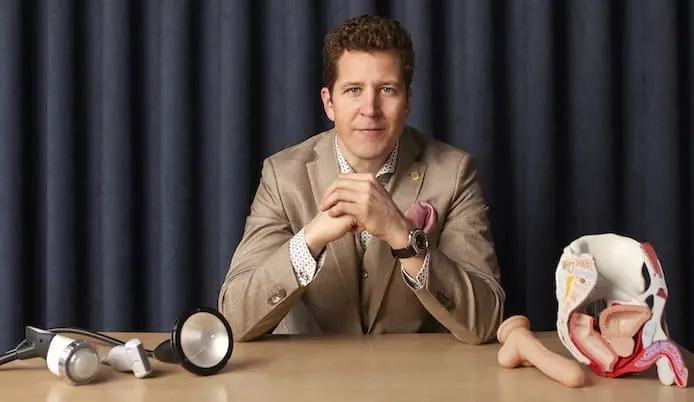
International speaker & expert in shockwave and EMTT treatment for erectile dysfunction, peyronies & CPPPS.
Prostate cancer is the most common cancer among men in Denmark. Yet it is a diagnosis that is often shrouded in silence, fear and uncertainty. When I meet men here at my clinic, MS Insight, I can see how concern about the prostate often lurks, whether they present with erectile dysfunction, pelvic pain or difficulty urinating. It’s a natural reaction that when the body changes in the abdomen, thoughts immediately turn to “the worst”.
My job as your therapist is to provide calm, clarity and concrete, actionable solutions. I don’t treat the cancer itself – that’s a specialist task for hospitals – but I play a crucial role in identifying symptoms that resemble cancer. I also specialize in the rehabilitation of the unfortunate side effects of cancer treatment, including erectile dysfunction and incontinence. Here’s my overview of what to look out for and how I can help you maintain or regain your quality of life.
Prostate cancer occurs in the bladder neck gland, also known as the prostate. It sits just below the bladder and encloses the upper part of the urethra like a small ring. The gland’s primary function is to produce the fluid that transports sperm. The disease often develops slowly and many men live with it for years without even noticing symptoms. In other cases, the cancer is more aggressive and requires prompt medical intervention.
The risk of developing the disease increases with age, with the vast majority of cases detected in men over 50. Heredity also plays a significant role; if your father or brother had the disease, your own risk may be increased. However, it’s important for me to say that a diagnosis today does not mean the end of life. Treatment options are incredibly good and survival rates are high. The biggest challenge for the men I help is often the side effects that come with surgery or radiotherapy, or the nagging fear of symptoms that fortunately often turn out to be something completely different.
In the early stages, prostate cancer rarely causes obvious symptoms. It’s often only when the lump grows and starts to press on the urethra that men notice physical changes. Below I’ve listed the signs I hear about most often and that you should always be aware of:
It’s crucial for me to emphasize that the above symptoms do not necessarily mean you have cancer. In fact, I see men with these exact symptoms on a daily basis, where the cause turns out to be benign prostatic hyperplasia (BPH), chronic pelvic pain (CPPS) or simply an overstretched pelvic floor. Many men walk around with a fear that turns out to be unfounded, but which requires a professional examination for peace of mind.
In my clinic, I use ultrasound scanning as a regular part of my diagnostics. It gives me a precise visual image of the bladder, pelvic floor and prostate size. Although the final diagnosis of cancer is always made via tissue samples by a specialist, I can help clarify whether your symptoms are due to muscular tension or other mechanical conditions that I can effectively treat here in the clinic without surgery.
For men who have undergone treatment for prostate cancer – either prostatectomy or radiation therapy – the reality is often significantly different. This is where I, as a specialist, come in. The two most common and intrusive side effects are:
The nerves that control your erection run closely along the prostate. Even with the most gentle, nerve-sparing surgeries, these nerves can be affected or temporarily “turned off”. The result is the inability to get or maintain an erection, which for many feels like a major loss of manhood and quality of life.
When the prostate is removed, the closure mechanism around the bladder changes fundamentally. As a result, many people find that they leak urine when they cough, sneeze or engage in physical activity. Unfortunately, this can lead to social isolation and shame.
I meet you at eye level and with me we talk openly about these challenges. It’s not something you just “learn to live with” or accept as a permanent condition. There are effective methods for rehabilitation, which I specialize in performing.
My focus is squarely on restoring your function and quality of life. Whether you’re concerned about symptoms or you’re recovering from cancer, I offer an evidence-based and holistic approach.
One of my absolute core competencies is the use of focused sound waves. For men with erectile dysfunction after prostate cancer treatment, this is a breakthrough technology. The sound waves stimulate the formation of new blood vessels (angiogenesis) and activate the tissue’s own repair processes. This can help “reboot” tissues and nerves that have been inactive or affected after surgery. I use the most advanced equipment on the market to ensure a precise, in-depth treatment that is as gentle as possible.
As a powerful complement to sound waves, I often use EMTT. This technology works at the cellular level by increasing cell membrane potential and promoting healing in nerves and muscles. For men with pelvic pain or post-operative nerve damage, EMTT can make a significant difference as it effectively suppresses inflammation and pain response.
Incontinence requires a strong and well-functioning pelvic floor. But it’s not just about “squeezing” randomly. Many men actually squat incorrectly. I guide you in proper pelvic floor activation and use neuromodulation to retrain the nerve connection between the brain and bladder/pelvic floor. This ensures that you regain control over your urination faster.
If you experience visible blood in your urine, sudden stopping of urination or severe pain, you should always contact your doctor as soon as possible. The same applies if you are concerned about prostate cancer due to family history. I often guide my clients on exactly which blood tests (such as PSA levels) and examinations they should discuss with their own doctor so that they get off to a good and safe start in the system.
But remember this: If the doctor has cleared you of cancer and you still have pain or erectile dysfunction, I’m where the work begins. The doctor saves lives, but I help you get your life back on track afterwards. I often see men who have been told that “everything looks fine” in the hospital, but are still in pain. Diagnoses like CPPS (chronic pelvic pain) are often overlooked, and it’s an area I have a lot of experience treating.
Prostate cancer and the accompanying symptoms don’t just affect the physical. It affects self-perception. Many of the men I talk to feel “less of a man” because their potency fails or because they drip in their pants. Naturally, this affects relationships and mental wellbeing.
In my consultations, there’s a high ceiling and room to talk about the hard stuff. I always take a sexological approach to my treatments, which means that we not only repair the “mechanics” but also talk about desire, intimacy and how to rediscover a satisfying sex life – perhaps in new ways. I see the person behind the diagnosis and my approach is always discreet, respectful and professional.
Whether you fear your symptoms are caused by prostate cancer or you’re struggling with the physical effects of cancer treatment, you’re not alone. At MS Insight, I specialize in the male genital area and the challenges that can arise.
I offer a thorough initial examination where we use ultrasound and conversation to get to the heart of the problem. I then tailor a program of focused sound waves, EMTT and relevant guidance to suit your situation. You don’t have to accept pain or impotence as a permanent condition.
Contact me today and let’s take control of your health. It takes courage to seek help, but it’s the most important step towards getting better.
If you are interested in hearing more about how I can help you, you are always welcome to contact me by phone 41 40 08 58 or email michael@msinsight.dk. I’ll get back to you quickly with a customized proposal so we can find the best way forward together.
I will get back to you within 12-24 hours.
Are you unsure about what’s causing your symptoms, or whether a specialized treatment program at our clinic in Copenhagen would be right for you? If so, you can start with a brief, confidential consultation. During this consultation, we’ll assess whether your symptoms align with the areas I specialize in at MS Insight and determine what the next appropriate step might be.
The initial consultation is not a full consultation, diagnosis, or treatment plan. It is intended for those who would like a thorough assessment of whether it makes sense to proceed with a more in-depth examination, an ultrasound scan, and a personalized plan at our clinic in Copenhagen.